Home Blog Page 133

A Q&A With HIV/AIDS Pioneer Dr Michael Gottlieb – AJMC.com Managed Markets Network – AJMC.com Managed Markets Network

In June of 1981, Michael Gottlieb, MD, was an assistant professor of medicine at the UCLA School of Medicine, when he and a team from the school, along with investigators from Cedars-Mt. Sinai Hospital in Los Angeles and the CDC’s Epidemiology Program Office, published a brief report in the June 5, 1981, issue of Morbidity and Mortality Weekly Report (MMWR).

This week marks the 40th anniversary of that report, which described a 5-case cluster of Pneumocystis carinii pneumonia, previously seen only in patients with known severe immunocompromised status, among homosexual men in Los Angeles. With the exception of one of the men, who had a history of Hodgkin disease, none were known to have been immunocompromised. The cause of their rapid decline would come to be known as AIDS, and the virus that causes it, HIV.

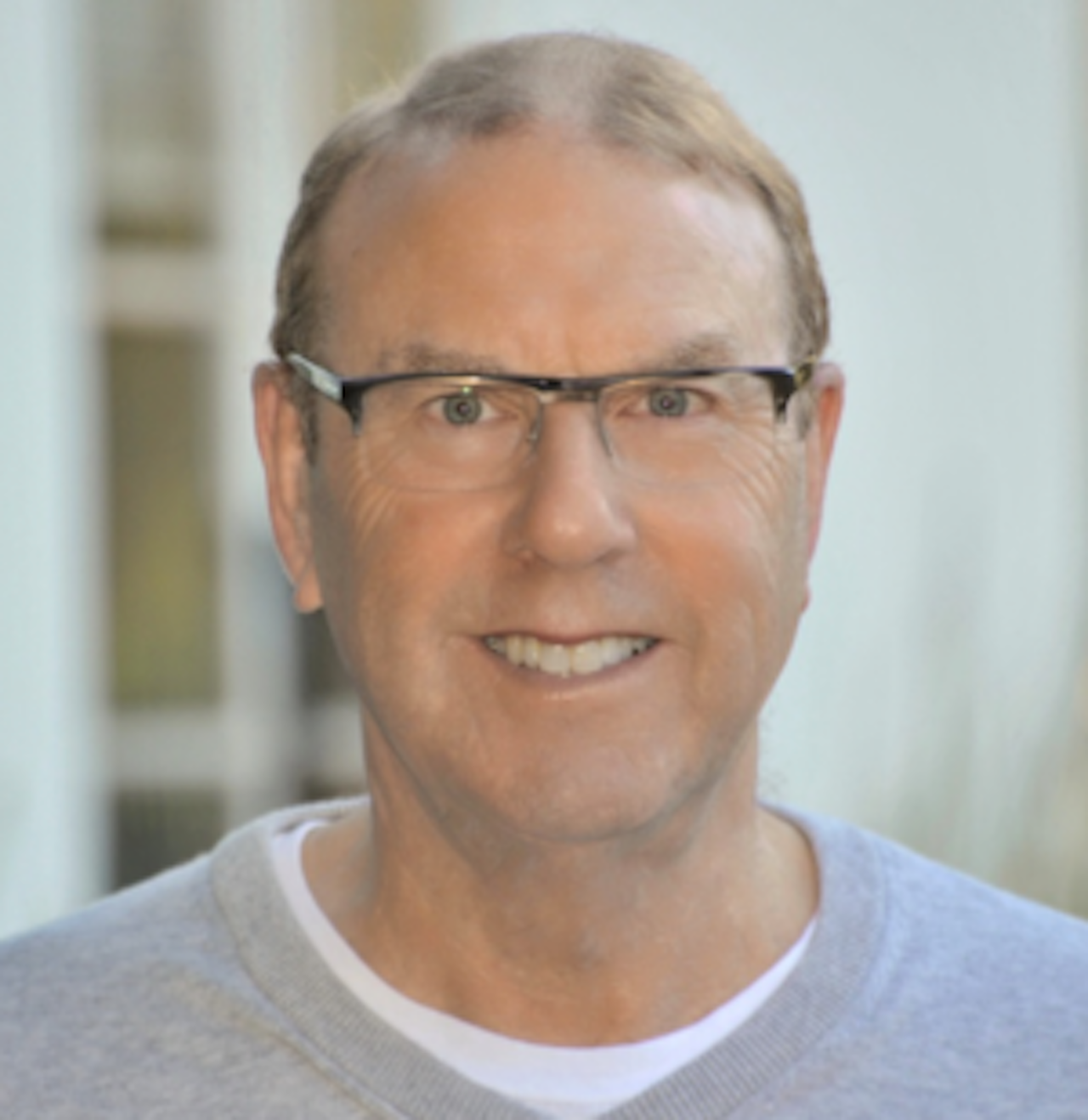
Today, Gottlieb, lead author on that first MMWR paper to identify HIV/AIDS, is a staff physician at AIDS Project Los Angeles (APLA) Health & Wellness and an associate clinical professor of medicine at the David Geffen School of Medicine at UCLA. The American Journal of Managed Care®(AJMC®) recently spoke with him to discuss the implications of his initial findings, how azidothymidine (AZT; now known as zidovudine) became an agent against this pandemic, appreciating the fear that permeated the field at that time, and vaccine and health equity, among other topics.

This interview has been edited slightly for clarity.

AJMC®: One of your principal conclusions in that first MMWR study was a possible cellular-immune dysfunction. The more extensive report months later in New England Journal of Medicine has been called one of the most prominent in the publication’s history. Did you have an indication of your findings’ implications?

GOTTLIEB: The short answer is, no. The longer answer is that what we were seeing was very different from anything I was aware of. It was very different. It was striking. And it was a distinction from previously known stuff, without being very eloquent. The demographics—5 gay men—in our experience raised the question of a sexually transmitted immune deficiency. But why? There were no known sexually transmitted immune deficiencies.

In the New England Journal of Medicine paper, we raised the possibility of cytomegalovirus, CMV, as the cause. But, of course, that was a chicken-and-egg phenomenon. The patients were excreting cytomegalovirus in their urine because they were immune deficient. So cytomegalovirus was not the cause. We did include a caveat in the discussion to the effect that there could have been some common exposure or undetected viral infection—I’d have to go back and look at it—some undetected microbial agent that could be the cause of the immune deficiency, based on the demographics.

Did I have an indication of the findings’ implications? A sexually transmitted immune deficiency would be a serious public health problem.

AJMC®: Each of the 5 men in your MMWR paper had some form of candidiasis. How important is mucosal immunity to virus prevention, particularly in someone with immunocompromised status?

GOTTLIEB: Well, it’s very important—but it’s complicated. Because mucosal immunity is complicated. It involves cells, it involves barriers, it involves local cells that might be susceptible to infection. It involves the presence of antibodies at the site, humoral immunity. It’s always important, but it’s virus dependent. In other words, for some viruses, just having antibody in the tissue may be sufficient to prevent infection. But that doesn’t seem to be the case for HIV.

HIV has a unique way of initiating infection. The portal of entry, the cells present in the tissue, probably are important in preventing HIV infection at the site of entry. Even today, 40 years later, we’re not sure what types of immunity might be necessary to induce to protect against HIV infection. And that’s why we still don’t have a vaccine.

But if your question pertains to COVID-19, for example, in someone who is immunocompromised, the data so far are kind of conflicting as to whether people with HIV have increased risk of contracting COVID-19. And they are somewhat conflicting with respect to the outcome. It does not appear that our patients with HIV, today at least in Western countries, have a poor prognosis with regard with regard to contracting COVID-19 and suffering serious consequences.

AJMC®: You were principal investigator of the UCLA site of the trial that first investigated AZT for use among patients with severe immune deficiency. Azidothymidine was shown effective in the lab, in that it suppressed HIV replication. Can you tell us how a failed cancer treatment become an investigative, eventually approved, agent against a virus of which little was still known at the time?

GOTTLIEB: It involved the determination to find a treatment. First, there had to be the will to look for something, and then it involved a stroke of luck. That’s really the truth.

Marty St. Clair, a scientist at then Burroughs Wellcome in Research Triangle Park, North Carolina,had an interest in retroviruses and developed a plaque assay in petri dishes with mouse leukemia cells that replicated with reverse transcriptase, the same the enzyme that’s necessary for HIV replication.If you’ll recall, in Françoise Barré-Sinoussi and Luc Montagnier’s initial paper, they show the rise of reverse transcriptase in their culture medium.

St. Clair tested numerous compounds in the library of compounds owned by Burroughs Wellcome, and one of them wasAZT.As she tells it—and she’s the best one to tell it—she came to the lab, looked at all the petri plates with agar and cells suspended in them. And there were a bunch of them where there was no lysis of the cells, the cells were surviving, and in all the rest of them, the leukemia virus had chewed up the cells. And she thought she’d made a mistake and not put the chemical in that particular set of petri plates. And her colleagues came in and verified that she had, in fact, done it all correctly. And AZT had protected the cells against destruction.

It was chance that Burroughs Wellcome had acquired this compound, a thymidine analogue, which could have been predicted to inhibit reverse transcriptase. It’s the kind of compound, an antimetabolite—a thymidine analogue—that might work against reverse transcriptase. Indeed, that’s what they found. And this was an important proof of principle that you could develop a drug against, or you could find a drug against, HIV.

At this time in history, there was only one antiviral drug on the market, and that was acyclovir cycle for herpes. There were a couple of other minor ones, but there was only one major one and that was acyclovir. And so Burroughs Wellcome was carving out a niche for itself as an antivirals company. And that’s why they jumped into this arena.

But as you’ll recall, there was no cure for the common cold at that time, and there still is no cure for the common cold. So taking on HIV, a new virus about what about which little was known, was a major challenge.

AJMC®: One reason you gave for joining APLA Health in 2019 was to address the increasing insurance-related costs (premiums, deductibles, co-pays). Costs for antiretroviral treatment (ART) average in the thousands of dollars per month. What are some ways persons living with HIV or those with a new diagnosis can overcome these prohibitive costs that may be preventing them from adhering to their current medication regimens or even initiating treatment?

GOTTLIEB: The first point I would make is that it is a bit of patchwork in the United States, state by state, with respect to what are called ADAP programs, or the AIDS Drug Assistance Program. For example, in California, it’s a very generous ADAP program, where there are no lines of people waiting to get on medication. In some states, at least as of a year or 2 ago, there were lists of people who were unable to get their medicine through ADAP, because the ADAP program was less generous or was less well funded. So for ADAP in California, anyone, even people who have no insurance whatsoever, can access medication through ADAP.

Other ways to access medication are through Obamacare [the Affordable Care Act]. And as a last resort for certain medications, pharmaceutical companies offer assistance programs for access to inexpensive medication, depending on the income level of the patient.

AJMC®: Will there ever be a time when the price points on these medications come down? Is that even possible?

GOTTLIEB: I think the price point on branded drugs is unlikely to come down. Once drugs become generic, the price point does come down. But not as much as it should.

In other words, the price point has come down for developing countries, remarkably. They’re able to provide drugs in developing countries at a very low price point. But in the United States, once the drug becomes generic, the price point tends to be not so far off the brand price. The reason for that isn’t clear to me.

It seems to me that if a drug can be made available in developing countries at a low price point, why does the American consumer pay so much more for the same generic?

AJMC®: Today’s younger generation knows of HIV as a treatable condition and does not know of the fear that surrounded HIV and the stigma experienced by those early patients. Can you discuss how that fear was experienced in the scientific community, or even expressed by scientists themselves?

GOTTLIEB: I think you have to go back to the very beginning. Young people, as you point out, do not appreciate the amount of fear, in general, that was out there among people who perceive themselves to be at risk for this disease. You only have to watch certain films to get an idea. I think that the best way for them to get an idea of what the atmosphere was like is to watch films like “Philadelphia,” “How to Survive a Plague,” “The Dallas Buyers Club,” “The Normal Heart,” and “Angels in America” to know what AIDS was like in the early 80s.

With regard to the scientific community, I have heard stories from researchers—and I have my own story—of experiencing an illness, which appeared to be viral, with fever and profound fatigue that lasted for months early on in the HIV epidemic. Paul Volberding, MD, in San Francisco has related a story of experiencing fear that he was going to bring HIV home to his family from the clinic. That all came on maybe a little bit later, maybe prior to the HIV test, probably 1983, 1984. The HIV test came about in 1985.

But early on, at the very beginning, we had no fear. We were perhaps naïve, but we carried on as usual. We did not take universal precautions. We didn’t gown up, we didn’t glove up, we took blood without gloves. That was probably out of error. And it was just dumb luck that there weren’t a lot of health care worker infections in the very earliest days.

In the lab, once we knew it was this virus, once HIV was discovered, it seemed the pattern of transmission seemed to be the same as that of type B hepatitis. We were pretty reassured by that and doubted that it was transmitted by any kind of aerosol or droplet—because hepatitis B is not transmitted by that route.

My wife at the time, her niece was having heart surgery in New York City as a child, and I advised the parents to donate blood for the child and not to take a chance on banked blood. It was probably 1982, 1983 and 83. Once the HIV test came out, and we all—researchers in the scientific community—took the test, I think there was a collective sigh of relief.

AJMC®: In 1996, Peter Duesberg asserted that HIV does not cause AIDS despite scientific evidence to the contrary. What message do you have for those who continue to deny that HIV and AIDS exist?

GOTTLIEB: Disinformation and a false narrative did not originate recently. Peter Duesberg and his colleagues were ahead of the time in disseminating misinformation and a false narrative, for unclear motives. Duesburg and the AIDS deniers did a huge amount of damage and undoubtedly cost peoples’ lives

People win the Nobel Prize for doing a very specific thing in the laboratory, which does not make them a global expert on anything other than that specific thing that they did. It does not, necessarily. Some may be polymaths who are brilliant in all aspects. But most have done a very specific thing for which they were well rewarded.

Peter Duesberg is flat wrong. One has only to look at the success of ART in changing HIV from a death sentence to a manageable condition with projected longevity for young people that approximates what their lifespan would have been without HIV. The only thing different is the fact that they are treated with medication that addresses HIV specifically and not any other virus or factor in their lives.

My message to them is to stop it.

AJMC®: What ideal circumstances need to be present to develop a safe vaccine that both prevents new HIV infection and reduces viral load in the blood? In light of drugs that enable persons living with HIV to reach undetectable levels, is such a vaccine possible?

GOTTLIEB: I think you’re talking about 2 different kinds of vaccine. One vaccine that prevents new infection and a vaccine that reduces viral load in the blood are 2 different animals. The first is a preventive vaccine. The second is a therapeutic vaccine. The characteristics are probably going to be very different.

A therapeutic vaccine, the hope would be that it would substitute for medication or that you could use less medication—if you could somehow stimulate the immune system to be more effective against an existing HIV infection. A preventive vaccine would act at the mucosa and prevent the early steps by which HIV can establish infection. Whether it infects the dendritic cells or local CD4 cells at the mucosal level, it would have to interfere with the steps that initiate infection.

One important lesson is the success of pre-exposure prophylaxis [PrEP] with medication. People at risk for HIV can take antiretroviral medicine every day. It’s remarkably effective at preventing new HIV infections. We don’t know exactly how that works, but it probably has to do with a tissue level of drug.

In early steps, an infection may start, but it’s stopped in its tracks by the presence of medication at the portal of entry. So I think that here are possibly some lessons for the vaccine folks from the success of pre-exposure prophylaxis with medicine.

Is such a vaccine possible? Well, that’s a therapeutic vaccine. Sure, it’s possible. But of course, once a person has HIV and they’re on medication, their immune system can be reconstituted—but it’s not normal, it doesn’t normalize. Folks with HIV on medication are very immune competent, but it is not a totally normal immune system; there’s still dysregulation caused by whatever damage happened early in the infection.

In the gut, for example, 90% of lymphoid cells in the gut disappear in the first weeks of HIV infection. So years later, the immune system is still isn’t normal. You have to have a therapeutic vaccine that is very potent, that can overcome the residual immune deficiency that patients have. That’s different from a preventive vaccine, which you would be giving to folks who are not HIV infected.

AJMC®: What are some lessons to be learned from the early years of the AIDS epidemic that you believe are must-knows for future infectious disease clinicians?

GOTTLIEB: Infectious disease clinicians can be an important voice in supporting the public health infrastructure. Infectious disease clinicians go off; they get this wonderful training; they read Mandel, the book; they take their boards; they go out and they focus just on patients. Public health to them sometimes is a nuisance.

The public health people call them and say, “Your patient has a positive syphilis test,” and the infectious disease doctor replies, “Okay, I’ll do it. I’ll get him in, I’ll treat it.” But support for public health infrastructure in this country is insufficient. One only has to look at the HIV epidemic and SARS and COVID-19 to know that.

Maybe the 2 pandemics will send the message to those who are responsible to beef up public health infrastructure. Infectious disease clinicians can be part of that effort as advocates.

I don’t think infectious disease clinicians held a great deal of prejudice. Yes, there was prejudice, but 2021 and 1980 are a long time apart. There’s been softening of attitudes over these 40 years. Stigmatizing or blaming a patient or blaming a group of people for disease is unfair. Prejudice is unfair.

There’s an outbreak of a disease in Wuhan, China, and blaming all people of Asian ancestry for that, on the part of the public, is absurd. But it’s gone on for centuries. As you know, syphilis was the French disease. Even though it originated elsewhere, it became known as the French disease. HIV early on was characterized as a gay disease, but not by infectious disease clinicians.

It was by the public that didn’t want to see it as their problem. They were so frightened of it that they wanted to believe that it was going to be contained in a certain population of people—unfortunately an already highly stigmatized group of people.

For infectious disease clinicians, I think HIV/AIDS has taught them some lessons, in terms of their politics, frankly. I think most people who’ve trained in this era are now familiar with the lifestyles of gay men and are more comfortable with them. That perhaps is one of the silver linings of all this: Sexual health and LGBT health are more mainstream than they were 40 years ago.

There will still be people who will object and who will refuse to treat, but an LGBTQ person wouldn’t want to be treated by those people. And if they sense that, they should simply look elsewhere.

The good news today for younger people is that there is life after HIV, even if they’re diagnosed. There are also lots of options. It is no longer a death sentence.

PrEP is underutilized. PrEP is primarily utilized by White gay men. In the absence of a vaccine, there’s a great need to make PrEP available to underserved populations, to people of color. The impediments to doing that really need to be worked on.

Of course, the epidemic goes on globally. There’s been some success, remarkably, in providing HIV medication in developing countries. The HIV epidemic was a major message about health equity and set the stage for institutions, like the Gates Foundation, to create global health initiatives. And that’s commendable.

Today, we’re facing the same sorts of issues with vaccine equity. But the example of HIV, I think there was a compelling moral argument for providing medication to underserved countries, where at one time some people said, “Oh, people in Africa can’t take pills. They don’t have clean water.” And yet adherence in developing countries is outstanding.

History has proved the naysayers wrong.
A Q&A With HIV/AIDS Pioneer Dr Michael Gottlieb – AJMC.com Managed Markets Network

In June of 1981, Michael Gottlieb, MD, was an assistant professor of medicine at the UCLA School of Medicine, when he and a team from the school, along with investigators from Cedars-Mt. Sinai Hospital in Los Angeles and the CDC’s Epidemiology Program Office, published a brief report in the June 5, 1981, issue of Morbidity and Mortality Weekly Report (MMWR).

This week marks the 40th anniversary of that report, which described a 5-case cluster of Pneumocystis carinii pneumonia, previously seen only in patients with known severe immunocompromised status, among homosexual men in Los Angeles. With the exception of one of the men, who had a history of Hodgkin disease, none were known to have been immunocompromised. The cause of their rapid decline would come to be known as AIDS, and the virus that causes it, HIV.

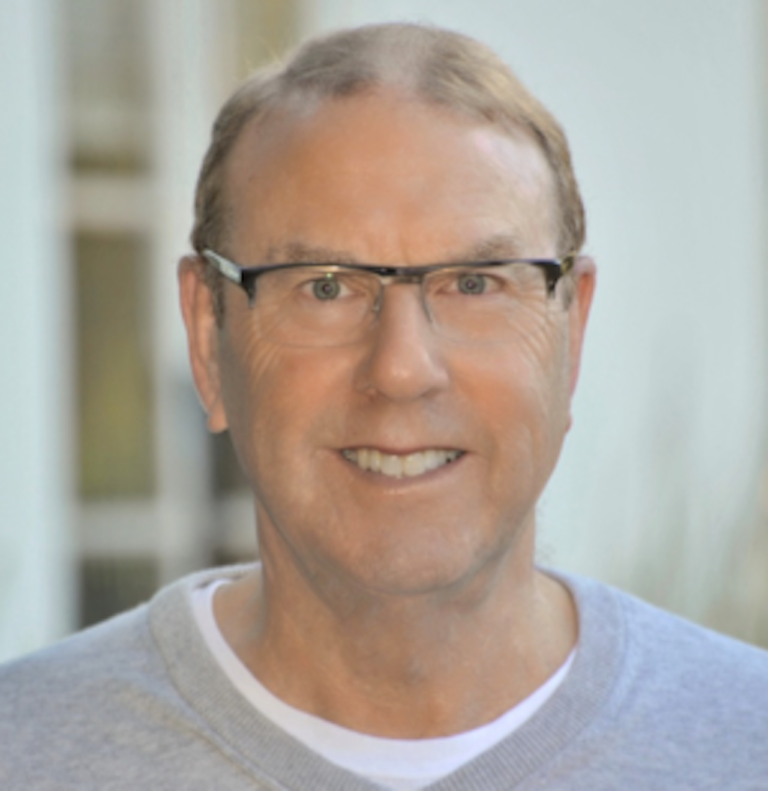
Today, Gottlieb, lead author on that first MMWR paper to identify HIV/AIDS, is a staff physician at AIDS Project Los Angeles (APLA) Health & Wellness and an associate clinical professor of medicine at the David Geffen School of Medicine at UCLA. The American Journal of Managed Care®(AJMC®) recently spoke with him to discuss the implications of his initial findings, how azidothymidine (AZT; now known as zidovudine) became an agent against this pandemic, appreciating the fear that permeated the field at that time, and vaccine and health equity, among other topics.

This interview has been edited slightly for clarity.

AJMC®: One of your principal conclusions in that first MMWR study was a possible cellular-immune dysfunction. The more extensive report months later in New England Journal of Medicine has been called one of the most prominent in the publication’s history. Did you have an indication of your findings’ implications?

GOTTLIEB: The short answer is, no. The longer answer is that what we were seeing was very different from anything I was aware of. It was very different. It was striking. And it was a distinction from previously known stuff, without being very eloquent. The demographics—5 gay men—in our experience raised the question of a sexually transmitted immune deficiency. But why? There were no known sexually transmitted immune deficiencies.

In the New England Journal of Medicine paper, we raised the possibility of cytomegalovirus, CMV, as the cause. But, of course, that was a chicken-and-egg phenomenon. The patients were excreting cytomegalovirus in their urine because they were immune deficient. So cytomegalovirus was not the cause. We did include a caveat in the discussion to the effect that there could have been some common exposure or undetected viral infection—I’d have to go back and look at it—some undetected microbial agent that could be the cause of the immune deficiency, based on the demographics.

Did I have an indication of the findings’ implications? A sexually transmitted immune deficiency would be a serious public health problem.

AJMC®: Each of the 5 men in your MMWR paper had some form of candidiasis. How important is mucosal immunity to virus prevention, particularly in someone with immunocompromised status?

GOTTLIEB: Well, it’s very important—but it’s complicated. Because mucosal immunity is complicated. It involves cells, it involves barriers, it involves local cells that might be susceptible to infection. It involves the presence of antibodies at the site, humoral immunity. It’s always important, but it’s virus dependent. In other words, for some viruses, just having antibody in the tissue may be sufficient to prevent infection. But that doesn’t seem to be the case for HIV.

HIV has a unique way of initiating infection. The portal of entry, the cells present in the tissue, probably are important in preventing HIV infection at the site of entry. Even today, 40 years later, we’re not sure what types of immunity might be necessary to induce to protect against HIV infection. And that’s why we still don’t have a vaccine.

But if your question pertains to COVID-19, for example, in someone who is immunocompromised, the data so far are kind of conflicting as to whether people with HIV have increased risk of contracting COVID-19. And they are somewhat conflicting with respect to the outcome. It does not appear that our patients with HIV, today at least in Western countries, have a poor prognosis with regard with regard to contracting COVID-19 and suffering serious consequences.

AJMC®: You were principal investigator of the UCLA site of the trial that first investigated AZT for use among patients with severe immune deficiency. Azidothymidine was shown effective in the lab, in that it suppressed HIV replication. Can you tell us how a failed cancer treatment become an investigative, eventually approved, agent against a virus of which little was still known at the time?

GOTTLIEB: It involved the determination to find a treatment. First, there had to be the will to look for something, and then it involved a stroke of luck. That’s really the truth.

Marty St. Clair, a scientist at then Burroughs Wellcome in Research Triangle Park, North Carolina,had an interest in retroviruses and developed a plaque assay in petri dishes with mouse leukemia cells that replicated with reverse transcriptase, the same the enzyme that’s necessary for HIV replication.If you’ll recall, in Françoise Barré-Sinoussi and Luc Montagnier’s initial paper, they show the rise of reverse transcriptase in their culture medium.

St. Clair tested numerous compounds in the library of compounds owned by Burroughs Wellcome, and one of them wasAZT.As she tells it—and she’s the best one to tell it—she came to the lab, looked at all the petri plates with agar and cells suspended in them. And there were a bunch of them where there was no lysis of the cells, the cells were surviving, and in all the rest of them, the leukemia virus had chewed up the cells. And she thought she’d made a mistake and not put the chemical in that particular set of petri plates. And her colleagues came in and verified that she had, in fact, done it all correctly. And AZT had protected the cells against destruction.

It was chance that Burroughs Wellcome had acquired this compound, a thymidine analogue, which could have been predicted to inhibit reverse transcriptase. It’s the kind of compound, an antimetabolite—a thymidine analogue—that might work against reverse transcriptase. Indeed, that’s what they found. And this was an important proof of principle that you could develop a drug against, or you could find a drug against, HIV.

At this time in history, there was only one antiviral drug on the market, and that was acyclovir cycle for herpes. There were a couple of other minor ones, but there was only one major one and that was acyclovir. And so Burroughs Wellcome was carving out a niche for itself as an antivirals company. And that’s why they jumped into this arena.

But as you’ll recall, there was no cure for the common cold at that time, and there still is no cure for the common cold. So taking on HIV, a new virus about what about which little was known, was a major challenge.

AJMC®: One reason you gave for joining APLA Health in 2019 was to address the increasing insurance-related costs (premiums, deductibles, co-pays). Costs for antiretroviral treatment (ART) average in the thousands of dollars per month. What are some ways persons living with HIV or those with a new diagnosis can overcome these prohibitive costs that may be preventing them from adhering to their current medication regimens or even initiating treatment?

GOTTLIEB: The first point I would make is that it is a bit of patchwork in the United States, state by state, with respect to what are called ADAP programs, or the AIDS Drug Assistance Program. For example, in California, it’s a very generous ADAP program, where there are no lines of people waiting to get on medication. In some states, at least as of a year or 2 ago, there were lists of people who were unable to get their medicine through ADAP, because the ADAP program was less generous or was less well funded. So for ADAP in California, anyone, even people who have no insurance whatsoever, can access medication through ADAP.

Other ways to access medication are through Obamacare [the Affordable Care Act]. And as a last resort for certain medications, pharmaceutical companies offer assistance programs for access to inexpensive medication, depending on the income level of the patient.

AJMC®: Will there ever be a time when the price points on these medications come down? Is that even possible?

GOTTLIEB: I think the price point on branded drugs is unlikely to come down. Once drugs become generic, the price point does come down. But not as much as it should.

In other words, the price point has come down for developing countries, remarkably. They’re able to provide drugs in developing countries at a very low price point. But in the United States, once the drug becomes generic, the price point tends to be not so far off the brand price. The reason for that isn’t clear to me.

It seems to me that if a drug can be made available in developing countries at a low price point, why does the American consumer pay so much more for the same generic?

AJMC®: Today’s younger generation knows of HIV as a treatable condition and does not know of the fear that surrounded HIV and the stigma experienced by those early patients. Can you discuss how that fear was experienced in the scientific community, or even expressed by scientists themselves?

GOTTLIEB: I think you have to go back to the very beginning. Young people, as you point out, do not appreciate the amount of fear, in general, that was out there among people who perceive themselves to be at risk for this disease. You only have to watch certain films to get an idea. I think that the best way for them to get an idea of what the atmosphere was like is to watch films like “Philadelphia,” “How to Survive a Plague,” “The Dallas Buyers Club,” “The Normal Heart,” and “Angels in America” to know what AIDS was like in the early 80s.

With regard to the scientific community, I have heard stories from researchers—and I have my own story—of experiencing an illness, which appeared to be viral, with fever and profound fatigue that lasted for months early on in the HIV epidemic. Paul Volberding, MD, in San Francisco has related a story of experiencing fear that he was going to bring HIV home to his family from the clinic. That all came on maybe a little bit later, maybe prior to the HIV test, probably 1983, 1984. The HIV test came about in 1985.

But early on, at the very beginning, we had no fear. We were perhaps naïve, but we carried on as usual. We did not take universal precautions. We didn’t gown up, we didn’t glove up, we took blood without gloves. That was probably out of error. And it was just dumb luck that there weren’t a lot of health care worker infections in the very earliest days.

In the lab, once we knew it was this virus, once HIV was discovered, it seemed the pattern of transmission seemed to be the same as that of type B hepatitis. We were pretty reassured by that and doubted that it was transmitted by any kind of aerosol or droplet—because hepatitis B is not transmitted by that route.

My wife at the time, her niece was having heart surgery in New York City as a child, and I advised the parents to donate blood for the child and not to take a chance on banked blood. It was probably 1982, 1983 and 83. Once the HIV test came out, and we all—researchers in the scientific community—took the test, I think there was a collective sigh of relief.

AJMC®: In 1996, Peter Duesberg asserted that HIV does not cause AIDS despite scientific evidence to the contrary. What message do you have for those who continue to deny that HIV and AIDS exist?

GOTTLIEB: Disinformation and a false narrative did not originate recently. Peter Duesberg and his colleagues were ahead of the time in disseminating misinformation and a false narrative, for unclear motives. Duesburg and the AIDS deniers did a huge amount of damage and undoubtedly cost peoples’ lives

People win the Nobel Prize for doing a very specific thing in the laboratory, which does not make them a global expert on anything other than that specific thing that they did. It does not, necessarily. Some may be polymaths who are brilliant in all aspects. But most have done a very specific thing for which they were well rewarded.

Peter Duesberg is flat wrong. One has only to look at the success of ART in changing HIV from a death sentence to a manageable condition with projected longevity for young people that approximates what their lifespan would have been without HIV. The only thing different is the fact that they are treated with medication that addresses HIV specifically and not any other virus or factor in their lives.

My message to them is to stop it.

AJMC®: What ideal circumstances need to be present to develop a safe vaccine that both prevents new HIV infection and reduces viral load in the blood? In light of drugs that enable persons living with HIV to reach undetectable levels, is such a vaccine possible?

GOTTLIEB: I think you’re talking about 2 different kinds of vaccine. One vaccine that prevents new infection and a vaccine that reduces viral load in the blood are 2 different animals. The first is a preventive vaccine. The second is a therapeutic vaccine. The characteristics are probably going to be very different.

A therapeutic vaccine, the hope would be that it would substitute for medication or that you could use less medication—if you could somehow stimulate the immune system to be more effective against an existing HIV infection. A preventive vaccine would act at the mucosa and prevent the early steps by which HIV can establish infection. Whether it infects the dendritic cells or local CD4 cells at the mucosal level, it would have to interfere with the steps that initiate infection.

One important lesson is the success of pre-exposure prophylaxis [PrEP] with medication. People at risk for HIV can take antiretroviral medicine every day. It’s remarkably effective at preventing new HIV infections. We don’t know exactly how that works, but it probably has to do with a tissue level of drug.

In early steps, an infection may start, but it’s stopped in its tracks by the presence of medication at the portal of entry. So I think that here are possibly some lessons for the vaccine folks from the success of pre-exposure prophylaxis with medicine.

Is such a vaccine possible? Well, that’s a therapeutic vaccine. Sure, it’s possible. But of course, once a person has HIV and they’re on medication, their immune system can be reconstituted—but it’s not normal, it doesn’t normalize. Folks with HIV on medication are very immune competent, but it is not a totally normal immune system; there’s still dysregulation caused by whatever damage happened early in the infection.

In the gut, for example, 90% of lymphoid cells in the gut disappear in the first weeks of HIV infection. So years later, the immune system is still isn’t normal. You have to have a therapeutic vaccine that is very potent, that can overcome the residual immune deficiency that patients have. That’s different from a preventive vaccine, which you would be giving to folks who are not HIV infected.

AJMC®: What are some lessons to be learned from the early years of the AIDS epidemic that you believe are must-knows for future infectious disease clinicians?

GOTTLIEB: Infectious disease clinicians can be an important voice in supporting the public health infrastructure. Infectious disease clinicians go off; they get this wonderful training; they read Mandel, the book; they take their boards; they go out and they focus just on patients. Public health to them sometimes is a nuisance.

The public health people call them and say, “Your patient has a positive syphilis test,” and the infectious disease doctor replies, “Okay, I’ll do it. I’ll get him in, I’ll treat it.” But support for public health infrastructure in this country is insufficient. One only has to look at the HIV epidemic and SARS and COVID-19 to know that.

Maybe the 2 pandemics will send the message to those who are responsible to beef up public health infrastructure. Infectious disease clinicians can be part of that effort as advocates.

I don’t think infectious disease clinicians held a great deal of prejudice. Yes, there was prejudice, but 2021 and 1980 are a long time apart. There’s been softening of attitudes over these 40 years. Stigmatizing or blaming a patient or blaming a group of people for disease is unfair. Prejudice is unfair.

There’s an outbreak of a disease in Wuhan, China, and blaming all people of Asian ancestry for that, on the part of the public, is absurd. But it’s gone on for centuries. As you know, syphilis was the French disease. Even though it originated elsewhere, it became known as the French disease. HIV early on was characterized as a gay disease, but not by infectious disease clinicians.

It was by the public that didn’t want to see it as their problem. They were so frightened of it that they wanted to believe that it was going to be contained in a certain population of people—unfortunately an already highly stigmatized group of people.

For infectious disease clinicians, I think HIV/AIDS has taught them some lessons, in terms of their politics, frankly. I think most people who’ve trained in this era are now familiar with the lifestyles of gay men and are more comfortable with them. That perhaps is one of the silver linings of all this: Sexual health and LGBT health are more mainstream than they were 40 years ago.

There will still be people who will object and who will refuse to treat, but an LGBTQ person wouldn’t want to be treated by those people. And if they sense that, they should simply look elsewhere.

The good news today for younger people is that there is life after HIV, even if they’re diagnosed. There are also lots of options. It is no longer a death sentence.

PrEP is underutilized. PrEP is primarily utilized by White gay men. In the absence of a vaccine, there’s a great need to make PrEP available to underserved populations, to people of color. The impediments to doing that really need to be worked on.

Of course, the epidemic goes on globally. There’s been some success, remarkably, in providing HIV medication in developing countries. The HIV epidemic was a major message about health equity and set the stage for institutions, like the Gates Foundation, to create global health initiatives. And that’s commendable.

Today, we’re facing the same sorts of issues with vaccine equity. But the example of HIV, I think there was a compelling moral argument for providing medication to underserved countries, where at one time some people said, “Oh, people in Africa can’t take pills. They don’t have clean water.” And yet adherence in developing countries is outstanding.

History has proved the naysayers wrong.
Tony Perkins: Military Drafted Into Biden’s LGBT Parade — The Patriot Post – Patriot Post

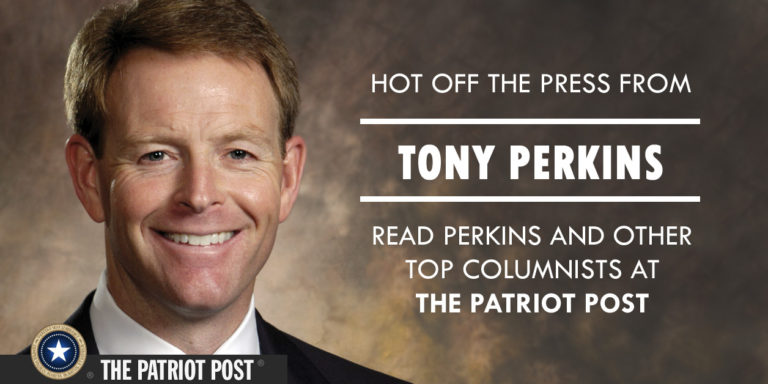
Forget the screaming children on the Rio Grande, the cyber attacks on our meat plants and pipelines. Don’t worry about the overseas unrest or the price hikes on gas and food. The serious issues will have to wait. Because there’s only one thing on the president’s mind right now — and that’s Pride month.

It’s been four years since Americans have had to live through an administration’s month-long rainbow love fest. Of course, Joe Biden, who made LGBT activism his number-one priority, didn’t wait for June to start his radical government revolution. From the minute he stepped into the Oval Office, the perversion of education, health care, our troops, foreign policy, taxpayer spending, facilities, school sports, and social services has been at the top of his to-do list. Already, the president brags in his proclamation on LGBT Pride month, he’s managed to saturate his administration with an army of LGBT extremists. “Nearly 14 percent of my 1,500 agency appointees identify as LGBTQ” — giving the radical agenda a foothold in every level of government.

Making matters more outrageous, Biden has decided to order everyone in a military uniform to play along. The Pentagon, which is so busy grand marshaling the president’s Pride parades that it barely has time for real work, announced Tuesday that it might consider allowing rainbow flags to be flown on installations along with the stars and stripes. It would be a dramatic departure from the Trump administration, which banned bases from flying anything but Old Glory and the POW/MIA colors. Apparently, the White House wants to add to the controversies it started in the State Department by unfurling the rainbow at embassies around the world where the symbol is seen as offensive.

In 2020, under Trump’s DOD, the policy was simple: “The flags we fly must accord with the military imperatives of good order and discipline, treating all our people with dignity and respect, and rejecting divisive symbols,” Defense Secretary Mark Esper said. Now, with Biden launching a full-scale rainbow offensive, some members are pushing back. The idea of turning our flagpoles into an LGBT infomercial is so contentious that Congressman Jeff Duncan (R-S.C.) introduced a bill called the Old Glory Only Act. “The United States flag is the single greatest symbol of freedom the world has ever known, and there’s no reason for anything but Old Glory to be flying…” he insisted.

But the flag is just one of Biden’s targets. The military chaplaincy is another. In a sign of just how radicalized our branches have become, some Leftist leaders are calling for the ouster of anyone in a religious role who doesn’t affirm the sexuality or identity of any soldier. “I believe the Army Chaplain Corps has failed to safeguard the wellbeing, dignity, and value of our LGBTQI+ soldiers,” wrote Major David Evans in the Army Times. “A chaplain is not a government-paid missionary, and an individual chaplain’s right to religious freedom cannot override any soldier’s right to be valued and cared for.”

It used to be that people who identified as LGBT had to hide their illicit sexual relationships in the military. Now, this administration thinks it’s time for chaplains to hide theirs — with God. “This is all about having a woke military,” FRC’s Lt. General (Ret.) Jerry Boykin said. “From the beginning of the chaplain’s corps in our military — which started all the way back in the Revolutionary War — chaplains have never been asked as a policy of the Department of Defense or of the military to violate their own conscience or to compromise on fundamental issues of their faith, regardless of whether they were Jewish, Catholic, Protestant, or whatever they were. And now, because we’re bringing in this Marxist theology,” he warned, we’re taking away the spiritual tools these men and women need to do their jobs.

In order for that extreme ideology to take root, these Leftists understand that they have to remove religious convictions and views. And that’s what is afoot here, as it pertains to the military chaplains. People like Major Evans want you to believe that the primary job of a spiritual leader in the ranks is to celebrate or encourage the troops’ harmful behavior. That’s absolutely false. Chaplains are there to attend to the spiritual needs of our soldiers, airmen, sailors, and Marines. And that oftentimes means telling them the truth — whether they want to hear it or not.

Regardless, the military’s job isn’t to champion causes. It’s to fight and win wars. So the more of this LGBT advocacy that we see, the more vulnerable our country becomes. Just this past week, a group of almost 40 House Democrats introduced a piece of legislation that would stop the DOD from stationing military members with trans-identifying children in any state or country that doesn’t give them access to mutilating surgery or hormone treatments. That would include places like Arkansas, where they’ve outlawed experimentation on minors. In other words, the Pentagon would let a son or daughter’s LGBT preferences get in the way of a servicemember’s deployment! How on earth does that improve military readiness?

Barack Obama spent eight years using our military as a mule for his social agenda. Now, his second-in-command is picking up right where he left off — wasting time and money on political distractions that aren’t just devastating for people in uniform, but for America’s mission at large.

Originally published here.


Conservatives Score Big against the NCAA

For the refused-to-be-canceled crowd, it was a headline to celebrate. “The NCAA threatened states over anti-transgender bills,” the big print of the Washington Post read. “But the games went on.” It was the surest sign in a post-Georgia, Coke-boycotting world that fed-up conservatives were the newest force to be reckoned with. It’s also the most recent evidence — out of piles of examples — that the Right side may be winning the woke wars.

For the far-Left, the retreat of a major sports league is a public defeat that they can’t seem to reconcile. After 2016, when the NCAA was the most powerful leverage liberals had in states like North Carolina, they’d begun to count on these hard-core allies to help them beat back local attacks on their often dangerous LGBT agenda. It worked until recently, when Americans — sick of being force-fed transgender politics — suddenly decided to take the momentum from their stand on election reform and start applying it across the board. Their unofficial mantra — refuse to be intimidated — began working. Suddenly, the tough talk about retaliation from corporations and other organizations were being exposed for what they were: empty threats from big-mouthed bullies.

Just two months ago, the NCAA had promised to boycott states that protected girls’ sports or banned gender experimentation on minors. That all fell apart just a few weeks later, when so many states had passed conservative legislation that the league finally realized it had nowhere to go. Suddenly, tournaments that weren’t supposed to be awarded to places like Arkansas, Alabama, and Tennessee got the news that they would still be hosts after all.

GLAAD and other LGBT groups, who are used to these leagues’ blind allegiance, have been hysterical ever since. They’ve accused the NCAA of “going back on its word” to choose locations that were “safe, healthy, and free of discrimination.” Human Rights Campaign President Alphonso David had even harsher words, insisting that the “NCAA should be ashamed of themselves for violating their own policy…” Their “failure to take action here,” he went on, “means that they are part of the problem.”

Internally, the hand-wringing at places like HRC has to be even worse. For years, the LGBT crowd has relied on scare tactics to move their agenda forward since it’s always lacked broad public support. If the NCAA won’t do its bidding, then the damage — especially now, as the demand for these bills keeps growing — is severe. In a letter from far-Left activists to the NCAA, Athlete Ally asks, “What changed?” One thing did, the Washington Times points out: the states that are passing these laws “are no longer outliers.”

In Florida, the latest state to protect girls’ sports, the threat from the NCAA more than backfired. Instead of frightening leaders away, it motivated conservatives to pass a bill even faster. The governor told one news anchor that he remembers the day the letter from the sports league was issued. “I called the speaker of the House in Florida and said, ‘Did you hear what they said?’” And he replied, “Now we’ve definitely got to get this done.” There, as in other states, the rally cry seemed to be, “We’ll show them!”

And to the delight of common-sense Americans all across this country, they have. Last week in Louisiana, despite the governor’s warnings, the legislature passed another bill to save girls’ sports by bipartisan, veto-proof majorities: 29-6 in the Senate and 78-17 in the House. Then, in a major punch to the Left’s gut, Oklahoma — one of the few states that was openly worried about the NCAA’s threat — realized the league was bluffing, went back to the drawing board, and passed its proposal out of the House.

When Oklahoma Rep. Justin Humphrey (R) realized that the NCAA was scheduling tournaments in states with policies based on biology, he said, “I kind of laughed.” LGBT activists were appalled. “It was really scary to know that so many lawmakers in Oklahoma [saw] this as a reversal to the NCAA’s earlier statement,” one said. “That had been the only thing that persuaded folks [to back off these] girls’ sports bills.”

When the NCAA announced that Florida would host a softball championship this spring, Republicans could barely contain their glee. “I guess the NCAA boycott of Florida is over after two weeks,” state Rep. Chris Latvala tweeted. “Go Knights!” The news for conservatives was even sweeter when the state’s bill became law on the first day of LGBT Pride month. Turns out, the tug of the Left may be strong, but so is the $730 million in revenue from the Southeastern Conference. Our influence as red states, Texas Governor Greg Abbott (R) pointed out, is bigger than we think. “Will they even be able to have sports events anymore in the United States [if they boycott us]? I don’t think so.”

In the end, Beth Stelzer, president of Save Women’s Sports, says, most of these states would have moved forward even if it did cost them a few collegiate events. They, like the majority of Americans, had already made up their minds: “We need to do the right thing and stand up for females. People over profits. Facts over feelings.”

Who would have thought at the start of this legislative season that protecting girls’ sports would be the issue that separated the leaders who had courage and the leaders who are cowards? But it did.

Originally published here.


This is a publication of the Family Research Council. Mr. Perkins is president of FRC.

Game Of Thrones’ Sophie Turner has fans celebrating proud LGBT post – Metro.co.uk

Sophie Turner.
Sophie’s proud Pride Month post is everything (Picture: Michael Tran/FilmMagic )

Fans have heaped all the praise on Sophie Turner as she shared a proud Pride Month post this week.

The Game Of Thrones star – who was recently confirmed to star in the adaptation of The Staircase – had many wondering whether she was dropping some major hints as she shared a series of stickers on her Instagram celebrating all things LGBT+.

Echoing the kind of sentiments we’re all about, the actress – who shares a daughter with husband Joe Jonas – wrote in her post: ‘It’s muthaf***ing #pride month babaaaayyyyy (sic)’

Alongside the text, Sophie added a series of stickers, one of which was a heart in the colours of the bisexual pride flag alongside the words ‘bi pride’.

A similar sticker with the colours of the LGBT+ flag read ‘gay pride’, while others included a rainbow and a character riding a bicycle alongside the phrase ‘move, I’m gay’.

That one is whole vibe.

sophie turner joe jonas
Sophie is married to Joe Jonas (Picture: Getty)

The final sticker read: ‘Time isn’t straight and neither am I.’

And believe us when we say fans of Sophie’s were gasping as they wondered whether Sophie’s post was more than a simple shout-out to the community.

One perplexed punter wrote on Twitter: ‘Waiiiiit a damn minute… is this Sophie Turner coming out as bi ?? Nothing but respect for the queen in the north.’

Another, who may have been jumping the gun, was all about the celebration, as they wrote: ‘SOPHIE TURNER SAID I RESPECT THE STRAIGHT COMMUNITY BUT IT AINT ME.’

While Sophie hasn’t popped a label on anything – and frankly, fair play – one fan on social media pointed out it’s not the first time the Sansa Stark actress had hinted she wasn’t straight, following a 2019 Rolling Stone interview in the wake of her engagement to the Jonas Brothers singer.

She’d said: ‘I was fully preparing myself to be single for the rest of my life. I think once you’ve found the right person, you just know.

‘I feel like I’m much older a soul than I am in age. I feel like I’ve lived enough life to know. I’ve met enough guys to know – I’ve met enough girls to know.’

When pressed on what she meant, Sophie explained: ‘Everyone experiments. It’s part of growing up. I love a soul, not a gender.’

Honestly, could we have more love for our Queen of the North?

Metro.co.uk contacted reps of Sophie for comment.

MORE : Sophie Turner joins cast of crime series The Staircase after gripping Netflix documentary

MORE : Dermot O’Leary shocked by ‘how little notice’ travellers are receiving as Portugal is taken off green list

Kellogg’s introduces LGBT-themed cereal for Pride Month: Protecting our kids and proclaiming our faith – Denison Forum

Kellogg's introduces LGBT-themed cereal for Pride Month: Protecting our kids and proclaiming our faith
© pongsakrit/stock.adobe.com

Like many Americans, I grew up eating Kellogg’s cereals. Apple Jacks, Frosted Flakes, Fruit Loops, Raisin Bran, and Special K were regular parts of breakfast in my home. When our sons were children, they became as familiar with them as I was.

Their children, however, are growing up in a very different world.

Kellogg’s recently made this announcement: “Kellogg Company’s Latest Collaboration with GLAAD Unwraps Why ‘Boxes Are for Cereal, Not for People.’” Their statement includes the assertion: “No matter who you are, who you love, or what pronouns you use, you’re too awesome to fit into a box.”

Rugrats will feature a lesbian mom

Kellogg’s timed its announcement to celebrate Pride Month, which CNN defines as the month “when the world’s LGBT communities come together and celebrate the freedom to be themselves.”

Related to this theme, the children’s cartoon Rugrats is being relaunched. This time Betty, the mother of two of the main characters, will be portrayed as a lesbian single mom. Not to be outdone, Nickelodeon has released a video by its kids’ program Blue’s Clues & You! that takes place at a Pride parade. It is narrated by an animated version of drag performer and activist Nina West.

The video includes families with two moms, two dads, trans-identified members, and “ace, bi, and pan” parents. One of the characters displays scars from surgery used to change its gender from female to male. The narrator sings, “Love is love is love you see, and everyone should love proudly.” West adds, “Allies to the queer community can love their friends so proudly.”

One more story on our theme: the San Francisco Giants will become the first Major League Baseball team to play in Pride uniforms when they take the field tomorrow. Their on-field caps will feature the “SF” logo with colors depicting the Progress Pride Flag. In addition, each jersey will have a patch on the right sleeve featuring the design.

If I wanted to indoctrinate children with LGBTQ ideology, I can think of no more effective partners than Tony the Tiger and other cereal box icons, beloved children’s television shows, and sports teams.

Choosing between Christ and culture

Today, parents and grandparents are forced more than ever before in American history to make a choice between popular culture and biblical morality. We have three options:

One: The Bible is wrong when it forbids same-sex relationships and teaches that gender is binary and “assigned” by God at birth. For a discussion of this false claim, see my paper, “What does the Bible say about homosexuality?”

Two: We are wrong in interpreting the Bible as we do. God’s word does not speak to monogamous, loving same-sex relationships, gender dysphoria, or other issues addressed by LGBTQ activists today. For a response to this false claim, see my paper, “How to defend biblical marriage: What you need to know about homosexuality, same-sex marriage, and the Bible.”

Three: The culture is wrong when it celebrates sexual activity that the Bible forbids. This is the position taken by Christians across twenty centuries and the position taken by the vast majority of Christians outside the Western world today.

Why proclaiming “Jesus is Lord” is dangerous

If you take the third position, as I do, you have never been more castigated and condemned by your culture than you are today. If you teach your children and grandchildren to stand for biblical morality, you are raising them to be rejected by many at school and in society who will condemn them as hateful bigots.

It is far easier to go along to get along, to hold our beliefs in private without proclaiming and defending them in public, to teach our children and grandchildren that they should separate what their faith says from what the culture demands that they believe.

After all, we can say to ourselves, “We can’t legislate morality. The Bible teaches that adultery is wrong, but we don’t have laws forbidding it.” People should be free to do what they want to do, or so we’re told.

Here’s one problem among many with this response: Our culture does not restrict its rejection of biblical truth to sexual morality. It also insists that we abandon biblical truth regarding the sanctity of life by embracing abortion on demand. It wants us to condone euthanasia whenever and wherever people seek to end their lives. It views evangelism and missions as the hateful imposition of our beliefs on others.

The simple claim “Jesus is Lord” is rejected as exclusionary and condemnatory toward other religions. The bottom line: I cannot think of a single claim made uniquely by Christianity that is not under attack on some level by our anti-Christian culture.

“Teach them diligently to your children”

As a result, those of us who follow Jesus and want our children and grandchildren to follow Jesus will need to be more courageous and diligent than ever.

God tells us that his words “shall be on your heart. You shall teach them diligently to your children, and shall talk of them when you sit in your house, and when you walk by the way, and when you lie down, and when you rise” (Deuteronomy 6:6–7).

While it is true that Christians are under greater attack for our faith than ever, the greatest victims of our culture’s rejection of biblical morality are the millions of people who are being deceived. Let’s not let our families be among them.

As our culture uses Pride Month to proclaim that “love is love,” let’s use it to teach our children and grandchildren that “God is love” (1 John 4:8). Let’s teach them to speak the truth in love (Ephesians 4:15) with courage and grace.

And let’s remember Charles Swindoll’s observation: “Each day of our lives we make deposits in the memory banks of our children.”

What deposits will you make today?

Video shows a gay family rescuing an alleged homophobic couple who had harassed them when their boat burst into flames on a Washington lake – Yahoo News

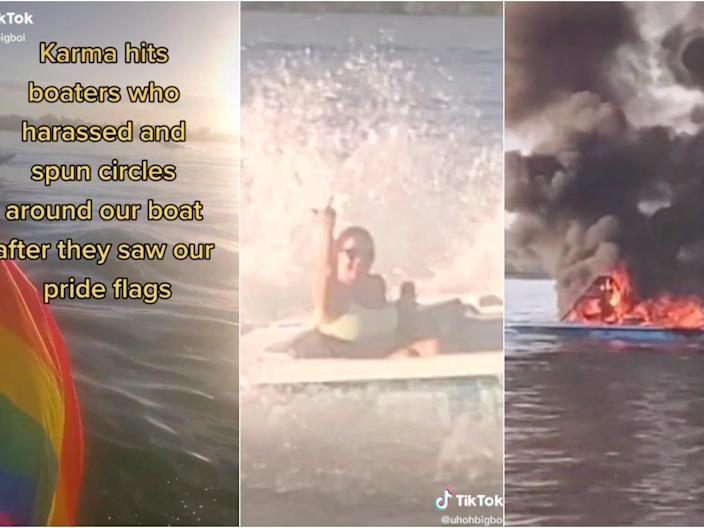
Boaters harass family flying LGBTQ flag
A viral TikTok video shows a boat explode shortly after the passengers harassed a family flying LGBTQ flags. @UhOhBigBoi/TikTok
  • A family of four was targeted for flying Pride flags on their boat, one of the passengers told Insider.

  • A blue vessel circled the family and shouted homophobic abuse, the passenger said.

  • The family rescued the couple after their boat burst into flames. They never thanked them for it.

  • Visit Insider’s homepage for more stories.

“Karma hits boaters who harassed us and spun circles around our boat after they saw our pride flags,” reads the caption of a viral TikTok video with over 10 million views and 2.5 million likes.

The video, shared by user @UhOhBigBoi, shows a woman on a blue vessel flipping off the passengers of a boat flying an LGBTQ pride flag on Moses Lake, Washington last Sunday.

The woman continues to keep her middle finger raised while circling the other vessel before her boat eventually bursts into flames, the video shows.

One of the passengers on the boat with Pride flags told Insider that the woman had repeatedly shouted “gays” at him and his family.

“We reviewed what footage we had and confirmed our suspicions that they did appear to be directly badgering us simply for displaying our LGBTQ pride flags,” Robbie, who did not wish to share his last name for safety reasons, said.

Read more: These LGBT finance pioneers are helping tackle the industry’s ‘bro culture’ and fighting to bridge gaps in inclusion

Robbie, a trans man, was tubing with his girlfriend, his brother, his brother’s partner, and their emotional support dog when the incident took place.

The family became alarmed after the boaters, seemingly unprovoked, circled them “six or seven times” and created waves around them.

“My brother turned to me and said, ‘They are doing this to humiliate us. They’re causing waves to rock us back and forth and we can’t say anything or they’ll keep doing it,'” Robbie said.

Moments later, the family heard a “loud backfire and a sputter” come from the other boat and saw a large cloud of black smoke arise from it. “At this point, we all actually felt quite satisfied with how the events turn out since no one on our boat was hurt and their damage seemed minimal,” Robbie added.

But, shortly after, the family became increasingly concerned after hearing a loud explosion and seeing flames. The boaters then began to scream and beg for help.

Another TikTok video shows the boaters, one of whom is crying, being rescued by the targets of their abuse.

The family helped the wailing passengers onto their boat.

“In complete shock, we kept to ourselves mostly as our driver attempted to calm the female passenger and have them delivered to their friends of which they insisted we take them to,” Robbie said.

“The passengers were quite rude, shouting over us, ignoring my inquiries about their well-being when on the 911 call and smoking a Vape pen on our boat without even so much as asking if they could; several passengers of our boat have asthma,” he added.

The boaters then exited their vessel without saying “thank you,” according to Robbie.

The Grant County Sheriff’s Office said on Wednesday that Robbie and his family had been interviewed as part of an investigation into the incident.

“The person who recorded the video and two other people on the vessel that was being circled were adamant about not wishing to pursue charges against the people on the blue vessel that burned,” Sheriff Tom Jones wrote on Facebook.

“We respect their expectation to not be publicly named as well as the decision not to pursue criminal charges in this matter. We have privately thanked them for their heroic efforts in rescuing the people who jumped from the burning boat,” Jones added.

“The Grant County Sheriff’s Office does not stand for intolerance of anyone and will investigate those cases accordingly” the statement concluded.

Read the original article on Insider

Leilah Babirye’s blowtorched trash sculptures of queer Ugandan royalty come to London – Art Newspaper

Leilah Babirye was forced to flee Uganda in 2015 after being outed as a lesbian in the press Photo by Xiao Mina. Courtesy Leilah Babirye; Stephen Friedman Gallery, London and Gordon Robichaux, New York

The Ugandan artist Leilah Babirye began carving wooden masks just over a decade ago after attending a concert with a group of LGBTQ art students in Kampala. Upon entering the venue, Babirye was surprised to observe that during the event many of her peers wore traditional West African masks to conceal their identities. “This art form suddenly took on a new meaning,” she says. “I was deeply saddened to see this was the reality we lived in.”

That reality would eventually prove life-threatening once Babirye was outed as a lesbian by a local newspaper in 2015 after collaborating with a queer activist group. Forced to flee Uganda’s severe anti-LGBTQ legislation, she was granted asylum in the US, receiving support from human rights organisations and artists including Kehinde Wiley who paid for her plane ticket. Settling in Brooklyn in 2018 she soon met the dealer Sam Gordon, the owner of Gordon Robichaux in Manhattan. She has since had two solo shows at the gallery of her ceramic, wood and found object sculptures of semi-abstracted masks, busts and figures that bear weathered surfaces and draw from a range of African and European artistic traditions.

Leilah Babirye, ‘Namasole Ndwaddewazibwa, Mother of King Kamaanya from the Kuchu Royal Family of Buganda’, (2021) © Leilah Babirye. Courtesy the artist and Stephen Friedman Gallery, London. Photo by Mark Blower

The largest of these to date, a totemic 13-ft-tall black ceramic work, will debut at her first European solo show at Stephen Friedman Gallery during London Gallery Weekend. Based around the royal families of Uganda, most of the show’s sculptures are named after various queen mothers who historically held dominant positions in society. Somewhat uniquely, Babirye says, Uganda’s monarchical clan system required a king to be part of his mother’s clan, while forbidding him from choosing a wife from his own, meaning rulership is passed around groups, promoting “harmony and respect”.

Donning gender-bending beards and ornaments typically associated with trans femme groups, the works are resolutely queer and celebrate kinship among the kuchu community, a “secret Lugandan word”, Babirye says, that LGBTQ people use to refer to one another.

Leilah Babirye, ‘Nansamba II from the Kuchu Ngabi (Antelope) Clan’, (2021) © Leilah Babirye. Courtesy the artist and Stephen Friedman Gallery, London. Photo by Mark Blower

Other sculptures, including one named after the late 19th-century King Mwanga II of Buganda who openly married men and kept harems of page boys, further exemplify the tolerant attitudes towards non-heterosexual relationships held across parts of Africa prior to European colonisation. When Uganda became a protectorate of the British Empire in 1894, its settlers refused to acknowledge the elevated role held by Black women, while also establishing rigid and harmful categories for defining sexuality. For Babriye, the unveiling of these queer African royals in the capital of the former British Empire is a chance to subvert existing power structures. In doing so, she revisits a history in which people like her were accepted, rather than persecuted.

Much of the work is composed from debris that Babirye scavenges from the streets of New York, such as bicycle tires that she braids into hair, or discarded chains and tin cans that she welds and hammers into earrings. Beyond giving the work a rough, industrial materiality, the choice of repurposing waste has a deeper symbolic resonance. In Luganda, a common pejorative slang for gay people is ebisiyaha (trash).

Detail from ‘Namasole Namaganda, Mother of King Mutesa II from the Kuchu Royal Family of Buganda’, 2021 © Leilah Babirye. Courtesy the artist and Stephen Friedman Gallery, London. Photo by Mark Blower.

The wooden sculptures in the London show are typically burned with a blowtorch that chars and blisters the surface, a technique that calls back to the artist’s days studying at Makerere University in Kampala. “When I first began making art that addressed my sexuality, my professors would dismiss my work telling me it was worthless and that made me so frustrated. So I began burning my art to destroy it. But in the process it began to look beautiful, like it was reborn.” To this day, Babirye’s codename in the Ugandan gay community is “Burns”. “If someone calls me Burns, it means they truly know who I am. It means they are my real family.”

Leilah Babirye, ‘Abambowa (Royal Guard Who Protects the King)’, (2021) © Leilah Babirye. Courtesy the artist and Stephen Friedman Gallery, London. Photo by Stephen White & Co.

But whether she has found this sense of kinship in the US is less certain. “The truth is I come from a very different place and the queer culture here is foreign to me. We do things differently back home, things aren’t so fast…” Babirye says that she has tried to maintain long distance girlfriends or date in Ugandan expatriate communities, but inevitably, the vast majority of lesbians she meets are still closeted. Her work too, she says, is more readily understood by Western audiences who are more receptive to the “ugliness” and “roughness” of these genderqueer figures.

The sense of dissonance that comes from being exiled from one’s home and caught between cultures might explain why Babirye creates groups of statues that resemble a large extended queer family. “As an artist, I try to create my own community and right now, clay is my best friend,” she says.

Painting too affords her a similar sense of comfort, and shown at Stephen Friedman are works on paper depicting faces of “visibly queer people” that she has seen in public places in Kampala such as railway stations. Much like her sculptures, which she builds up gradually with no sketches, Babirye says that she tries to reimagine these people with no photographic references, allowing their spirits “to speak through her, and in the process befriending them”.

Leilah Babirye, ‘Kuchu Ndagamuntu (Queer Identity Card)’, 2021. © Leilah Babirye. Courtesy the artist and Stephen Friedman Gallery, London. Photo by Mark Blower

More recently, Babirye has been focusing her attention on African queer-rights advocacy, using her growing public platform to pressure Ugandan politicians to overturn the country’s draconian laws against homosexuality. She mentions that while comments on her social media posts are often vitriolic, she has also received an overwhelming amount of positive messages from LGBTQ Ugandans and from the wider queer community, who celebrate the progress that is being made.

“In my last body of work I used chains and locks because I was representing how trapped I once felt. Now I have started to use bicycle tyres because I’m thinking about moving forward, about progress” Babirye says. “I don’t want these works to just dwell on the pain of my community. I want them to elevate us as royalty—a testament to our beauty, of what we can offer to the table.”

Leilah Babirye: Ebika Bya ba Kuchu mu Buganda (Kuchu Clans of Buganda) II, Stephen Friedman Gallery, London, 4 June-31 July

Check out The Art Newspaper’s guide to London Gallery Weekend for recommendations on the best exhibitions to see during the three-day event, top trends and commentary

Click here for the full list of galleries taking part in London Gallery Weekend

The Art Newspaper is an official media partner of London Gallery Weekend

Regina public school principal comes out as gay to inspire hope, lead by example – CBC.ca

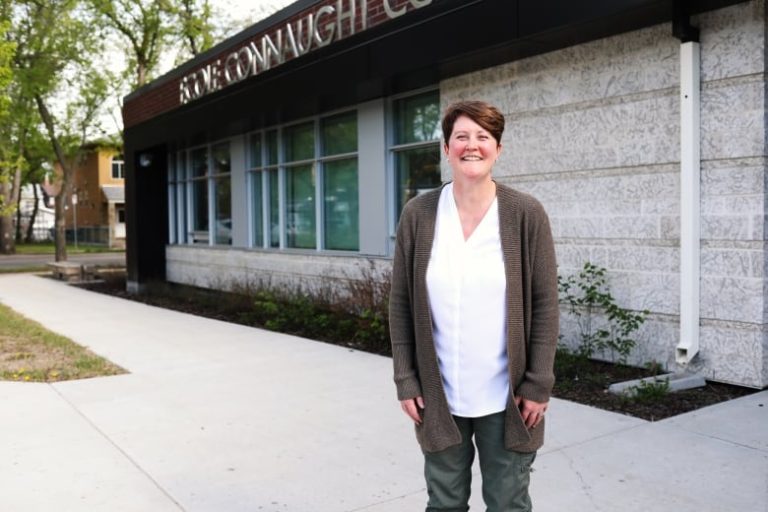
Krystal McPherson sat in the meeting room for Regina Public Schools one week ago to introduce herself as a member of the board’s diversity steering committee. But for her, it was more than that.

“My heart was racing. I was terrified and I knew that there was some support,” McPherson told CBC Saskatchewan. 

In an emotional speech to the board, McPherson said she’s dedicated her 25-year career to creating safe spaces for others and was now ready to truly be herself.

“Coming to live my truth as a gay woman has been liberating, a sense of coming home. But it has also been laden with fear and uncertainty. Would I lose my job if people found out?” McPherson told the board on May 25. 

“I no longer want to be afraid or othered or silenced, so I’m making a choice to step out of the shadows and hopefully lead by example. I know how important it is to be an ally, but now I know it’s even more important to be a visible gay woman.”

Krystal McPherson said she felt relief after coming out to the Regina Public Schools board and that she needed to live her truth. (Heidi Atter/CBC)

McPherson told the board she wanted to show people that it’s okay to be wholeheartedly who you are and that all people belong and matter in the public school system. 

Decision comes after Pride motion shut down 

McPherson said she wanted to join the diversity steering committee because she has a lot to learn about anti-racism. She also said it was a response to the defeat by the previous school board of a controversial motion made in 2019 that would have allowed schools to celebrate pride how they see fit.

“I was so shocked and I couldn’t believe that it had been defeated. And so once all the hurt and the fear subsided, I just said to myself, ‘I can’t sit around and wait in the shadows for the change. I have to be a part of the change,'” McPherson said. 

McPherson was in those shadows for almost her entire life. She said it was due to fear. Fear about her children and how they’d be treated, how her family would react and if she would have her job as an educator if she were out. 

“It’s one thing to make a decision and know that you could be the one that has the consequences. But when others can suffer the consequences, it’s just so much fear there,” McPherson said. 

Krystal McPherson says she needed to live her truth and her supportive partner helped provide that safe place. (Heidi Atter/CBC)

McPherson said she has been thinking about coming out for some time. She was going to do it in 2019, until the Pride motion was shot down.

However, after working up the courage, she decided now was the time. 

“As long as we’re hiding, it’s so dehumanizing. It’s like we don’t exist. And the truth is we do,” she said. “I needed to live my truth. I have a very loving partner and she’s a phenomenal human and she’s the personification of love and warmth and kindness.

“She’s my soulmate … she is the primary reason for that strength.” 

McPherson said she was tired of living in fear and of the shame of staying silent. She said she feels a sense of relief after coming out, and no longer has the sense of looking over her shoulder waiting for the other shoe to drop.

“I hoped that if there were children and families or honestly, young teachers, new teachers, old teachers who were in the same position as me, that they might feel like they had a safe place,” McPherson said. 

McPherson has been receiving a lot of feedback since coming out to the board. She said people she doesn’t even know have been emailing her encouraging messages and parents have told her they feel their kids are safer now because she’s there.

McPherson stressed that she is still just a typical person and being gay is just one part of her life. She said she hopes one day being gay or LGBTQ is more normalized. 

For the month of Pride, Connaught Community School has a sign reading ‘The world is a family with a rainbow of friends!’ (Heidi Atter/CBC)

When looking at the future, McPherson said she’s hopeful. The next generation is questioning gender stereotypes and questioning gender as a construct, she said.

Heading into Pride month, McPherson said people should realize there are many LGBTQ staff, teachers and students.

“I hope that kids know and people know that you can be and do anything if you’re gay or if you’re trans or no matter what your diversity is, you can. You can be the principal of the school one day,” she said.

“There is nothing wrong with who you are. You are a beautiful soul and you deserve to have a beautiful life.”

The problem with a U.S.-centric understanding of Pride and LGBTQ rights – The Washington Post

0

The East German experience with gay liberation was yet more surprising. Although most Westerners assumed such activism could not possibly have been successful in a communist state, by the end of the 1980s, East Germany could realistically lay claim to being one of the most sexually progressive countries on Earth. In the 1970s, gay men and lesbians began to organize together in East Berlin. While the Stasi, the secret police, denied the group the right to organize in public, these tenacious women and men coordinated house parties, steamboat cruises and birthday dinners. In the middle of the decade, they met Charlotte von Mahlsdorf, a trans woman who ran a museum in one of East Berlin’s outer neighborhoods. She offered them the museum’s basement to host their activities, and for several years they “bopped and danced like it was 1904.” This arrangement lasted until 1978, when the East Berlin police forbade the group to continue meeting.

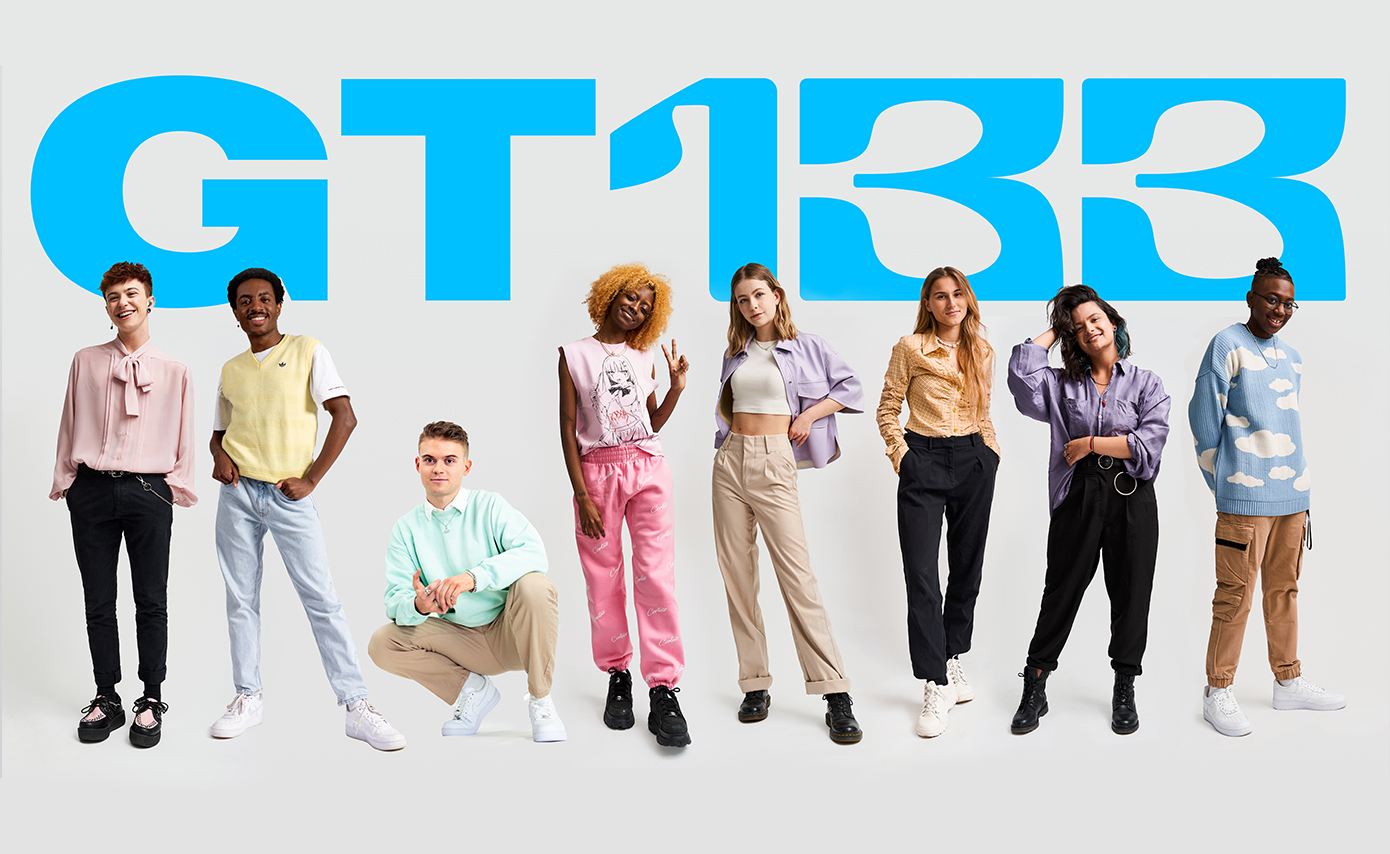
GT133: Meet the new faces of GAY TIMES on TikTok – Gay Times Magazine

Sam (He/Him)
Location: London/Manchester
Star sign: Aries

Sam is a full-time student in Manchester studying film and history.

Who inspires you the most?
Firstly, it has to be my family. My mum, sister and dad have all inspired me over my life so far and the work and care they have given me is like a debt I’ll always be paying back. My sister especially as she has always protected me and always had my back. Even when we used to fight and bicker when we were kids, I’ve always looked up to her and will do for the rest of my life.

Secondly, Billy Porter! 100%! The work he does is incredible and inspires me every day. From a young age, I’ve looked up to Billy because I saw myself. I saw someone who represented who I was and this person was thriving and shining. His work in Pose is especially striking to me because the show came at a time where I was exploring my own identity and history and the show really helped me in that sense. The cast of the show is amazing and definitely deserves more recognition.

What made you start creating content?
It was a mixture of uni and the first lockdown. Some mates from home and uni had TikTok to begin with and I was like ‘oo okay I’ll give this a go’ and then it took off. It gave me structure and something to do during that initial lockdown and I loved it. It also helped me to express myself and the more creative side of me. As I’m hoping to be film director in the future, it was just a nice creative release.

What’s the best thing about being part of GT133?
Ummm everything!!! I’m so grateful for this opportunity because it gives us a platform to express ourselves to the world and give back to our communities. I think the top best thing for me is meeting and making new LGBTQ+ friends because growing up I wasn’t really around anyone like me, so to be a part of this team, makes me feel seen and heard and a great way to be a part of the community.

What do you love most about being a queer creator?
Oooo. I think it’s the freedom to be who you are and to thrive in it. I love it! Being able to be authentic and real is what I strive to be in life, and I find content creation a really fun way of expressing myself. Also because it gives me the opportunity to give back and hopefully inspire other Black gay people who are in a similar situation to me – to hopefully be a beacon for them.

TikTok: @bigbootysam_
IG: @samredman_

Plaques mark out new trail of LGBT history – Islington Tribune newspaper website

Martin McGloghry with new mayor of Islington Troy Gallagher


THE new mayor of Islington hopes a heritage trail with plaques celebrating the borough’s LGBT+ history will be an opportunity for young people to learn about and appreciate civil rights.


Islington’s Pride – funded by the Heritage Lottery Fund, and part of the council’s heritage team – includes tributes to individuals, organisations, and famous venues.


The first plaque, at Islington Town Hall, celebrates the late Bob Crossman, who became the first openly gay mayor in the entire UK back in 1986.


Councillor Troy Gallagher, who began his turn as mayor last week, said Mr Crossman was a “trailblazer” and “set the standard for equality and LGBT rights and made Islington not just a home and a safe place, but the bastion and the champion of inclusivity and diversity at a time when it was frowned upon.”


Bob Crossman. Photo @islingtonspride


Cllr Gallagher, who is himself gay, was joined by Mr Crossman’s partner Martin McCloghry for the unveiling and Tessa Havers-Strong from Forum+.


He said: “We’ve got equality in the workplace, there are civil partnerships but the problem is equality is not always felt on a personal day to day reality. I think there is more to be done to ensure equality seeps through everyday normal life.”


He added: “I hope young people don’t think this is just a piece of local history from 30 years ago that isn’t relevant to them. The problem is there needs to be more of an awareness of what the struggle was, and there should be an attitude for gratitude, recognising how important civil rights and equality are across the board.”


Osh Gantly


The trail marked by plaques to be installed in the coming weeks will include tribites to Arsenal fans group, the Gay Gooners, pioneering trans lawyer Sonia Burgess, the home of the LGBTQ+ helpline Switchboard, pubs and clubs such as the Carved Red Lion and Trade at Turnmills. London’s first trans councillor Osh Gantly, and the home of campaigning group Stonewall will also feature.


In total, there will be 50 interactive plaques, each one uniquely scannable to find out its personal history. Many contain images and references to Islington’s Pride Archive, and lots will contain snippets of the oral histories to listen to.


Cllr Gantly, said: “Islington residents will be amazed to find out that so much of the rights people fought for, and the community spirit we’ve built, all began here in Islington. One borough really has made a huge impact.”


Seán McGovern, Islington’s Pride Project Manager, added: “There’s inspiring people and community organisations right across the borough.We celebrate our heritage by shining a light on the unsung heroes of Islington.”


Republican chair celebrates Pride Month. Derision follows. The Arkansas record tells the story. – Arkansas Times

Yeah, this really happened. The chair of a party attacking LGBTQ rights at the local, state and federal level issued a Pride Month tweet. The reaction to the hypocrisy is about what you’d expect.

Advertisement

The Arkansas Republican State Committee should censure Ronna McDaniel for defying the party’s platform of LGBT discrimination.

Consider. The Arkansas majority-Republican legislature has banned local civil rights protections for gay people; created a pretext of religion for discrimination against LGBT people in employment, housing and public services; passed not one, but two, laws banning sports participation by transgender females; prohibited gender-affirming care for children; refuses to repeal a same-sex marriage prohibition; refuses to repeal the unconstitutional state law on sodomy; has had members describe LGBT people on the floor of the legislature, without pushback, as abominations; passed an explicitly anti-LGBT resolution;  defeated a hate crime bill because it protected LGBT people; took control of school curriculum related to sexual issues to allow parents to keep students from hearing about them, and, well, those will do for starters.

Advertisement

OK, Rep. Mary Bentley tried, but failed in her mean proposal to require teachers to refer to children by names on birth certificates, not names they have adopted. And a bid to allow insurance companies and health providers to refuse service to LGBT people came up short, too.

Fairness? A balance of protections? Barnyard waste is more like it.,

Advertisement

Chasten Buttigieg, spouse of Transportation Secretary Pete Buttigieg, had a sharp retort:

Illinois data highlights need for diversity, ‘difficult conversations’ in mental health – The State Journal-Register

Editor’s note: This story is the third of three this week exploring mental health and highlighting some of the local efforts taking place to improve the community’s overall mental wellness.

There was a point in college where Dion McNeal’s mom was regularly calling to check on him. 

When he did not respond, her next call was often to the local police in Charleston, where McNeal, 28, was attending school at Eastern Illinois University

On top of struggling to accept his sexuality, McNeal — who says he is now a “proud gay Black man” — found out he was HIV positive.  At the time, he was in his early 20s and his new reality sent him down a spiral that included depression, self-harm, drug and alcohol abuse and thoughts of suicide. 

“There were just a lot of emotions,” said McNeal, who was a speaker at a mental health rally outside the state Capitol last month. “I felt like I couldn’t go to anyone who could connect with me. I was in a town where there was a support group, but the support group was with older white men. They hit on me in the second meeting.

“That made me very suicidal. It put me in a very dark place.” 

Even though socioeconomic challenges often place people of color at higher risk for mental health struggles, there is also a longstanding reluctance to recognize the need for mental health treatment within Black and brown communities, studies have shown. According to a report from the American Psychiatric Association, one in three Black people who need mental health care receive it.

Statewide data also shows why keeping conversations about mental health wellness is vitally important in communities of color. 

An Illinois Department of Public Health report from January through September 2019 — and for the same period in 2020 — shows suicide rates across the state decreased by 7.68%. However, among the state’s Black population suicide rates increased by 28.39%.

In feeling like he had to process his HIV status on his own, McNeal began abusing Xanax and mixing it with alcohol, which led to him regularly blacking out.  Eventually, he got tired of feeling numb. That is when he turned to cutting.

Related: Springfield PD devotes more time to mental health in effort to improve crisis response

It has been five years since McNeal last harmed himself. He admits he still struggles at times. But the Eastern Illinois communications graduate is now passionate about sharing his journey in hopes that his vulnerability will help others.

Locally, mental health professionals are working to ensure there are spaces where Black and brown people can feel comfortable receiving treatment.

“I’m pretty lucky to be here,” McNeal said. “So I try to use that power of learning who I was, and who I am up until this point, to try to help other people — so they don’t feel alone, and they know they don’t have to do this by themselves.”

‘Representation is key’ 

Barra Madden is fourth-year psychiatry student at the SIU School of Medicine SIU School of Medicine in Springfield, Ill., Wednesday, May 19, 2021. Madden decided to focus on psychiatry to address the lack of Black people working within the mental health world.

A senior resident at SIU School of Medicine asked a patient a question about how he was doing. The man responded. But the resident did not understand his answer, so she asked the question a second time. The patient said the same thing in response.

Barra Madden, who began her fourth year as a SIU medical student this week and didn’t reveal the term used, was also in the room for the interaction between the patient and her senior resident.

“I understood deeply what he meant, in terms of what he was going through,” said Madden, who is an aspiring psychiatrist. “I was like, ‘I’ll fill her in.’ 

“It was just a connection that we were able to build over our culture and our background.”

Madden, 27, said an encounter like that — where a patient uses slang terms a doctor does not understand — is a common occurrence she has seen throughout her time in medical school. 

“I have many stories where just being in the room changes the dynamics,” she said. “I don’t even have to be the one doing the interview. I can just be observing and it changes the atmosphere of how minority patients feel at that time.”

Also: ‘Living room,’ legislation among Illinois efforts to increase access to mental health care

From her month-long psychiatry rotation to her time spent learning other specialties, Madden said minority patients often pull her aside and thank her for being in the room and making the environment more comfortable for them. 

“I always say representation is key,” she explained. “I notice that all the time, but especially in psych. Because in psych we’re dealing with traumas, we’re dealing with difficult conversations — things that people have never told their families. It’s just secrets that they’re living with. When we ask questions, if you feel comfortable, you bring it up.

“When minority patients see a Black face, it kind of gives them another view or perspective of what they can share, and if that person is going to understand them.”

Having the ‘difficult conversations’

With last month marking the one-year anniversary of George Floyd’s murder at the hands of then-Minneapolis police officer Derek Chauvin, local therapist Oluwatamilore “Tami” Odimayo said many of his Black clients have been unaware of some of the trauma they have experienced over the last year. 

Tamilore Odimayo is a licensed therapist at Killian and Associates and is one of the few Black therapists in the Springfield area.

“Trauma does not have to be direct,” explained Odimayo, who works as a clinical professional counselor and certified drug and alcohol counselor at Killian and Associates. “Trauma can be observed. So, in the past year with what has been happening in our country, and what we see on the news, a lot of Black people are being traumatized on a daily basis and don’t know.”

Read this: ‘Speak out for Gregory’ opens conversation about police response to mental health crisis

As one of a handful of Black licensed therapists in Springfield, Odimayo said some of his clients have expressed to him that they previously did not attend therapy because they did not feel comfortable speaking with a therapist who wasn’t Black. Many of those clients said they instead relied on the church for counseling because they wanted to speak with someone who could relate to some of their trauma. 

With Madden’s father incarcerated for much of her childhood, she was raised by a single mother in a poverty-stricken area in Rochester, New York. Even though she witnessed the impact drugs and addiction can have on a family and community, like many Black families, hers did not have conversations about how their surroundings and circumstances impacted their mental health. 

“We really didn’t talk about our mental health conditions or how we felt or what we were going through,” Madden said. “We knew my grandma had diabetes; we were at every hospital visit. But we didn’t know if my grandma was dealing with depression, we didn’t know if she was dealing with PTSD from anything, because those were just things we did not discuss.” 

Odimayo said it is important for people of color to be aware of racial trauma — or, as Mental Health America explains, the mental and emotional injury caused as a result of encounters with racial bias, ethnic discrimination, racism and hate crimes — and how it can manifest. 

“If I’m driving on the road and there is a cop is behind me. Even if I’m doing everything well, my heart rate is going up,” Odimayo explained. “That’s a traumatic response to what I have seen on TV.

“A lot of people in the Black community have been traumatized and triggered. Some people don’t know where that anxiety is coming from; where those panic attacks are coming from.”

Watch: George Floyd, calls for police reform, where we go from here: A conversation with The SJ-R

Even though spaces such as church can provide relief to those who are struggling, Odimayo said sometimes counseling and other forms of mental health treatment are necessary. He explained treatment can help a person avoid unhealthy coping skills — much like the ones McNeal developed during his darkest moments when he began abusing drugs and alcohol.

About half of people who experience a mental illness during their lives will also experience a substance use disorder and vice versa, according to the National Institute on Drug Abuse.

From October 2019 to October 2020, Illinois saw a 32.78% increase in opioid-overdose deaths, according to data from the Centers for Disease Control and Prevention. While overdose deaths among Illinois’ white residents increased by 16.96% from 2019 to 2020, they increased by 49.64% for Illinois’ Black population, according to data from the IDPH.

“We have to have these difficult conversations,” said Madden, who plans to specialize in child and adolescent psychiatry and addiction medicine. “If we don’t, it’s going to continue and we’re going to be in this minority tax of mental health — we don’t deal with it, we don’t talk about it and then our family is still suffering with it.”

Contact Natalie Pierre at npierre@gannett.com or on Twitter @NataliePierre_

Sexual minorities urge LDP to pass LGBT bill – NHK WORLD

Representatives of sexual minorities have called on Japan’s main ruling party to swiftly pass a bill designed to enhance public understanding of LGBT.

Three representatives handed over their request to the head office of the Liberal Democratic Party in Tokyo on Friday.

The move comes after the party leadership decided not to propose the bill to the Diet, after failing to reach an agreement within the LDP last week.

Senior party officials say they have too little time to deliberate the bill, as the current Diet session ends on June 16.

The bill drafted by bipartisan lawmakers aims to prohibit discrimination against sexual minorities.
But some LDP members voiced concerns that stipulating the prohibition could generate excessive activism or lawsuits.

The petition calls for the enactment of the bill in the current session, as originally sought by the bipartisan group. It also argues that the bill is a necessity and the first step to protect the lives and livelihoods of sexual minorities.

One of the representatives, Sugiyama Fumino, said Japan is lagging behind on the issue, as over 80 countries have laws to ban discrimination against sexual minorities.

Sugiyama stressed the urgent need to have the law go into effect, because it is a matter of life and death, saying young people who are members of sexual minorities often think of taking their own lives.

Warwick students focus on acceptance for LGBTQ Pride event – Times Herald-Record

0

VILLAGE OF WARWICK – On Saturday evening, Warwick Mayor Michael Newhard is expected to light up an art display at Stanley Deming Park to “illuminate pride” at a community-wide event that will encourage acceptance and celebrate LGBTQ pride.

Day of Acceptance, Illuminate Pride, hosted by the Warwick Valley Community Center and Gay-Straight Alliance/Living Well Youth Group, will be free for people of all ages to attend in downtown Warwick. It will take place from 5:30 to 8:30 p.m. Saturday at Stanley Deming Park. Attendees must wear face masks and social distance. The event’s rain date is Sunday.

There will be food and drinks, crafts, speakers, musical performances, drag and art displays, some of which will be interactive. Speakers and performers will begin at 6 p.m. and the drag show is slated for 7:30 p.m. The mayor will perform the lighting ceremony at 8:30 p.m. and conduct short a presentation.

Planners of the upcoming Pride event to be held Saturday in Warwick's Stanley Deming Park show off their banner.

Though the group hosts annual youth pride celebrations, this will be their first Day of Acceptance organized by students at the center.

The new theme came about after some of the students voiced concerns about high suicide rates among teens over the past year, and the particularly high rates among young LGBTQ people, said Melissa Shaw-Smith.

“Something the students are telling us is that one of the biggest obstacles they face at their age is coming out to their parents and being accepted by their parents,” said Shaw-Smith, who worked with the students on the event. Shaw-Smith, creative director at Wickham Works, creates art-based programming for teens in the Warwick Valley Community Center’s Youth Task Force, Youth Advisory Board, and for their Gay-Straight Alliance.

Unlike in years past, there will not be a pride parade due to concerns about spreading COVID-19, Shaw-Smith said.

Other pride events going on this month in the Mid Hudson Valley include the Newburgh LGBTQ Center’s 2021 Pride Caravan that will travel through Newburgh, Beacon, Poughkeepsie, Kingston and New Paltz on June 20; Pride at Old Rockville presented by the town of Wallkill and Orange County, NY Pride on June 12; 

lbellamy@th-record.com