Home Blog Page 131

Second Gentleman Doug Emhoff Supports Pride With a Visit to Pitchers Gay Bar – Eater DC

A security detail marched up 18th Street NW in Adams Morgan last night to lead Second Gentleman Doug Emhoff into respective gay and lesbian bars Pitchers and A League of Her Own. The bars were hosting a Pride-themed vaccination pop-up offering free Pfizer shots from Giant, and Emhoff stopped by to pose for pictures and generally lend his support. People wearing Giant masks were also ducking into other bars to ask patrons if they needed a jab. According to the latest data, 42.3 percent of D.C. residents are fully vaccinated. Emhoff, the wife guy of all wife guys, also checked out the CakeRoom to bring some sweets back to Vice President Kamala Harris.

In other news …

  • A longtime cook who was laid off from his job at the Mayflower hotel during the pandemic is now volunteering full-time at a Rockville food pantry and using Facebook Live to make sure Spanish speakers know what’s available there. [DCist]
  • Washington Post critic Tom Sietsema recommends appetizers like hamachi crudo or burrata with pesto and African blue basil at the recently revamped Tosca downtown. [WP]
  • Lucky Buns chef Alex McCoy is bringing a crab-picking pop-up back to Union Market later this month. [WCP]
  • Leesburg’s Señor Ramon Taqueria is opening its fifth local location with a new store in Great Falls, Virginia. [The Burn]
  • Sloppy Mama’s barbecue has closed its Ballston Quarter food hall stall, but its Arlington storefront is still going strong. [ARLnow]

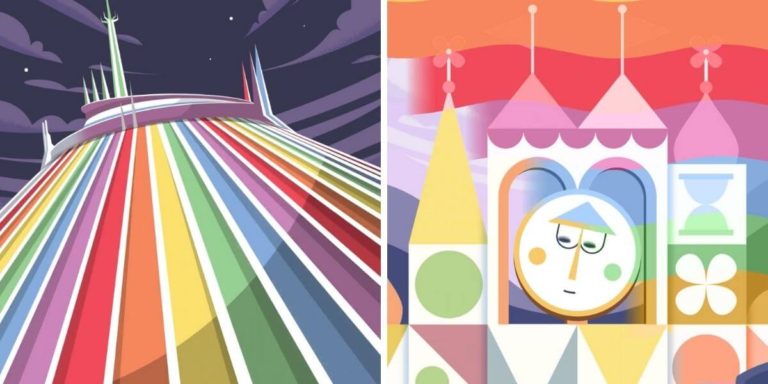
Comments for Disney Rides Transform to Include Colors of the Rainbow For Pride Month – Inside the Magic

Inside the Magic was created in 2005. What started as a tiny central Florida based website and short weekly podcast that provided our audience the opportunity to visit Walt Disney World virtually has grown to the publishing company it is today. We focus on bringing you all things fun so you can plan your theme park vacation, enjoy Disney at home, and more.

ITM now consists of multiple writers living near both Disneyland and Walt Disney World theme parks and around the world. This allows us to bring you the most interesting, entertaining, and unique entertainment experiences, covering theme parks, movies, TV, video games, special events and so much more.

Michigan LGBTQ rights initiative challenged by group with ties to anti-gay law firm ⋆ Michigan Advance – Michigan Advance

methodist church lgbt
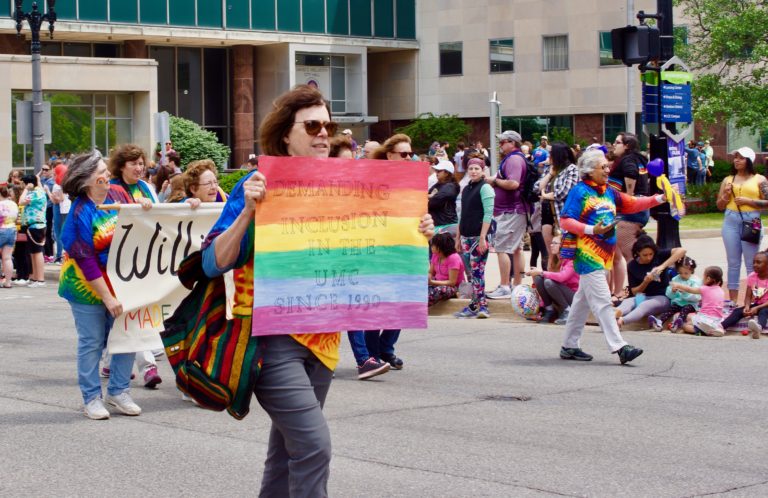
Michigan Pride, June 15, 2019 | Susan J. Demas

A group called Citizens for Equality, Fairness and Justice filed a challenge with the Board of State Canvassers Thursday against the Fair and Equal Michigan campaign.

Fair and Equal Michigan, which aims to ban discrimination in jobs and housing for LGBTQ Michiganders by expanding Elliott-Larsen Civil Rights Act (ELCRA) to include sexual orientation and gender identity, filed nearly 500,000 signatures in October for the 2022 ballot. 

It’s unclear who is funding Citizens for Equality, Fairness and Justice, as campaign finance reports have not yet been filed. The group argues that Fair and Equal Michigan does not have enough valid signatures, and questions whether or not electronic signatures are valid. 

Citizens for Equality, Fairness and Justice hired Honigman Business Law Firm to represent the group.

In April, Citizens for Equality, Fairness and Justice filed with the Secretary of State for a ballot question. The address listed on the filing is for Kallman Legal Group and the Great Lakes Justice Center, a Lansing-based conservative legal group.

David Kallman has litigated several cases related to sexual orientation and gender identity protections, including suing the Williamston School District for adopting a nondiscrimination policy related to transgender students and suing Planet Fitness for allowing transgender women to use the women’s locker room. 

LGBTQ rights ballot initiative moves ahead with ‘sign online’ strategy

Kallman also was the chief litigator in a Michigan Supreme Court ruling that allowed parents to homeschool their children without having a teaching certification. And he has represented a number of business owners, including the owner of Cafe Rosetta in Houghton County, fighting state pandemic health orders.

The Advance left a message with Kallman asking him to comment on the legal group’s connection with the petition challenge.

Fair and Equal Michigan attorney Steve Liedel says that electronically gathering signatures is allowed under the Electronic Transactions Act of 2000, which states that “that a signature shall not be denied legal effect or enforceability solely because it is an electronic form.”

“I think it’s interesting that the challenge doesn’t cite any legal authority and Fair and Equal Michigan is going to rely on the plain language of the law to make the case that those signatures are valid signatures under Michigan law. There’s nothing in the election law that says the signatures cannot be affixed digitally,” Liedel said. 

Another argument brought forth in the challenge is actually not about Fair and Equal Michigan, but rather it is about Unlock Michigan, a GOP-linked campaign to permanently repeal the 1945 law that granted emergency powers to Gov. Gretchen Whitmer during the COVID-19 pandemic. 

After paying $7,500 fine, U.P. eatery hit with contempt order for defying COVID measure

Attorney General Dana Nessel investigated Unlock Michigan for invalid signature gathering, finding insufficient evidence of malicious wrongdoing by the group but detailing unethical behavior by several individuals who were paid to collect signatures for the group.

Nessel did not criminally charge anyone following the investigation due to the lack of admissible evidence. 

However, because some of the same circulators for Unlock Michigan also collected signatures for Fair and Equal Michigan, Citizens for Equality, Fairness and Justice is arguing that all signatures from those canvassers should be invalidated.

“I think about 90% or more of the complaint seems to raise issues with Unlock Michigan, and there was no evidence whatsoever with regard to any improper conduct by Fair and Equal Michigan,” Liedel said. 

Liedel said Fair and Equal Michigan will be asking the Bureau of Elections and the Board of State canvassers to ignore anything in the complaint that has to do with Unlock Michigan. 

State board deadlocks on Unlock Michigan petition

Josh Hovey, spokesperson for Fair and Equal Michigan, said the challenge didn’t come as a surprise.

“I would say the name of the organization … is pretty Orwellian and it’s disappointing that they would try to use a name like that when they’re actively trying to keep an equality initiative off the ballot,” Hovey said. “But it’s not surprising that we were being challenged. That’s pretty typical. All the other challenges campaigns face between the global pandemic and all of that is just one more hurdle that our path towards equality.”

Fair and Equal Michigan formed in January with the intention of getting a measure on the Nov. 3 ballot, but was stunted by the challenges caused by the pandemic, such as gathering signatures.

Once the coalition fell short for the 2020 election, it readjusted for the 2022 ballot and submitted 483,461 signatures, exceeding the 340,047 valid signatures required.

Japan LGBTQ activists push for equality law before Olympics – The Herald Journal

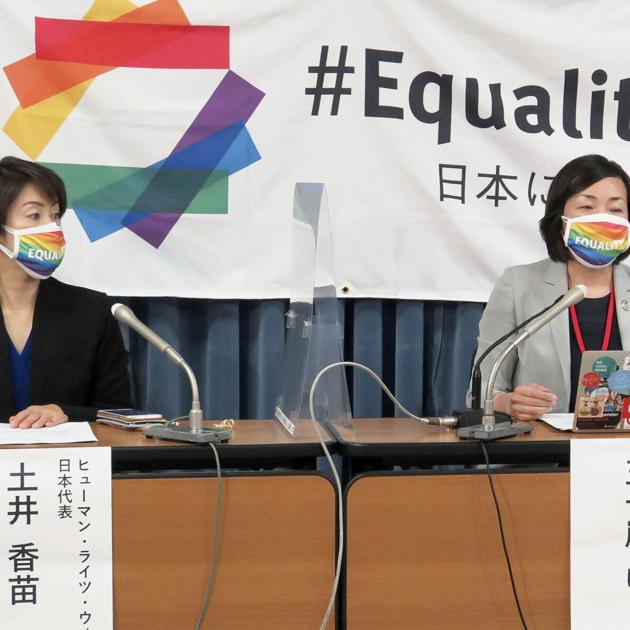
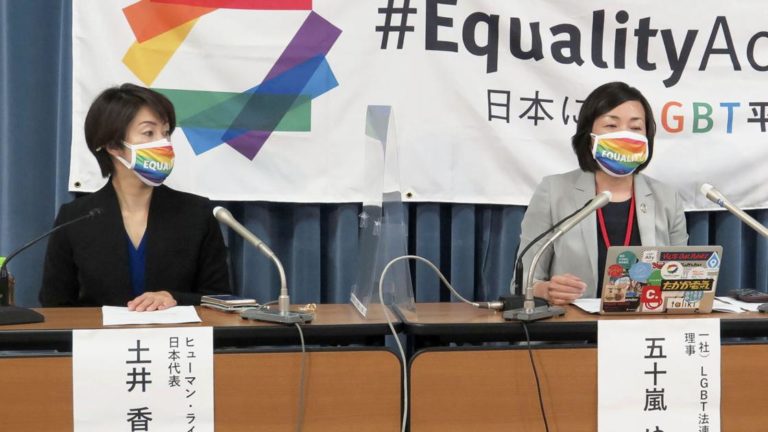
TOKYO (AP) — Japanese sexual minority groups and their supporters, in a last-ditch effort to get long-sought equality legislation passed before the Tokyo Olympics, submitted requests on Friday to the governing Liberal Democratic Party, whose conservative members have stalled the bill.

The groups also have widened their campaign to gain corporate support for their cause in hopes of pressuring Prime Minister Yoshihide Suga’s pro-business party to support the legislation.

“In order to protect the lives and livelihood of sexual minorities, enacting a LGBT law that states discrimination is not tolerated is an indispensable first step,” said Kane Doi, Japan director for the New York-based group Human Rights Watch.

Advertisement

“An enactment of such a law in Japan ahead of the Olympics is also necessary for the international community,” Doi said, adding that Japan needs to demonstrate its commitment to ensuring equality for LGBTQ athletes, journalists and other participants in the Olympics, set to begin July 23.

Support and awareness of sexual diversity has slowly grown in Japan, but there is still a lack of legal protections for lesbian, gay, bisexual and transgender people. Japan does not legally recognize same-sex partnerships, and LGBTQ people often suffer discrimination at school, work and even at home, causing many to hide their sexual identities.

“Japan is far behind the international standard,” said Yuri Igarashi, co-chair of the Japan Alliance for LGBT Legislation. She noted growing support from the business community, including Panasonic, which on Friday became the 23rd company pledging support for the cause.

Rights groups are pushing for the passage of the equality act as international attention falls on Tokyo as it hosts the Olympics. The International Olympic Committee also issued a statement stressing the importance of inclusivity in sports.

Prospects for passage of the legislation before the current parliamentary session ends on June 16 are uncertain because of strong resistance from conservatives in Suga’s party.

On Friday, members of LGBTQ groups and supporters submitted requests at the governing party’s regional headquarters in Tokyo, Osaka, Aichi and other areas.

Remarks by some party members during discussions of the bill last month sparked outrage from rights groups.

Lawmaker Kazuo Yana was quoted as saying in an closed-door session that same-sex relationships “defy the preservation of the species, go against the biological basis.”

Eriko Yamatani, known for her support of traditional gender roles and paternalistic values, called it “ridiculous” that transgender people with male bodies say they have female hearts and want to use women’s restrooms or participate in women’s sports.

———

This story has been corrected to show the current parliamentary session ends on June 16.

Area Sports Roundup, June 3 (copy) — FOR PRINT | Local Sports | sentinelsource.com – The Keene Sentinel

Monadnock baseball dominates Newport

NEWPORT — The Monadnock baseball team beat Newport, 12-1, in a mercy rule win Thursday in Newport.

Trevor Heise went 3-3 with four RBI. Victor Lotito cracked a triple and added a 2-2 day with four runs scored.

Kevin Putnam got the start for the Huskies and cruised through two innings before Colin Donelly took over and finished the game.

Monadnock travels to Fall Mountain for a quarterfinal matchup Saturday.

ConVal baseball walks off against Lebanon

PETERBOROUGH — Eric Stapelfeld hit a walk-off, two-run home run in the bottom of the seventh inning to put the ConVal baseball team over Lebanon, 6-4, in the preliminary round of the NHIAA Division II tournament Thursday in Peterborough.

Stapelfeld also pitched all seven innings, striking out nine and giving up one earned run.

Elias Niemela went 3-3 at the plate with a home run and two runs scored.

ConVal next plays the winner of Hanover and John Stark, who’s game was moved to Friday, on Saturday.

Conant baseball upsets Mascenic

NEW IPSWICH — The Conant baseball team continued its playoff run with another upset, a 3-0 win over rival Mascenic Thursday in New Ipswich in the preliminary round of the NHIAA Division III tournament.

Conant got on the board early when Hayden Ketola scored after reaching on a walk. Colson Seppala scored in the fourth and Chris Bergeron came across in the sixth inning.

Seppala recorded the Orioles’ only hit, but Conant drew three walks to get baserunners.

Jordan Ketola pitched all seven innings giving up just three hits while striking out seven and issuing four walks.

Conant next plays Hopkinton in the quarterfinals Saturday.

Fall Mtn. baseball takes down Kearsarge

SUTTON — The Fall Mountain baseball team beat Kearsarge, 6-0, in the preliminary round of the NHIAA Division III tournament Thursday in Sutton.

Mitch Cormier pitched the complete game, giving up just three hits with 10 strikeouts.

Hayden Chandler and Lucas Gay each had three hits. Chandler had two RBI and Gay had one.

Cormier, Lucas Roy and Noah Blake each also had hits for the Wildcats.

Fall Mountain hosts Monadnock for a quarterfinal matchup Saturday.

Monadnock boys lax hits late game-winner

SUTTON — Aidan Hart hit the game-winner with 56 seconds on the clock to put the Monadnock boys lacrosse team over Kearsarge, 11-10, Thursday in Sutton in the preliminary round of the NHIAA Division III tournament.

Hart finished with three goals.

Justin Joslyn led the team with six goals of his own, while Nolan Fletcher and Crawford Tucker each had a goal as well.

The Huskies played a strong game defensively as well, said head coach Rob Hart.

Monadnock advances to the quarterfinal round, where they visit Lebanon Saturday at 5 p.m.

Other Scores:

Sunapee 13, Hinsdale 3 (NHIAA Division IV preliminary)

Greenpoint Pride Unites Local Businesses for LGBTQIA+ Fundraising – greenpointers.com

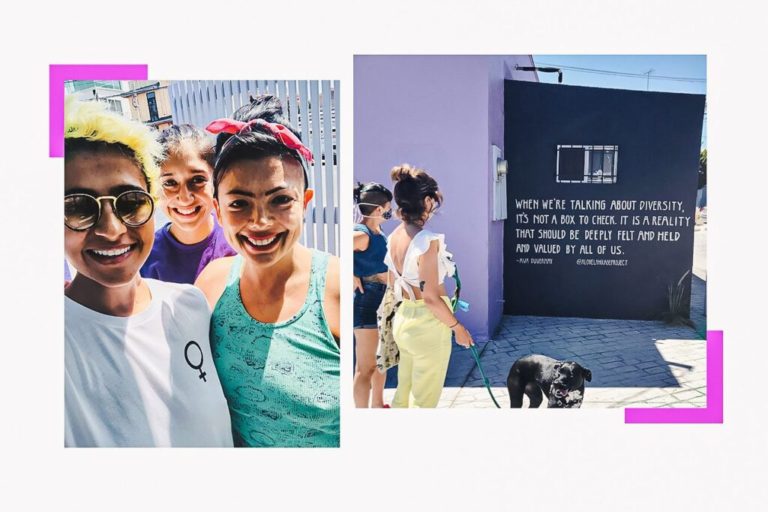
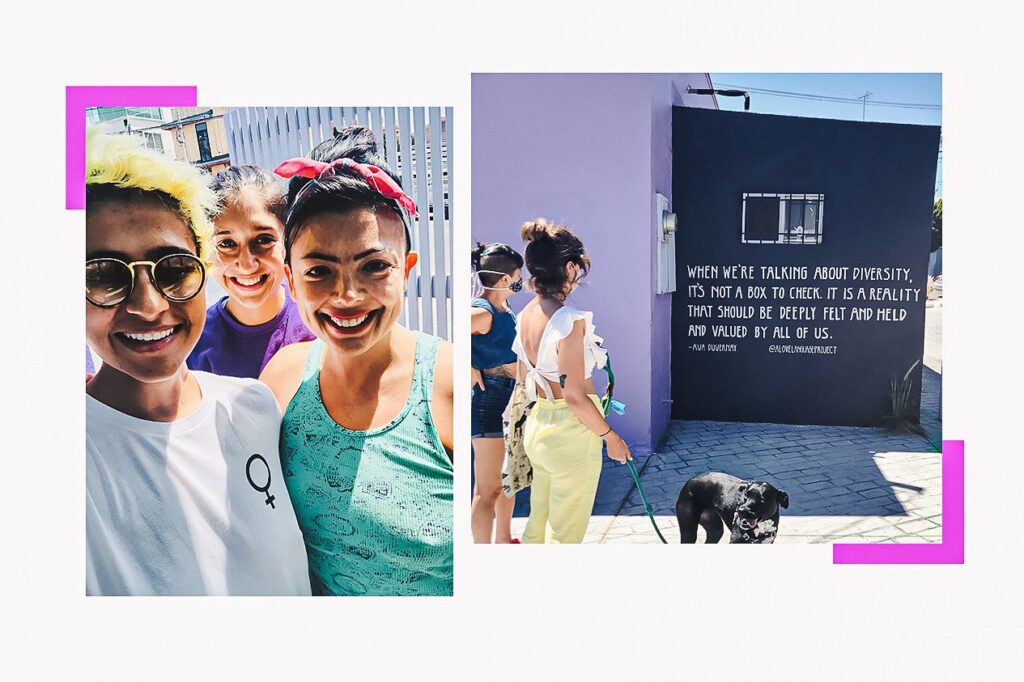
The Karcher salon is spearheading a local Greenpoint Pride project aiming to bring the community together while also supporting LGBTQIA+ organizations.

The idea was born out of the lack of NYC Pride events in 2020, combined with a hope of uplifting each other locally. Eric Torneros, a stylist and colorist at The Karcher, dreamed up Greenpoint Pride out of his desire to feel connected to the greater LGBTQIA community within Greenpoint.

“Last year, reflecting in the middle of the pandemic, it was really hard not to have Pride be a full-on thing. Having Pride be something I went to every single year since I was 17 meant so much to me,” Torneros said. “Being in Greenpoint, I feel so connected to the community here. One thing for me was wanting something to gather the LGBTQIA community here. And so over the last few months, it felt very natural for us to go this route and to really ask for the hands of other small businesses in the neighborhood.”

Torneros and The Karcher’s owner, Meg Costello, were also inspired by the rise of mutual aid efforts in NYC.

“I was really inspired by the rise of mutual aids in the different parts of Brooklyn and the city and just seeing that come out of the pandemic,” Costello explained. “At the end of the day, it was really our communities that mattered and our communities that uplifted us rather than the larger governments.”

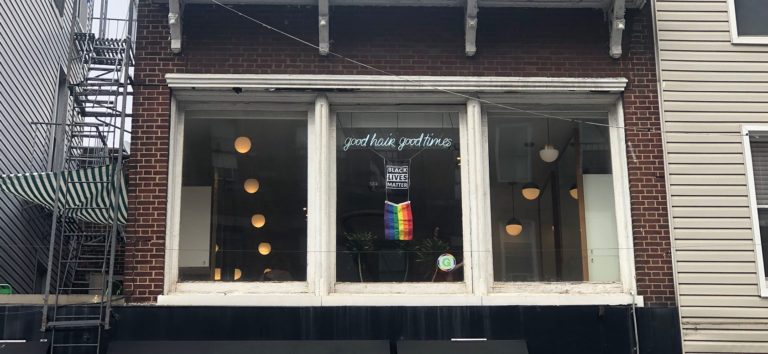
Participating businesses receive a special window decal to signify their support for Greenpoint Pride and select a designation of their sales to benefit an LGBTQIA+ organization of their choice. 

Outreach has been mostly through word-of-mouth, with Costello and Torneros contacting businesses they already have relationships with or are known to be queer-owned, as well as tapping into The Karcher’s network and other friends within the community.

“We don’t want this to be our thing, we want this to be Greenpoint’s thing,” Costello noted. “Let’s make this a many-armed beast and think of how we can all just spread throughout Greenpoint.”

Currently, Tend, Dandelion Wine, El Born, Edy’s Grocer, Grace + Grit Flowers, Alter, smallhome, Otis & Finn, Ramona, Cato’s Army & Navy, Hair, Lockwood, Odd Fox Coffee, and PRESS Massage have joined the initiative, and charities include G.LI.T.S., The Trevor Project, New Alternatives, the Marsha P. Johnson Institute, and many more. Involvement is ongoing, and any businesses interested in participating are encouraged to get in touch with The Karcher.

For Tend owner Joe Ferrari, getting involved with Greenpoint Pride was a no-brainer.

“[Costello] reached out right at the beginning and it was kind of funny because I’d just been talking to my team here about doing something of a similar fashion and spearheading it, but I just had loose thoughts,” Ferrari admitted. “I was happy to hear there were others having similar feelings and wanting to help and elevate the presence of our other shops in the neighborhood, but also give back.”

Throughout June, Tend will be donating 10% of its sales to the Audre Lorde Project, as well as featuring a new window design specifically for Pride.

“We chose [the Audre Lorde Project] because it is elevating the cause of the transgender community, which I definitely think gets overlooked during Pride month, and also because it’s focused on communities of color,” Ferrari said. “It’s weird to think that something like Pride, which should be celebratory for all, tends to be a bit exclusive, so we wanted to make it more inclusive.”

Overall, the goal is to create a feeling of community and widespread support with the hopes of the initiative eventually turning into something bigger right here in Greenpoint.

“The small businesses within Greenpoint are very social, so that can easily blend into the bigger community as well,” Torneros explained. “So this is just a start for us to reach out a hand, but also this could become a parade down Manhattan [Avenue] or a block party somewhere.”

“Our neighborhood is growing so fast … I think the more we band together as a community and show our openness, it’ll help foster that for the future of our neighborhood,” Ferrari said.

Chef Jasmine Shimoda: Social Justice Is Self Care – LIVEKINDLY

While recently cooking for a family in their home, I uncovered six drawers, two cupboards, and a freezer drawer full of supplements, health elixirs, tinctures, vitamin syringes, and all manner of trendy wellness paraphernalia. Just the sight of it all made me dizzy. As a chef who owned a plant-based restaurant and a devoted proponent of a healthy lifestyle, I can tell you firsthand that you cannot buy your way to wellness. 

How we cultivate self-care in our lives will look different for each of us. For me it has always included yoga, healthy eating, and a mindfulness routine. But perhaps most importantly, it is centered on connection—with my community, and with myself. 

By showing up for ourselves and our communities, we are saying we are worthy. And during these twin pandemics of COVID-19 and racially fueled violence, cultivating self-love and reminding ourselves that we are worthy is the single most powerful thing we could be doing.

The Search for Belonging

I didn’t grow up with much positive reinforcement about being Japanese. Some exceptions were when my grandfather took us to Buddhist church and taught us how and why to pray, took me to Japanese restaurants, and eventually I got to go to Japan with him. But despite that, there was mostly shame messaging about being Japanese American. My grandparents were interned during World War II for being ‘enemies to the state’ and lived in a horse stall with several other families. My grandmother never recovered. She was a catatonic ghost floating through our childhood. The only time she ever spoke was to scream at her own ghosts. My aunt Naiomi was born in that horse stall. Interesting that she was given a Western name while her other three siblings (born in Japan) have Japanese names. They returned to the states in 1956 when my father was six years old and proceeded to live a life of quiet assimilation. My father pretended he was Mexican to blend into our Latino neighborhood, goes by an American name, and speaks no Japanese. My grandfather never taught us Japanese or kendo (the martial art that he practiced); in fact, he told me to “marry a nice American man that would take care of me.” 

So, in essence, I was raised to believe that my Japanese heritage was shameful and that my worth was measured by finding a husband. In addition, the mental illness and trauma in my family were not to be discussed. Well, I never did find that husband. But I did marry a Filipino woman with whom I opened a restaurant. 

Being women in a male-dominated industry is enough to foster imposter syndrome on its own; put queer and BIPOC on top of that and you have a recipe for struggle. For many people of color, it manifests as overcompensating. We feel the need to work harder, be harder, achieve higher than our peers. The restaurant industry is a self-sacrificing culture. We wear our suffering like a badge of honor. So when you add imposter syndrome, internalized racism, and homophobia, it can be a dangerous place. Some of the most toxic chefs I’ve ever worked for were women, queer, and/or people of color. It took me a long time to see the conditioning behind that. 

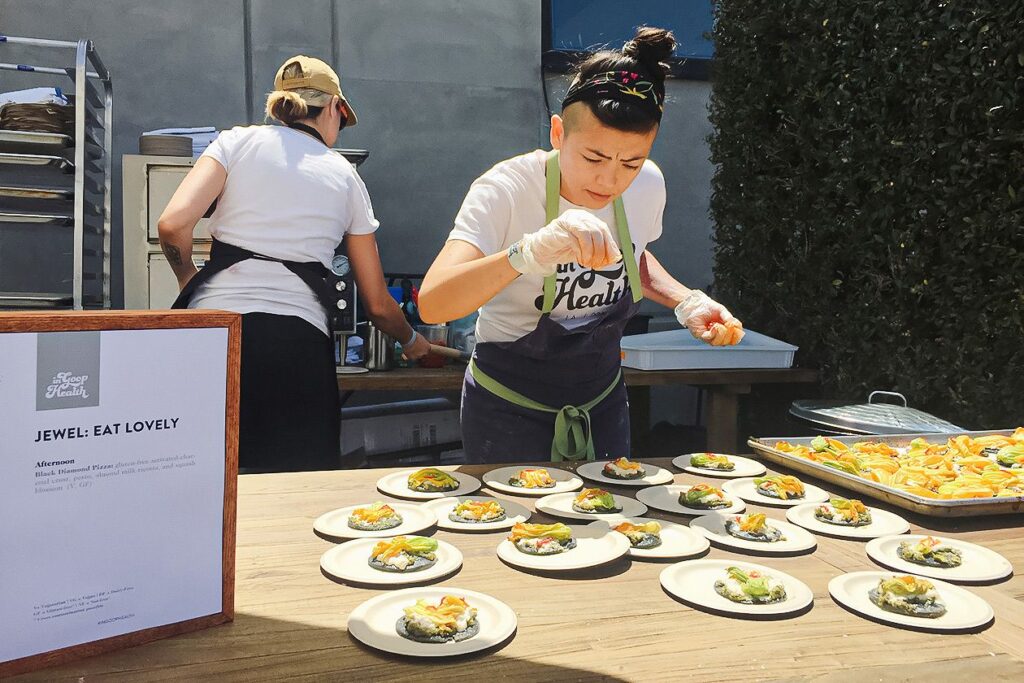
Jewel opened in 2017. | courtesy of Jasmine Shimoda

A Vegan Haven and a Safe Space

When my former partner and I opened Jewel in 2017, it was important to us that our restaurant be a reflection of us and our community. We both came from fine dining backgrounds in New York and we wanted to say goodbye to the tweezers and white tablecloths and all the straight white patriarchy that goes with those things. We wanted a restaurant that was not a culinary temple or a “scene” but a place of community and healing. A business model that was better for the environment, that promoted a healthy lifestyle without being preachy or elite. We envisioned a bustling dining room filled with people eating vibrant plates of food, chatting blithely, and hugging each other warmly. We wanted to go back to the roots of breaking bread with folx, sharing food as a catalyst for sharing ideas, joys, triumphs, and struggles. 

This is indeed what Jewel became—a plant-based restaurant using the gifts (or “jewels”) of the earth to create food to bring our community together. It was my dream come true, and I am filled with pain reflecting on it all because I’ve recently stepped away. But even though I’m no longer a part of her, my creativity, passion, and holistic approach will live on in the culture I helped create, and for this, I feel immense pride. I never subscribed to the hierarchy and toxicity that plagues restaurant kitchens. As the chef-owner, it was my job to lead, inspire, create and be authoritative when necessary, it was someone else’s job to wash the dishes, but we were both equally important to the whole organism. If the dishwasher was sick or going through something personal, we all pitched in collectively until she was able to work again. We used ‘we/us’ pronouns. If someone made a mistake the conversation was “how do we fix it, and how do we avoid a similar mistake in the future?” I believe singling people out and shaming them is counterproductive and is actually extremely dangerous as it leads to disengagement and, eventually, rage. When people are in shame they lash out at people weaker than them and on and on it spirals. These are the kinds of kitchens I came up in, and I wanted to break that cycle.

Shimoda co-founded Jewel to bring the community together. | courtesy of Jasmine Shimoda

In the wake of George Floyd, Breonna Taylor, Elijah McClain, Duante Wright, and the too many humans that were the wrong color, gender, or identity at the wrong time; in the wake of elderly people and AAPI women that look like me being attacked and murdered in the streets and in their workplaces; it’s hard not to be filled with horror and despair. But I have found resilience in the simple concept of unity. There is beauty in the togetherness that has been born out of collectively surviving a pandemic, and all forms of injustice, together. 

In my industry, that has manifested in the collaborative problem solving and creative pivoting that we have been thrust into. You see examples of communities rising up everywhere and shining a light on racism, police brutality, transphobia, toxic masculinity, and systemic injustice. Yes, the last four years have incubated seeds of racism, hatred, and divisiveness, but now that they are in full bloom, we can no longer look away. It took exposing the ugly roots to finally start the work to cut them down.  

Healing also comes through simple communication. When we talk about mental health and self-care in our Black, brown, Asian, and queer communities, we are resisting. When we talk about systemic racism and defunding the police, we are talking holistically about shifting paradigms. When we reject the claim that the murder of six Asian women was “not racially motivated,” we are speaking truth to power. Of course, we are angry, and rightfully so, but underneath the outrage, we must be rooted by a sense of self-worth to push change forward. We must be united by the deep-seated belief that we deserve better.

Feeling a sense of belonging and feeling loved are intrinsically linked so when you grow up in the margins you are receiving a constant negative reinforcement that you are not loved and worse, that you don’t deserve love. It takes a lot of courage and work, often daily work to overcome that messaging. I’ve spent a lifetime cultivating my own self-love, and sense of belonging and it is what roots me in my identity. I am a queer Japanese-American woman, a child of immigrants, a restaurant owner, and a community leader. This is the power of the word “Pride” in the LGBTQIA community.

By leaning on our communities we achieve a sense of belonging. By embracing our identity we cultivate self-love. By celebrating our identities we feel pride. By resisting societal messaging that we deserve anything less, we affect cultural change.

Here are some of my favorite community resources for support or if you wish to donate:

The Trevor Project
GLAAD
Equality California
California LGBTQ Health and Human Services Network
Los Angeles LGBT Center

‘I Am Samuel’ and the fight for gay rights in Kenya: “It’s not safe for them here” – NME

Shot in verité style over five years, Kenyan director Peter Murimi’s absorbing documentary shows us the heartwarming tenderness of a couple named Alex and Samuel. It’s a film that ennobles humdrum small lives, but in a country where gay sex is punishable by prison and LGBTQ+ people are victimised and vilified, the mundane becomes extraordinary and inspirational.

Kenya inherited their anti-gay laws – which can result in up to 14 years imprisonment – from their colonial leaders and persecution of sexual minorities remains rife. At the start of I Am Samuel we’re shown harrowing cameraphone footage of a man being savagely kicked, punched and taunted by a rabid mob after they discover his sexuality. Characters within the film talk with chilling resignation about their own family dispatching attackers to “teach them a lesson.”

Advertisement

Murimi – who wants his documentary work to shine a light on the unseen, marginalised and vulnerable in society – was inspired to make I Am Samuel after meeting someone who was torn between balancing his duty to his family with his queer identity. Then, through a mutual friend, he was introduced to Samuel.

“Samuel wanted to get his story told,” says Murimi, who won the CNN African Journalist Of The Year award for his first film, Walk To Womanhood, which dealt with female genital mutilation. “His motivation was that when he was aged 13, he thought he was the only gay person in his village because he had not seen any man openly saying he was gay. It was important for Samuel and his friends to share their stories because they said it couldn’t get any worse. Whether there are cameras there or not, they’re attacked and beaten.”

Samuel was raised in rural Kenya, which values tradition above all else. He is close to his mother, but his deeply religious father, a local pastor, can’t understand why he isn’t married yet. After moving to the capital, Nairobi, to find work, he falls in love with Alex and discovers strength in a community of other gay men. Murimi feels that Samuel is a “pioneer” in that he is a queer Kenyan who has come from poverty, but now has a platform.

I Am Samuel
Peter Murimi, director of ‘I Am Samuel’. CREDIT: Bohemia

“Society is really hostile to people being openly gay, but the biggest problem is the class divide,” says Murimi. “If you’re middle class and wealthy, that buys you some protection because your house is isolated, you have a bigger compound and you can be who you are within confines. But if you’re poor – like Samuel and the majority of gay men in Kenya – it’s more difficult because you’re living in confined spaces so it’s hard to keep a secret. And if people find out, the results can be fatal.”

Murimi, a straight man who sees himself as an LGBTQ+ ally, says the hardest part of the film to shoot was the aftermath of a vicious assault on the couple in their home. “When they got beaten up and had to move, I just thought: ‘If that was me, I’d move to another country’,’” he sighs. “But they just moved to another estate and continued with their life. Although it was difficult to watch, it was inspiring because of their strength and resilience to keep being true to themselves despite the difficulty.”

Advertisement

While the beating heart of the documentary is Samuel and Alex’s unshakable love in the face of fear, it also paints an against-the-odds portrait of the complex bond between father and son. When Samuel’s father, Redon, discovers his secret, he struggles to cope. But by the end, a détente is reached. There are no teary conversations or hugs, just a quiet, stoic, unspoken acceptance.

“What I hope this documentary shows is a different kind of acceptance,” says Murimi. “In Kenya, your father will not sit across the table from you and have a heart-to-heart. The first generation will not talk about emotions with their children. What you saw on screen is acceptance in the African context – the father knows what’s going on, he’s embraced it, and he says you can come here with your boyfriend and be who you are. Now both the father and mother hope this film can be a lesson to other parents struggling with the same issue.”

I Am Samuel
‘I Am Samuel’ tells the story of a young Kenyan man and his partner, Alex. CREDIT: Bohemia

Last year, LGBTQ+ activists in Kenya found a bid to repeal laws criminalising gay sex rejected by the high court. They are now appealing the ruling and Murimi is hopeful for change. “We’re going to have LGBTQ+ rights in Kenya, but it might take 10 years and that’s too long,” he says. “There’s a strong, organised and vibrant movement in Nairobi who are giving people safe houses and legal aid. Rather than giving up and going into hiding, they’re fighting for their space and saying ‘we’re here, we’re as Kenyan as you, and we want our space.’ As a storyteller, I hope my film contributes to that movement.”

For everyone involved in I Am Samuel, the stakes are high. There is a comprehensive safety plan in place for its release should this sweet and gentle movie prove politically incendiary. Murimi reveals that Samuel and Alex have since relocated. “Kenya’s not safe for them – especially when the film comes out.”

Even so, the filmmaker wants viewers to see hope in Samuel and Alex’s bravery. “The perception is if you’re gay in Kenya, it’s horrible. But I’ve tried to show that despite how horrible it is, they find this beautiful romance and have carved out a space and tried to make it work. Rather than feel bad for them, audiences should feel encouraged by the strength of Samuel and Alex,” says Murimi. “Yes, the law is against you, society is against you, but they find a way to be happy and enjoy life.”

‘I Am Samuel’ is released in the UK on June 3 via Bohemia Euphoria VOD platform

Japan LGBTQ activists push for equality law before Olympics – Daily Union

TOKYO (AP) — Japanese sexual minority groups and their supporters, in a last-ditch effort to get long-sought equality legislation passed before the Tokyo Olympics, submitted requests on Friday to the governing Liberal Democratic Party, whose conservative members have stalled the bill.

The groups also have widened their campaign to gain corporate support for their cause in hopes of pressuring Prime Minister Yoshihide Suga’s pro-business party to support the legislation.

“In order to protect the lives and livelihood of sexual minorities, enacting a LGBT law that states discrimination is not tolerated is an indispensable first step,” said Kane Doi, Japan director for the New York-based group Human Rights Watch.

“An enactment of such a law in Japan ahead of the Olympics is also necessary for the international community,” Doi said, adding that Japan needs to demonstrate its commitment to ensuring equality for LGBTQ athletes, journalists and other participants in the Olympics, set to begin July 23.

Support and awareness of sexual diversity has slowly grown in Japan, but there is still a lack of legal protections for lesbian, gay, bisexual and transgender people. Japan does not legally recognize same-sex partnerships, and LGBTQ people often suffer discrimination at school, work and even at home, causing many to hide their sexual identities.

“Japan is far behind the international standard,” said Yuri Igarashi, co-chair of the Japan Alliance for LGBT Legislation. She noted growing support from the business community, including Panasonic, which on Friday became the 23rd company pledging support for the cause.

Rights groups are pushing for the passage of the equality act as international attention falls on Tokyo as it hosts the Olympics. The International Olympic Committee also issued a statement stressing the importance of inclusivity in sports.

Prospects for passage of the legislation before the current parliamentary session ends on June 16 are uncertain because of strong resistance from conservatives in Suga’s party.

On Friday, members of LGBTQ groups and supporters submitted requests at the governing party’s regional headquarters in Tokyo, Osaka, Aichi and other areas.

Remarks by some party members during discussions of the bill last month sparked outrage from rights groups.

Lawmaker Kazuo Yana was quoted as saying in an closed-door session that same-sex relationships “defy the preservation of the species, go against the biological basis.”

Eriko Yamatani, known for her support of traditional gender roles and paternalistic values, called it “ridiculous” that transgender people with male bodies say they have female hearts and want to use women’s restrooms or participate in women’s sports.

This story has been corrected to show the current parliamentary session ends on June 16.

‘A rainbow logo isn’t enough’—why LGBTQ workers say some Pride celebrations fall short – CNBC

June is LGBTQ Pride month, chosen to commemorate the Stonewall Riots that took place in New York City on June 28th, 1969 in response to police violence against LGBTQ people. One year later, demonstrators organized a march down Christopher Street to celebrate “Gay Pride” — a protest that has evolved into the Pride marches that can today be seen in communities around the world.

The Stonewall Riots were neither the first nor the only time LGBTQ people fought back against police harassment and the fight for LGBTQ rights has happened in workplaces as well. In the United States, some of the most visible milestones in the push for progress have been when workers have fought against discrimination from employers and business owners.

Though progress has been made since 1969, research suggests that workplaces are still failing LGBTQ people — and that temporary Pride month rainbow logos are not enough to support employees.  

Discrimination and harassment

It wasn’t until last Pride month, June 2020, that the Supreme Court ruled that that U.S. workers cannot be fired for being homosexual or transgender. However, at-will employment still gives employers opportunities to fire employees for nearly any other reason they wish to give except for race, religion, sex or national origin.

And research suggests that LGBTQ workers often still face discrimination at work. 

According to a recent survey of LGBTQ professionals by LinkedIn, 25% of out respondents say they have been intentionally denied career advancement opportunities (such as promotions and raises) because of their identity. A significant 31% of out respondents say they have faced blatant discrimination and microaggressions in the workplace.

The majority of those polled, 54% of managers and 52% of employees, say that their company should offer educational opportunities and bias training.  

Beyond harassment and discrimination, many LGBTQ workers also report being unsatisfied with how they feel their organization supports — or rather, does not support — the LGBTQ community. 

According to an analysis of company reviews by Glassdoor, LGBTQ employees are less satisfied at work compared to their non-LGBTQ counterparts.

“Unfortunately, it’s not surprising,” says Scott Dobroski, vice president of corporate communications for Glassdoor and a member of the organization’s LGBTQ+ employee resource group. “We conducted another survey that shows nearly 50% of LGBTQ+ employees believe being out at work could hurt their career. And more than half of LGBTQ+ employees report they have witnessed or experienced anti-LGBTQ+ comments by coworkers. So when you aggregate the data, the trends and the experiences of LGBTQ+ people, unfortunately, I am not surprised.”

“A rainbow logo isn’t enough”

Part of this dissatisfaction, Dobroski posits, may also stem from how some companies superficially participate in Pride Month, without engaging in the celebration’s radical political legacy — a phenomenon often referred to as “rainbow washing.”

“While many companies will turn their logos and social profiles to rainbows for Pride Month, creating a more equitable company is more than just symbolic or superficial moves. It’s about action,” he says. “A rainbow logo isn’t enough.”

“Changing logos in solidarity with the community has some benefits to some members in the community because it can show that the entity is standing with them,” says Dobroski, noting that Glassdoor has also changed its logo for the month. “Where the problem comes in, is if a company is just changing its logos, or even making some sort of public statement that says ‘I stand in solidarity with this group,’ but is not taking the appropriate action inside their walls to support it.”

Kayla Gore is the executive director of My Sistah’s House, a Memphis-based organization founded to help bridge a gap in services for trans and queer people of color with an emphasis on housing. She says that often the issue of corporate participation in Pride Month boils down to standing up for LGBTQ workers outside of the office and “not trying to just capitalize off of people’s lived experiences of being proud”.

“There’s been so many opportunities over just the last couple of months for major corporations to actually take a stand against the ‘Slate of Hate‘ that is happening all over the South, when it relates to anti-trans legislation,” she says. “There have been many opportunities for major corporations to say, ‘Hey, this is how we feel and we can affect a lot of things that happen in your state financially if you’re not affirming of trans people and if you don’t stop the unjust treatment and cruelty that you’re imposing, especially on trans youth,’ instead of using us as marketing strategies throughout the month of June.”

She stresses that to truly support LGBTQ+ workers, organizations should stand up for LGBTQ rights inside and outside of the office 365 days a year.

“There are other months in the year that people can show up.”

Don’t miss:

Naomi Osaka, mental health awareness, Memorial Day and other top columns – USA TODAY

In today’s fast-paced news environment, it can be hard to keep up. For your weekend reading, we’ve started in-case-you-missed-it compilations of some of the week’s top USA TODAY Opinion pieces. As always, thanks for reading, and for your feedback.

— USA TODAY Opinion editors

By Scott Douglas Gerber

“It is profoundly disturbing that Naomi Osaka felt compelled to withdraw from the French Open, one of tennis’ four Grand Slam tournaments. It is also illegal to make her feel like she needed to withdraw. The 23-year-old Osaka is the No. 2 female tennis player in the world at the moment. She won the previous two Grand Slams, and she has won a total of four in her young tennis career.”

Naomi Osaka in the quarterfinals of the Miami Open tennis tournament in Miami Gardens, Florida, on March 31, 2021.

By Connie Schultz

“Pride Month always stirs up a lot of memories for me. They float up like snapshots, a collection of captured moments in time: My daughter’s gay high school guidance counselor insisting that she is worthy of her dreams. Holding my breath as people recite long lists of names of friends and loved ones who have died of AIDS. Pastor Kate officiating at our wedding, even as she is legally forbidden from marrying Jackie, her longtime partner in the front pew.”

By Jonathan Turley

“Gen. Michael Flynn appears to be man adrift. Flynn was pummeled by prosecutors to the point of bankruptcy and subjected to serious errors in prosecutorial and judicial misconduct for years. Despite my criticism of his prosecution, however, some of us noticed a rise of unhinged and undemocratic rhetoric from the former national security adviser.”

By Jennifer Grosshandler

“I can still feel the rough spots of asphalt underneath me, balanced on one knee, fingertips on the ground.  I remained as still as possible, razor focused, ready to sprint.  I was at the net, my gaze set on that white band at the top, not daring to look to my left as one of the world’s most celebrated tennis players, Chris Evert, served an ace. It was the mid 1970s. I was eight years old and had been playing tennis half my life.”

Tulsa cover-up

By Mike Hayes

“Today, on Memorial Day, when people say, “thank you for your service,” it’s a beautiful way to tip their cap to the 1.2 million people actively serving in the armed forces, or our 20 million veterans. But it’s also insufficient. Memorial Day shouldn’t just be a day to remember. It should be a day to change our understanding of service. It should be a day to realize that we are no different from the rest of you. We possess no special gift that makes us uniquely able to give back. We should not just be thanked for our service. We should be joined.”

By Fay Horwitt, Lanessa Owens-Chaplin and Trevor Smith

“Pop culture has made Tulsa, Oklahoma, and the violence that destroyed its Greenwood community the center of conversation in ways that it never has been before. The HBO series ‘Watchmen’ kicked off with a vivid re-enactment of the massacre. The comic book series ‘Bitter Root’ features the massacre as its heroic characters fight racism. But Greenwood wasn’t the only Black Wall Street in America, and mass violence wasn’t the only means of wiping them out. Urban renewal and redlining tore apart many Black neighborhoods, along with their promises of progress and economic freedom.”

By The Editorial Board

“There’s good news about the COVID-19 vaccines almost daily. New research shows immunity from the shot could last years, perhaps a lifetime. And all major vaccines – Pfizer, Moderna and Johnson & Johnson versions in the United States – appear effective against most feared, emerging variants, according to the Centers for Disease Control and Prevention.”

Normal

By Dr. Peter Hotez

“Our best hope of slowing or even halting COVID-19 virus transmission is through vaccination. Based on our earlier studies, we will need about three-quarters of the U.S. population vaccinated to achieve this goal. But with more transmissible variants, we may need to vaccinate just about all American adults and adolescents. In regards to current vaccination rates, we are making good progress on the East and West Coasts, but in the Southern United States and in Idaho and Wyoming, vaccine coverage remains low.”

By Tom Wilber

“Six years ago, on Memorial Day, I helped my dad assemble the many pieces of his service dress white uniform. As retired military, the local organizer had asked us both to ride on a float in our hometown parade. Why us? We represented two successive generations of naval careers. Before leaving for the parade, Dad and I stood side by side for photos with the things that we carried. I held the remaining piece of his F-4J aircraft that I had collected two weeks earlier, in a village in Nghe An Province in north central Vietnam, where Dad’s burning fighter plane had crashed in 1968. The engine piece had spent decades re-purposed as a pot to hold flowers for Tet, the lunar new year family holiday in Vietnam.”

Gun Violence

 By Suzette Hackney

“Because there shouldn’t be any stigma attached to mental illness. It’s a message that Americans must embrace beyond Mental Health Awareness Month. It’s so important, particularly during pandemic recovery, that Jim Irsay, billionaire owner of the Indianapolis Colts, created a Kicking the Stigma family initiative and raised more than $4.5 million this month to help generate awareness about mental health disorders and expand treatment options and resources. Irsay said the initiative was the brainchild of his three daughters, Carlie, Casey and Kalen. Conversations around mental health and wellness and equitable access to treatment is the first step in helping people realize they are not alone in the struggle.”

By Eileen Rivers

“Most people probably haven’t heard of Linnentown – a small community in Athens, Georgia, whose 22 acres of shotgun houses and tree-lined streets were bulldozed in the 1960s, replaced by dorms for students at the University of Georgia. Linnentown, like so many other Black communities of that decade, was destroyed by urban renewal. The city sold it for the equivalent of $1.8 million. But this year, Athens-Clarke County became one of the latest in a handful of municipalities to recognize the suffering of residents like Hattie Thomas Whitehead, who grew up with six siblings in Linnentown. Her parents lost the only home they would ever own, she explained in an interview with Grant Blankenship of Georgia Public Broadcasting.”

By Jill Lawrence

“The successful Senate filibuster blocking an independent, bipartisan commission to investigate the deadly Jan. 6 attack on the Capitol should not be viewed as just another round of dysfunction. Barring shocking displays of procedural courage by Democrats or political courage by Republicans, it is a preview of massive failures to come in the project of trying to preserve American democracy. ‘I’m deeply disappointed,’ Rep. Lee Hamilton, a Democrat who was vice chair of the 9/11 Commission, told me. He called the Jan. 6 riot ‘a very dark day in the history of our country. We came very close to losing our republic and our form of government. Obviously Congress should investigate.'”

Creating a Literary Culture: A Short, Selective, and Incomplete History of LGBT Publishing, Part I – lareviewofbooks

IN LITERATURE, as in history, it is often the obscure stories, the ones that go unnoticed at the time and which are not inscribed in the Official Record that, years, decades, even centuries later, turn out to have been the true story of an age. Unsurprisingly, these are often the stories of the outcasts, the insignificant, and the despised of their era whose voices are not merely ignored but actively suppressed only to be reappraised and finally heard in a later, more evolved time. This is the case with LGBTQ literature, a sphere of aesthetic production which, even now, is often devalued as the special pleading of a minority community preoccupied with sex and of only passing, faddish interest to the Literary Establishment and society at large.

This devaluation is part of the larger fallacy of dismissing the struggle of the LGBTQ community as essentially a fight about sexual expression. It is not. For queer people, the movement has always been about uncovering and embracing the deepest sense of oneself; it is a movement of human liberation. That’s how its writers have understood and tried to express it for nearly a century only to be usually met by indifference, silence, condescension.

In this three-part series, I explore, admittedly imperfectly, how mostly gay and lesbian writers have struggled to be heard through an examination of how they were published, by whom, and under what circumstances. The emphasis on gay and lesbian writers reflects the fact that the period under examination mostly preceded the emergence of transgender, bisexual, and nonbinary communities as distinct and recognizable literary communities and publishing cohorts; it in no way devalues them.

I begin with the decades between 1940 and 1980. This era began as a wasteland for gay and lesbian writers who, when they were published, were often forced to write about homosexuality as pathology, and ended on a note of affirmation. I then examine the years between 1980 and 1996 when the mass movement for gay and lesbian equality (as it was then known) coupled with the AIDS epidemic briefly made gay and lesbian writers fashionable, only to see them dumped by an increasingly market-driven publishing industry. Finally, I look at the present which is both the best and worst time to be a queer writer, as opportunities for publication expand while the audience for queer books seems to be contracting.

I titled this essay creating a literary culture. By literary culture, I mean a community of writers, readers, publishers, critics, scholars, and all the other component parts who speak about, to, and from a specific vantage point — whether that position is racial, ethnic, gendered, geographic, or cultural — to describe their experience of the world and of human existence. By creating, I mean that this essay describes only the first steps that LGBTQ people took to articulate their experience and existence. The expansion of that community is ongoing and much broader than the gay and lesbian writers involved in its emergence. That story — of trans and nonbinary people, of bisexual people and the evolution of queer — is yet to be told, and I leave it to more informed voices than mine. This is only part of the story, the part of the story I lived through and participated in. A trail of breadcrumbs for future readers, writers, and scholars to follow to uncover one of the most important literary movements of the last century.

¤

Out from the Shadows: Beginning, 1940–1980

In 1987, Alyson Publications, the then-preeminent publisher of gay male literature published a novel called Better Angel by Richard Meeker. The novel was essentially a coming-out story that followed its protagonist Kurt Gray, a Midwestern boy, from ages 13 to 22 as he came to understand and ultimately embrace his homosexuality. Alyson had been founded in 1980 in Boston by 28-year-old Sasha Alyson, himself a gay Midwestern boy. Better Angel, a competently written story with a positive ending, was standard fare from Alyson except in two respects. First, Kurt Gray finds love not just with one but two men, simultaneously; they become what would now be called a throuple. Second, and even more striking, Better Angel was a reprint of a book originally published by Greenberg Press in 1933. (Greenberg, which folded in 1976, had been a major house with an eclectic list that included such established writers as Robert Graves [author of I, Claudius].)

In 1933, homosexuality was both a crime and classified as a mental illness, a state of affairs that did not begin to change until the 1970s. In its time, Better Angel was a revolutionary work that dared to suggest homosexuals could function as well-adjusted and happy human beings. But the revolution did not come. Even with the benefit of a respectable publisher like Greenberg, Meeker’s novel went unnoticed. The novel disappeared, resurfaced briefly in the 1950s when it was reprinted by a paperback publisher called Universal under the title Torment, and then again slipped into obscurity until Sasha Alyson found it and restored it to literary life.

The book was out of copyright, and Alyson assumed the author was long dead. He was not. A 1990 edition of the book revealed that its author, whose real name was Forman Brown, was alive and well in Los Angeles, living with one of his two partners, the other having died in 1985. Brown confirmed the book was largely autobiographical. Before he died six years later at the age 95, Brown was asked about his proudest accomplishment. He replied, “I think the most rewarding thing that has happened to me has been the rediscovery of Better Angel, and the realization that its message of hope, or the possibility of hope, is still pertinent and as warming as it proved sixty years ago.”

The “message of hope, or the possibility of hope.” Forman Brown’s words capture the raison d’être of gay and lesbian literature for many of its readers. But before the emergence of a mass gay and Civil Rights movement in the 1970s, that hope was a faint flicker in a fiercely hostile culture that viewed homosexuality, at best, with grudging and provisional tolerance and, at worst, as a social evil to be stamped out. Gay and lesbian fiction of that period mimicked those attitudes. Novels featuring gays and lesbians — even those by gay and lesbian writers — were steeped in that contempt and condemnation. They were also a minuscule segment of the literary marketplace, scarcely enough to constitute a genre much less a literary culture. Yet they were read and treasured by gay men and lesbian women because, if nothing else, they were proof that we were here and not alone. Throughout this period, and beyond, books remained the one cultural artefact that maintained and even promoted homosexual identity in a culture in which same-sex-interest people were actively persecuted and generally despised.

The most famous gay male novels published before 1960 remain Gore Vidal’s The City and the Pillar (1948, E. P. Dutton) and James Baldwin’s Giovanni’s Room (1956, Dial Press). Their authors’ later eminence kept the books in print and available to generations of gay boys furtively searching the stacks of their local libraries for anything about homosexuals. There were, however, a few other books by gay writers, albeit closeted, published between 1940 and 1950 in which homosexuality was either a central theme or which featured major homosexual characters. Most prominent were The Fall of Valor (Rhinehart, 1946) by Charles Jackson, best known as the author of The Lost Weekend; The Gallery (Harper & Brothers, 1947) and Lucifer with a Book (Harper & Brothers, 1949) by John Horne Burns; and James Barr’s Quatrefoil (Greenberg, 1950).

In these midcentury novels, the protagonist awakens to his homosexuality, engages in hopeless and/or unrequited love affairs that serve mostly to emphasize the depravity of his desire, and comes to a bitter end. In The Fall of Valor, the protagonist ends up drenched in his own blood and crawling across the floor after having been beaten by the straight man with whom he has fallen in love; in Quatrefoil, the protagonist survives but his lover dies in a plane crash. The Gallery is a collection of short stories, one of which is set in a gay bar in Italy during the American occupation after the war. The story is little more than a sympathetic vignette Burns snuck in perhaps to test the waters for his second novel, Lucifer with a Book, which catalogs the gay goings-on at a private boy’s school. It was roundly condemned; Catholic World alleged that it was “filled with cynical obscenities.” And, of course, famously the protagonist in The City and the Pillar ends up murdering his boyhood crush after being rejected by him, while the gay affair in Giovanni’s Room terminates with the eponymous Giovanni on the executioner’s scaffold.

What gay men related to in these depressing novels were the glimmers of humanity the gay writers were able to slip into their lead characters, whom they depicted as ordinary men rather than as stereotypes of either the screaming queen or sociopathic fag variety. Also, by identifying gay spaces in the books’ settings they signaled to a couple of generations of lonely, isolated men that such spaces existed. Finally, they recognized that gay men were driven not by simple or predatory lust but by the need to love and to be loved. That they were not allowed to find such fulfillment was, the books hinted, not entirely their fault; perhaps, they tentatively suggested, society, too, must bear some responsibility for these ruined lives because of its treatment of homosexuals.

More than a decade later, the publication of two important novels by gay writers showed marginal progress. The protagonist of John Rechy’s City of Night (Grove Press, 1963) was a moody hustler in the mold of James Dean who roamed the gay underworld of late ’50s and early ’60s America. The single man of Christopher Isherwood’s eponymous novel A Single Man (Simon & Schuster, 1964), was a middle-aged English teacher at a Southern California community college whose younger lover of many years has been killed in a car accident while visiting his family to whom he had remained closeted. Both novels were apparently based on autobiographical material, which seems to be a frequent occurrence in early gay literature as the writers were working in a literary void and so were compelled to draw heavily upon their own experiences.

Rechy’s nameless hustler suffered from existential dread — toward the end of the book he proclaims (in Rechy’s inimitable style), “Like you, like everyone else, I’m scared, cold, cold terrified” — but that dread seems more a product of the Age of Assured Mass Nuclear Destruction that had everyone on edge rather than internalized homophobia. Rechy’s book also paints a detailed, textured, and pretty compassionate (or at least non-moralizing) panorama of gay spaces that would undoubtedly serve as a road map for some gay men. And at the end of his novel, Rechy’s protagonist encounters Jeremy, “a well-built, masculine man in his early 30s, with uncannily dark eyes, light hair,” who is not only unapologetically gay but offers the protagonist the possibility of love. “When I first realized I was homosexual, I prayed to be changed. I felt guilty, as if I had committed a crime,” Jeremy tells the protagonist, “and the only crime had been in making me feel guilty.” Rechy’s hustler ultimately rejects Jeremy’s offer, but the long and moving section in which he and Jeremy discuss the need for and nature of love is a dialogue that would have been unimaginable in, say, The City and the Pillar.

Isherwood’s underrated novel even more militantly insists that the homosexual’s problem lies not within himself but with the society. For Isherwood’s protagonist, George, the personal was the political. As critic Claude Summers points out,

[B]y associating the mistreatment of homosexuals with the discrimination suffered by other minorities in America, Isherwood legitimizes the grievances of gay people at a time when homosexuals were not recognized either as a genuine minority or as valuable members of the human community.

He accomplishes this not polemically, though there is polemical language in the book, but by painting a picture of a happy marriage between two people, filled with the textures of daily domesticity, who both happen to be men.

Publication of these two books presaged a shift in attitude about homosexuality, if not by society, then by gay men themselves who would, within a decade, abandon the role of pathetic victim they played in midcentury gay novels and take up the banner of liberationists. This change would also change how they wrote about themselves.

¤

While there was but a trickle of gay novels in the 1950s and ’60s, there was a flood of fiction about lesbians and lesbian life, much of it available on paperback book racks in your local drugstore. In her introduction to the indispensable Lesbian Pulp Fiction: The Sexually Intrepid World of Lesbian Paperback Novels 1950–1965 (Cleis Press, 2005), editor Katherine V. Forrest writes,

A lesbian pulp fiction paperback first appeared before my disbelieving eyes in Detroit, Michigan in 1957. I did not need to look at the title for clues; the cover leaped out at me from the drugstore rack; a young woman with sensuous intent on her face seated on a bed, leaning over a prone woman, her hands on the other woman’s shoulders.

The book, Forrest writes, was Odd Girl Out, the first of the Beebo Brinker novels by the pseudonymous Ann Bannon, who would become one of the most celebrated of the pulp writers. (Decades later, the author revealed her true identity, Ann Weldy; and in the years after publication of her novels, Weldy had a distinguished career as an academic.)

Prior to the lesbian pulp boom, there was only a trickle of novels about lesbians by lesbian writers, beginning with Radclyffe Hall’s The Well of Loneliness (1928) and including Djuna Barnes’s Nightwood (1936), Gale Wilhelm’s We Too Are Drifting (1935) and Torchlight to Valhalla (1938), and Claire Morgan’s The Price of Salt (1952). The last title is notable because Claire Morgan is the pseudonym of Patricia Highsmith, who achieved international fame as a suspense writer (Strangers on a Train; the Ripley novels).

Published in 1952 by Coward-McCann after Highsmith’s original publisher, Harper & Brothers, declined to publish it, The Price of Salt tells the story of Therese Belivet and Carol Aird. Therese has a fiancé, and Carol has a child with a husband whom she is in the process of divorcing. The two women fall in love, and the book traces the obstacles in their path that include being spied on by a private investigator hired by Carol’s husband and her loss of custody of her child because of her relationship with Therese. Nonetheless, at the end of the novel the two women are united. In 1984, 32 years after its original publication, the novel was reprinted by Naiad Press, which was then the most prolific lesbian publisher, under Highsmith’s name and with an afterword written by the author. In 2015, it was adapted into the Academy Award–nominated movie Carol with Cate Blanchett and Rooney Mara. It’s a rare instance — Tom Ford’s film of A Single Man is another — of an early queer novel having a robust afterlife.

The surge in lesbian pulp fiction in the 1950s was due, in part, to the paperback revolution in publishing following World War II. In her biography of pioneering lesbian publisher Barbara Grier, Indomitable (Bella Books, 2016), Joanne Passet notes that paperbacks were first introduced in 1939 as pocket-sized books that reprinted classic novels. After the war, however, a newsstand publisher, Fawcett, began a line of original paperback novels under the Gold Medal imprint. This began a flood of paperback publishers who made a mint publishing sensationalist genre fiction that included hard-boiled detective noir, sci-fi, and lesbian pulps. It was literature, critics complained, of the lowest common denominator. Certainly, socially redeeming value was not a priority for these publishers.

One of the first Fawcett Gold Medal originals was Women’s Barracks by Tereska Torrès, published in 1950. Torrès was a member of the French Resistance during World War II, serving in its London headquarters. Women’s Barracks was a fictionalized account of her experiences based on her diary and included accounts of lesbian relationships. Its lurid cover showed two half-dressed women while in the foreground a uniformed woman gazed at them with more than passing interest. The book sold four million copies and was condemned by a congressional committee investigating pornography.

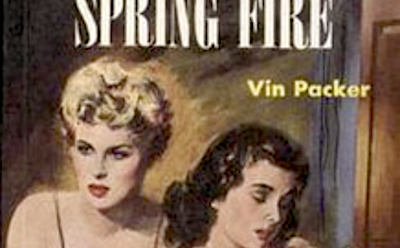
The massive success of Women’s Barracks led the Gold Medal fiction editor, Dick Carroll, to commission Vin Packer (pseudonym of Marijane Meaker) to write Spring Fire (1952). Generally considered the first true lesbian pulp novel about a love affair between two college women, the book sold 1.5 million copies. Spring Fire in turn inspired Ann Weldy, a young, married woman who had written a novel about sorority women that included a love affair between two girls named Beth and Laura. Weldy wrote to Meaker soliciting advice on how get published. Meaker introduced her to Carroll. According to Weldy, Carroll, after reading the manuscript told her, “It’s pretty bad, but I think it’s fixable. Go home, put this manuscript on a diet, and tell the story of the two girls. Then, send it back to me.” Carroll published the resulting book as Odd Girl Out (1957). It became the second best-selling Gold Medal paperback of 1957, and so Ann Bannon was born.

Between 1950 and 1965, hundreds of these books were published not only by Fawcett Gold Medal but also such major players in the paperback publishing world as Avon, Bantam, and Beacon, as well as lesser-known and now-defunct publishers like Hillman, Monarch, and Midwood Tower. But the popularity of these books could hardly be ascribed to their positive depictions of lesbian life — nor were lesbians their intended audience. From the very outset, the authors of these books were told they had to conform to the popular view of lesbianism as a pathology, which eliminated the possibility of happy endings. In her introduction to the 2004 Cleis Press reprint of Spring Fire, Marijane Meaker recalled that her editor, Carroll, told her that because the book would be sent through the postal system it could not present a positive portrayal of homosexuality or postal inspectors would return it to the publisher. “You cannot make homosexuality attractive,” he warned. “No happy ending.” Specifically, he told her one of the characters had to conclude she wasn’t a lesbian after all; the other had to be “sick or crazy.” Meaker obliged by having one of the lovers, Leda, committed to a mental institution while the other, Susan, decides she was never in love with Leda.

While not all lesbian pulp novels ended with insanity or death — Bannon’s Beebo Brinker series was a notable exception — tragic endings were the convention. As Forrest writes in her introduction to Lesbian Pulp Fiction: “We despairingly hoped that stories in the original paperbacks would not end badly but realized in the larger society, ‘perversion’ could have no reward in novels about us, even those we ourselves wrote.” The “we” to whom she refers are lesbian readers, but they were not the intended audience for the books. In an email, she points out the “original intent” of these books “was the titillation of men.” Straight men, that is, for whom the girl-on-girl action in these books made them perfect one-hand material for their sexual fantasies. The lurid covers of many of these books were no doubt intended as masturbatory visual aids for their male consumers.

Nonetheless, like the handful of gay male novels published after World War II, these books reached lesbian readers for whom they were — despite the required unhappy endings — an important and unique lifeline. Forrest continues in her introduction:

The importance of all our pulp fiction novels cannot possibly be overstated. Whatever their negative images or messages, they told us we were not alone. Because they told us about each other, they led us to look for and find each other, they led us to the end of the isolation that had divided and conquered us. And once we found each other, once we began to question the judgments made of us, our civil rights movement was born.

She concludes that these books “saved my life.”

¤

The 1970s witnessed the emergence of a militant movement for lesbian and gay rights that would, among other things, persuade the American Psychiatric Association to remove homosexuality from the list of mental illness in its diagnostic manual and lobby for the repeal of state sodomy statutes. As long as homosexuals could be dismissed as crazy or criminal, the very idea of equal rights and social acceptance was absurd. Thus, the de-pathologizing and decriminalization of homosexuality were absolute prerequisites for everything that followed in the LGBTQ rights’ movement. Throughout that decade, the gay and lesbian community began to emerge as a political force in locales, mostly big cities, urban cultural centers that we would now identify as “blue.” Still, the political and legal gains were extremely modest, affecting only small numbers of gays and lesbians and having no effect at all on transgender people. A few localities enacted anti-discrimination ordinances, and there were a handful of gay or lesbian elected officials — Kathy Kozachenko elected to the Ann Arbor City Council in 1972, Elaine Noble elected to the Massachusetts House of Representatives in 1975, Harvey Milk elected to the San Francisco Board of Supervisors in 1978.

Recognition of gay and lesbian unions in any legal form and comprehensive protections against discrimination in employment, housing, and service in the military were still pipe dreams. By the end of the decade, even the community’s scattered victories had inspired a massive blowback led by religious bigots and right-wing politicians. Those efforts culminated in Anita Bryant’s infamous “Save the Children” campaign to repeal a Miami gay anti-discrimination ordinance and the murder of Harvey Milk.

Perhaps it is not surprising, then, that there was no great outpouring of gay and lesbian literature in this transitional period. The most consequential literary developments of the era took place on the coasts. In San Francisco, Armistead Maupin launched a serialized novel published as Tales of the City (1978, Harper & Row), the first of an enormously popular series that chronicled gay and straight San Francisco with equal sympathy and cheerfulness. A little later in the decade, a group of New York writers that dubbed itself the Violet Quill was much more strenuously literary than Maupin. Its members included Edmund White and Andrew Holleran who achieved mainstream publication of novels, including White’s Nocturnes for the King of Naples (1978, St. Martin’s Press) and Holleran’s Dancer from the Dance (1978, William Morrow & Co.). The house organ of the New York gay writers was Christopher Street (1976–1995), a magazine that covered both politics and culture and featured both nonfiction and fiction. Its co-founder, Michael Denneny, would become the best-known and perhaps most influential gay editor of the 1980s and 1990s. That era would become the Golden Age of gay and lesbian publishing was on the horizon. And the terrible and awesome fuse that lit that fire was AIDS, which left, amid losses we still feel acutely today in the absence of nearly an entire generation of gay men, a wealth of fiction, poetry, and prose that made possible the many forking paths through which we would come to contemporary queer literature.

¤

Michael Nava is the author of a groundbreaking series of novels featuring gay Latino criminal defense lawyer Henry Rios.

Texas man pleads guilty to crimes that targeted gay men he met on app – KSAT San Antonio

DALLAS – A Dallas man has pleaded guilty to federal hate crime charges stemming from a string of kidnappings and robberies that targeted gay men using a dating app, prosecutors announced Thursday.

Daniel Jenkins, 22, was the last of four men to plead guilty to charges arising from the 2017 scheme that used Grindr to lure men to an apartment where they were then robbed and assaulted, federal prosecutors said. He pleaded guilty to five counts including hate crime and hate crime conspiracy.

“These defendants brutalized multiple victims, singling them out due to their sexual orientation,” acting U.S. Attorney Prerak Shah said in a statement. “We cannot allow this sort of violence to fester unchecked,”

Jenkins’ attorney did not immediately respond to requests for comment. According to court records, the group created a fake profile on the dating app, which is primarily used by gay men, and used it to draw men to an apartment. Once the victims arrived, the group forced them inside.

The men then robbed, pistol-whipped, beat and assaulted the victims, federal authorities said. At least two were smeared with feces and urinated on, and one was sexually assaulted with an object, prosecutors said. An indictment said the men were also subjected to anti-gay slurs.

Authorities were alerted when one of the victims got away and Dallas police arrived at the apartment to find four men lying face down in an empty bedroom.

In 2019, Michael Atkinson, Daryl Henry and Pablo Ceniceros-Deleon pleaded guilty to a variety of charges in the case, prosecutors said. They are set to be sentenced in June while Jenkins’ sentencing is scheduled for October.

1894: ‘The Dickson Experimental Sound Film’ as first gay film – The Mountaineer

Keep it Clean. Please avoid obscene, vulgar, lewd,
racist or sexually-oriented language.
PLEASE TURN OFF YOUR CAPS LOCK.
Don’t Threaten. Threats of harming another
person will not be tolerated.
Be Truthful. Don’t knowingly lie about anyone
or anything.
Be Nice. No racism, sexism or any sort of -ism
that is degrading to another person.
Be Proactive. Use the ‘Report’ link on
each comment to let us know of abusive posts.
Share with Us. We’d love to hear eyewitness
accounts, the history behind an article.

1969: ‘Funeral Parade of Roses’ explores Tokyo’s gay scene – The Laconia Daily Sun

“Funeral Parade of Roses” retells the “Oedipus Rex” myth within Tokyo’s underground gay scene of the 1960s, following a young trans woman named Eddie. Writer-director Toshio Matsumoto’s Japanese drama combines experimental film techniques with several genres, such as sexploitation movies and melodramas.