
Home Blog Page 127

24 Books We Can’t Wait to Take to the Beach This Summer – Thrillist

0

We ask you, once again, to consider the Beach Read: What is it? No one is lugging all 1,200-plus pages of The Power Broker (except me, one time) out onto the sandy shores of their favorite spot; they need to be relatively slim, immensely engrossing, but breezy enough to put down when your friend drags you into the water for a dip, and, generally speaking, not a bummer. We’ve picked 24 new titles to complement a day spent outdoors, maybe with a cold one nearby, because no beachside excursion is complete without a good book to block out the sun.

READ MORE: The Best Books of 2021 (So Far)

May 4
If you’ve been keeping up with the swiftly growing biological field of plant communication (and who isn’t???) you’ve probably heard of Suzanne Simard, whose work studying the inner lives of trees has captured the attention of millions of TED viewers, been the subject of a beautiful New York Times profile, and inspired James Cameron’s Avatar. Simard’s first book introduces us further to a complex interdependent world that exists below our feet and above our heads, challenging preconceived notions of how plants live, grow, and communicate.
 May 4
After escaping a sinking ocean liner in 1914, young Marian Graves discovers a love for flying planes, embarking on a lifelong quest, Amelia Earhart-like, to circumnavigate the globe. A century later, actress Hadley Baxter is cast to portray Marian in a film about her mid-flight disappearance, and the parallel narratives of the women weave themselves together into an epic tale spanning a hundred years.
 May 4
Andy Weir took us all to space and back with The Martian, and he’s set to do it all again with his latest book, which follows an amnesiac astronaut who wakes up from cryogenic sleep, his fellow crew members dead, knowing he has an apocalyptic mystery to solve far in the outer reaches of space whose answer will affect the survival of humanity.
 

The Siren by Katherine St John

May 4
Summer, a tropical Caribbean island, a film set, and some of Hollywood’s most notorious and alluring stars already sounds like a recipe for a steamy, intriguing plot, but when you add a publicly unstable actress, a producer fleeing scandal, and a manipulative personal assistant to the mix, as well as a hurricane brewing offshore that traps the entire film crew on the island, you’ve got yourself a beach read that’ll keep the pages flipping long after sunset.
 

The Plot by Jean Hanff Korelitz

May 11
If Stephen King tells you something is “insanely readable,” you listen. In this crime thriller, a professor and novelist plagued with writer’s block becomes intrigued by his arrogant student’s idea for a book. Years later, he learns that his student had died and steals the idea for his own, publishing a book that turns into a hit—except someone seems to know that the plot was plagiarized, taunting him while he digs into his former student’s identity.
 May 18
In the first book in Emiko Jean’s new series, Japanese American teen Izumi doesn’t feel quite at home in her tiny, mostly white, Northern California town; to make things more confusing, she learns that her father is the Crown Prince of Japan and visits the country to meet him, only to feel not totally welcomed there either, overwhelmed by the million things she’s expected to learn practically overnight to “prove” that she’s “Japanese enough” to wear her princess crown.
 May 25
For those already obsessed with the Real Housewives universe, Brian Moylan’s saga of the reality TV show’s history and behind-the-scenes curios is a no-brainer. For those who don’t understand what all the fuss is about, picking up this critical text might just be the thing that gets you hooked.
 June 1
Nella is the only Black woman at the (of course) overwhelmingly white publishing house where she works, until finally another Black woman, Hazel, gets a job there too. At first thinking they could be friends, bond, and commiserate with each other, Nella becomes the target of a threatening, shadowy campaign to get her to leave, but the full picture of what’s really going on isn’t revealed until the final twist of this novel by Zakiya Dalila Harris, a former editorial staffer at Knopf/Doubleday.
 June 1
This memoir from the Irish singer who became infamous (and blacklisted) after tearing up the pope’s photo on Saturday Night Live is as characteristically unfettered as they come. As time has passed, the broad cultural judgment about O’Connor has been revised, positioning 2021 as the perfect time to hear from Sinéad herself about her troubled youth in Dublin, rise to fame, and fallout for taking a controversial political stance on national TV.
 June 1
A play on the sinister energy of We Need to Talk About Kevin, Arnett’s followup to 2019’s Mostly Dead Things tracks a mother working from home who lives in fear of her worrisome young son, who transforms over the years from an ill-tempered boy into a vicious teen. Resentful of her absent wife, she attempts to keep things together by herself until her son’s bad temperament erupts into violence, tearing a rift in their idyllic queer life.
 June 1
One of the stories in Nana Nkweti’s debut, genre-blending short story collection is about a zombie outbreak in West Africa and the weary public relations person who tries to spin it into something less sinister. From this, to mermaids and more realistic tales of a graphic novelist or a pregnant woman, Walking on Cowrie Shells will constantly surprise you with its cleverness.
 

Slipping by Mohamed Kheir

June 8
In this fictionalized travelogue of Egypt with a splatter of magical realism, journalist Seif visits the secretly surreal destinations of the country in a post-Arab spring world, guided by a man with exhaustive knowledge of these special locations. Together, they witness unbelievable phenomenons, like giant corpse flowers raining from the sky and a section of the Nile River where one can walk on water.
 June 15
Edward Fosca is Cambridge University’s handsome and charismatic professor of Greek tragedies, the muse of a secret society of female students known as the Maidens. Therapist Mariana Andros is also convinced that Fosca is a murderer, after one of the Maidens is found dead on campus. Fans of dark academia and Donna Tartt’s The Secret History will be drawn to Mariana’s obsessive attempt to prove Fosca’s guilt, even at the cost of her own life.
 June 22
When literature professor Dr. Addie Cox is contacted by an eccentric billionaire to lead a mercenary strike team to infiltrate his high-tech Dungeons & Dragons-inspired theme park island, she’s puzzled to say the least. That is, until she learns that all communication into the island has been blocked off by a force shield, believed to have been activated by the project’s head designer—who happens to be Addie’s ex-boyfriend.
 June 29
College students Charlie Jordan and Josh Baxter don’t know each other—they met at the campus ride board looking to carpool on the long road home to Ohio. Josh claims he’s traveling back to visit his sick father, but his increasingly shady demeanor and refusal to let Charlie peek into his trunk cause her to believe she might be sharing a ride with the notorious serial murderer known as the Campus Killer.
 July 6
Helen Scales’ latest work of nonfiction—The Brilliant Abyss: Exploring the Majestic Hidden Life of the Deep Ocean, and the Looming Threat That Imperils It is the full title—defogs the marine life hidden in the the deepest and darkest parts of the ocean, making the case that these rarely seen creatures and ecosystems affect us surface dwellers more than we think. Those curious about a book about oceanic conservation while you’re at the ocean, this will definitely do the trick.
 

Bubble by Jordan Morris; Sarah Morgan

July 13
For something more engaging than page after page of big blocks of text, try a graphic novel. Bubble, based on the fictional comedy podcast, satirizes the modern gig economy in an alt-universe where wild monsters threaten humans in the titular Bubble, society’s safe zone, and an app crops up for people to sign up to hunt them down—for cash, of course.
 July 20
After Zhu, a young girl in 1300s China, becomes orphaned and alone, she adopts her late brother’s identity to take over his destined “greatness,” something not afforded to her being born a woman. If this sounds sort of like Mulan, you’re on the right track; this literary fantasy reimagines the rise of the Ming Dynasty’s founding emperor through a queer, feminist lens.
 July 20
Already one of our favorite books of the year, Rachel Yoder’s debut novel is about a mother, simply known as Nightbitch, who starts succumbing to ferality and believes she’s quite literally turning into a dog two years after putting her art career on hold to take care of her son, who joins in her “doggy games,” while her husband travels during the work week. It would be a shame to reveal much more than this about the plot, but join the Nightbitch bandwagon now: It’s being developed as a star vehicle for Amy Adams to go fully unhinged.
 

Virtue by Hermione Hoby

July 20
When Luca becomes disillusioned with an internship at an elite magazine whose heyday is long over, he becomes infatuated with a wealthy white couple who invite him along to their beach house over the summer. He revels in insinuating himself into their lives, but when tragedy strikes back in the city, Luca is forced to reckon with his own privilege, the dangers of complacency, and his place in a rapidly changing world.
 July 20
When he returns to his hometown to house-sit for a friend, the narrator of Andrew Palmer’s novel gains an unlikely obsession: ABC’s The Bachelor, which he catches one night while flicking through channels on the TV. Recovering from heartbreak and dipping multiple toes back into the dating pool texting women and going on weird group outings, his life gradually starts to resemble a reality dating show until he’s not sure where reality stops and “reality” begins.
 August 3
From the author of 2020’s gorgeous Migrations comes a similarly earth-shattering tale of humanity’s influence on the natural world. When two twin sisters arrive in the Scottish highlands determined to reintroduce a pack of gray wolves onto what was once their native soil, the sisters, the wolves, and the land appear to be thriving. But when a farmer is found dead, they know where the citizens of the nearest town will lay blame—and they also know that it was no wolf that killed him, but a human.
 August 3
Anthony Veasna So’s debut (and tragically posthumous) story collection traces the lives of Cambodian-American refugees in Southern California after escaping the devastating genocidal reign of Pol Pot and the Khmer Rouge, but by no means has Afterparties been deemed a bummer. Early reviews have celebrated just how funny, insightful, and sharp these short stories are, from a young writer whose gift will be remembered through these pages.
 August 30
The Girl on the Train author is back with her first novel in four years. When three women are drawn into the murder investigation of a man they all have mysterious connections to—a grief-stricken aunt, a suspiciously nosy neighbor, and a one-night-stand who was the last person to see the victim alive—they all appear to have the motive to do this man harm. But which of them, if any, did it, and how far would each of them go to enact revenge?
Where did Fort Worth gay bars go? – Spectrum News

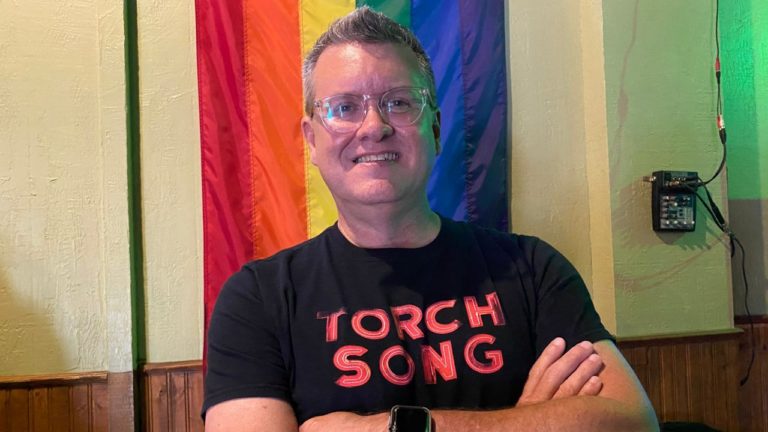
FORT WORTH, Texas — As employees watched flames engulf the bar they had just cleaned and closed down for the night, few understood the glowing embers in front of them represented the end of an era. The ash pile of the Rainbow Lounge, Fort Worth’s most iconic gay bar and an epicenter of the town’s then-burgeoning “gayborhood,” took with it painful and joyous memories of a gay scene the city hasn’t been able to replicate since.


What You Need To Know

  • There are only about half a dozen gay bars in Fort Worth
  • Back in the 1980s, there were as many as 18
  • Just a few years ago, there was a growing gay bar scene in an area south of downtown
  • When the iconic Rainbow Lounge burned down in 2017, the “gayborhood” permanently changed

In 2009, the Rainbow Lounge was the setting for a national news story. Local police and TABC agents raided the then recently-opened bar on the 40th anniversary of the raid at the Stonewall Inn in Greenwich Village, which set off the Stonewall Riots and gave birth to the modern gay rights movement. In Fort Worth, Police made several arrests for public intoxication, and one customer suffered severe brain and head injuries.

The timing of the raid incensed the local gay community and its supporters. The event galvanized a population that had long faced persecution and fought to integrate. A Dallas filmmaker made a documentary about the raid and resulting dialogue with the city and police the resulting protests sparked.

When the Rainbow Lounge burned, the number of gay bars in the city was already comparatively low. Back in the early ’80s, the town boasted nearly 20 gay bars. By 2017, there were only about six or seven in Tarrant County, and most of them were concentrated in a small corridor just south of downtown at the cross-section of Jennings and Pennsylvania avenues. Now, there are even fewer places scattered throughout the city.

Todd Camp — a local gay rights activist, founder of former artistic director and executive director of Q Cinema, which produces the Fort Worth Gay and Lesbian International Film Festival, Fort Worth’s first and only gay film festival — said the lack of local gay bars isn’t necessarily a bad sign for the city.

“The gay community is the dog that caught the car,” he said. “We wanted inclusion — to be part of the bigger world at large — and we got it. You can walk into any bar in the city of Fort Worth on any given night and find gay people in it being openly gay, kissing, being emotional, engaging in public displays of affection with no fear of repercussions because, for the most part, people feel comfortable.”

Camp has been researching Fort Worth’s gay history dating back to the turn of the 20th Century for a book he’s writing. According to his data, there have been more than 100 gay bars in Fort Worth and nearby Arlington, with 651 Club the longest-tenured at about 20 years, and a club called Trix lasting only one weekend.

When prohibition ended, gays and lesbians were forbidden from drinking in bars. Businesses could lose their liquor licenses, or they could face shut down if they served the LGBTQ community. In the ’50s, mafia-owned speakeasies on Fort Worth’s notorious Jacksboro Highway stepped in to serve the community — with watered-down, overpriced drinks.

Other gay clubs opened despite police crackdowns, Camp said. Owners employed a lookout person who would flash a red light when police showed up to the clubs.

“All the gay men would grab a girl and they would start dancing so that when they cops came in, they wouldn’t be arrested,” he said.

Homosexuality, he said, only really became taboo in the ’50s and ’60s. Though the gay community wasn’t integrated then, it lived alongside the heterosexual community peacefully.

“At the turn of the century and into the ’20s, drag acts and female impersonation was just wildly popular,” Camp said. “No one really had a problem with gayness. It was strange. It was different. But it was a world that didn’t bother them. That was always interesting to me, and that’s an area we don’t really know anything about.”

One of the reasons the Fort Worth gay bar scene has been slow to grow since the 1980s  is the lure of Dallas’ thriving gay scene drawing away people — particularly young people who prefer a more up-tempo dance scene rather than Fort Worth’s more languid come-as-you-are vibe.

“The whole Dallas versus Fort Worth kind of thing dates back to the ’50s and ’60s,” Camp said. “There was a parking lot downtown that was infamous, because that was where gays would meet and they would all park and then drive to Dallas bars. Dallas always had a much more thriving gay scene.”

Countless publications have spent wells of ink opining the death of the gay bar in general. San Francisco recently lost The Gangway, that city’s oldest, longest-running gay bar. New York has seen many clubs shutter, such as the legendary leather bar The Rawhide — open since 1979, long-tenured dance club Splash, G Lounge, and others. Los Angeles said goodbye to The Palms, Circus Disco and The Other Side.

Locals around the country say gentrification is to blame, and the LGBTQ community usually augurs coming development. The cycle is now a familiar one: Gays move into a downtrodden area, build it up, create a community, and developers swoop in and price them out of the neighborhood.

While the area surrounding the Fort Worth gayborhood has developed at the pace of the Game of Thrones opening, the buildings and bones of the cross-section are still mostly intact. Newly opened Liberty Lounge, though not a gay bar, is very LGBTQ-friendly. It has opened in a spot that has traditionally been a station of the cross for local LGBTQ folks. The longest-tenured gay bar in Fort Worth isn’t in the old gayborhood. Club Changes occupies a prominent space on East Lancaster Avenue in East Fort Worth.

“I still firmly believe that the role of the gay bar is still important, because I still believe that the coming out process is painful,” Camp said. “It’s hard, no matter how many role models there are, no matter how many television shows and movies affirm you as a person, it still hurts. It’s still scary. You still feel alone. You still feel abandoned by the rest of the world. You still feel like an outcast.

“So the role of the bar was, I can go to this place where everybody is like me, and I will be safe and it will be OK.,” he continued.

America ‘best place in world’ to be female, Black, gay, trans: Ayaan Hirsi Ali – Fox News

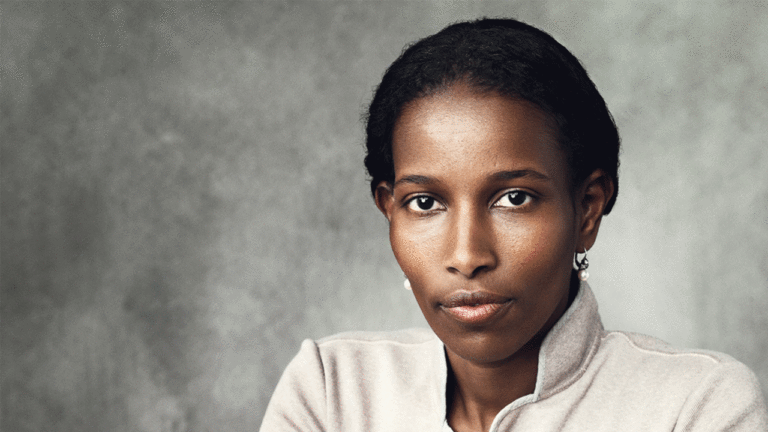
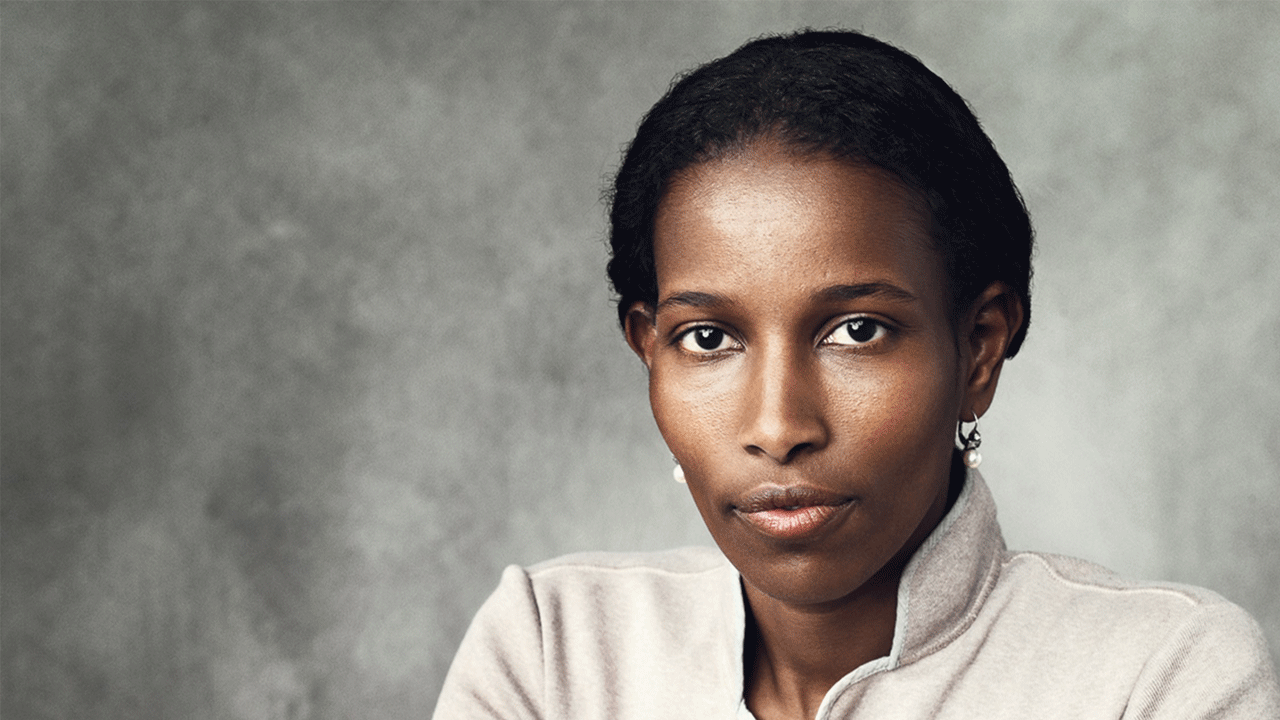
Somali-Dutch scholar and activist Ayaan Hirsi Ali strongly criticized the increasing presence of critical race theory and racial politics in the United States, commenting that as a Black woman, the United States is the best nation in the world for minority rights on the part of both race and gender.

Ali, who was the victim of the regional custom of genital mutilation and later became a women rights activist speaking out against such customs; after her father shepherded her family out of Somalia, said on Fox Nation’s “Tucker Carlson Today” that those who preach division and theories of inequality do not recognize America’s unique standing as a beacon for the oppressed — rather than a feature of oppression.

“That’s what’s so great about America is that a lot of these things have actually been achieved; equality between men and women, it’s the best place in the world to be female, it’s the best place in the world to be Black, it’s the best place in the world to be gay, trans, whatever you want to be,” she told host Tucker Carlson.

“That is America. What do we do with all those achievements if you still want to keep an organization going and still wants to get money from donors.”

Ali said that institutions like to “invent” new problems that don’t otherwise exist, or at least not to the drastic extent they are advertised to be.

“If you still want to keep the organization going and still want to get money from donors, you start to invent new stories and new problems. And you come up with things like Islamophobia,”  said Ali, who was born Muslim but later became an atheist.

She added that one example is the left-wing Southern Poverty Law Center, which claims to identify hate groups and hateful individuals – which had put her and former radical Islamist Maajid Nawaz – who went on to found an organization called Quilliam dedicated to counter-extremism and empowerment of moderate theism – on a suspicious “list.”

AYAAN HIRSI ALI BLASTS ILHAN OMAR OVER CALL TO REMAKE USA: ‘I DON’T THINK WE NEED A REVOLUTION’

“The SPLC … put us on a list which looked a bit like a hit list, I have to say. Because if you are on that list, you make it very easy for those people who may not constantly be making their own lists to go after you,” she said.

“So in many ways, they’re sinister, they’re wrong, they’re corrupt, and the corruption is trying to take people’s money, vulnerable people’s money to pretend that they’re fighting for something that they actually are not fighting for.”

Ali told Carlson that it is important for people to organize instead to counter things like critical race theory with critical thinking.

“[That is when] you take what you have and you see what is not right and try to correct that — you use words like reform. Or you’re talking about critical race theory or critical justice theory and you’re being inculcated into an ideology, into a doctrine, into an orthodoxy. That’s where we are at now,” she continued, adding that Americans may be at last recognizing the nefarious nature of critical race theory and “invented” problems.

“You have people from the left, people from the right, you have people from the center who are waking up to this thing and we’re at that stage now. Where it’s like wait a second, what’s going on here?”

As for the concerns of those preaching critical race theory, Ali told Carlson that freedom of expression and religion and equality of race and gender were embodied in the Constitution from the founding of this nation; which she said helped lead enslaved people at the time to eventually fight for their freedom later codified explicitly in the 13th Amendment; ratified in 1865.

CLICK TO GET FOX NATION

“When Black people in America were subjected to slavery and all sorts of humiliation, they were able to wave those documents to fight for their dignity, their equality, their freedom — That’s a unique thing — that’s what I try to tell Americans: You don’t have that in Somalia, Saudi Arabia, Ethiopia or even any of those European countries: It’s unique to America.”

“Now, we’re being told, ‘ditch that and make your skin color the source of all truth, equality, dignity and whatever gives meaning to it’.”

“My skin color has always been the most superficial thing for me about anything.”

Fox Nation programs are viewable on-demand and from your mobile device app, but only for Fox Nation subscribers. Go to Fox Nation to start a free trial and watch the extensive library from Tomi Lahren, Pete Hegseth, Abby Hornacek, Laura Ingraham, Ainsley Earhardt, Greg Gutfeld, and many more of your favorite Fox News personalities.

Chasten, Emhoff Take DC. Second Gent Pushes Vaccine On Pride Lap Of Gay Bars. Chasten Owns RNC Chair, Leaves Her Own Platform As Receipt. – Towleroad

Buttigieg to RNC Chair: ‘Revisit Your Party’s Platform’

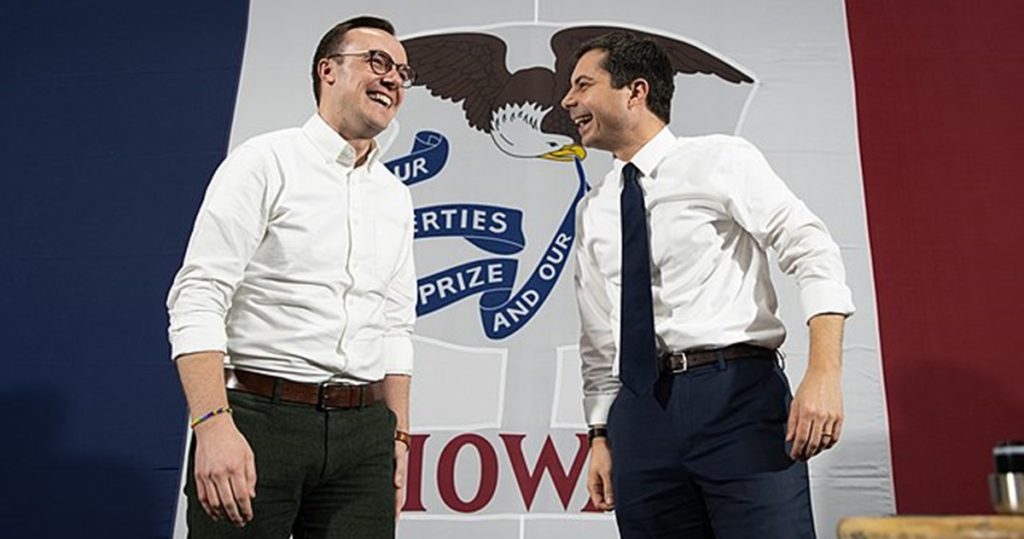
Chasten Buttigieg, husband of Transportation Secretary Pete Buttigieg, didn’t suffer a message from RNC chairwoman Rona McDaniel celebrating Pride month and the GOP’s support for “measures that promote fairness and balance protections for LGBTQ Americans and those with deeply held religious beliefs.”

Buttigieg responded to McDaniel by calling out the problems in her statement directly in a tweet Thursday. “Those with ‘deeply held religious beliefs’ are often the parents who force their LGBTQ children out of the home and onto the street. I’ve met with those kids. 40% of homeless youth in this country are LGBTQ,” wrote Buttigieg. “Re-visit your party’s platform before you open your mouth about #Pride.”

McDaniel also touted that LGBTQ support for the GOP doubled over the last four years in her statement, but clearly omitted the numerous anti-LGBTQ policies pushed by the party she leads under the Trump administration as well as the more than 30 state legislatures that are currently pushing to restrict and rescind trans rights across the country.

Buttigieg’s comments have drawn plenty of support online from LGBTQ people and allies.

Second Gentleman Pops in DC LGBTQ Bars to Support Pride Vax Pop-up

Second Gentleman Doug Emhoff took time Thursday night to stop in at Pitchers and A League of Her Own, two staples of Washington, D.C.’s LGBTQ bar scene. Giant pharmacy held a Pride-themed vaccination pop-up at the bars, offering free Covid-19 vaccines to the communities.

Emhoff gladly posed for pictures with those in attendance and secured a birthday cake for his wife, Vice President Kamala Harris, at local gay-owned bakery The CakeRoom.

Previously on Towleroad

Road Head review: Sharp, witty gay horror with a gruesome climax – Metro Weekly

road head
Road Head

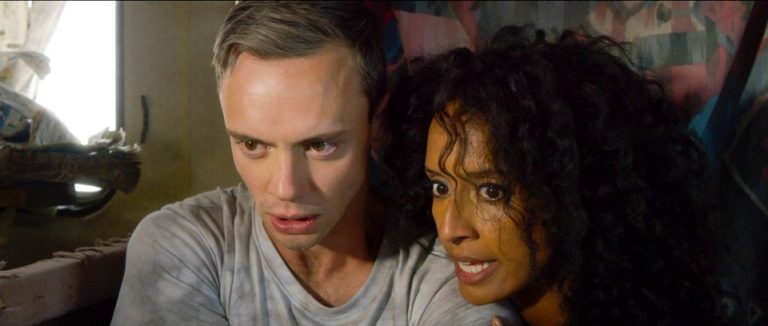
A sharper, wittier horror trip than one might expect a movie titled after a sex act to be, David Del Rio’s Road Head (★★★☆☆) gives good laughs and suspense until the plot and pacing peter out along the way to the film’s gleefully gruesome climax. Not exactly full of twists and turns, the movie builds a fun ride upon crisp direction, bloody but not overdone horror mayhem, and solid performances.

Damian Joseph Quinn and Clayton Farris form a cute comic duo as vacationing L.A. couple Alex and Bryan, trekking through the Mojave in their cannabis-colored Chevy Astro van. “It was supposed to just be us,” Alex complains to Bryan, but, as it turns out, they have a tagalong in their mutual friend Stephanie, played by Elizabeth Grullon, who basically runs away with the movie.

Stephanie, smoking away her rage at the cheating boyfriend she left at home, has badass energy to spare even before the friends’ road trip takes a wrong turn into the killing grounds of a sword-wielding maniac. But she really steps up once they cross paths with the jacked, hooded menace known as the Executioner (Adam Nemet), who slices off the heads of travelers unlucky enough to pass through his domain.

Her friends, more often than not, don’t have her cojones or smarts, which isn’t a good look for the gays. Stephanie won’t be alone in wondering, “Why the fuck is your phone in the van, Alex?!”

Road Head

Quinn, Farris, and, in particular, Grullon are tasked with selling some implausible turns in the perky script by Justin Xavier, who also wrote Del Rio’s indie horror debut, Sick for Toys. The main cast is up to the task, although the same can’t be said for the main villain, whose presence loses impact as soon as he starts talking.


Of the few other characters who show up in the desert, including a drag queen played by Misty Violet, Paul T. Taylor makes an impact as an off-the-grid weirdo, as does Sierra Santana, as the unfortunate passenger in the prologue who first suggests the shenanigans suggested in the title.

Stephanie’s boyfriend David (Clay Acker) also materializes, but as a figment of her imagination — and a means for the film to dramatize the inner workings of its standout character. Again, Grullon adds nuance to the silliness, but neither the concept nor Acker’s performance as David are that persuasive.

The occasional green-screen shots of the desert are more convincing, and on the whole, the movie’s a well-made, satisfying diversion — not the best you’ve ever had, but good enough to get you there.

Road Head is available for streaming on Prime Video. Visit www.amazon.com.

Read More:

Cruella review: A hyperbolic, hyperactive fashion fail

‘A Quiet Place: Part II’ review: Greater scale, but less intensity

‘Dance of the 41’ Review: Netflix’s drama is a gorgeous tale of closeted gay love

stripes – Rainbow flags will not be flown on military bases for gay pride month, Pentagon says – Stars and Stripes

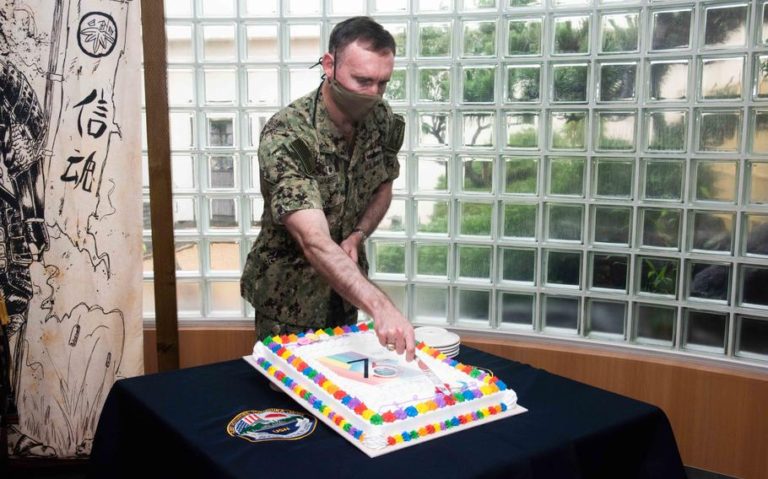
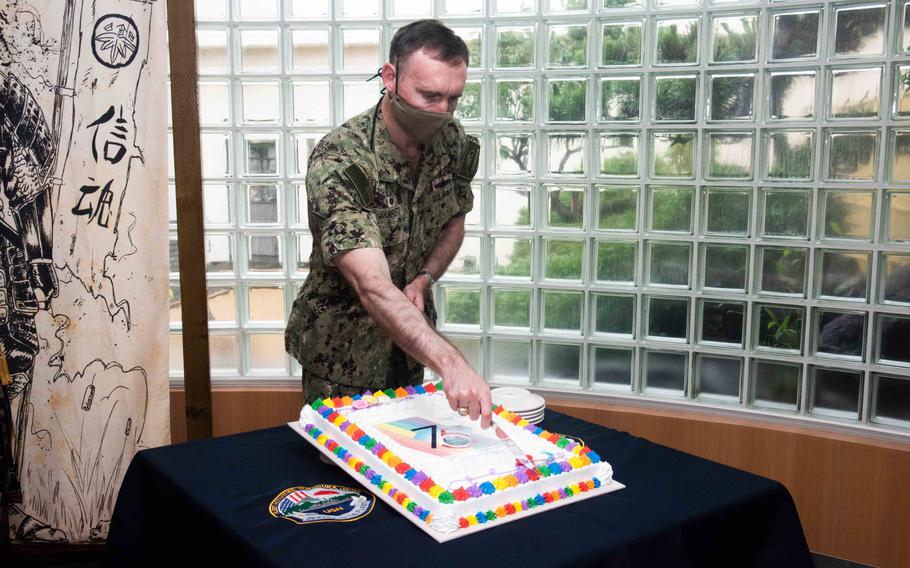
Capt. Rich Jarrett, commander of Fleet Activities Yokosuka, cuts a celebratory cake at a LGBT Pride Month cake-cutting ceremony on June 25, 2020.

Capt. Rich Jarrett, commander of Fleet Activities Yokosuka, cuts a celebratory cake at a LGBT Pride Month cake-cutting ceremony on June 25, 2020. (Tetsuya Morita)

WASHINGTON – The Defense Department will not make an exception to its unauthorized-flag policy to allow military bases to fly rainbow flags for Pride month, chief Pentagon spokesman John Kirby said Friday.

June is gay pride month, which supporters often mark with displays of rainbow flags. However, a July 16 Pentagon policy that banned the display of unofficial flags on military installations means the unauthorized Pride flag will not fly on bases this month, Kirby said.

“The department will maintain the existing policy from July of 2020 regarding the display or depiction of unofficial flags, so there won’t be an exception made this month for the Pride flag,” Kirby told reporters at the Pentagon.

The policy was enacted in the wake of a national outcry against racism after the killing of a Black man by Minneapolis police on Memorial Day 2020. It effectively quashed the display of Confederate flags on military bases without directly addressing the controversial banner.

The memorandum banned the display of unauthorized flags “in all Department of Defense workplaces, common access areas and public areas.” The only flags authorized were those of U.S. states, military service flags, POW/MIA flags, ceremonial, command or unit flags or other government-sanctioned flags.

Kirby said the decision not to issue an exemption for the Pride flag was made to avoid “the potential for other challenges that could arise from that specific exception.”

“This in no way reflects any lack of respect or admiration for people of the LGBTQ-plus community, personnel in and out of uniform, who served in this department,” Kirby said. “We’re proud of them.”

Alternatively, the State Department in April announced it would allow embassies to fly the Pride flag during the month of June.

doornbos.caitlin@stripes.com

Twitter: @CaitlinDoornbos

Caitlin Doornbos

The 40-Year-Long Fight: HIV Experts on Four Decades of the Epidemic – Metro Weekly

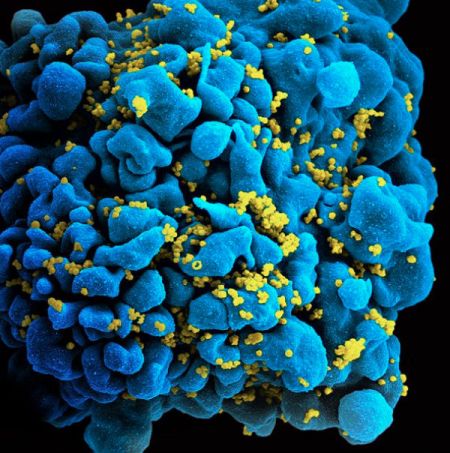
An HIV-infected T-cell – Photo: NIH’s National Institute of Allergy and Infectious Diseases (NIAID), via Wikimedia.
It was an article by Larry Kramer, published in the New York Native in 1983, that awoke Paul Kawata to the threat of HIV.

While Kawata was already aware of a mysterious disease that was largely claiming the lives of gay men, Kramer’s opening words resonated with him: “If this article doesn’t scare the shit out of you, we’re in real trouble. If this article doesn’t rouse you to anger, fury, rage, and action, gay men may have no future on this earth.”

“With that opening line, Larry awoke my activism and the need for the community to fight,” says Kawata, now the executive director of NMAC, the organization dedicated to combating HIV among vulnerable communities, particularly communities of color, by fighting for health equity and racial justice in health care.

“In those early days, it was absolutely frightening,” Kawata recalls. “While we thought we knew how HIV was transmitted, there were no definite scientific studies yet. And so there were rumors about poppers and there were rumors about all these different ways that you could or could not catch HIV. And the only thing that we saw back then was the fact that our friends were getting sick and dying, and they were dying so fast.

“It was kind of unbelievable. When I look back and think about how you could see some person one day, and, a month later, they were dead. I was a young gay man then. I knew nothing about death. I knew nothing about sickness. All I knew was that somebody I loved was in trouble,” Kawata adds, referring to his former partner, who died from the disease before modern-day treatments were ready.

For Daniel Bruner, the awakening came much earlier, when he read a story in The New York Times about the emergence of mysterious illnesses affecting gay men in Los Angeles and New York. 

“I remember having just moved to the D.C. area with my partner at that time, and reading that story, and looking at each other and saying, ‘Oh my God, we don’t even want to think about what this might be,’” says the senior director of policy at the Whitman-Walker Institute, the federally-qualified health center that specializes in HIV- and LGBTQ-specific care.

“In the very early days, just from the perspective of the general population, as well as gay men in the circles I was win, people were completely terrified. I remember people going through phases where everyone stopped hugging and everyone stopped kissing each other hello, and people were very careful about sharing a water glass or sharing a beer or sharing a glass of wine or anything,” Bruner adds. “There was just a lot of fear and a lot of physical separation…. There was no cure, certainly, and there was no really effective treatment at all. So it was a time of a lot of uncertainty and a lot of fear.”

Joanne Sincero primarily learned about HIV and AIDS through her activism in a group called OUT, which advocated for fast-tracking HIV treatments through the FDA. But even though much of the coverage of the virus focused on gay men in the early days of the epidemic, Sincero knew from her personal interactions with various communities that HIV was spreading beyond the LGBTQ community to other vulnerable groups.

Sincero, now the wellness coordinator at Whitman-Walker Health, recalls how, after joining Whitman-Walker’s team in 1994, she would have to figure out contingencies in case some of the people with HIV in her day treatment program passed away.

“We had the constant challenge of caring for, honoring people’s lives, their stories. Yet while you were losing people right before your eyes — someone died every week — we tried to figure out how we could manage to provide care without making people feel like they were going to be next,” she recalls. “At the time, there were very few treatments, and some of them were really toxic for people. We had a nap room as part of our program because people couldn’t even make it through a day without having to rest and lie down.

“And yet there was also a sense that people wanted to live the last bit of their lives. I remember taking someone to the Air and Space Museum, to the planetarium, where you can lie back and look up at the stars, and this person was so ill that I would listen for every breath as he breathed, like, ‘Oh, my God, this is going to be the last breath?’

“The only way you could bear it was that you knew that the work was still there and you had to keep going because there were people who were depending on us, depending on each other to carry on. So having a supportive community kind of normalized things for people and gave them a sense that they could still go on and do stuff and still get something out of life, even though they didn’t know how much time they had left,” she adds.


For those suffering from the disease, true relief didn’t come until the mid-1990s, after Dr. David Ho released his seminal study of protease inhibitors and health care professionals realized that they had found a treatment that would keep people with HIV alive.

“I look back on those years between 1996 and 2000 and it was a complete shift in everything that we were doing. Up until then, almost all of our work was just about helping people die with dignity. And all of a sudden, around ’96, ’97, in ’98, we got to learn how to have people live with dignity,” says Kawata.

“Around 2008 is when we got the studies that showed that if you had an undetectable viral load, you couldn’t pass the virus to someone,” he adds. “And that became the next revolution, because all of a sudden we realized that not only could we save an individual’s life, but we could also save the community’s life if they could become undetectable. And so we had a clear pathway for how to end the epidemic.”

As a result of those advances in treatment and prevention, HIV has become less of a terminal disease and more of a long-term manageable health condition.

“The changes in particular, around 1995 and 1996, were stunning for those of us who were helping people and living with the disease in the community at the time,” notes Bruner. “I was doing a lot of volunteer legal work for a couple of Whitman-Walker clients with the Legal Services Department. And I had a client whose insurance plan would not cover her medications and we were negotiating with the carrier and the employer and, you know, looking into legal action. 

“I talked to my client’s doctor at the time and the doctor told me, ‘If you’re going to do something for this individual, you need to do it quickly, because she is declining and she likely will not be alive a year from now.’ And we got the insurance company to reverse course and cover her meds. So she got on meds right away. And about a year or so after that, I got a notice of her impending marriage. So that’s kind of how transformative it was at that particular time.”

The HIV epidemic took an enormous toll, not only on the LGBTQ community, but on society as a whole and the District of Columbia in particular. It’s something that Kawata particularly thinks of when he reflects on his life, given the designation he bears as the last remaining member, out of 33 original co-founders, of the National Association of People Living with AIDS.

“I will be very honest and say that HIV fucked me up,” Kawata says. “I am a part of a generation of people whose lives were completely turned around and lived through a trauma that is almost unspeakable because there was so much stigma and silence around it. And so, while I am proud of the work that I’ve accomplished, I know that it came at a cost. I’m growing old as a gay man, and all the people that I came up with are dead, and I am alone with my memories of these amazing people. There are moments in my life when I know that those angels are with me every step of the way. And there are moments in my life when I know that it feels too much of a burden to carry on the legacy and their dreams.”

Kawata also thinks of the artists, creative professionals, and changemakers who might have had a positive impact on society had they not passed away too early from AIDS-related causes.

“I look back at some of these extraordinary figures: Rudolph Nureyev, Halston, and I wonder ‘What would have happened to Nureyev’s career and how would he have been in the world if he had survived? How would Halston have changed the world?’” he says.

“There are so many voices that are gone too soon and had so much more to give to this world,” says Kawata. “And so beyond the personal loss, the epidemic marks a huge loss to society of talent and the vision and ability that I don’t think we fully understand yet, because there is this generation that could have, should have, would have changed the world. I just look at the loss of creativity and love and political power, and it makes me profoundly sad.”

Sincero and Bruner note one of the effects of the HIV epidemic has been that it’s made many more people more aware of the social determinants of health and of the importance of racial equity in fighting the epidemic, which disproportionately impacts some communities over others.


Looking toward the future, advocates hope that the rapid manner in which researchers were able to develop a vaccine for COVID-19 will inform efforts to develop an HIV vaccine.

“I’d never heard of an RNA vaccine until this last year. And I will be honest, I had the same kind of cynical sense of what was possible. It seemed like we had been fighting for an HIV vaccine forever and not making much progress. And yet I would be foolish to not acknowledge what has been extraordinary around the COVID vaccine,” notes Kawata. 

“I had an opportunity to talk to some of the scientists who work on the COVID vaccine. And they’ve all said to me, ‘You’re next.’ And so I don’t know if it’s pollyannaish or not. What I know is that people who are doing work on this RNA vaccine have said that there is a great possibility that this mechanism can be used for many other diseases that we are facing. And so my hope is that we will [eventually] have an HIV vaccine.”

Sincero, too, marvels at how quickly a vaccine for COVID was developed and the implications that might hold for HIV.

“Obviously, it’s a different virus, but considering the long hunt for an HIV vaccine, in one sense, it made me feel hopeful, where maybe they’ve learned some other things that could be applicable to HIV,” she says. “And in another sense, I thought, ‘Wow, it just shows how entrenched and how wily this virus is.’”

On the other hand, Sincero says what is currently known about HIV, including the use of treatment as prevention (TasP), offers its own hope for the future. 

“A vaccine would obviously be a great prevention tool. But we already have some fantastic ones like PrEP, which is 99% effective,” she notes. 

She also has concerns about the need for support services for people who are already infected if a vaccine is developed. 

“I’ve worked with a lot of people who I’ve known for 20 years who are living with this virus. And in some sense, it’s been a struggle for them because they feel like it’s gotten lost a bit, that they’ve kind of taken a back seat — necessarily so — as AIDS service organizations evolved into community health centers,” Sincero says. “And so I think we have to remember that social connection is one of the most important parts of health care. It’s obviously not just maintaining your medical regimen and taking your pills. So in that sense, I hope there continue to be places for people to connect, to keep those social ties.”

Kawata says that, despite the HIV epidemic’s tremendous toll in terms of lives lost, it also had some effects that were ultimately positive and beneficial to the larger LGBTQ community.

“So I’m about to say something that some people may consider heresy: I think the HIV movement woke up the LGBTQ movement in a way that we will never fully understand,” he says. “All of a sudden, all of these folks who were living in their closets, in a world that hated them, had to stand up and say, ‘I need your help.’ And I think what it did is it humanized gay men to a larger world in a way that we hadn’t been humanized. It woke up a community to say ‘We deserve the same rights as anybody else.’

“And so in the larger context, I think what the epidemic did was it became the political touchstone for the LGBTQ movement to then go on to look at marriage, to look at lived equality, to look at all these other fights,” Kawata adds.

“I think the second thing that the epidemic did was it helped us to understand that we were everywhere, because HIV was everywhere. It wasn’t just in New York and San Francisco or L.A., it was Omaha. I did a meeting with the ‘Ladies who Lunch’ in Omaha. And it was extraordinary to me to watch them try to grapple with the fact that all of a sudden the people that they loved, with whom they really never talked about their sexuality, were getting sick and they wanted to do something. And so I think that it created a sense of: who are your friends? And the people who stood with us are the people that we owe the world to.”

Kawata notes that the parameters of the fight against HIV have shifted to a question of health care access.

“HIV now is looking for racial equity in health, it is asking the question of ‘Can we as a society address the racism that is perpetuating an epidemic?’ When you look at Black Lives Matter and look at the injustices that are happening, we are recognizing that HIV/AIDS is part of that struggle, that the epidemic continues to disproportionately impact black and brown communities. And we have to look at what racial justice means if we’re ever going to end HIV.”

Read More:

Billy Porter reveals he’s been living with HIV for 14 years

UNAIDS Ambassador: Eliminating bans on gay sex are crucial to fighting spread of HIV

Injectable HIV treatment only requires six doses per year, study finds

Ethical Investing for Pride Month: 10 Gay-Friendly Stocks To Buy – Yahoo Finance

xavierarnau / Getty Images

xavierarnau / Getty Images

In the not-too-distant past, there was no such thing as an “LGBTQ-friendly workplace.” And although there’s still a lot of work to be done in this area, there are now literally hundreds of employers committed to LGBTQ inclusion and equality.

Last Chance: It’s Not Too Late To Nominate Your Favorite Small Business To Be Featured on GOBankingRates — Extended to June 5

In fact, according to the Human Rights Campaign, there are 767 places designated as the “Best Places To Work for LGBTQ Equality” in 2021. Ten of those names appear in the list below if you’re looking to invest somewhere that is working toward LGBTQ equality.

Last updated: June 4, 2021

Kitchener-Waterloo, On, Canada - October 17, 2020: Google office building in Kitchener-Waterloo, Ontario on October 17, 2020.

Kitchener-Waterloo, On, Canada – October 17, 2020: Google office building in Kitchener-Waterloo, Ontario on October 17, 2020.

Alphabet Inc. (GOOG)

Google, now trading under parent company Alphabet, has long been a strong supporter of the LGBTQ community, with even its ads reflecting its efforts at diversity. The company has a specific support group for the LGBTQ community, known as “Gayglers,” and it sponsored a trip for more than 60 of its LGBTQ employees and managers from 26 countries to Warsaw, Poland, to help explore diversity issues in Central and Eastern European regions.

Read: Socially Responsible Investing in 2021: How Can You Invest Responsibly?

Brisbane, QLD, Australia - 26th January 2020 : IBM (International Business Machines Corporation) sign hanging on a building in Brisbane.

Brisbane, QLD, Australia – 26th January 2020 : IBM (International Business Machines Corporation) sign hanging on a building in Brisbane.

International Business Machines Corporation (IBM)

IBM was one of the first companies to include sexual orientation in its nondiscrimination policy, back in 1984. The company established its Global LGBT Council, designed to make the workplace safe for everyone, in 1995. The following year, IBM became the largest company at the time to provide benefits for domestic partners. IBM has multiple campaigns to support diversity and equality, including its “Be Equal” initiative, which strives to provide an open and welcoming environment regardless of sexual orientation, gender expression or gender identity.

See: Ways Investing Will Change in the Next 25 Years

.

.

Visa Inc. (V)

Visa has appeared on the Human Rights Campaign’s Corporate Equality Index for five years running, marking it as one of the best places to work for LGBTQ employees. Visa supports the United Nations Standards for LGBTI, which outlines five standards of conduct that the business community can use to combat discrimination against lesbian, bi, gay, trans and intersex people. Visa has also joined the Human Rights Campaign’s Business Coalition for the Equality Act, which aims to provide the same basic protections under federal law to LGBTQ individuals as with other protected groups.

Check Out: 25 Investments That Make You Feel Good While You Make Money

Irving, Tx: Entrance facade of Charles Schwab branch office nice trim landscape.

Irving, Tx: Entrance facade of Charles Schwab branch office nice trim landscape.

The Charles Schwab Corporation (SCHW)

Schwab has received a 100% rating on the Human Rights Campaign’s Corporate Equality Index for LGBTQ+ inclusion for over 15 years. In addition to striving for a diverse and supportive workforce, the financial services company also develops educational content tailored to the needs of specific communities, including the LGBTQ+ community. The company has installed gender-neutral restrooms in some locations, and it supports and volunteers for many different LGBTQ groups across the country. Internally, Schwab has created a diversity and inclusion group known as PRIDE, dedicated specifically to the LGBTQ+ network at Schwab.

More: The Top 10 Stocks for 2021

Sydney, Australia - March 22, 2014: A large group of people walk past two large neon Coca-Cola billboards on Kings Cross at night.

Sydney, Australia – March 22, 2014: A large group of people walk past two large neon Coca-Cola billboards on Kings Cross at night.

The Coca-Cola Company (KO)

Coca-Cola prides itself on its diversity and inclusion. The company has scored 100% on the HRC’s Corporate Equality Index every year since 2006. Coca-Cola has also designed a separate Business Resource Group specifically to address LGBTA issues. Other LGBTQ-focused resources that Coca-Cola supports include the Gay & Lesbian Victory Fund and The Trevor Project.

Learn: What $1,000 Invested in Stocks 10 Years Ago Would Be Worth Today

San Jose, USA - October 15, 2015: PayPal headquarters located at 2221 N.

San Jose, USA – October 15, 2015: PayPal headquarters located at 2221 N.

PayPal Holdings, Inc. (PYPL)

PayPal is another company scoring a perfect 100% on the Human Rights Campaign’s Equality Index, and it strongly promotes LGBTQ rights. The company has a benefits flyer that outlines all its health benefits for transgender employees, from hormone replacement therapies and voice modification surgery to therapy sessions and more. PayPal Pride is a workplace community that supports the well-being of its LGBTQ family through awareness, sensitivity and outreach.

Discover: The Most Fascinating Things You Never Knew You Could Invest In

Redmond, WA, USA - January 30, 2018: One of the biggest Microsoft signs is placed next to green trees at a public intersection near Microsoft's Redmond campus.

Redmond, WA, USA – January 30, 2018: One of the biggest Microsoft signs is placed next to green trees at a public intersection near Microsoft’s Redmond campus.

Microsoft Corporation (MSFT)

Microsoft and its employees have donated over $2 million to organizations supporting the LGBTQI+ community just over the past year. The company contributed an additional $150,000 to organizations such as The Trevor Project, OutRight Action International and Act To Change, in addition to the ACLU. Microsoft has received a perfect 100% score on the HRC’s Equality Index for 13 years running.

See: How To Invest In Stocks: A Beginner’s Guide

July 30, 2018 Cupertino / CA / USA - Entrance to one of the Target stores located in south San Francisco bay area.

July 30, 2018 Cupertino / CA / USA – Entrance to one of the Target stores located in south San Francisco bay area.

Target Corporation (TGT)

Inclusivity is one of the core corporate beliefs at Target. As with many of the other companies making the HRC Equality Index, Target has signed the Equality Act. Target has developed its own PRIDE Manifesto, designed to emphasize the company’s dedication to equality. Target also produces clothing and other products indicating its backing of the LGBTQ community.

Find Out: Do You Invest Like These Millionaire Stars?

Frankfurt, Germany - April 27, 2016: Passengers waiting for their flight queing up on a Starbucks coffee and snack bar for a little drink or a piece of cake at Frankfurt Airport.

Frankfurt, Germany – April 27, 2016: Passengers waiting for their flight queing up on a Starbucks coffee and snack bar for a little drink or a piece of cake at Frankfurt Airport.

Starbucks Corporation (SBUX)

Starbucks’ self-described history of LGBTQ inclusion states that “For more than three decades, Starbucks has been committed to building a culture where everyone is welcome. We stand as an ally to the lesbian, gay, bisexual, transgender and queer community – affirming every way people may choose to identify.” In addition to receiving a perfect 100% score on the HRC’s Equality Index for 11 straight years, the company has recently donated $50,000 to the Lavender Rights Project to help transgender people and members of other marginalized communities obtain low-cost legal services.

More: Reasons These 10 Hot Stocks Might Not Survive 2021

Apple Store

Apple Store

Apple Inc. (AAPL)

Apple isn’t just the largest company in America, it’s also one of the most consistent supporters of the LGBTQ community. Apple has been rated a best place to work for the LGBTQ community for 15 years straight. The company supports a number of LGBTQ advocacy organizations, including the National Center for Transgender Studies and Encircle, which offers safe spaces for the community. For Pride Month 2021, Apple released two new Apple Watch Pride bands, in addition to a new Pride watch face.

More From GOBankingRates

This article originally appeared on GOBankingRates.com: Ethical Investing for Pride Month: 10 Gay-Friendly Stocks To Buy

This New Six-Part Webseries Documents Andrea Mares’s Yearlong Transition Journey – Hornet

This month, Buzzfeed is presenting The Andrea Mares Project, a six-part docuseries documenting Andrea Mares, a trans-feminine Latinx, as she goes on her transition journey.


Andrea Mares’s story takes you through a year of her life and her transition. It examines the intersections of her various identities — as Latinx and as trans — and the way Andrea finds her most authentic self.


About her story, Andrea says:


When I first started transitioning, I was overwhelmed because I had never met another Trans Latina and had so many questions. I turned to YouTube for stories that looked and sounded like me. While I did find a few videos that I resonated with, it was almost impossible to find anything at the intersection of being Trans and Mexican.


That’s when I realized what an opportunity we had in sharing my story and helping others feel less alone. My hope is that people who are thinking about transitioning will see some of themselves (or their future) in my story.


I’m really excited to share this journey with the world and hope that it can inspire people to step into their more authentic self, or, at least, learn more about some of the complexities that Trans Latinas face.


The Andrea Mares Project will be released through June 25. You can watch the first two episodes below.


In this first installment of the series, Andrea takes us through her background and upbringing, experience with male privilege, initial transitioning doubt and the policing of gender within the community. Her honesty, openness and nuanced understanding of the various structures and ideologies that contribute to identity in our culture are both compelling and refreshing.


“What it means to transgress, what it means to transcend, what it means to be transgender — is feeling more comfortable with the fluidity, feeling more comfortable with different manifestations of your gender,” she says.


Episode 2 of The Andrea Mares Project:


Will you be tuning into The Andrea Mares Project this month? Save the entire playlist here so you don’t miss an episode.


To my children: Being progressive and pro-Israel go hand in hand – J. – The Jewish News of Northern California

0

To my children:

I know this is a difficult time for you, as it is for all of us who care about Israel. I know you worry about our family in Israel, and you’re frustrated hearing comments from your friends in school and seeing posts on social media that one-sidedly blame Israel for the conflict in biased soundbites.

I think you’re doing a remarkable job weathering the daily barrage, but as progressive Jews living in Northern California, I know you struggle with how to express yourself to your friends and share a different narrative on Instagram and TikTok.

It may not surprise you to hear that I am in the same boat. I, too, am frustrated with what I see in the news, read on social media and hear from people in the community. It’s especially difficult when we see people who identify as “progressive” condemn Israel unfairly. We can’t understand why they don’t see what’s so obvious to us, and it disheartens us that we stood by them for so many of our shared causes and now they’re abandoning us for this one.

We marched with them side-by-side in the Women’s March. Together we chanted at gun control rallies. We sat together at Planned Parenthood and NARAL Pro-Choice America lunches. You posted countless memes on social media calling for racial justice. And you’ve donated time and money to organizations that fight for immigrants’ rights and environmental justice.

Yet, when it comes to Israel, our progressive friends either sit back quietly or worse, join in with the Israel-bashers. How do we break through to them? How do we help them understand that Israel embraces progressive values and they should be standing with Israel, not with the terrorists who are attacking Israel?

Here’s what I want to say to them. I want to remind them of what it means to be a true progressive and how our shared values relate to current events in Israel and, in fact, happenings throughout the greater Middle East.

Progressives believe in the right to free speech. We believe you ought to be able to say what you want, even if it’s terribly critical of the government in power. Today, you can stand in the middle of Tel Aviv, scream insults about the Israeli government, and walk away without being arrested. In fact, it happens all the time. But if you stand in the middle of Gaza City and insult Hamas, or in the middle of Tehran and insult the IRGC, you will be dragged away by the authorities, detained, arrested, and who knows what else.

Progressives believe in democratic rule. We believe in regular, free and fair elections, and that parties of varying beliefs should be able to run for office. Israel has had four elections in the last two years, and in the last election, an Arab party that rejects the foundational principles of the State of Israel was elected to the Knesset. Meanwhile, the last time we saw elections in the Palestinian territories was more than 14 years ago.

Progressives believe in women’s rights. We believe women should be given every opportunity that men are afforded. In Israel, women serve in combat units in the military, on the Supreme Court, in the Knesset and have even served as prime minister. But in Saudi Arabia, women can’t travel abroad without a man’s permission. In Afghanistan, girls can’t go to school in Taliban-run areas. In Pakistan, girls who’ve been raped are subject to honor killings. And in Egypt, 92 percent of women between the ages of 15 and 49 have been forced to undergo genital mutilation.

Progressives believe in gay rights. We believe our gender and sexuality should not impact our freedoms, and LGBTQ people deserve all the same rights as straight people. Israel has some of the largest gay pride parades in the world (in which we’ve marched as a family), and is a country proud to have openly gay members of Knesset, trans rock stars representing the country in international competitions and gay soldiers proudly serving in uniform. However, in Gaza, if authorities discover you are gay, it’s very likely you will be tortured and killed.

Progressives believe in minority’s rights. We believe the role of government is to protect the minority, and we are highly sensitive to the tyranny of the majority. In Israel, Arabs make up roughly 20 percent of the population and they have the right to vote and run for office, and even serve on the Supreme Court. Arab Israelis do struggle to gain equal access in some areas, which is why progressives constantly advocate for the rights of Arabs and Muslims living in the Jewish state. But in Saudi Arabia, you are not allowed to step foot in Mecca or Medina if you are not Muslim. Gaza is judenrein, meaning no Jews are allowed to be there. Even West Bank areas run by the Palestinian Authority prevent Jews from living there. That is what one would call religious apartheid.

Progressives believe in freedom of the press. We believe reporters should be able to report the news without fear of the government shutting them down, even if they’re critical of the government. In Israel, you can open nearly any newspaper or turn on any TV station and you’ll hear plenty of frustration aimed at the government. But if a reporter in Saudi Arabia insults the royal family, they may not walk away in one piece.

Progressives believe children should be cherished, protected and valued. Actually, conservatives believe that, too. This is a universal value, which is why Israel spends billions of dollars protecting children by building bomb shelters and investing in anti-missile systems (Iron Dome) that can shoot rockets out of the air before they kill children. Meanwhile, Hamas uses children as human shields, hiding their weapons caches in schools and mosques.

I want to remind our friends that Israel is a little country that embraces progressive values even though it is surrounded by authoritarian-run countries that don’t.

That progressive country spent 12 days defending itself against a terrorist army, Hamas, which has the backing of some of those authoritarian-run countries. And despite it being nearly impossible to be a good progressive when you’re at war, Israel does its best, including tactics like alerting inhabitants so they can evacuate buildings before the bombs drop.

Now, is Israel doing everything right? No, of course not. But no country does everything right — not even the most progressive countries in the world do. And surely, the United States doesn’t. From our immigration policies to racial injustice to massive economic inequality, we have our own work to do here.

So yes, it’s OK to question the actions of Israel’s government. It’s human to feel empathy for innocent civilians hurting on both sides of the Gaza-Israel border. And it’s right to criticize Israelis who are participating in violence against Arabs. But there’s a difference between legitimate criticism and one-sided, biased condemnation of the Israel Defense Forces trying to protect its citizens from an onslaught of terrorist rockets.

So if your friends and social media contacts can’t see themselves supporting Israel for some reason, so be it. I’m sure they have legitimate reasons.

But let’s be clear that they should not blame their lack of support on their progressivism. That’s not what holds them back. It’s something else and they may want to search their souls for what it is. And when they discover it, they may also discover what to call themselves.

But in the meantime, you ought to feel really good about your own values and your ability to call yourself progressive. For indeed, that’s what we are.

Keep fighting the good fight. I’m proud of you.

The views and opinions expressed in this article are those of the author and do not necessarily reflect the views of J.

The Many Fabrics of Oberlin Fashion – The Oberlin Review – The Oberlin Review

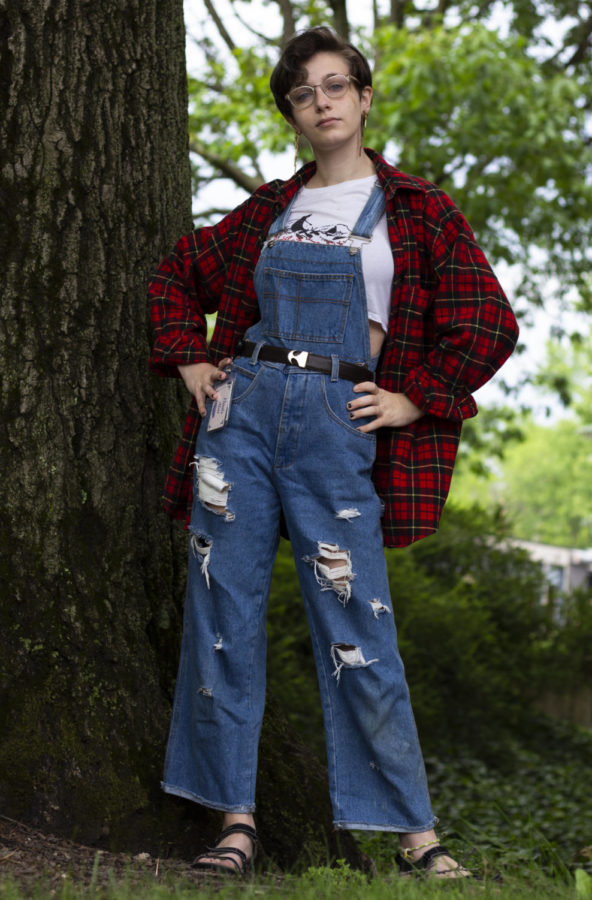
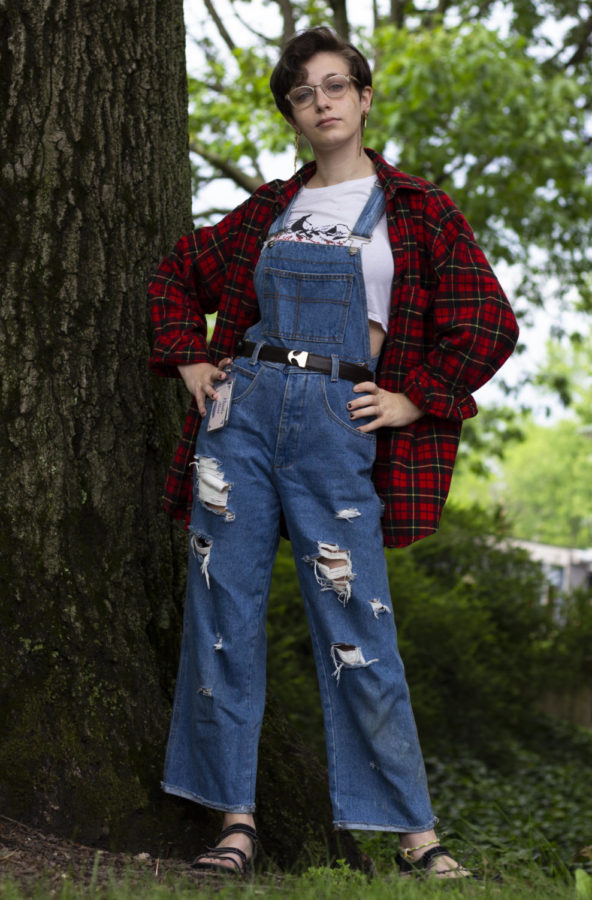
If you’re walking down the hallway of King Building, you’ll likely become enveloped in a clashing cacophony of vibrant prints and crunchy Carhartt neutrals. Oberlin’s fashion scene has long been a strong factor of student life; experimenting with outfits is embraced as a medium of self-expression. For some Obies, building an outfit is just for fun, while others use their clothing to express deeply important identities of race, class, gender presentation, sexual orientation, and more. 

“[For] the ‘traditional’ Obies, I see a lot more statement pieces, like the really cool pattern pants, or really cool shirts, kind of like the mixing and matching patterns,” College second-year Iyanna Lewis said. “I also see an equal amount of sweat pants.”

Oberlin style often transcends clothing choice for many Obies, outfits are a full-body process. 

“Oberlin fashion is very unique,” said Brendan Aleman, OC 21, “People usually put a lot of time into their ’fits is what I realized. You have matching the eye shadow with the shoes, with the sneakers, with the socks and crazy stuff like that. Very in-your-face, bold, ‘This is who I am.’” 

For other students, how they dress is deeply impacted by which micro-communities they interact with at Oberlin. College second-year Iyanna Lewis, who is on both the volleyball and track and field team, appreciates the marriage of sportswear and fashion when she works out.

“I feel like weight room fashion is kind of a vibe,” she said. “I’d be like, oh, your leggings look really cute. Like, ‘Oh, where’d you get that? Like, where’d you get that shirt?’”

Being a student athlete is not the only thing that Lewis sees impacting her style on campus. 

“In terms of the Black community, we have some very interesting fashion,” Lewis said. “I think a lot of us really tap into street wear, … but there’s also a lot of variety.”

Within this variety, one encounters the trendy-niche, with some Oberlin students intermingling era and region to emulate very specific looks. College second-year Theo Canter named a couple he had noticed.

“There’s like a group of people who kind of all dress like 90s LA, off-SKA, skater-ish,” he said. “There are some who [dress] Brooklyn techno-gothy.” 

Canter also mentioned that students are still welcomed if fashion isn’t an interest of theirs.

“I heard someone say when I first got here, like, it’s nice to not have to worry anymore about what they wear, like how it looks,” Canter said. “Since I heard that, I’ve really identified with that. I think I worry less if my shirt and pants match.”

The enormous range of style is largely a product of one of Oberlin’s most popular trends: thrifting and reusing. Angelo Passaro, OC 21, said that for him, the practice of sustainable clothing consumption not only defined Oberlin’s style, but also his own. 

“I think it’s different for everybody, but I think that something that really unites Oberlin fashion is recycling other people’s clothing,” he said. “The concept of the free box is very integral to Oberlin fashion to me. And having a community of people, like in my co-ops who would compliment me or ask me like, do you want to go to Volunteers [of America] together? … was really encouraging for me to experiment and show off different things.”

Along with thrifting’s popularity at Oberlin, its prevalence comes with a larger ethical dialogue about socioeconomic class and equity. 

“I feel like you could say that a lot of thrift stores are theoretically intended for low-income people to be able to afford those kinds of clothes,” Canter said. “I mean, that’s a whole debate … I think most of the kids who I know who are always like, oh, I got it at Volunteers, they have enough money to have a fancy car to drive themselves to Volunteers … which I don’t think is an outright sin. The stores are there, and there’s plenty of clothes. But I guess there’s the deeper question: How can we achieve solidarity while acknowledging our differences?”

As a first-generation and low-income student, Aleman said that the difference between his friends’ thrifted appearance and thrifting out of necessity led to some uncomfortable situations. 

“Having money, but then playing down that you have money to someone who’s low-income can be troublesome in the sense of helping them navigate white spaces and giving them agency,” Aleman said. “Because for example, there’s been plenty of times where I’ve gone out with people who I initially thought were from similar backgrounds as me, and so we at first bonded over that. And then they asked me to go out every other weekend to like the Feve or go on fancy trips on spring break. And I’m just like I don’t have money to do that. And then they’ll be like, ‘Oh no, but I’ll pay for you.’ It just makes me feel a little weird having other people pay for me, because this is a reminder for low-income students, like this space isn’t necessarily meant for you.”

The enthusiasm for thrifting and experimentation can also lead to cultural appropriation in fashion — something that Lewis has noticed happening occasionally around campus.

“Streetwear is very popular right now and not acknowledging that that came from Black people, and understanding that, even though trends are recycling, not paying attention to where they came from can be very detrimental because if you do it incorrectly or you try to claim it as your own, it can be seen as very offensive,” said Lewis. “We can’t police it, which is really hard, because if something were to be truly harmful, I personally don’t know how to address it. ’Cause I could just go up and be like, ‘Hey, what you’re wearing is not cool at all,’ but also sometimes, I’m not that confrontational of a person.”

Adding gender and sexuality onto questions of culture and class status makes these conversations even more complex. As someone who has recently transitioned, Passaro is actively grappling with how to dress in a way that clearly expresses his gender identity to other Obies. 

“Unless people understand your gender presentation, it’s really hard for people to understand correctly the way that you are trying to present something,” Passaro said. “It’s a tough problem because as much as fashion is about expressing yourself, you’re always thinking about an audience … and that’s not really in your control most of the time.”

For some students, the conversations that Oberlin students have about fashion can feel a bit like gatekeeping. Aleman encountered a moment when, in a gender studies course, someone told him that the flannel he was wearing was only appropriate for  for gay women to wear.

“Having communities police what certain communities can wear, being like, ‘LGBTQ+ communities can only wear this,’ or, ‘You can’t wear this if you’re cis[gender]’ — It’s a little problematic, but I understand it,” he said. “I think sometimes when you lack representation you kind of want to hold onto the one identifier that you have.”

Obies love to make art from the quotidian, and fashion offers a means of merging artistic flair with self expression. But many Obies say outfits should be treated with the intentionality of art, and the boundaries of cultural appropriation and class obfuscation should frame our outfit curation. Lewis suggests we take a moment to step back and take the time to really think about our ‘fits, and what they could be communicating.  

She says, “I think it has to be on more of an individual basis of making sure, like: ‘Hey, is there any possibility of what I’m wearing, being offensive?’”

Board of Commissioners declares month of June Pride Month, affirms commitment to recognizing and serving the needs of LGBTQIA2S+ community – Multnomah County

June 4, 2021

Dr. Tyler TerMeer, the chief executive officer of Cascade AIDS Project, began his remarks to the Board of County Commissioners Thursday with a brief history lesson.

“On a summer night in 1969, a small bar in Greenwich Village was packed wall to wall with drag queens, gay men, lesbians, bisexual, transgender, and queer people of all colors. They were having the time of their lives when police came into the bar, announced a raid, and began checking IDs and making arrests.”

For five nights, brave individuals rose up at the Stonewall Inn in New York City, solidifying a turning-point moment for LGBT rights in the United States. 

“Now, five decades later we are continuing their fight,” he said.

In addition to recounting the events at Stonewall, Dr. TerMeer spoke about his own experience as a Black queer man. Though the path toward equality has been difficult and dangerous for those in the Lesbian, Gay, Bisexual, Transgender, Queer, Intersex, Asexual and Two-spirit (LGBTQIA2S+) community, Dr. TerMeer’s final message was one of hope.

“If I’ve learned anything in my 17 years living with HIV and working in the field of LGBTQIA2S+ rights, it is that we are a resilient people,” he said. “Even in our darkest days, we find ways to move forward, to understand the landscape before us, set new priorities, stand strong and ground ourselves as we continue to build resilience in the world in front of us.” 

Co-sponsored by Commissioners Jessica Vega Pederson and Sharon Meieran, the Board’s proclamation recognized June as Pride Month in Multnomah County and reaffirmed the County’s commitment to serving the LGBTQIA2S+ community and addressing the multiple types of oppression and harm that members of this community face. 

“Multnomah County acknowledges and affirms a commitment to address disproportionate economic and health outcomes and barriers to essential resources and services this community experiences,” the proclamation reads.

“We recognize that BIPOC and transgender members of this community experience bias and discrimination in our system at higher rates due to the intersections of racism, misogyny, transphobia, and homophobia. Multnomah County remains committed to deconstructing systemic racism, transphobia, and homophobia by supporting culturally specific and community led organizations, programs, initiatives, and services.”

This year’s Pride Month marks the 51st march on Christopher Street, a day of liberation one year after the riots at the Stonewall Inn, to commemorate community members standing up against state-sanctioned oppression against the LGBTQIA2S+ community. Multnomah County has supported Pride Month celebrations since 1992, led by employees who are members of the community. 

Commissioner Meieran said that the community has been particularly impacted this year because many social and cultural hubs that serve LGBTQIA2S+ people have been closed due to the COVID-19 pandemic and explained why the work is so crucial to her personally.

“This work matters to me in so many ways: as a community member, as a physician, as a commissioner, and most importantly, as the mother of two awesome, amazing, queer trans children who have taught me so much about gender identity and love,” she said.

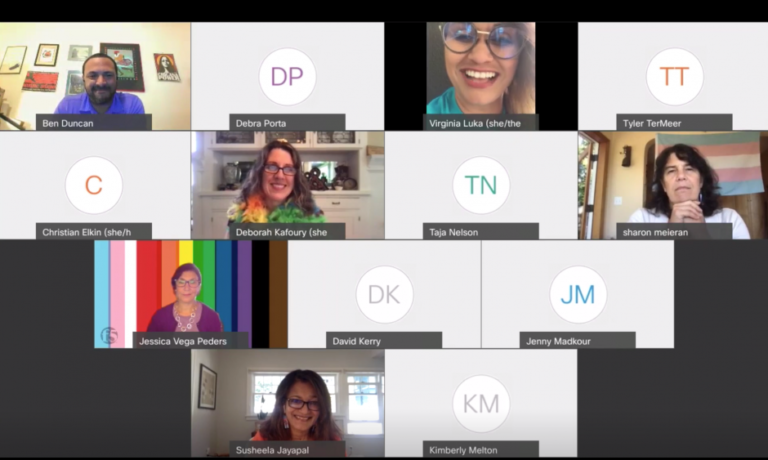
Several others joined the board members and Dr. TerMeer at the proclamation reading, including Multnomah County’s Chief Diversity and Equity Officer Ben Duncan and Debra Porta, the executive director of Pride Northwest. Virginia Luka, a senior program specialist for the County’s Public Health Division, also spoke.

In his statement before the proclamation, Duncan underscored the work done by LGBTQIA2S+ members in the County, acknowledging that many “have to do so much of their work so fully in their identity.”

“We know we have a long way to go. We all also recognize that rainbow flags and proclamations don’t equal justice,” Duncan said. “As we do our work to implement steps and practices of inclusively leading with race, it’s important that we continue to invest both internally in our workforce equity efforts and externally in intersectional work.”

Porta thanked the County for continuing to uphold their commitment to the LGBTQIA2S+ community.

“We have the potential benefit here of being able to take [LGBTQIA2S+ rights] for granted in Multnomah County, and we do so to our own detriment,” she said.

“To know that Multnomah County did not choose to minimize and end their recognition this year, when there is so much other stuff that needs to be done, is important. It’s an important part of moving the work forward.” 

Luka drew upon her personal life to highlight the intersection of race and gender while sharing about the unique experiences of queer, transgender Pacific Islanders (QTPI) like herself.

“Queer and trans spaces tend to center around the white queer and trans experience, while Pacific Islander communities can come from homophobic and transphobic backgrounds because of conservative religious practices,” she said. “So while these intersecting experiences of oppression have been challenging to navigate, QTPIs still carry our love for our families by organizing community, affirming our entire, whole identities.”

Luka encouraged greater investment in institutions that preserve Pacific Islander histories and teach about the roles queer and trans Pacific Islanders played in their communities before colonization so that the QTPI community can “understand who we are and where we’re going from here, and help us in healing.” She also called for the County and the State to adopt the Race, Ethnicity, Language and Disability (REALD) and Sexual Orientation and Gender Identity (SOGI) classifications as standard when collecting data to best observe community needs. 

“If we don’t know who is here and their authentic experiences, we’ll never be able to fully help with their challenges,” she said. “We would never be able to fully recognize their strength and resiliency. 

Before reading the proclamation, Commissioner Vega Pederson thanked those who shared, stating that it has been her honor to sponsor the Board’s annual Pride Month proclamation for four years. Vega Pederson also extended her appreciation to all of the LGBTQIA2+ employees of Multnomah County who work to serve and improve the lives of the community.

“Your presence and your whole self makes our organization and our community a stronger home for us all,” she said. “Pride itself is a symbol of resiliency. It was born in a riot against police brutality and state-sanctioned oppression. Through the decades the LGBTQ+ community has demonstrated its resiliency and strength by supporting one another even when no one else would.”

Chair Deborah Kafoury added her thanks to all the presenters and for all that they do to serve Multnomah County. She also recognized that the resilience of the LGBTQIA2S+ community developed out of necessity in the face of profound injustices and harm. 

“The LGBTQIA2S+ community has always been one of resilience. But even during a celebratory season like this, I do think it’s important for all of us to remember that that resilience was forged in and born out of both systemic and interpersonal oppression, harm and pain,” she said.

“But the ways in which that resilience showed up — particularly in mutual networks of love, acceptance, support and joy — has saved countless lives over the years, and I know it was especially critical over this last year as members of this community faced numerous challenges. I am proud to be a part of today’s proclamation and the work the County is doing and is committed to continuing.”

LGBTQ bills advance in California Legislature – Bay Area Reporter, America’s highest circulation LGBT newspaper

While two bills regarding health care for transgender and intersex individuals were tabled this year in light of limited support, a bevy of LGBTQ legislation is advancing in the California Legislature. The package of 11 bills survived the legislative process in their house of origin and is now being taken up by the other chamber.

Gay state Senator Scott Wiener (D-San Francisco) opted to make his Equitable and Inclusive UC Healthcare Act into a two-year bill in late May when it became clear it could not be passed this year. His Senate Bill 379 seeks to ensure that the University of California only contracts with facilities that allow the UC staff in those facilities to provide gender-affirming and reproductive health care.

In early April Wiener had also put on the back burner this legislative cycle his SB 225, known as the Bodily Autonomy, Dignity and Choice Act, that aims to postpone elective surgery on intersex children until they are 12 years of age and can take part in making such a medical decision. Wiener and intersex advocates have attempted to get such a law passed since 2019 and will now see if it makes sense to try to revive SB 225 in the legislative session that begins next January.

For this legislative session lawmakers had until June 4 to see their legislation survive floor votes in either the Assembly or Senate. The bills must now be passed by the other chamber and sent to the governor’s desk for signage by September 10.

Moving forward this year are a number of trans-focused bills, such as Assembly Bill 439 that would allow for the option of nonbinary as the gender identity on death certificates. Authored by Assemblywoman Rebecca Bauer-Kahan (D-Orinda), the bill is scheduled for a vote Wednesday, June 9, before the Senate Health Committee.

A bill aimed at protecting the privacy rights of people receiving sensitive health care services, such as gender-affirming care, AB 1184, is to be taken up by the Senate’s judiciary and health committees. It is one of two trans rights bills Assemblyman David Chiu (D-San Francisco) is carrying this year.

His AB 245, which would prohibit public universities from deadnaming trans and nonbinary students on their diplomas and academic records, is awaiting votes before the Senate education and judiciary committees.

“Making sure college records reflect a student’s name is a no-brainer,” stated Chiu. “Transgender and nonbinary students face many challenges, and this simple policy will ensure they have one less barrier to overcome.”

AB 218, which is aimed at allowing Californians to update their marriage certificates and the birth certificates of their children to accurately reflect their legal name and gender, made it out of the Assembly and was sent to the Senate June 1. Gay freshman Assemblyman Chris Ward (D-San Diego) revived the legislation after Governor Gavin Newsom vetoed similar legislation last fall due to concerns it would inadvertently out transgender and nonbinary individuals.

As the B.A.R. reported at the time, it was only once the previous bill, authored by lesbian former state Senator Cathleen Galgiani (D-Stockton), had reached Newsom’s desk that state health officials flagged a problem with its implementation they said could result in individuals who sought to update certain records publicly revealing they had transitioned their gender.

With his AB 218, Ward is aiming to allow transgender people to request that their old marriage certificates and the birth certificates of their children with inaccurate information about their gender identity be sealed and have new documents issued. It would be similar to current state law that allows such a person’s old birth certificate to be sealed and a new one issued as an original to both protect the person’s privacy and respect their identity, as noted in the legislative analysis of the bill.

Another bill having to do with gender identity is SB 272 authored by gay state Senator John Laird (D- Santa Cruz), which is now being heard in the Assembly. It will update “archaic gender-specific pronouns” used in the state’s vehicle code to refer to the California Highway Patrol commissioner, now led by a woman, as well as throughout the state’s insurance code.

Also making it out of the Assembly at the start of Pride Month was gay Assemblyman Evan Low’s (D-Campbell) AB 1084, which would require retailers with 500 or more employees to remove signs for gender in toy and childcare sections, or require the retailers to provide a gender-neutral retail section for the items. In a compromise to move the bill forward, Low and co-author Assemblywoman Cristina Garcia (D-Bell Gardens) agreed to remove language referring to children’s clothing sections in the bill when it is taken up by the state Senate.

“We are limiting their ability to express themselves, we are limiting their ability to learn, and, really, we are limiting their ability to become the leaders that we need them to be down the road in STEM and engineering,” stated Garcia, who during the Assembly floor debate on the bill disclosed she was discouraged from playing with Lincoln Logs as a girl because they were considered a “boys’ toy.”

SB 357, the Safer Streets for All Act co-authored by Wiener and Assemblyman Ash Kalra (D-San Jose), passed out of the Senate June 1 and is now to be taken up by the Assembly. It would repeal California Penal Code Section 653.22, the law that criminalizes loitering for the intent to engage in sex work.

It would also allow those convicted of loitering with the intent to commit prostitution, particularly the Black women and transgender individuals often targeted under the law, to seal their records. A similar bill became law in the state of New York this year.

“Sex workers are workers, and they deserve respect and safety,” stated Wiener. “We must work toward a future where people — especially the most marginalized — aren’t criminalized because of who they are and what they look like. Anti-sex workers loitering laws are deeply pernicious, and they need to be repealed. I’m so grateful to my colleagues for understanding why this SB 357 is so necessary.”

Senator Lena A. Gonzalez’s (D-Long Beach) SB 283, aimed at strengthening the Equal Insurance HIV Act of 2020, is now before the Assembly. It would impose a prohibition as of January 1, 2023 on a life or disability insurance insurer from considering an applicant’s occupation in determining whether to require an HIV test and clarifies that limiting benefits payable for a loss caused or contributed to by HIV is allowed if it was part of the original underwriting risk. It also clarifies that the misdemeanor for willful, negligent, or malicious disclosure of HIV test results to a third party is punishable by imprisonment for a period not to exceed 364 days.

Two other bills concern older LGBTQ adults, such as Laird’s SB 258, which aims to include older people with HIV as part of the population of “greatest social need” when it comes to programs and services administered by the California Department of Aging. It is awaiting a vote before the Assembly Aging and Long-Term Care Committee.

The other bill is AB 465 by Assemblyman Adrin Nazarian (D-Van Nuys), which would require that professional fiduciaries receive LGBTQ+ cultural competency and sensitivity training during their education and licensing process. Private professional fiduciaries provide critical services to older adults and people with disabilities, from managing their clients’ daily care, housing, and medical needs to ensuring their bills are paid and managing their investments. It is to be taken up Monday, June 7, by the Senate Committee on Business, Professions and Economic Development.

Also waiting to be taken up by state Senators is AB 1041, authored by Assemblywoman Buffy Wicks (D-Oakland), that would expand the definition of “family member” for purposes of family and sick leave to allow covered workers to take time off to care for someone designated by the employee at the time of the request. It takes into account LGBTQ people’s chosen family members who aren’t biologically or legally related and other household units that don’t abide by a “nuclear family” model so that such individuals can get time off to provide health care and other assistance to their loved ones.

Equality California Executive Director-designate Tony Hoang praised lawmakers in both the Assembly and Senate for helping to advance most of the legislation that the LGBTQ statewide advocacy organization is co-sponsoring this year.

“Each and every one of these bills represents a giant leap of progress for our LGBTQ+ community — specifically trans and nonbinary folks, chosen families, people struggling with addiction and sex workers,” stated Hoang.

Help keep the Bay Area Reporter going in these tough times. To support local, independent, LGBTQ journalism, consider becoming a BAR member.

Pride Month and We’re Still Marching! 🏳️‍ – InsiderNJ

Happy LGBT Pride Month! Look for Pride events in NJ? Here’s Click here!

The cavalcade of rainbows all over social media can only mean one thing: It’s Pride Month, an annual celebration of LGBT culture and politics. Pride celebrations are a lot different than the old days when AIDS ran roughshod and remorselessly  over the LGBT community.

Nowadays, Pride of more a celebration of our community’s hard-fought cultural- and political mojo. Instead of AIDS memorials for example, we now have supervised rock climbing walls for the kids of LGBTs to play on while their moms are off enjoying the live band.

But plenty of people out there who who aren’t feeling the rainbow. They wish LGBT people would go home and keep quiet. They call us divisive for having a parade and remain furious at LGBT people for flaunting our lifestyles and ramming it down everyone’s throat.

So here’s why Pride Month is more relevant  than ever:

1. Visibility matters.

When queried “Why does it still matter,” NJ State Senator Loretta Weinberg called Pride Month “a sign of community together.”

She’s right. Visibility matters. It may not matter to you and that’s ok. But it matters to every queer kid in America growing up without love and support from their parents.

2. Because they still call us faggots

Ive been called faggot enough to know that those kinda insults are infrequent and usually roll off my back. But every faggot (in this case, me) has his limits.  Just before COVID, during a protest of NJ’s bear hunt, a couple bros swerved their Dodge pickup uncomfortably close and yelled out something like “you’re all a bunch of c**ks-ckers! Get the fu-k out to here!”

Not missing a beat, I fired back something like “besides y’all, I’m the only c**ks-cker here at the moment!”

My fellow activists high-fived me for getting the last word. They seemed energized watching me stick up for myself. It felt like my quick retort actually won the moment and kept me from losing face. But here’s the tea: getting called faggot (or worse) in front of my activist- and media cohorts was actually really humiliating.

So as long as homophobic slurs flow freely in America, we’ll keep doing our Pride Month, thank you very much.

Still not equal.

Dean Dafis is Maplewood NJ’s deputy mayor.

“Laws oppressing us are still being passed,” Mr. Dafis shared. “Our dignity still rests in the Supreme Court’s hands, shame and stigma pervades every hateful act, our political representation is slim (though better than it was), trans persons are being murdered with impunity, trans youth are denied access to sports & restrooms, because LGBTQ youth are denied LGBTQ inclusive curriculum in their studies, because LGBTQ youth are far more likely to experience suicidal ideation.”

That’s why we march. 

The “Most Heterosexual State Legislature” in America.

There are 120 seats in NJ’s General Assembly, none held by an LGBT person. We’ll hear a lot of pandering this Pride Month, especially from the democrats who loves memes about equality. But when it comes down to it, the gatekeepers in both parties very rarely give LGBTs folks a path to higher office.

I live in Cherry Hill, home to the Camden County Democratic Committee, undisputedly the most dominant political machine in modern NJ political history. So can anyone tell me the last time the Camden Democrats elected (or even nominated) an LGBT person to become mayor or county commissioner or state lawmaker?

Because I don’t recall it ever happening.

Not a fetish

Pride matters “because trans folks are still bullied and murdered damn near all the time, “Jackie Cornell said. “And because our sexuality is still fetishized, tokenized and used as a wedge or political issue.”

Ms. Cornell is the former #2 at New Jersey’s Department of Health where she promoted HIV eradication. She was #21 on InsiderNJ’s most recent OUT 100 Power List, a tribute to politically influential  LGBTs in New Jersey.

Ok so lets discuss the part about our sexuality being fetishized. Awkward to even contemplate is it not? Well here’s some more tea: tying the word “lesbian” into Porn Hub’s search engine generated over 84,657 results. That’s a lot of content produced and packaged mostly for consumption by straight guys. The actors on so-called lesbian porn are usually straight women playing gay for pay.

For which, according to the porn marketplace, there’s a booming demand.

Trans Lives Matter

So why do we march?

“Just a reminder that trans folks are violently killed every day,” Tim Eustace told InsiderNJ. “We have not won the battle.”

A former Assemblyman Tim Eustace was NJ’s lone LGBT state lawmaker when he took his shot at a vacant Senate seat. NJ Democratic Party coalesced  around a rival sending Eustace into retirement.

Still No AIDS vaccine 

Remember when a global pandemic hit the general population and we came up with multiple vaccine therapeutics in record time?

Remember when a global pandemic hit the LGBT population and the government did nothing. And 40 years later, still no HIV vaccine.

As long there’s no HIV vaccine, we’ll keep doing Pride Month.

Jay Lassiter is an award-winning writer and podcaster who’s been HIV+ nearly 30 years. He’s does Pride Month because it’s fun. He’s on Twitter @Jay_Lass

(Visited 84 times, 84 visits today)

‘Ex-gays’ visit DC to complain about LGBTQ rights, not visit recently reopened gay bars – Metro Weekly

ex-gay, gay news, metro weekly
Ex-gay “Formers” visiting D.C. in 2019– Photo: Christian United

A cohort of “ex-gays” is descending on D.C. this weekend to apparently complain about conversion therapy bans and LGBTQ rights.

The “Changed DC” tour will see the anti-gay activists, who claim to have renounced their sexuality or gender identity, visiting the District until June 8. Activities will include a prayer meet, a “Freedom March,” and definitely not visiting the city’s LGBTQ bars, which coincidentally were recently allowed to reopen at full capacity.

The activists — who certainly won’t be planning to go to Pitchers, or dropping by Green Lantern, or meeting up at Trade — claim to have “left LGBTQ because we wanted to.”

As part of the Changed DC tour, which won’t include opening Grindr or Scruff while alone in their hotel rooms, they will be protesting against bans on conversion therapy — a widely debunked and harmful practice that claims to change a person’s sexuality or gender identity.

The “ex-gays” will also be protesting transgender people, whose rights are currently under assault in Republican-controlled legislatures across the country, as well as the Equality Act, a landmark piece of legislation which would codify nondiscrimination protections for LGBTQ people into federal law.

The group is demanding a number of “rights” that it claims pro-LGBTQ legislation will remove, including the right to “follow one’s religious convictions away from LGBTQ identity,” the right to “shape one’s own sexual identity without political indoctrination,” and the right to “publicly declare alternative views of LGBTQ experience without being labeled a ‘hate group.’”

“I didn’t want to live life as a gay man. I was tormented by suicidal thoughts and was unfulfilled. The talk therapy I received when I was a minor saved my life,” Ken Williams, co-founder of CHANGED Movement, said in a statement.

“I wanted a different way forward and my sexual desires eventually changed. I have been married to my wife for 15 years. We have four children together,” Williams continued. “Today I am connected to thousands who left LGBTQ behind. SOGI legislation takes away our rights to freedom of religion, speech and equal treatment by promoting LGBTQ identity as the only way forward.”


Fellow co-founder Elizabeth Woning said the activists had come to DC to “appeal to Congress to focus on human dignity, not identity politics.”

“We are Christians with LGBTQ in our past. Many, like us, have changed,” she said, ignoring the countless other former “ex-gays” who have since come out as gay and denounced conversion therapy. “We left LGBTQ because we wanted to. Article 18 of the Universal Declaration of Human Rights affirms we have the right to live out what we believe. Fair treatment in America shouldn’t rest with one’s social identity, like LGBTQ or even religious beliefs, but with respect for the dignity of every person.”

It’s not the first time the group has visited D.C. to protest equality. In October 2019, a group of “Formers,” as they have branded themselves, came to the District to complain about the Equality Act.

Curiously, the group visited the city at a time when Republicans controlled the Senate, blocking the Equality Act from passing.

It begged the question as to why a group of people who claim to no longer be LGBTQ felt the need to visit D.C. at all — particularly on Halloween, when it would have been incredibly easy to slip on a costume and pass unnoticed in one of the many LGBTQ parties occurring that week.

Last year, the United Nations urged a global ban on conversion therapy, labelling it “cruel, inhuman, or degrading treatment” and saying it “may amount to torture depending on the circumstances.” In December, more than 370 religious leaders from around the globe called on lawmakers to ban conversion therapy.

Research has found that conversion therapy more than doubles the risk of suicidal ideation among gay and bisexual adults, while transgender people subjected to conversion therapy as children are four times more likely to attempt suicide.

In addition, a number of former “ex-gay” leaders, who touted the efficacy of conversion therapy in attempts to force others to undergo the practice, have since come out as gay and decried the practice, admitting the harm it can cause to LGBTQ people.

Read More:

Donald Trump is ‘repulsed’ by LGBTQ people, Michael Cohen claims

Boat catches fire after owners allegedly harass people flying Pride flags

Human Rights Campaign will sue Florida over anti-transgender sports ban