Home Blog Page 117

Newsroom – Celebrating the power of love and kindness – American Airlines Group, Inc. – American Airlines Newsroom

0

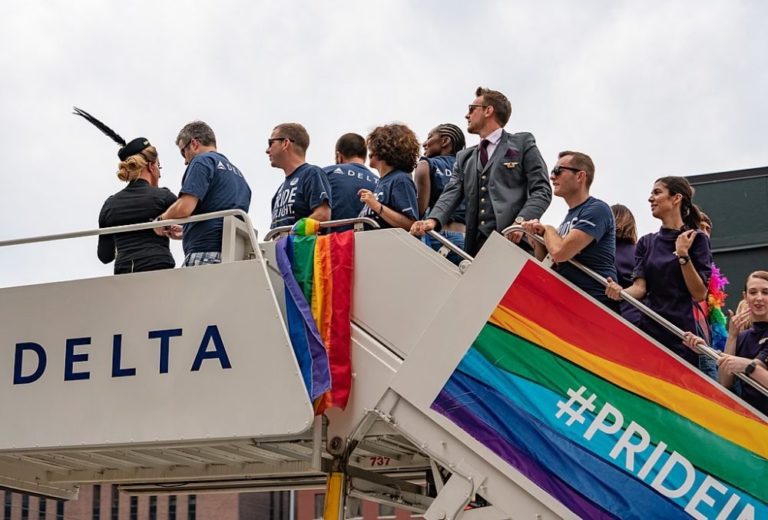
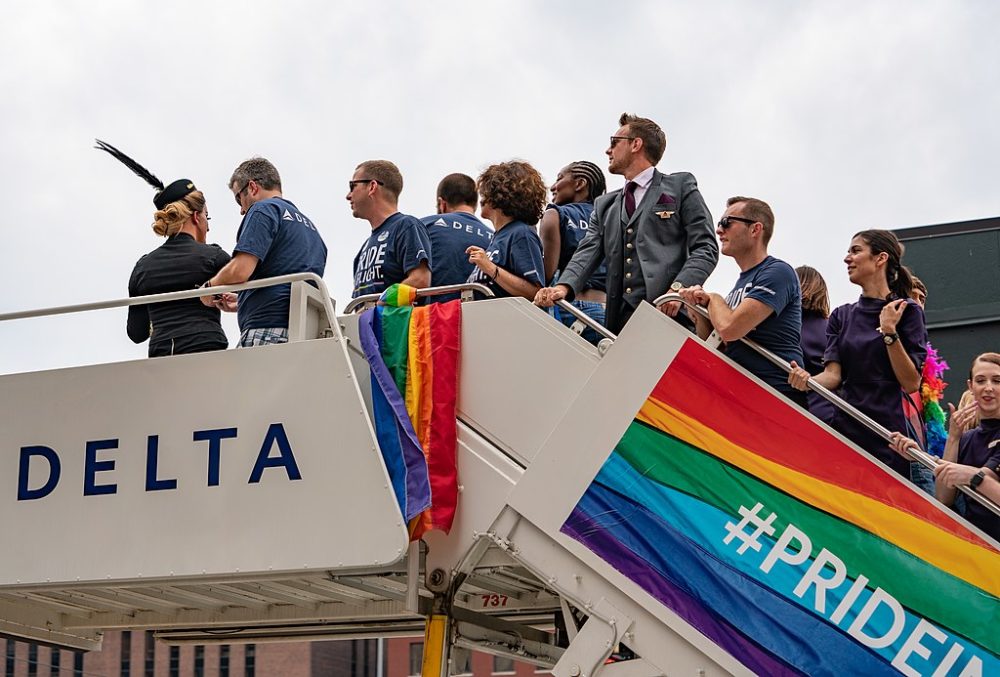
Although Pride Month looks a little different this year under COVID-19 pandemic guidelines, there’s still much to celebrate — love, kindness and all the things that bring us together. In this month’s issue of American Way, Flight Attendant JC Watson shares how he shows up as his authentic self to spread love and kindness in the skies.

Growing up with four siblings, my house was always filled with family and friends, and there was never a shortage of love, laughter and support.

But the society I grew up in told me it wasn’t OK to be different. Like so many, I was afraid to be me and lose all of that love and acceptance from my family and friends when they learned my truth. To my surprise, when I came out as gay, they embraced me with open arms. I felt more love than ever before, and I realized how lucky I was to have such a supportive family — one that treats each other with kindness, loves unconditionally and, most importantly, celebrates what makes us different.

That has become my mission in life, as well. And, when I discovered my love of travel, I decided that no matter where I was or what I was doing, I was going to spread the same love and kindness I was shown everywhere I went.

At American Airlines, I’m able to do just that. Every flight I’m on is an opportunity for me to have an impact — no matter how small — on the lives of hundreds of people in a single day. Whether I’m trying to make a customer laugh or help ease their nerves in flight, I am always on a mission to care for you on your journey, celebrating our differences and starting a chain reaction of kindness.

I’m proud to be part of a company that not only accepts me for who I am but encourages me to bring my whole self to work every day and on every flight, a company that puts far more value in what we have in common than what divides us. So, this Pride Month — and every day — I celebrate love, kindness and all the things in between that bring us together.

On behalf of American and my colleagues worldwide, I welcome you as you are and thank you for flying with us today.

Juan Carlos (JC) Watson
Flight Attendant
Peru (LIM)

Guide To Pride Parades And Other Events In America’s Most Gay-Friendly Cities – TravelAwaits

0

Are you ready to get out and go somewhere with your girlfriends this summer? Girls’ trips are a great way to cut loose and have 100 percent girl time without worrying about what the guys want to do. I don’t know about you, but my friends and I are already planning trips for later this summer. We like places that offer cultural experiences, outdoor options, shopping venues, and wonderful food and drink. The places below would be great spots for you and your girlfriends to chill out and do some exploring together!

1. New York City, New York 

From Central Park to St. Patrick’s Cathedral to Grand Central Station to Times Square to Fifth Avenue to Chinatown, New York City has it all. If you want to be dazzled by the bright lights of the big city, go to New York. I highly recommend staying in Manhattan for your trip. It’s where so much of the action is, and staying there will make getting around really convenient. Speaking of getting around, we found the subway very easy to navigate. For the most part, we took the subway during the day and used taxis at night.

New York City can be a little overwhelming, but just go knowing that there’s no way you can do it all. Some things I would definitely recommend are seeing a Broadway show and walking across the Brooklyn Bridge, for starters. Also cool are all the museums the city has to offer.

We enjoyed brunch at Tavern On The Green followed by a carriage ride through Central Park and a visit to The Met. It was a perfect day in NYC. At night, we headed up to the rooftop bar at our hotel for a glass of wine and a view of the skyline. Talk about atmosphere — it was great! If your hotel doesn’t have a rooftop bar, you need to get to one so you can look out at the city lights. There are a lot of good rooftop bars in the city, or you can head to Top of the Rock for an awesome view of the Manhattan skyline. 

2. Key West, Florida

For total relaxation during the day and great times at night, you really can’t beat Key West! Key West is the ultimate spot to visit if you want to veg out on the beach all day and hit happy hours at night. If you want more activity during the day, Key West is very walkable, especially if you stay in the Old Town. Or you can rent bikes and get around that way. There are a lot of bike rental options.

Once the sun goes down, pretty much anything goes in Key West. You’ll find a plethora of live music venues and open-air bars as well as nice restaurants. Don’t miss the sunset celebration, the nightly party at Mallory Square. Also fun are all the water activities, like snorkeling, fishing, kayaking around the mangroves, and sunset cruises. The options for fun are pretty limitless. 

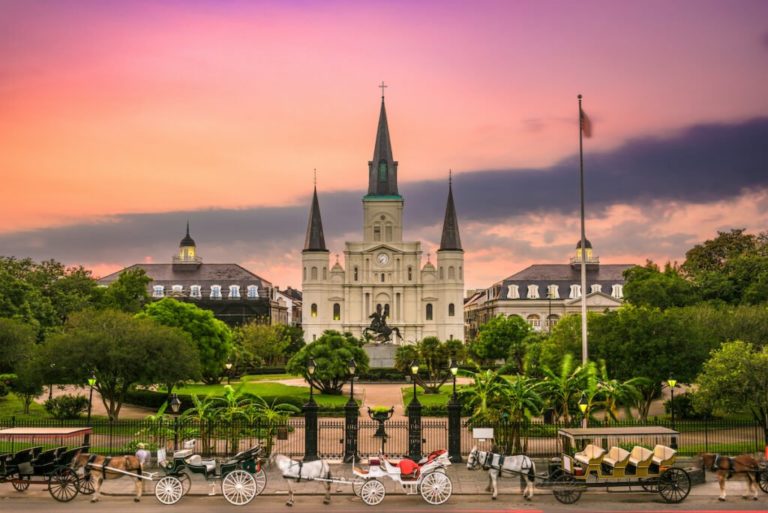
Jackson Square in New Orleans, Louisiana.
Sean Pavone / Shutterstock.com

3. New Orleans, Louisiana 

If you and your girlfriends like history and good food, then New Orleans is the place for you. There’s so much to see and do. We stayed in the French Quarter and loved it. Everything we wanted to do was within walking distance or a streetcar ride away. I’d recommend going to Jackson Square to get a feel for what New Orleans is all about. You can visit the historic St. Louis Cathedral, do some serious people-watching in the park, and check out the nearby restaurants. We walked around an art show in the square while we were there.

History lovers can visit the famous National WWII Museum. It’s one of the best in the country and is well worth your time. If you like to walk around cemeteries, you’re in luck, because New Orleans is known for its aboveground cemeteries — some of them haunted — and there are a ton of tours to choose from. If you like architecture, then you’ll enjoy the Garden District, where you can take a walking tour past some gorgeous historic homes.

We also loved all the food that New Orleans is famous for! You have to go to Cafe Du Monde for coffee and beignets and try Acme Oyster House for oysters. We also had a great meal at Felix’s Restaurant and Oyster Bar. Of course, no trip to New Orleans would be complete without a walk down Bourbon Street for some fun after dark!

4. Omaha, Nebraska

If you and your girlfriends live in different parts of the country and want to meet up at a central location, look no further than Omaha! While the location might be the first reason you think to visit, it won’t be the last once you find out all there is to see and do here. You’ll find great food, lots of bars, and plenty of shopping and culture.

I really like the downtown area known as the Old Market. Here you’ll find all kinds of shops, restaurants, and bars along cobblestone streets. It’s super quaint with lots of eclectic shopping options. And in the summer months, there’s a very large farmers market to check out. In addition, the Orpheum Theater and Holland Performing Arts Center are downtown and offer lots of live shows. Or you can try the Slowdown for live music. For art lovers, the Joslyn Museum is nearby and not to be missed. West Omaha has tons of restaurants and bars as well, especially in the Legacy and Village Pointe shopping areas. And you’ll find cute neighborhoods to explore like Midtown and Benson. 

For the most walkable area, I’d stay downtown in the Old Market. But no matter where you stay, you’ll be able to get pretty much anywhere in town within 25 minutes or so. 

Pro Tip: Get a steak in Omaha. Try an old-school steakhouse like Gorat’s, Cascio’s, or Johnny’s.

The West Fork trail in Sedona, Arizona.
Alexey Stiop / Shutterstock.com

5. Sedona, Arizona

Before I knew any better, I thought of the desert as nothing more than brown sand. That all changed the first time I saw Sedona! If you’ve never been, you really need to go. The beauty of Sedona is like nothing I’ve ever seen. It’s a great place to unplug and enjoy the outdoors. 

You and your girlfriends can do fun hikes that aren’t super strenuous. We liked climbing around Bell Rock and Cathedral Rock. We weren’t out to conquer any mountains, and we definitely didn’t get to the top of Cathedral Rock, because the hike is almost straight up at points! But that wasn’t our intent, anyway. If you just want to take in the scenery and get out there on the trails, it won’t matter that you’re not an experienced hiker. As long as you stay on the easier trails, you’ll be fine. And if you want to rest your feet, you can always sign up for a Jeep tour of the area. The tours take you off-roading and are bumpy, crazy fun.

For a more relaxing way to experience the red rocks of Sedona, you can sign up for an outdoor yoga class. Make sure you check out the Chapel of the Holy Cross as well. The church is actually built into the rocks of Sedona and is quite a marvel. Note that there is very little parking at the Chapel of the Holy Cross, so you’ll need to go first thing in the morning or right before it closes to avoid heavy crowds. 

6. Delray Beach, Florida

South Florida is one of my favorite places. I’ve spent quite a bit of time in this area and can tell you that Delray Beach is an awesome place for a girls’ trip! In Delray Beach, you can relax all day at the beach and then go out for a fabulous dinner every night. If you stay around Atlantic Avenue, you can walk to many bars and restaurants, and you won’t need to rent a car if you don’t want to.

We usually stay at the Hyatt right off Atlantic Avenue and walk everywhere. The beach is a bit of a hike, so we opted to take Freebee, the free transportation for the downtown area provided by the city of Delray. It’s super easy to use — just download the app to your smartphone, and then request a ride.

There’s plenty to do in the downtown area, so you won’t be bored. Right on Atlantic Avenue are plenty of bars and restaurants you’ll want to hit. We liked Johnnie Brown’s for live music. The Pineapple Grove Arts District is home to many art galleries, public art displays, and unique shops. Also check out the Arts Garage, where you can explore more art and also enjoy live music and comedy. And the farmers market is held right next door on Saturday mornings. It’s a fantastic market that’s not to be missed. We especially liked the baked goods from the French bakery stand.

Pro Tip: Downtown Delray is very busy. I’d suggest making reservations for dinner if you don’t want to wait!

LGBT Pride flags burned in Waterford city – TheJournal.ie

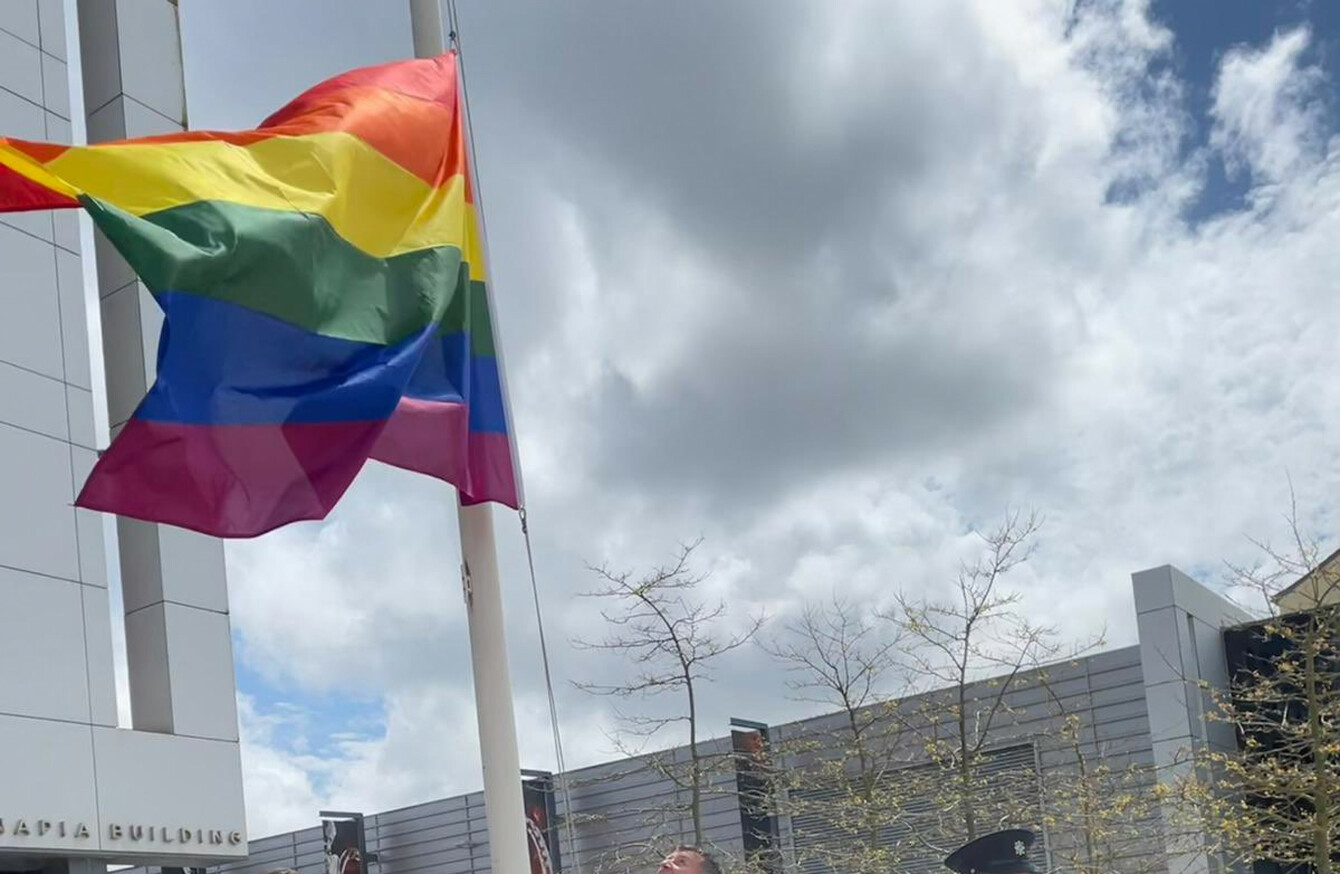
Image: Waterford Council

THE MAYOR OF Waterford has criticised the burning of Pride flags outside the council’s offices in the city.

Flags had been erected in recent days at the local authority’s buildings in the city and Dungarvan to mark Waterford’ Pride of the Deise weekend, a celebration of the LGBT+ community.

However, flags outside the Menapia Building on The Mall were burned overnight.

The council made the discovery after being alerted by security for a neighbouring premises.

Mayor of Waterford Cllr Damien Geoghegan, who had originally proposed flying the flags, said it was a “disgusting” act.

“It would be a rare occurrence but it goes to show why festivals like Pride matter in the first place, because there are still people who view the LGBTQI community as legitimate targets of hate,” he said.

He added that he has set about seeking to have fresh Pride flags flown above the council’s offices: “I certainly won’t be deterred as mayor and will be looking to have the flags replaced immediately.”

#Open journalism No news is bad news Support The Journal

Your contributions will help us continue to deliver the stories that are important to you

Support us now

Gardaí are investigating the matter and it is understood will have access to CCTV footage of the incident.

“I don’t know the mindset of the people who would do this, it’s certainly not representative of Waterford and I really think the vast majority of people would be disgusted by that,” Geoghegan said.

The Pride of the Deise festival took place primarily online over the weekend with events aimed at adults and teens in the community.

Top 10 best-selling books in Frederick | Arts & entertainment | fredericknewspost.com – Frederick News Post

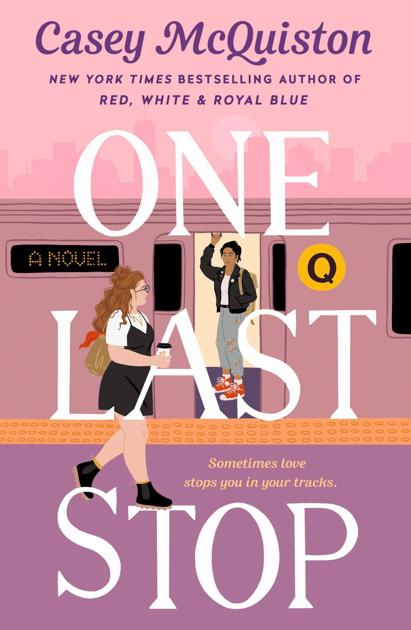
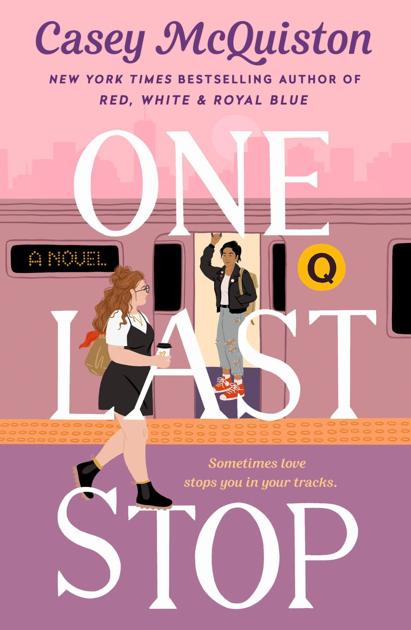
“One Last Stop” by Casey Mcquiston

“Anthropocene Reviewed” by John Green

“People We Meet on Vacation” by Emily Henry

“The Gay Agenda: A Modern Queer History and Handbook” by Ashley Molesso

“How the Word Is Passed: A Reckoning with the History of Slavery Across America” by Clint Smith

“Crying in H Mart: A Memoir” by Michelle Zauner

“The Midnight Library” by Matt Haig

“The House in the Cerulean Sea” by T.J. Klune

“The 2000’S Made Me Gay: Essays on Pop Culture” by Grace Perry

“The Other Black Girl” by Zakiya Dalila Harris

Adult bestsellers in Frederick is updated weekly and provided by Curious Iguana, 12 N. Market St., Frederick.

Titles perfect for Pride, a buzzy debut and more of critic Moira Macdonald’s Paperback Picks – The Seattle Times

Paperback Picks

Some good Pride Month selections, a buzzy first novel and more — six new paperbacks, with which to while away (almost) summer afternoons.

Good Boy: My Life In Seven Dogs” by Jennifer Finney Boylan (Celadon, $16.99). Boylan, whose 2003 bestseller “She’s Not There: A Life in Two Genders” explored her experiences as a transgender woman, returns with another memoir — this one devoted to her beloved canine pets. “Filled with insight and remarkable candor, this is a sterling tribute to the love of dogs,” wrote Publishers Weekly in a starred review. “She touches on, among other subjects, self-doubt, confusion about her sexuality, emotional distance, and infidelity. Boylan also shares encouragement and guidance for those facing their own emotional struggles, noting that while hers weren’t easy to overcome, self-acceptance awaited her at her journey’s end.”

The Deviant’s War: The Homosexual vs. the United States of America” by Eric Cervini (Picador, $20). And more good Pride Month reading: This bestseller from historian Cervini has at its center the story of Frank Kameny, who lost his government job in the 1950s because he was gay — and who fought back. “Besides being the first full-length biography of the intellectual father of the gay liberation movement, Cervini’s work provides a wealth of fascinating new details about the movement before the Stonewall riots of 1969,” wrote Washington Post reviewer Charles Kaiser, describing the book as “brilliant.” Kameny, he wrote, changed the world in two ways: “first by convincing gay people that they weren’t sick and then by getting millions of straight allies to embrace that point of view. His single greatest contribution was the pivotal role he played in persuading the American Psychiatric Association to remove homosexuality from its list of disorders in 1973 — the singular accomplishment that made all future LGBTQ progress possible.”

Luster” by Raven Leilani (Picador, $17). A bestseller and winner of multiple awards, including the National Book Critics Circle’s John Leonard Prize, this one had everyone talking last year. “‘Luster’ is an exotic hybrid — a depressing intergenerational love story with a heart of noir wrapped in gallows humor, some sexy scenes, and a look at race in this country that takes into account differences of age and class,” wrote Gabino Iglesias for NPR. The book “smashes together capitalism, sex, loss, and trauma and constructs something new with the pieces, using pitch-black humor as glue. That this Frankenstein’s monster of genres and topics works so well is a testament to Leilani’s talent. That it all happens in a debut novel makes it even more impressive.”

One Last Stop” by Casey McQuiston (St. Martin’s Griffin, $16.99). I was utterly charmed by McQuiston’s adorable gay rom-com “Red, White and Royal Blue” last year; now she’s back with another one that seems ready for a big-screen adaptation immediately. “One Last Stop” features August, a bisexual New Yorker who one day meets her dream girl, Jane, on the subway. Only problem? Jane’s a time traveler from the 1970s. Kirkus Reviews called the book “a sweet, funny, and angst-filled romance with a speculative twist”; sounds like perfect summer reading.

The Glass Kingdom” by Lawrence Osborne (Random House, $17). The latest from the author of “Beautiful Animals” is described as both literary novel and taut thriller. In it, the former assistant to a famous novelist flees the U.S. for Bangkok, taking with her a suitcase of stolen money and a vague plan to lie low. “It’s a masterfully drawn, mesmerizing novel in which the ghosts of the past — like the bats, lizards, and geckos who gain free access to the Kingdom — refuse to vacate the premises,” wrote a Kirkus reviewer in a starred review, calling it “a seductive, darkly atmospheric thriller with a spine-tingling climax.”

Memorial Drive: A Daughter’s Memoir” by Natasha Trethewey (HarperCollins, $16.99). Trethewey, a Pulitzer Prize-winning poet, here writes the story of her life and its central event: the murder of her mother at the hands of her stepfather, 35 years ago. “Trethewey’s memoir is not the hardest book I have ever read,” wrote New York Times reviewer Kiese Makeba Laymon. “The poetry holding the prose together, the innovativeness of the composition, make such a claim impossible. ‘Memorial Drive’ is, however, the hardest book I could imagine writing.” The book, a 2020 bestseller, was named one of the best books of the year by, among others, the Washington Post, NPR and Barack Obama.

United States-Mexico Match Briefly Stopped After Horrendous Anti-Gay Chant & Fans Throwing Objects On Field (VIDEO) – Total Pro Sports

Sunday’s CONCACAF Nations League final between the United States and Mexico at Empower Field at Mile High in Denver had to be briefly stopped when fans not only threw things on the field, but started an anti-gay chant.

Chants began to be heard from the crowd and the officials asked the crowd to cut out the chanting.

U.S. midfielder Giovanni Reyna was struck the face with an object as fans threw cups and water bottles on the field.

“Total lack of respect for what’s happening on the field and all effort that both teams are putting into the game,” U.S. manager Gregg Berhalter said. “I think he’s going to be OK, but he did take something to the head, and it could have been a lot worse.”

Christian Pulisic ended up scoring the game winner with a penalty kick in the 114th minute.

Share This

Supporting the LGBTQ+ patient – Contemporary Pediatrics

Sexual minority and gender-diverse (SMGD) youth experience significant health and psychosocial disparities compared with their heterosexual and cisgender peers. Risk for poor health and social outcomes is incrementally higher among SMGD youth, but not universally so. Pediatricians, adolescent medicine physicians, and other youth providers can play a crucial role in mitigating this risk by supporting SMGD youth and their families and promoting resilience through inclusive and clinically, culturally competent care.

Sexual orientation encompasses sexual identity, attraction, and behavior. Gender identity refers to one’s internal sense of being male, female, or another gender identity. Sexual minority youth are individuals who identify as lesbian, gay, bisexual, or another nonheterosexual identity (eg, pansexual, same-gender loving), have same-sex attractions, engage in same-sex sexual behavior, or may be questioning their sexual orientation. Gender-diverse youth are individuals who identify as transgender; have a gender identity that differs from their sex assigned at birth; may be questioning their gender identity; or identify as agender, fluid, or nonbinary.

Sexual orientation and gender identity (SOGI) data are not routinely collected in the US Census or recorded in vital statistics; how- ever, national surveillance and polling data suggest increasing trends in the prevalence of SMGD youth and adults. Data from the Youth Risk Behavior Survey (YRBS)—a biennial survey of high school students—suggests the prevalence of sexual minority adolescents aged 13 to 17 years increased from 11.2% in 2015 to 15.6% in 2019, with adolescent respondents identifying as gay or lesbian increasing from 2.0% to 2.5%; bisexual, from 6.0% to 8.7%; and unsure, from 3.2% to 4.5%.1 The YRBS collected data on gender identity for the first time during the 2017 wave of data collection in which 1.8% of adolescent respondents identified as transgender2—a prevalence more than double the prior estimates of 0.7% prevalence among adolescents aged 13 to 17 years.3 Another 1.6% reported being unsure of their gender identity.2 The Gallup Poll, a telephone survey of a random sample of adults aged 18 and older, has similarly shown an increasing percentage of adults who identify as lesbian, gay, bisexual, or transgender (LGBT), from 3.5% in 2012 to 5.6% in 2020.4 In 2020, the question about LGBT identity was changed to allow respondents to specifically designate transgender identity in addition to lesbian, gay, or bisexual identity, which produced the following population prevalence estimates—3.1% bisexual, 1.4% gay, 0.7% lesbian, and 0.6% transgender.4 Whereas the Gallup Poll is limited to adults, the rise in reported LGBT identity was driven by increasing prevalence among younger age cohorts; 9.1% of millennials (born be- tween 1981 and 1996) and 15.9% of Generation Z who are 18 years and older (born between 1997-2002), identify as LGBT, suggesting these increasing trends are mirrored and potentially higher in adolescents.4

Identity development is one of the primary tasks of adolescence and includes development of one’s self- concept and social identity—how you fit into society and among social groups that share characteristics important to your self-concept (eg, race, ethnicity, culture, religiosity).5,6 The formation of sexual and gender identity is an important component of identity development. Sexual identity formation theory suggests that identity occurs in stages as people try to align identity, behavior, and attraction and includes identity formation (ie, awareness, exploration, questioning sexuality) emerging in early adolescence followed by integration of sexual identity into one’s self-concept and disclosing to others (coming out) in middle to late adolescence.7,8 This approach suggests a linear progression; however, others have suggested that sexual identity formation is nonlinear, fluid, and interconnected with lived experiences and other social identities, including racial/ethnic identities.9,10 Gender identity typically develops in early childhood for cisgender as well as transgender and other gender-diverse youth; however, gender identity development also occurs in the context of social norms, biases, and familial and cultural expectations and can be a dynamic and evolving process from childhood into adolescence and adulthood.11

Children and adolescents may present differently based on where they are in their gender or sexual identity development and on their exposures to anti-LGBT stigma and discrimination. They may present in a period of self-discovery or exploration; a period of questioning, confusion, or internal conflict; at a stage where they have fully realized and integrated their identity; or anywhere along this spectrum. At any and all of these stages, it is critical that pediatric and adolescent medicine providers meet and affirm patients where they are with reassurances that it is “entirely acceptable to be whoever you are” and explain that variations in sexual orientation and gender identity are normal aspects of human diversity. This approach is particularly important for youth who have experienced anti-LGBT stigma. The National Academies 2020 report “Understanding the Well-being of LGBTQI+ Populations”12 notes the following:

“Early life course exposure to discrimination and stigma based on sexual orientation, gender identity, or intersex status can have lifelong consequences […and] can set trajectories of health and well-being into motion that may be exacerbated by subsequent exposures to discrimination or interrupted by subsequent exposures to protective factors.”

Providers thus have the opportunity in their care of SMGD youth to interrupt or exacerbate the negative effects of the homophobia, transphobia, and heterosexism that many SMGD face. Unfortunately, some SMGD youth experience stigma, discrimination, and rejection in the health care setting. The Human Rights Campaign’s survey of over 10,000 LGBT-identified youth aged 13 to 17 years showed that 67% of LGB and 61% of transgender youth described not disclosing their sexual orientation or gender identity to their health care provider and that 80% of LGBT youth who identified as racial/ethnic minorities further described experiences of racial discrimination in health care settings.13 SMGD youth who have delayed dis- closure of their sexual orientation or gender identity have described dis- crimination, denial, and substandard care as a result of their sexual orientation or gender identity.14 Such experiences can also result in delayed medical care and poor access to treatment15,16 and exacerbate rather than interrupt SMGD youths’ disproportionate risk of depression, suicidal ideation, poor sexual and reproductive health outcomes, and substance use compared with heterosexual cisgender youth.17

Providers first should routinely ask about an adolescent’s sexual orientation and gender identity. The American Academy of Pediatrics, the Society for Adolescent Health and Medicine, the Uniform Data System, and Meaningful Use Stage 3 have is- sued policy statements recommending routine collection of sexual orientation and gender identity as part of primary care for all patients, including adolescents.18-20 In an AAP survey, only 18% of pediatricians reported routinely discussing SOGI with their patients.21 Routinely asking alerts adolescents that it is safe to disclose to their provider and that it is an opportunity for open dialogue. SMGD youth have described routinely wanting to disclose their SOGI to their providers.14

The preferred method of SOGI disclosure by age, sexual orientation, and gender identity is yet to be extensively researched, but routine and universal conversations about sexual orientation and gender identity create an environment of support and reassurance so that children feel safe raising questions and concerns. These routine, universal conversations also provide opportunities to teach and model to children and families the importance of inclusion, family support, and affirmation and that sexual and gender diversity is a normal, expected aspect of human development. The specific approach for SOGI assessment may vary depending on the age of the patient. For instance, to assess gender identity in school-age children, providers may ask parents about their child’s preferences for play, hair, and dress; about how their child reacts to gendered activities like having to “line up with all the girls” or use the “boys” bathroom at school; and whether they have concerns or questions about their child’s behavior with these activities. Providers can also ask children and younger adolescents how they like to play, dress, or wear their hair; or “When you think about who you are on the inside, do you feel more like a girl, a boy, neither, both, or something else?” In younger adolescents, sexual orientation may be assessed by asking about crushes or feelings toward other adolescent males or females. In older adolescents, the routine use of self-administered questionnaires is a suggested approach for asking about sexual orientation and gender identity that can enhance the accessibility of the information for further discussion during the visit. Providers can also ask patients to share about their gender journey, including what age they knew they were in the wrong body, feelings of discomfort with their body, or desire for secondary characteristics of the other gender.

Second, pediatricians can move beyond asking about sexual orientation and gender identity to affirming the patient’s identity. The first step is to provide developmentally appropriate care oriented toward understanding and appreciating the youth’s experience.22 This includes encouraging talk about identity and providing assurance that diverse sexual or gender identities are not a mental disorder, illness, or aberration but, rather, normal aspects of human diversity. Example affirmation statements include “Many of my patients begin to question their sexual identity as they grow older and that’s completely normal” and “You are not alone; it is very normal to have feelings and questions about your gender identity.” The purpose of this is to let the adolescent know that what they are experiencing is normal and that they are not alone. Providers can also create a setting that affirms adolescents’ sexual orientation and gender identity. These can be in the form of visual cues, such as posters featuring SMGD youth, badges with providers’ preferred pronouns, gender-neutral restrooms, and inclusive forms and patient materials that are gender neutral and nonheteronormative.

Pediatricians are uniquely situated to provide or refer SMGD youth to sources of needed health care. SMGD youth experience disproportionate rates of bullying and victimization, interpersonal and intimate partner violence, mental and behavioral health needs (eg, depression, anxiety, and suicidality), substance use disorder, and HIV and other sexually transmitted infections (STIs) compared with their heterosexual and cisgender peers.19 As with all youth, but particularly SMGD youth who are at greater risk, providers should be prepared to complete appropriate screening for these notable health and social disparities. They may be the first to identify a health or social need that requires treatment or referral. Bullying is a key area that may require identification and action. The GLSEN (formerly Gay, Lesbian & Straight Education Network) 2019 National School Climate Survey23 and the Human Rights Comparison 2018 LGBTQ Youth Report13 both report high rates of bullying and victimization (including verbal, physical, electronic, and sexual harassment) among SMGD youth. Further, YRBS reports significantly higher rates of bullying and victimization among youth who identify as lesbian, gay, bisexual, or transgender compared with their heterosexual and cisgender peers.2,24 Providers should ask about school, including safety inside and outside the building, and be prepared with guidance and resources if youth are feeling unsafe.

Finally, at all ages and at all stages of sexual and gender identity development, pediatric and adolescent medicine providers play a critical role in supporting, educating, and equipping parents with the tools needed to affirm their SMGD child and protect them against the negative effects of anti-LGBT stigma. Evidence is clear that family acceptance is associated with improved mental health, de- lay in engagement of substance use, and less engagement in sexual risk behavior. Studies have consistently shown that family acceptance during adolescence can be protective against depression, suicidality, substance use, HIV and STIs, and associated with higher reported social support, self-esteem, and general health.25,26 The reverse is also unfortunately true. SMGD youth rejected by their families have higher rates of poor mental health outcomes, substance use, and sexual risk behaviors than SMGD who experience family acceptance and affirmation.25,26 Parental and family affirmation and support are paramount to SMGD youth health and well-being. Pediatric and adolescent medicine providers should prioritize helping parents under- stand this. Similar to the approach we have recommended for SMGD youth, providers should also start by meeting parents where they are and inviting them to share their questions, feelings, beliefs, and concerns. However, providers’ advice and anticipatory guidance should be grounded in their evidence-based medical expertise about the importance of parent and family support. Providers should also remind parents of responsibilities that are important for all youth—parental monitoring, parent-child communication, and setting expectations and limit set- ting—and remain important as parents help their SMGD youth navigate the transition to adulthood.

By routinely creating a space of acceptance and support, pediatricians have an opportunity to improve the health outcomes of SMGD youth. They can create this space by asking consistent, routine questions about SOGI, linking youth to needed resources and referrals, and providing parents with the evidence, knowledge, and resources to help them support their children and adolescents. Using such an approach, pediatricians can help patients and families address the vulnerabilities that sexual minority and gender- diverse youth face, play a critical role in bolstering youth against these vulnerabilities, and help secure their health and well-being.

References

1. Kann L, Olsen EO, McManus T, et al. Sexual Identity, Sex of Sexual Contacts, and Health-Related Behaviors Among Students in Grades 9–12 — United States and Selected Sites, 2015. MMWR Surveill Summ 2016;65(No. SS-9):1-202. DOI: http://dx.doi.org/10.15585/mmwr.ss6509a12.Youth risk behavior surveillance system. Centers for Disease Control and Prevention. Updated October 27, 2020. Accessed May 4, 2021. https://www.cdc.gov/healthyyouth/data/yrbs/index.htm

2. Johns MM, Lowry R, Andrzejewski J, et al. Transgender identity and experiences of violence victimization, substance use, suicide risk, and sexual risk behaviors among high school students – 19 states and large urban school districts, 2017. MMWR Morb Mortal Wkly Rep. 2019;68(3):67-71. doi:10.15585/mmwr.mm6803a3

3. Herman JL, Flores AR, Brown TNT, Wilson BDM, Conron KJ. Age of individuals who identify as transgender in the United States. The Williams Institute, UCLA School of Law; 2017. Accessed April 25, 2021. https://williamsinstitute.law.ucla.edu/wp-content/uploads/Age-Trans-Individuals-Jan-2017.pdf .

4. Jones JM. LGBT identification rises to 5.6% in latest U.S. estimate. Gallup. February 24, 2021. Accessed April 25, 2021. https://news.gallup.com/poll/329708/lgbt-identification-rises-latest-estimate.aspx

5. Erikson EH. Growth and crises of the healthy personality. Psyche (Stuttg). 1953;7(1):1-31.

6. Sanders RA. Adolescent psychosocial, social, and cognitive development. Pediatr Rev. 2013;34(8):354-358. doi:10.1542/pir.34-8-354

7. Cass VC. Homosexuality identity formation: A theoretical model. J Homosex. 1979;4(3):219-235. doi:10.1300/J082v04n03_01

8. Mcneely C, Blanchard J. The teen years explained: A guide to healthy adolescent development; 2009. Accessed April 25, 2021. https://www.jhsph.edu/research/centers-and-institutes/center-for-adolescent-health/_docs/TTYE-Guide.pdf

9. Rosario M, Schrimshaw EW, Hunter J, Braun L. Sexual identity development among gay, lesbian, and bisexual youths: consistency and change over time. J Sex Res. 2006;43(1):46-58. doi:10.1080/00224490609552298

10. Fields E, Morgan A, Sanders RA. The intersection of sociocultural factors and health-related behavior in lesbian, gay, bisexual, and transgender youth: experiences among young black gay males as an example. Pediatr Clin North Am. 2016;63(6):1091-1106. doi:10.1016/j.pcl.2016.07.009

11 .Guss C, Shumer D, Katz-Wise SL. Transgender and gender nonconforming adolescent care: psychosocial and medical considerations. Curr Opin Pediatr. 2015;27(4):421-426. doi:10.1097/MOP.0000000000000240

12. White J, Sepúlveda MJ, Patterson CJ. Understanding the well-being of LGBTQI+ populations. National Academies Press; 2020. Accessed April 21, 2021. https://www.nap.edu/catalog/25877/understanding-the-well-being-of-lgbtqi-populations

13. Kahn E, Johnson A, Lee M, Miranda L. 2018 LGBTQ Youth Report. Accessed April 25, 2021. https://www.hrc.org/resources/2018-lgbtq-youth-report

14. Rossman K, Salamanca P, Macapagal K. A qualitative study examining young adults’ experiences of disclosure and nondisclosure of LGBTQ identity to health care providers. J Homosex. 2017;64(10):1390-1410. doi:10.1080/00918369.2017.1321379

15. When health care isn’t caring: Lambda Legal’s survey of discrimination against LGBT people and people with HIV. Lambda Legal. Accessed April 21, 2021. https://www.lambdalegal.org/sites/default/files/publications/downloads/whcic-report_when-health-care-isnt-caring.pdf

16. Smith DM, Mathews WC. Physicians’ attitudes toward homosexuality and HIV: survey of a California Medical Society- revisited (PATHH-II). J Homosex. 2007;52(3-4):1-9. doi:10.1300/J082v52n03_01

17. Hafeez H, Zeshan M, Tahir MA, Jahan N, Naveed S. Health care disparities among lesbian, gay, bisexual, and transgender youth: a literature review. Cureus. 2017;9(4):e1184. doi:10.7759/cureus.1184

18. Cahill S, Makadon HJ. Sexual orientation and gender identity data collection update: U.S. government takes steps to promote sexual orientation and gender identity data collection through meaningful use guidelines. LGBT Health. 2014;1(3):157-160. doi:10.1089/lgbt.2014.0033

19. Levine DA; Committee on Adolescence. Office-based care for lesbian, gay, bisexual, transgender, and questioning youth. Pediatrics. 2013;132(1):e297-e313. doi:10.1542/peds.2013-1283

20. Reitman DS, Austin B, Belkind U, et al. Recommendations for promoting the health and well-being of lesbian, gay, bisexual, and transgender adolescents: a position paper of the Society for Adolescent Health and Medicine. J Adolesc Health. 2013;52(4):506-510. doi:10.1016/j.jadohealth.2013.01.015

21. Alexander SC, Fortenberry JD, Pollak KI, et al. Sexuality talk during adolescent health maintenance visits. JAMA Pediatr. 2014;168(2):163-169. doi:10.1001/jamapediatrics.2013.4338

22. Rafferty J, Committee on psychosocial aspects of child and family health; committee on adolescence; section on lesbian, gay, bisexual, and transgender health and wellness, Health F. Ensuring comprehensive care and support for transgender and gender-diverse children and adolescents. Pediatrics. 2018;142(4):e20182162. doi:10.1542/peds.2018-2162

23 Kosciw JG, Clark CM, Truong NL, Zongrone AD. (2020). The 2019 national school climate survey: the experiences of lesbian, gay, bisexual, transgender, and queer youth in our nation’s schools. GLSEN. Accessed March 22, 2021. https://www.glsen.org/sites/default/files/2021-04/NSCS19-FullReport-032421-Web_0.pdf

24. Johns MM, Lowry R, Haderxhanaj LT, et al. Trends in violence victimization and suicide risk by sexual identity among high school students — Youth Risk Behavior Survey, United States, 2015-2019. August 21, 2020. Accessed March 22, 2021. https://www.cdc.gov/mmwr/volumes/69/su/su6901a3.htm

25. Russell ST, Fish JN. Mental health in lesbian, gay, bisexual, and transgender (LGBT) youth. Annu Rev Clin Psychol. 2016;12:465-487. doi:10.1146/annurev-clinpsy-021815-093153

26. Ryan C, Russell ST, Huebner D, Diaz R, Sanchez J. Family acceptance in adolescence and the health of LGBT young adults. J Child Adolesc Psychiatr Nurs. 2010;23(4):205-213. doi:10.1111/j.1744-6171.2010.00246.x
Despite shifting attitudes and apps, New Orleans’ gay bar scene is here to stay – NOLA.com

Rampart Street looks a lot different since Ken GrandPre moved to New Orleans nearly three decades ago to work in the city’s gay bar industry.

Back then, he estimates there were probably around 10 gay bars on the street alone.

“Rampart Street used to be the gay street in New Orleans,” he says, listing them off from memory and gesturing to each location. “Bar Tonique, that was T.T.’s … Voodoo was a gay bar, Black Penny was a gay bar. There was another, Jonathan’s, right next to Voodoo … Where Mary’s Hardware was, that was a huge gay complex. Down here, where French Quarter Courtyard is, that big, huge building, that was a big gay bar. It was all gay bars.”

Now, his bar GrandPre’s is one of the few gay bars remaining on the street. He bought and opened the bar in 2014, but he says the space has been a gay bar since at least the 1970s. New Orleans still has more than a dozen gay and queer bars, but several have closed their doors for good over the years. This mirrors a national trend of the overall number of gay bars declining in the last decade.

The city’s gay bar scene is not disappearing, but it is changing. In cities across the country, shifting attitudes toward LGBTQ people, the proliferation of dating and hookup apps, and gentrification changing city demographics have all been contributing to both the overall decline in the number of gay bars and the way they function in their communities.

And a global pandemic, resulting in city restrictions that have often hit bars the hardest, has only intensified the strain on local gay bar owners, managers and workers. They have had to work together to fundraise for their communities and navigate Covid restrictions that have been anything but stable since last March.

“Basically, right now, it feels like we are all building a plane while it’s in the air going through a hurricane,” says Oz general manager Sarah Manowitz.

NO.aboordinance.100319_9.JPG (copy)

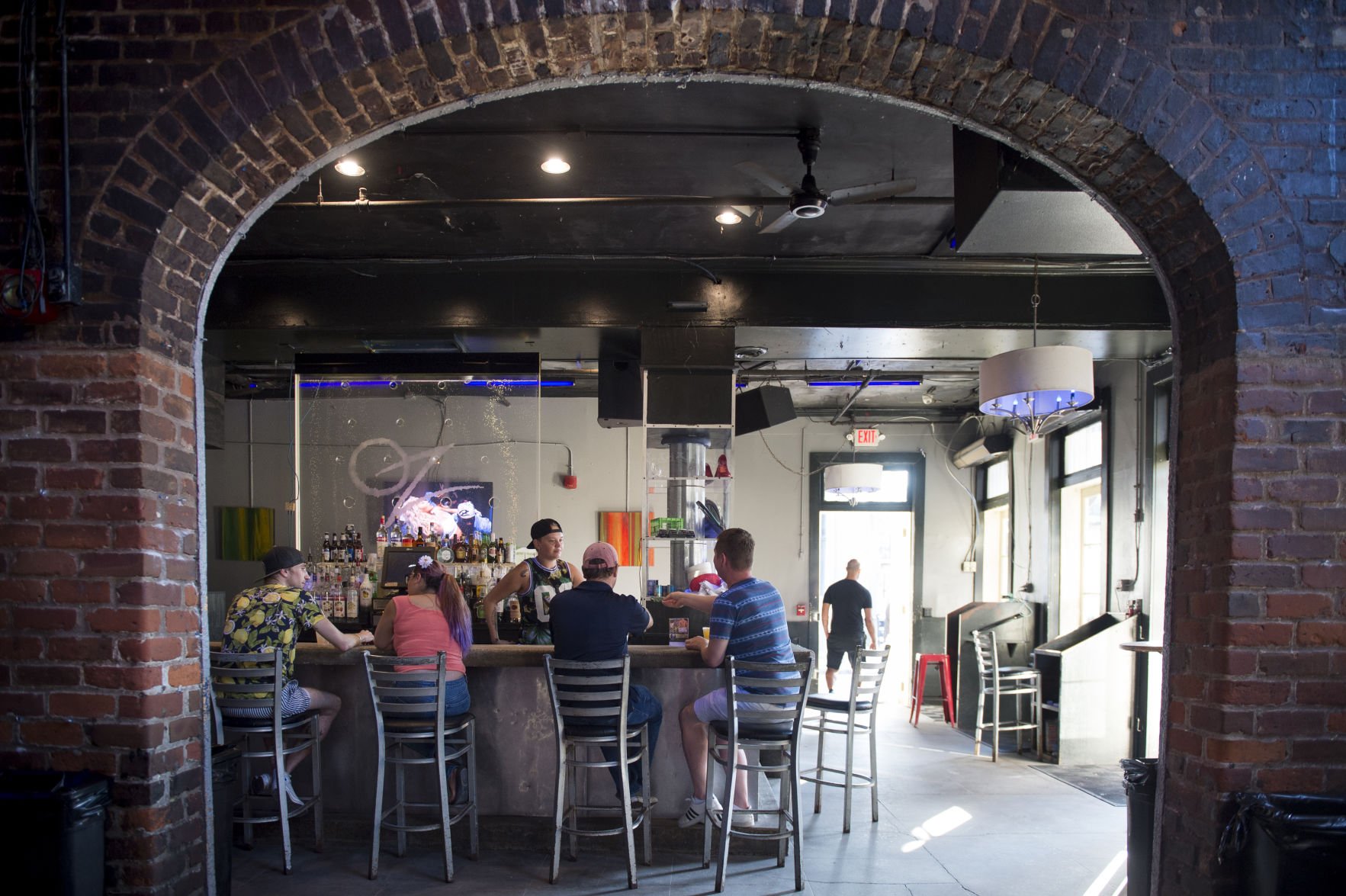
The bar at Oz on Bourbon Street in the French Quarter in 2019.

rainbow section divider

The number of gay bars in the United States declined 18.6% between 2012 and 2017 and fell another 14.4% from 2017 to 2019, according to business listings compiled by Greggor Mattson, a sociology associate professor at Oberlin College. In his report, he notes inferring rates of bar closures from business listings alone is not a perfect system, but it does confirm a pattern many have been observing for years.

For one, technology has also played a role in not just the decline of gay bars, but also how they function in society generally.

Before, gay bars were some of the only spaces queer people could go to meet other queer people in a safe environment. Dating and hookup apps now allow LGBTQ and gender-nonconforming people to find partners without specifically visiting queer spaces in person, just as they allow straight people to meet each other without going out.

Both Tracy Deroche, who owns The Phoenix in the Marigny, and GrandPre say even when people come to their bars now, they’re often on their phones. With so many entities vying for people’s attention, bar owners and event planners have had to adapt and organize events that draw people in.
“You don’t have to go out and buy drinks — you can just pick up your phone,” says poet and social observer Saeed Jones. “So that’s a major change: that now if people go to a bar or a club, they’re looking for something different,” adds Jones, who served as the editor of BuzzFeed’s LGBTQ vertical for three years.

Jenna Ard of GrrlSpot understands that well, and she’s been organizing pop-up nightlife events specifically aimed at lesbian women for years. It started in 2006 when she’d randomly text her lesbian friends to show up at the same bar one night.

“Eighty lesbians would show up unexpectedly at a straight bar,” Ard says. Eventually, they started coordinating more formal events with bars so they wouldn’t overwhelm the staff. Plus, “there was never enough toilet paper,” she adds.

GRRLSPOT

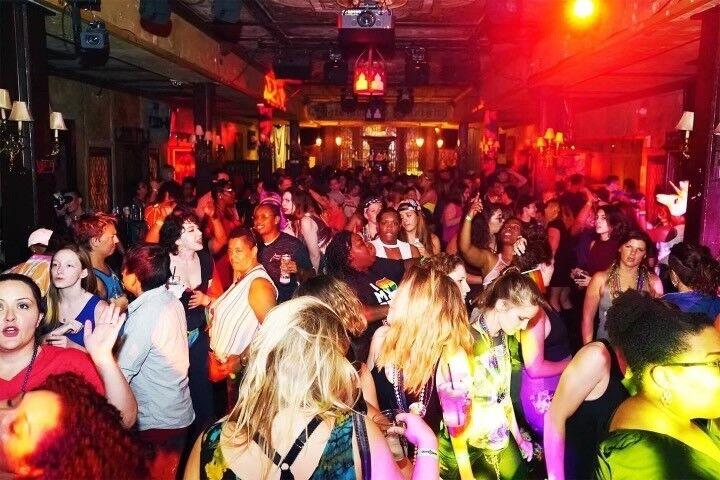
A past GrrlSpot event in all its glory

Now, GrrlSpot plans events every few months for special occasions like Pride, Decadence and Mardi Gras, and they go all out. Their past events have included RuPaul’s Drag Race contestants, burlesque dancers, fire artists and aerialists.

“What I try to do is, I’m like OK, there is no lesbian bar, but I’m going to try to make this the coolest, most interesting and beautiful lesbian bar you’ve ever been to just for tonight, one night,” Ard says. “I just try to do the coolest, weirdest things because it’s not what you’d expect at a lesbian bar.”

It’s the closest thing the city has to a bar specifically catering to lesbian women. Though there have been some throughout the years — most notably Charlene’s which used to be across from The Phoenix — there aren’t any remaining in the city. Lesbian bars have never been as common as bars primarily serving gay men, and many have closed down nationally in recent years. (Again, the pandemic didn’t help the situation.)

Both Ard and Jenelle Marlbrough, a lesbian woman and bartender at the Black Penny, say they think the lack of lesbian bars both in the city and nationally could be because there is less of a demand for them. Because of the wage gap, women generally have less money than men.

“(Men) have a lot more money to throw around and have fun with, to vacation and party and whatever,” Marlbrough says. “That’s a really big part of that equation that I feel like is constantly overlooked.”

rainbow section divider

As societal attitudes toward the LGBTQ community become more accepting, the line between gay bars and bars not specifically labeled as such is blurring.

GrandPre says he lived in a lot of “gay-friendly” cities before he moved to New Orleans, including San Francisco and Key West, Florida. But he says New Orleans is the “gay-friendliest city” he’s ever been in.

“When I moved here in the early ‘90s, the gay bars had their doors open onto the street,” GrandPre says. “You didn’t see that in San Francisco but you saw it here.”

It was a welcoming experience, particularly for a community that has been constantly targeted for violence and abuse. Now, because many LGBTQ people no longer only feel safe in gay bars, they have more options to choose from for a night out and may not end up at a specifically gay bar.

“When I go out, I’m just as likely to want to go to a gay bar or club as I am to go to a ‘straight’ bar or club, if I like it as well,” Jones says. “I no longer feel like those are my only options.”

Best French Quarter bars and Compere Lapin: Talking food on News Talk 99.5 WRNO (copy)

The Corner Pocket is at the corner of St. Louis and Burgundy streets. 

Straight people are also feeling more comfortable hanging out at gay bars. While bar owners welcome the business, the presence of straight people in bars can change the vibe of the space.

“I can tell you every queer person has a story of being at a drag show and seeing a bachelorette party kind of takeover,” Jones says. “I don’t think bachelorette parties are to blame for whatever trends are going on, but there definitely is a phenomenon where I think these spaces are kind of being blurred.”

When GrandPre thinks about some of the gay bars on Bourbon Street, he cringes thinking of rowdy bridal parties full of screaming women. He wants his bar to function as an alternative to that scene.

“There will always be a need for other bars like mine that are out of the way, that don’t attract the bridal parties,” he says.

Marlbrough says often customers will come into the Black Penny asking if the bar is a gay bar, to which she likes to reply, “We’re not not a gay bar.”

“We don’t cater to anybody, so everybody is welcome here, like nobody cares,” she says. “As long as you’re not an asshole … then we don’t give a fuck … I think that in itself — supporting people’s intuitions and just who people are — is a big part of why New Orleans is such a special place.”

Not only are straight people becoming more accepting of the LGBTQ community, but gay bars and spaces are becoming more inclusive of lesbian, bisexual and TGNC people.

“We want acceptance, we want inclusivity in these spaces, so sure you’re seeing more diversity in these spaces,” Jones says. “And that also means, I hope, not just straight people feeling invited into these spaces but trans and gender-nonconforming people feeling comfortable in these spaces.”

NO.aboordinance.100319_17.JPG (copy)

Sarah Manowitz, Oz’s first female general manager, stands in the doorway at the Bourbon Street bar.

Manowitz, who is a bisexual woman, says she’s noticing this happening in New Orleans. She says she’s Oz’s first female general manager and that in the last several years the bar hired its first openly transgender bartender.

Manowitz says she’s noticed the gay bar scene has gone from mostly cisgender white males to a mixture of women and gay, trans, straight and polyamorous people — and that it’s only gotten more diverse after the pandemic.

“The world is changing, and thankfully we are changing with it,” she says. “Historically, New Orleans has always been ahead of those trends.”

Jones says with the lines blurring and queer bars becoming more inclusive, he’s beginning to see even the term “gay bar” itself as outdated.

“Because that’s not actually what I envision,” he says. “I envision a space where queer people are just centered, and I can get a good cocktail, and there’s good music … It’s not just necessarily a room full of men. I want queer women to feel welcome there. I want trans people to feel welcome there.”

rainbow section divider

Another reason the gay bar scene is changing is because many cities themselves are changing, with increasing property values and gentrification.

“If you think about where a lot of gay bars would be located, gentrification often is going to impact them,” says Jones. “We see that consistently across the country … Real estate in those places is becoming more and more expensive.”

That’s true in New Orleans, where rents have risen while wages have stayed roughly the same.

GrandPre says the pandemic was the breaking point for many LGBTQ people working in the city’s service industry. Some who were out of work and still saw the bills stacking up were priced out.

“A lot of those people moved because they couldn’t afford to live here with no work,” he says. “The rents here have gotten to be so high.”

The city’s changing Covid restrictions have made navigating the pandemic both complicated and expensive for bars.

NO.barsopen.100420.001.jpg (copy)

Golden Lantern Bar owner James Garner and bartender Matt McWain open on an October morning in 2020, following Mayor LaToya Cantrell’s announcement that bars could open for to-go drinks only from 8 a.m. to 11 p.m.

Deroche says when The Phoenix was closed for months in the early pandemic, most of his product expired. In June, the city allowed his bar to reopen in a limited capacity, so he had to repurchase all the supplies, only to have to close down weeks later when restrictions tightened again.

Still, he says support from the community helped keep the bar going.

“Everybody came out to support us,” Deroche says. “Even if they were running to the grocery store to pick something up, they would just come in and order a drink, just so that they could tip the bartender.”

Starting May 28, Mayor LaToya Cantrell lifted the 1 a.m. curfew for bars. The city is allowing full capacity for large indoor gatherings with the stipulation that they either require customers to wear masks or to show proof of vaccination or a negative Covid test. If they do neither, capacity is limited to 50%.

The loosened restrictions have been a relief to the city’s gay bar owners, and they’ve seen a warm welcome as they’ve been able to resume operating again. Memorial Day weekend was the first time they’d been able to operate without curfews in over a year, and business exceeded expectations at The Phoenix, Deroche says.

“Usually Memorial Day weekend is very slow for us. Everybody goes to the beach,” he says. “When [Cantrell] announced that she was going to lift curfew, I said, ‘Oh, it’s going to be slow. People probably already made their hotel reservations. They’re not going to cancel it.’ But it was very good. I was pleasantly surprised.”

Bar owners are hoping business continues to keep up throughout the summer, which is a traditionally slow season for the city.

“The summertime’s always the slow time in New Orleans, and I don’t think that’s going to be the case this year,” GrandPre says. “People are traveling, and New Orleans has always been a big destination. So I think it’ll be a good summer.”

French Quarter gay bars stand with Orlando during pride weekend: ‘It gives us sense of soldiarity’ _lowres (copy)

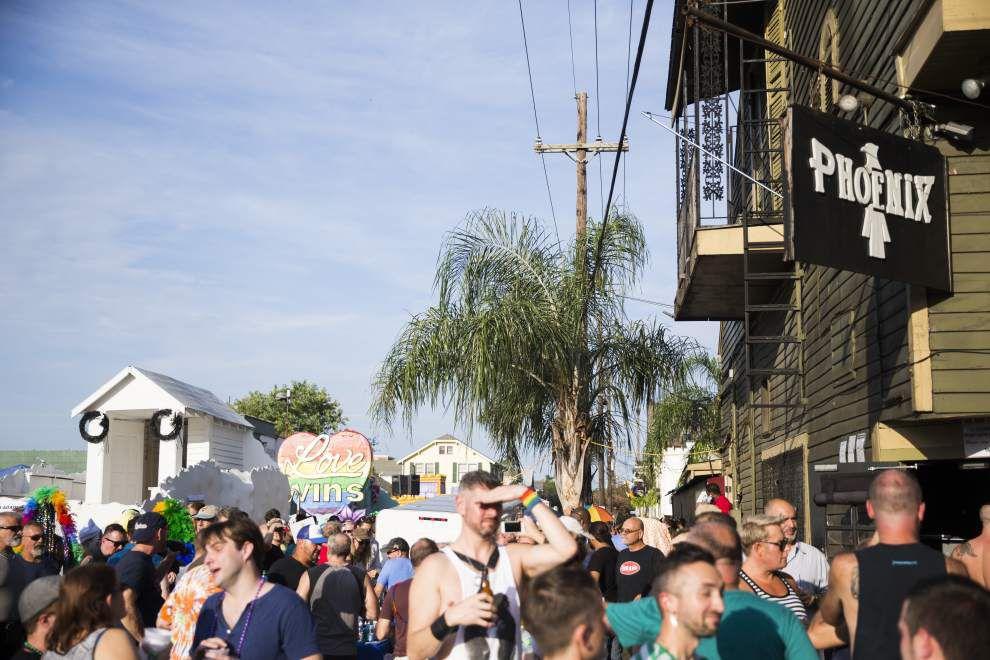
People gather outside the Phoenix Bar before the 2016 New Orleans Pride parade.

Gay bar owners and event organizers are already seeing an increase in demand for LGBTQ-centered events as pandemic restrictions loosen just in time for Pride month. While there isn’t going to be a parade or big block party this year, organizers are arranging for smaller decentralized events at gay bars throughout the month of June.

Many plans are still in the works, as organizers scramble to plan according to the latest ease of restrictions.

Deroche and Manowitz say they’re hoping this will encourage people to support the city’s LGBTQ businesses all month, and that it will give them the opportunity to have events that support different segments of the community.

Deroche is planning a June 26 event at The Phoenix that will have a clothing drive for trans people going on job interviews and might evolve into a small job fair. GrrlSpot is putting on an event on June 12 at Crossing with burlesque performers Jeez Loueez and Lola Van Ella. And on June 10, GrandPre’s is having a 1920s-themed speakeasy event.

“It really has given us an opportunity to really, really be inclusive, because we can plan events to include everyone,” Deroche says, “where in the past, it was just whoever showed up at the block party and whoever showed up at the parade, and that was kind of it.”

rainbow section divider

Although a lot has changed since the pinnacle of gay bars, they’re still important and almost sacred places for many in the LGBTQ community.

For Arthur Severio, who performs drag in the city as Reba Douglas, the New Orleans gay bar scene is the reason he was able to see his first drag show in the ‘80s.

Gay bars are still places LGBTQ people can go to find fellowship with people like them and feel comfortable being themselves.

“It’s like being with your family, like being deep in your culture and with your tribe,” Marlbrough says. “[It’s] just about being with your people that you identify with and have a ton of things in common with just by default. That’s just a valid experience.”

Reba_and_audience_member.jpg (copy)

Arthur Severio performs in drag as Reba Douglas at the Golden Lantern Bar.

Additionally, gay bars continue to be venues for performance art and self-expression — whether that be in the form of drag, burlesque performers or experimental shows.

“[Those performances] are still incredibly special, and I both have a good time and I laugh, and it does something for my heart,” Jones says. “That’s special, and that requires a certain kind of space where these artists can do their thing.”

New Orleans has always been a city known for its culture of celebrating individuality and expression, one that can’t be separated from the LGBTQ community and gay bars. Queer spaces play a role not just in the local LGBTQ community but in entire cities.

“When you say we need these bars, it’s because it’s like it’s hell outside of them,” Jones says. “It’s more like recognizing that if you like food, you realize you want different kinds of restaurants in your community because you want to be able to enjoy those different experiences. I think we should recognize that if you want to have a rich community, a rich cultural experience in your city, then having queer spaces is just a part of that.”

Outdoor dining has helped a lot of restaurants get through the pandemic shutdowns, but outdoor seating has also been a lifeline to bars, parti…

SUPPORT LOCAL JOURNALISM

For 40 years Gambit has reported on the city we love, connected you to New Orleans, and covered the issues that matter to New Orleanians—all for free.
We need YOUR help to keep doing it.
Become a Gambit Member and join our krewe today.

Hola Papi: How a gay, Latino man found his voice as an advice columnist – NBC News

Author and illustrator John Paul Brammer knew he had hit a professional low when was he living in New York City and recapping gay porn for a living. 

Fired from a short-lived job working for a start-up, he found himself on “the smut circuit” — his words — feeling like a failed journalist. He was sleeping a lot, having panic attacks and drinking mimosas in the middle of the day. One morning, while staring at some graphic content awaiting his attention, a chilling thought hit him: “Oh God, my abuela picked fruit in this country for me to become this.”

June 6, 202104:26

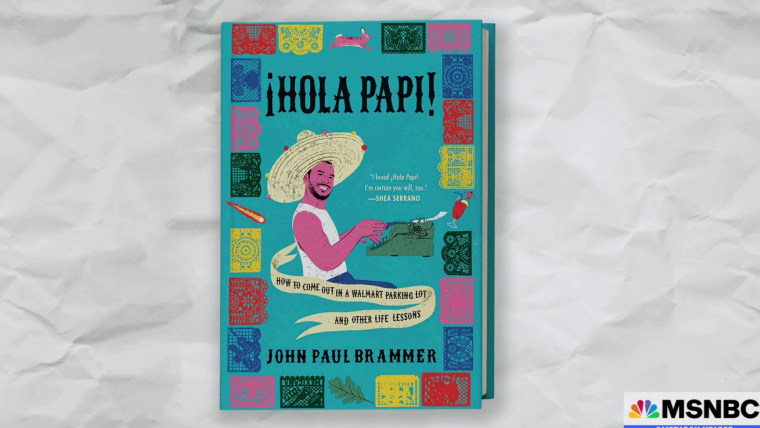
Such is the humor and pathos in Brammer’s first book, “Hola Papi: How to Come Out in a Walmart Parking Lot and Other Life Lessons,” which is out on June 8. A popular online advice columnist, Brammer weaves together his experiences growing up biracial and closeted in rural Oklahoma with letters he has received from readers asking about relationships, identity and love. 

Brammer, 30 and “very single — make sure you put that in,” he instructed, originally began his advice column on the gay dating app Grindr. “Total strangers often sent me messages that began with Hola Papi, so I thought that would be a good name for the column; I intended it to be a spoof, as satire,” he said.

Papi, which means father in Spanish, is also used casually as a term of endearment to refer to a guy. “Then I began getting letters that were more serious,” Brammer said, “and I realized I had a responsibility to take them, and my role, more seriously.”

Brammer’s column then moved to Them, and later Out Magazine, and it can currently be viewed at The Cut and on Substack.

John Paul Brammer’s first book “Hola Papi: How to Come Out in a Walmart Parking Lot and Other Life Lessons.”Simon and Schuster

One of the most common themes Brammer sees in emails from readers is loneliness, whether it is young people feeling isolated, or adults wondering about their place in the LGBTQ community. 

With “Hola Papi,” Brammer illuminates his own ups and downs as well, like the time he took a job in a tortilla factory out of a misplaced desire to prove his Mexican-ness, or when his former childhood bully contacted him on a gay hookup app. He describes everything from how he came out in college (“in a fit of gay mania,” he writes), to a dysfunctional relationship with a Christian youth group member, to his own sexual assault.

“Hola Papi” has received mostly positive reviews. Kirkus Reviews called it a “sassy, entertaining debut collection,” praising it as “charming, instructional, and frequently relatable.” Brammer has also written for NBC News, The Washington Post and The Guardian.

In his book, Brammer, a self-described “ambiguously Latino potato” from “Satan’s Armpit, Oklahoma,” opens up about his own struggles with depression, anxiety and more. One time, a random negative tweet directed at him from a total stranger led him to attempt suicide. “The internet is an unnatural arrangement of community, and we are not wired to accept blatant hostility from strangers at a fast clip,” he reflected. “Usually when I receive negativity on social media, it doesn’t affect me — I don’t see those people as my peers. But it is harder on the gay or Latino internet, when the criticism is coming from there and it is personal, it hurts. If your perceived community turns on you, it is not a good experience.” 

Building on a tradition — the advice column

Brammer noted that although he never set out to be an advice columnist, that genre of media is a place where female writers, along with other traditionally marginalized voices, have been able to gain a toehold in newspapers and publishing.

Brammer’s publisher calls him the “Chicano Carrie Bradshaw” of his generation, referring to Sarah Jessica Parker’s sex columnist character in “Sex and the City.” On a broader level, his writing is continuing a tradition that is familiar to Latino and non-Latino readers alike.

Beginning in 1998, the late Dolores Prida wrote the “Dolores Dice” (Dolores Says) column in Latina Magazine for over a dozen years. “We used to do surveys, and her column was more popular than our cover girls,” said writer and documentary filmmaker Sandra Guzmán. The former editor-in-chief of Latina, Guzmán considers hiring Prida for the column her greatest legacy at the magazine.

“Dear Abby wasn’t thinking about us. She wasn’t getting letters about experiencing racism in college or wrestling with assimilation,” Guzmán said. “Dolores Prida created a safe space where readers could share their problems.”

Many Latinos are not acculturated to going to therapy, Guzmán pointed out, and the “Dolores Dice” column was a way for readers to get advice from someone who could seem like a savvy cousin or a wise aunt. “It takes a special skill to answer questions and be funny and be light — and also profound and truthful.”

“Taking problems outside of your family is often not something that our communities approve of,” Guzmán added, “So Dolores’ column was a place where readers could seek counsel on relationships, career advice, and cultural identity.”

In a similar vein, from 2004 to 2017, writer Gustavo Arellano took questions from readers in his “Ask a Mexican” column. Like Brammer, Arellano’s original column began as a satire, then morphed into a syndicated column and then a book.  “I started the column on the advice of my editor at the time, at the OC Weekly (in Orange County, California). We did it to fill up space, to make fun of the dumb questions people asked about Mexicans.”

“Never in a million years did I expect the column to take off,” said Arellano, now a columnist with The Los Angeles Times. At its peak, “Ask a Mexican” was reaching over 2 million people in 38 markets.

“People used to write and ask why Mexicans did certain things, like going to the beach with clothes on, or readers would make ignorant comments, but I saw it as a way to educate people,” Arellano said, noting that he got questions from all kinds of people, including both whites and Mexicans. He still writes “Ask a Mexican” in his weekly newsletter.  

Brammer has received emails from around the world, including Morocco, India, Brazil and Japan. His column, he said, has helped him come to terms with events in his own life. “I’ve learned that there is no singular Mexican experience, no singular Latino or gay experience. I don’t consider myself an expert on things; but hearing other people’s struggles has helped me reckon with my own.”

In Brammer’s view, everyone is an author of sorts, as people sift through their experiences and craft narratives to make sense of their lives.

“Over the years, I have finally learned to stop looking for approval in places where I am not going to get it,” he said. “I can only do my best to make sure my head and heart are in the right place. And I hope my readers see that there is a lot of room for happiness, exploration and wisdom in all the things that make us our unique selves.”

Follow NBC Latino on FacebookTwitter and Instagram.

United States-Mexico match final marred by anti-gay chant, fans throwing objects on field – USA TODAY

Sunday’s CONCACAF Nations League final between the United States and Mexico at Empower Field at Mile High in Denver was briefly suspended due to anti-gay chants in the stadium.

As the match was coming to a close in the second half during stoppage time, the chants were heard from the crowd and the officials asked them to stop. But the unruly fan behavior didn’t end there.

Christian Pulisic ended up scoring the game winner with a penalty kick in the 114th minute, and in the 124th Mexico’s chance at an equalizer via a penalty kick was stopped to secure the 3-2 win. 

Christian Pulisic celebrates after scoring on a penalty kick.

After Pulisic’s goal, U.S. midfielder Giovanni Reyna was struck the face with an object as fans threw cups and water bottles on the field. 

“Total lack of respect for what’s happening on the field and all effort that both teams are putting into the game,” U.S. manager Gregg Berhalter said. “I think he’s going to be OK, but he did take something to the head, and it could have been a lot worse.”

A fan was also tackled by stadium security after he ran on the field near the match’s end. 

Mexico’s Nations League semifinal match against Costa Rica on June 3 was also stopped over homophobic chants. Stadium security threw out several fans for chanting even after they were warned.

The referee stopped the match for three minutes, which is part of CONCACAF’s anti-discrimination protocol.

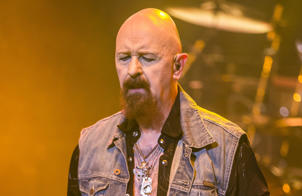
Judas Priest singer Rob Halford felt free after he came out as gay – MSN UK


Rob Halford wearing a hat: Judas Priest's Rob Halford

© Bang Showbiz Judas Priest’s Rob Halford

Judas Priest singer Rob Halford felt an “enormous feeling of freedom” when he came out as gay on MTV in 1998.

The heavy metal legend admits he never planned to announce to the world that he was homosexual when he casually referred to himself as a “gay man” during the Q&A and he is still unsure whether he would have publicly come out if he had decided to make a more a more grandiose statement.

In an interview with Apple Music’s Hattie Collins, he said: “It was one of those things where I’m at MTV in New York, I’m talking about a project that I was working on called ‘Two’, with myself and John 5, the amazing guitar player. I was doing the rounds in New York City and ended up at MTV talking about this project. And in the casual course of the conversation, we were talking about the overall music, and the direction, and the feelings. And I said something to the effect of, ‘Well, speaking as a gay man, blah, blah, blah, blah, blah.’ And then I heard the producer’s clipboard bounce on the floor. It was one of those gay sharp intakes, ‘Oh my God, he’s come out.’

“And so that was it. So it was very simple. I think if I’d … I still say today, if I’d have really thought this through, like today’s the day I’m going to come out, maybe I even wouldn’t … maybe I may not have come out per se, because it’s still a big moment for so many of us, with a close friend, with someone at school, with mum and dad, with whomever, to actually say, ‘Hey, I’m a gay guy or I’m a gay girl.’ It’s just a big, big deal. It’s just a glorious, glorious moment.

“So there I was, and I did the interview, and then I walked back to the hotel, and went back to my room, and go well, that’s it, now everybody knows. And then, of course, it hit the news wires and that was that.

“So wow, it was just this enormous feeling of freedom, and the pressure was gone, and there’s no more talking behind your back because you have all this ammunition of power as a gay person now, as an out gay person. Nothing can hurt you because this is it. You can’t throw insults, you can’t throw rumours, you can’t say anything negative about me because I am who I am. So that’s my wonderful memory of my great coming out day.”

The ‘Breaking The Law’ rocker also opened up on the effect hiding his sexuality had on his mental health as the band achieved success in the 1970s and 1980s.

Halford, 69, remembers he would lock himself away in his hotel room after the band had played live because he was worried about being outed before he came out to his parents and bandmates.

He said: “As a youngish guy in a thriving heavy metal band, it was difficult because I was in that place where a lot of us protected everybody else.

“[I thought] ‘Oh, I better not come out because it will upset my mum and dad. I hadn’t better come out because it will upset my friends, I hadn’t better come out because it’ll upset my band and my fans and record company.

“I had all that riding on my shoulders through those moments of Priest when we were gaining headway, particularly in America. It was difficult y’know, I went back to my room and turned on the TV and that was it.

“I couldn’t go to clubs, I couldn’t go to bars because it was suggested, ‘Don’t do that, because paparazzi might get you and we’ll have to do the cover story’ and all this innuendo.

“Mentally, on top of being the gay man in the closet, I had all these extra pieces piled onto my life at that time.”

The Museum of the Home’s £18.1m refurb: inside the rebranded east London cultural hotspot – Evening Standard

T

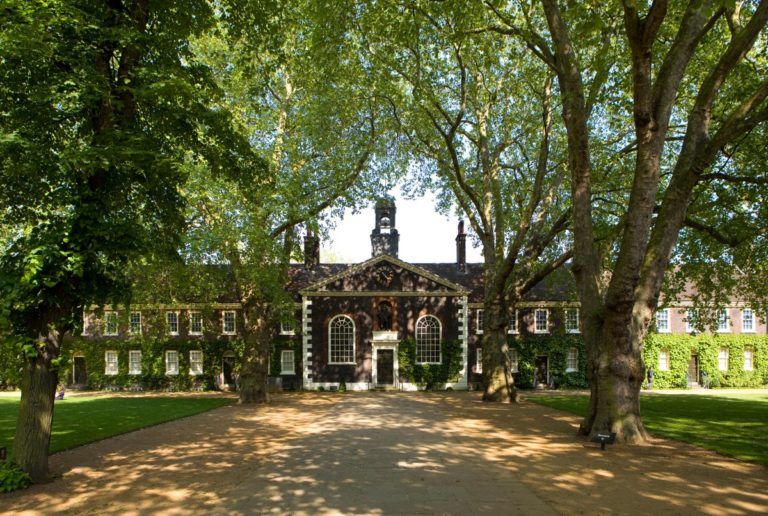
he irony isn’t lost on me that, after a year locked up in our homes, London’s best new day out is at the Museum of the Home. Previously known as the Geffrye Museum, it reopens on June 12 with a new name, a gorgeously revamped building, and a refreshed purpose. After being closed for three years while an £18.1m redevelopment project was underway, it’s now ready to invite us all back in – and right from an imminently Instagram-able new red sign, above an accessible new entrance opposite Hoxton station, it does just that.

Where once the museum focused heavily on interior design, now the director Sonia Solicari is taking things in a new curatorial direction. “Now it’s really about the experience of home as an emotional and psychological space,” she tells me when I visit. “Our vision is to review and rethink the ways we live, in order to live better together – and that’s bringing in a social mission as well.”

The jumping off point is one big question: what does home mean to you? And it’s an apt one for a moment when the concept of a home is changing – its delineation from work perhaps forever altered by the pandemic – but also at a time when actually owning one seems out of reach for many young Londoners.

That this expansive remit can actually be displayed is down to an impressive refurb by architects Wright & Wright, which has given it 80 percent more exhibition space. Keeping the original – very beautiful – Grade I listed almshouse building intact, the firm has smartly, sensitively and sustainably stitched the historical and the contemporary into the new design by digging down into the foundations.

The new entrance

/ Hufton+Crow

Now there are three floors open to the public, giving the museum’s artefacts a better show but also allowing the space to breathe a bit more. In the new lower-ground floor gallery, windows have been added at garden level to bring in light. The expansion will also greatly improve the visitor experience: in the past, bottlenecks used to form in its popular ‘Rooms Through Time’ walkway, a particular stress for wheelchair users or parents with pushchairs.

Accessibility and practicality are integral to the new layout – the museum gets a lot of school visits, so a new learning centre has been placed near the toilets and garden, with steps nearby for children to sit on, all making life easier for beleaguered teachers. And new event spaces that open out onto the museum’s stunning gardens have been dotted around the building, with the hope that a festival of live events can be launched when the world gets up and running again in earnest.

The idea is that the museum can feel like a magazine – something you can dip in and out of. Where visitors once had to go through the entire exhibition space to get to the café or shop, these can now be visited separately and outside of museum opening hours. It will make the museum much more a part of the local community; people can pop into the new café, Molly’s (named after a pioneering former curator) and buy a coffee as part of their walk to the station.

Inside the new Home Galleries

/ Em Fitzgerald

So yes, it all looks beautiful – but what’s inside? The new Home Galleries, on the lower-ground floor, are where the meaning of home is put under the microscope. A photograph by the entrance by Jonathan Donovan, entitled All I Want Is a Room Somewhere, really sums up the personal and political breadth of the subject. It shows an older woman with dementia and a family of refugees from Syria – they needed somewhere to live and she needed care, so they came together to form a unit, and the girls would sing songs from My Fair Lady to help her remember things. It’s both immediately touching and gently thought-provoking about the wider possibilities of home.

In this space, vast historical and contemporary questions are explored, from domestic labour in the home to who gets to inherit property. And there are fun interactive elements for younger visitors – a game squashing bed bugs, and a chance to vote on this essential question: do you keep your ketchup in the cupboard or the fridge? (Clearly it’s the fridge). Perhaps most perfect is a TV set from the 90s surrounded by VHS tapes with hand-scribbled labels – the tapes, so you know they’re truly authentic, were found in a skip.

Upstairs, some of the popular Rooms Through Time (displaying the changing trends in British home decor) have been rejigged and reimagined. A 1745 parlour now shows signs of a servant cleaning the fire grate, with soot across the floor, to show what it was like to be lived in – and the often-ignored stories of the people who kept a house like this clean.

The curators of the Museum of the Home have emphasised that its model of a 1998 flat belonged to a gay couple

/ Em Fitzgerald

Solicari is keen to see how the visitors react to it (they might just think someone forgot to clean the floor), but the rooms provide a big opportunity to widen the stories being told, she says. It’s now been emphasised that the swanky 90s flat is home to a gay couple – and re-curating them is her next big project. A 1976 front room reflecting the experience of Windrush generation families, curated by playwright Michael McMillan, was a popular previous exhibit and has now been made permanent.

A nimble temporary exhibition programme will allow the museum to react more quickly to ongoing conversations. Upstairs, a video artwork called Waiting For Myself to Appear by McMillan and performed by Esther Niles is an attempt to contextualise the statue of slave trader Robert Geffrye outside the building, the removal of which was blocked by the government last summer (Solicari says the museum’s board of trustees is “amenable” to reopening the conversation about its removal again in future).

Downstairs, there are images from the museum’s rapid-response lockdown collecting project, while Holding the Baby, a series from photographer Polly Braiden, will explore the experiences of single parents. Behind the Door, a two-year partnership between the museum and the London Homeless Collective, will explore perceptions of homelessness and fundraise for charities in the collective.

And all the way round, the once-residential building’s original features are incorporated into the exhibition space, from an old coal chute to a beautifully preserved undercroft, which will feature a soundscape voiced by Maxine Peake. While work on the refurb was ongoing, the architects found an old boot up a chimney. They later discovered this was down to an old anti-witchcraft belief: putting a shoe up a chimney would keep evil away. That shoe is now on display – another fascinating story about the way we once lived and the universal need for a safe place to live.

Corporate Pride Pushes The End Of The Constitution, Not Inclusion – The Federalist

It’s that time of year, when it seems like nearly every corporation in America decks itself out in more rainbows than a summer sky after a thunderstorm. But these elaborate displays of virtue signaling — limited, of course, to countries where LGBT people are already largely accepted and not countries like Iran where they are harmed — aren’t just about celebrating inclusion.

Behind the confetti-sprinkled ads with sayings so cliché (a) they hardly mean anything and (b) no one really disagrees with them, hundreds of corporations are throwing their support behind the deceptively named “Equality Act” — and its threats to religious liberties and free speech.

The marketing branches of these corporations pretend the Equality Act would simply recognize that people in the LGBT community have the same human rights anyone else does. But in actuality, the Equality Act would strip religious liberties, freedom of speech, parental rights, and the safety and privacy of women and girls.

The bill explicitly exempts itself from the Religious Freedom Restoration Act, which Congress passed to secure religious exemptions on issues like this one. It would open women’s prisons to men, even men with no surgical changes, and force women’s sports programs and bathrooms to welcome biological males.

Under the Equality Act, employers couldn’t prevent biological men identifying as women from taking jobs like “law enforcement officials involved in strip searches or supervisors of locker rooms, or handling intimate care in hospitals or long-term care facility,” as Margot Cleveland noted for The Federalist.  It could also penalize parents who don’t wholeheartedly endorse their children’s desires to identify as the opposite sex; it would ban “conversion therapy,” which the Gay & Lesbian Alliance Against Defamation (GLAAD) broadly defines as “any attempt to change a person’s sexual orientation, gender identity or gender expression.”

With those extreme provisions in mind, here’s a roundup of some of the major corporations doing backflips to support the Equality Act.

1. Target

Target launched a collection of more than 150 pride-themed products this year, including string lights, scented candles, and this $50 garishly striped rainbow shorts suit, which was quickly mocked on Twitter. Behind its colorful displays, Target has professed support for the Equality Act since 2015.

2. IBM

“We’re Stronger Together,” IBM declares with an overused and vague cliché. President and CEO Ginni Rometty sent a letter to Congress in 2019 “unequivocally voicing support for the Equality Act and urging lawmakers to pass it without delay.”

3. Honda

The American branch of the vehicle company explicitly posted its support for the Equality Act on June 1, also sharing a post from the Human Rights Campaign, one of the chief activist groups pushing the legislation. To them, like all the rest of these corporate entities, support for LGBT Americans is synonymous with ending constitutional protections for free speech and living in accord with your conscience.

4. Capital One

For Pride Month, Capital One posted a video complete with upbeat music, stock video clips of smiling people, and the buzzwords “equality” “love” and “family.” The banking company also pledged “strong support” for the Equality Act, with a press release assuring “Capital One is proud to be advocating for its passage.”

5. Gap, Inc.

Equality is “always in style,” said Gap in its 2016 announcement of support for the Equality Act. This year, the retailer — which is also connected to Banana Republic and Old Navy — announced a Pride clothing collection and a $50,000 donation to GLAAD.

6. Facebook

Facebook posted a video in honor of Pride Month celebrating Facebook groups of “cottagecore farmposting,” “non-binary gamers,” “queer nurses,” “gay men meditating,” “trans musicians,” “LGBTQ+ crochet/knitting/crafters,” “LGBTQ pets,” and “black lesbian bikers.” Facebook, Inc. touts its “open and vocal” support for the Equality Act on its U.S. Public Policy page.

7. Deloitte

The global consulting firm posted a Pride message on its Twitter account, promising to share stories of LGBT employees and showing a lesbian couple holding and smiling at a baby. Deloitte, LLP is also part of the Business Coalition for the Equality Act listed on the HRC website.

8. American Airlines

American Airlines decked its Twitter profile and cover photos in rainbow stripes, along with a separate Twitter post for Pride Month. It’s also advertising a list of 23 onboard “movies to celebrate Pride,” while touting its “active advocacy” for the Equality Act.

9. Disney

The Walt Disney Co., whose core products are geared toward children, is part of the HRC’s Business Coalition in favor of the Equality Act. It also offers a Pride collection for sale, including a baby onesie and rainbow stuffed Mickey and Minnie toys.

Disney Plus, the entertainment giant’s online streaming site, is also spotlighting TV shows and films that encourage children to question their sexuality.

10. Pinterest

Another member of the Business Coalition for the Equality Act, the online mood board company suggests curated collections with titles like “The future of fashion is Queer,” “Your Pride month reading essentials,” and “How to be an ally in the LGBTQ+ community.”

11. Google

In addition to a special Twitter post, a “Google Doodle” honoring LGBT rights activist Frank Kameny, and an “Easter Egg” of confetti and assorted striped flags, Google has also thrown its support behind the Equality Act.

12. Apple

Apple, Inc. endorses the Equality Act, and Apple’s CEO Tim Cook shared a detailed message of support for the act on Twitter earlier this year. This month, the tech company is offering rainbow bands on its Apple Watches.

2021’s most welcoming US vacation destinations for LGBTQ families: Seattle, NYC, DC, Chattanooga – USA TODAY

0

When you think about inclusive family vacation spots in the U.S., you probably think of Anaheim, California, and Orlando, Florida, theme parks and other overtly welcoming destinations.

But beyond the big theme park towns, there are a number of other great cities across the country packed with fun attractions, protected by LGBTQ-inclusive laws, and full of LGBTQ-run businesses. And these LGBTQ-friendly cities in the U.S. offer a warm welcome to all families. 

Here are the top LGBTQ family-friendly vacation destinations in the U.S., and recommendations for fun family activities and tourist attractions to experience when you’re there:

Long Beach, California

Long Beach, California, is home to Southern California's only off-leash dog beach.

Long Beach is just down the road from Los Angeles but feels worlds away. It’s like a quaint and quirky small town straight from a sitcom. And if you’re traveling with your furry family member, Long Beach has the only beach in LA county where your dog can run wild and free off-leash as long as it’s under voice control. There’s even an annual corgi beach party! Yes, really. 

Find a deal:10 Best hotel booking sites for families

After all that fun in the sun, cool off with ice cream at either Long Beach Creamery or Afters. For big-ticket thrills, visit the Aquarium of the Pacific, take a tour of the historic Queen Mary, or cruise the canals on a Duffy boat. And for something totally free, don’t miss the city’s vibrant series of POW! WOW! murals.

We went to Disneyland during COVID-19:  Here’s what you need to know

Fort Lauderdale, Florida

Fort Lauderdale calls itself Florida's Gay Capital. And although it has a reputation as a party town (especially around spring break), it also offers plenty of family activities.

There’s no doubt that Fort Lauderdale is LGBTQ-friendly, though it kind of has a reputation as a party town. But there’s another side to this Florida beach destination with great attractions for all ages, such as Butterfly World and the Museum of Discovery and Science

Fun in the sun:  10 dreamy Florida beach resorts that are perfect for families

If you’re traveling with teenagers interested in learning about LGBTQ history, check out the Stonewall National Museum and Archives, one of the largest gay libraries and archives in the U.S. The exhibitions change, but it’s a great activity – especially if you have queer teens looking to learn more about the LGBTQ community and the history of civil rights. 

Seattle

Seattle Pride will be virtual in 2021 but once COVID is over, it will once again be a must-see event for LGBTQ visitors. In 2014, "Star Trek" actor-turned-social media star George Takei took part.

The grungy capital of the Pacific Northwest is one of the most inclusive cities in America, with several streets in the hip Capitol Hill neighborhood adorned with rainbow flag crosswalks and businesses proudly displaying trans and rainbow flags all year. If you’re in the neighborhood, do not miss the ice cream at Molly Moon’s. Beyond the touristy stops at Pike Place Market and the Space Needle, Seattle has some great attractions for families, such as the Museum of Pop Culture

Splash zone:  14 best indoor water park resorts in the U.S.

While the city is known for constant rain, summer in Seattle is generally sunny and gorgeous. For the ultimate family vacation, come the last weekend of June for Seattle’s Pride weekend, when the region’s thriving gay community takes center stage and there’s a huge LGBTQ family picnic and block party. (This year’s Pride Parade will be virtual and take place June 26-27.) 

Denver

If your family is into outdoor activity and you have a music lover in the family, Denver is the place for you. It's home to Red Rocks Amphitheater, one of the country's most famous music venues.

Denver is a city for the #FitFam with so many outdoor adventures right downtown, from 85 miles of bike trails to the man-made whitewater kayak chutes at Confluence Park. And just outside the city, there’s a world of hiking and camping as it’s only an hour and a half from Rocky Mountain National Park.

But for something incredibly special – especially for music lovers – plan your trip around a concert at Red Rocks. The open-air outdoor amphitheater in Red Rocks Park has some of the best acoustics in the world. 

Oahu, Hawaii

While Maui is the best spot for snorkeling and scuba and Kauai is tops for hiking, Oahu offers families a little bit of everything.

All of the Hawaiian islands are very LGBTQ-friendly, so if you’re a same-sex couple planning a family vacation to the Aloha State and don’t know which island to choose, it just depends on your family’s personality. If you love the outdoors and hiking, Kauai is your island. If you love hanging out in the water and snorkeling all day, look to Maui. 

Stress-free vacations:  15 best all-inclusive resorts in the U.S. for families

But if you want a little bit of everything, Oahu is probably the best bet for your family. Plus, Honolulu is home to the Hawai’i LGBT Legacy Foundation, which hosts several Pride festivals and events throughout the year.

If you’re traveling with little ones, consider staying at one of the best Hawaii all-inclusive resorts for families, Disney’s Aulani Resort and Spa, located about 30 miles from downtown Waikiki. The hotel’s cast members (Disney’s term for employees) undergo the same training as park employees for inclusion and sensitivity and strive to create magical vacations for all. 

San Diego

If you have a gardener in the family, head up the San Diego coast to the Flower Fields at Carlsbad Ranch. The colorful rows of giant ranunculus are a must-see in the spring.

If half of your family loves to go-go-go on vacation while the other half just wants to relax, San Diego is a great compromise for summer vacations or any time of year. It’s got a little bit of everything, from the world-renowned San Diego Zoo and the surrounding museum-packed Balboa Park to some of the best family-friendly – and most wheelchair accessible – beaches in the world. 

In fact, throughout San Diego County you can find both manual and power wheelchairs to rent for free. And if you have a car, drive 30 minutes up the coast to the Flower Fields at Carlsbad Ranch. The colorful rows of giant ranunculus are a must-see in the spring. 

New York

New York City is one of the best vacation spots for trans and queer kids as there are so many LGBTQ cultural sights to see and be inspired by. It’s a great trip to take if your kid or teen is transitioning and expressing a new gender outside of the home for the first time, or if your child is searching for more LGBTQ representation and role models. The Leslie–Lohman Museum of Art is solely dedicated to representing LGBTQ artists and, these days, many shows on Broadway feature LGBTQ stories and characters.

► Teen trips:  10 all-inclusive family resorts even teenagers will love

If your teens love to shop and thrift, funky Williamsburg, Brooklyn, is packed with LGBTQ-friendly boutiques and shops. And for something really special, make a reservation at Bindle & Keep for a custom-fitted shirt, pair of pants, or a suit. The bespoke LGBTQ-owned company is all about making clothes that are tailor-made to the customer, and the experience can be incredibly powerful for a teen struggling with self-esteem and acceptance. 

Of course, just as important as seeing the Statue of Liberty, you cannot go to New York City without visiting the new Stonewall National Monument in Greenwich Village. Make sure your kids have their National Parks passports so they can get a stamp for their visit while they learn about LGBTQ heritage and the history of civil rights. 

Washington, D.C.

History buffs can examine the original Star-Spangled Banner and the first Transgender Pride flags at the Smithsonian's National Museum of American History.

Washington, D.C., is one of the best budget-friendly trips for families because most attractions are free, from the National Mall and the major memorials to 17 Smithsonian museums, galleries and a zoo – all with free admission. While you can’t see and do it all in one trip, make sure to prioritize the National Museum of American History to see two very important flags: the more than 200-year-old Star-Spangled Banner and the original transgender pride flag. 

► No passport needed: The 4 best Puerto Rico all-Inclusive resorts for families

For older teens, the “Illegal to Be You: Gay History Beyond Stonewall” exhibit is incredibly poignant and features artifacts from the civil rights movement through today. For the little ones, the museum’s “The Muppets Take American History” series features adorable surprise pop-ups throughout the museum. Don’t miss Miss Piggy with The First Ladies. 

► Big trips:  27 unforgettable family vacation ideas for the best trip ever 

Chattanooga, Tennessee 

At 260 feet, Ruby Falls is America's tallest and deepest underground waterfall that's open to the public.

The Southeast isn’t the most LGBTQ-friendly region in the U.S., and some areas can be dangerous for LGBTQ travelers. But as someone in the LGBTQ community with my own family, I can say that after growing up and living in the South (Alabama, Georgia, and Tennessee), there’s a real gem for families and it’s not the big city of Atlanta. It’s tiny, quirky Chattanooga. This funky town on the river has a huge art scene and, with that, a more welcoming, diverse environment than other Southern cities. 

There are tons of attractions for the whole family in Chattanooga, too. The Tennessee Aquarium is one of the best aquariums in the country. Ruby Falls is a must-see. And your little ones will love the fairytale caverns and gardens at Rock City. If all that sightseeing worked up an appetite, head straight to Community Pie for pizza and homemade gelato. And for breakfast or brunch, you have to swing by the eccentric, Halloween-themed Aretha Frankensteins

Chicago

There are plenty of kid-friendly activities in Chicago.

Chicago is packed with fun attractions for kids, from the Shedd Aquarium to Navy Pier. And if you do visit the world-famous spot overlooking Lake Michigan, be sure to check out the Chicago Children’s Museum. The museum has an impressive LGBTQ inclusion program with special training for museum staff and community events for LBGTQ families. 

If your kiddo wants to go to a game at Wrigley Field, The Cubs, like other MLB teams, do a special Pride night (usually in June). It’s incredibly empowering to see famous athletes decked out in rainbow-colored socks and uniforms. 

More from FamilyVacationist:

FamilyVacationist.com covers family vacation ideas; family travel destinations; all-inclusive resorts; and must-have travel accessories for families of all shapes, sizes, and orientations.

2021’s most welcoming U.S. vacation destinations for LGBTQ+ families: Seattle, NYC, DC, Chattanooga – USA TODAY

0

When you think about inclusive family vacation spots in the U.S., you probably think of the Anaheim and Orlando theme parks and other overtly welcoming destinations.

But beyond the big theme park towns, there are a number of other great cities across the country packed with fun attractions, protected by LGBTQ-inclusive laws, and full of LGBTQ-run businesses. And these LGBTQ-friendly cities in the U.S. offer a warm welcome to all families. 

Here are the top LGBTQ family-friendly vacation destinations in the U.S., and recommendations for fun family activities and tourist attractions to experience when you’re there. 

As someone in the LGBT community with my own family, I can say that after growing up and living in the South (Alabama, Georgia, and Tennessee), there’s a real gem for families and it’s not the big city of Atlanta. It’s tiny, quirky Chattanooga.

Long Beach, California

Long Beach, California, is home to Southern California's only off-leash dog beach.

Long Beach is just down the road from Los Angeles, but feels worlds away. It’s like a quaint and quirky small town straight from a sitcom. And if you’re traveling with your furry family member, Long Beach has the only beach in L.A. county where your dog can run wild and free off-leash as long as it’s under voice control. There’s even an annual corgi beach party! Yes, really. 

Find a deal:10 Best hotel booking sites for families

After all that fun in the sun, cool off with ice cream at either Long Beach Creamery or Afters. For big ticket thrills, visit the Aquarium of the Pacific, take a tour of the historic Queen Mary, or cruise the canals on a Duffy boat. And for something totally free, don’t miss the city’s vibrant series of POW! WOW! murals.

We went to Disneyland during COVID-19:  Here’s what you need to know

Fort Lauderdale, Florida

Fort Lauderdale calls itself Florida's Gay Capital. And although it has a reputation as a party town (especially around spring break), it also offers plenty of family activities.

There’s no doubt that Fort Lauderdale is LGBTQ-friendly, though it kind of has a reputation as a party town. But there’s another side to this Florida beach destination with great attractions for all ages, such as Butterfly World and the Museum of Discovery and Science

Fun in the sun:  10 dreamy Florida beach resorts that are perfect for families

If you’re traveling with teenagers interested in learning about LGBTQ history, check out the Stonewall National Museum and Archives, one of the largest gay libraries and archives in the U.S. The exhibitions change, but it’s a great activity – especially if you have queer teens looking to learn more about the LGBTQ community and the history of civil rights. 

Seattle

Seattle Pride will be virtual in 2021 but once COVID is over, it will once again be a must-see event for LGBTQ visitors. In 2014, "Star Trek" actor-turned-social media star George Takei took part.

The grungy capital of the Pacific Northwest is one of the most inclusive cities in America, with several streets in the hip Capitol Hill neighborhood adorned with rainbow flag crosswalks and businesses proudly displaying trans and rainbow flags all-year. If you’re in the neighborhood, do not miss the ice cream at Molly Moon’s. Beyond the touristy stops at Pike Place Market and the Space Needle, Seattle has some great attractions for families, such as the Museum of Pop Culture (MoPOP)

Splash zone:  14 best indoor water park resorts in the U.S.

While the city is known for constant rain, summer in Seattle is generally sunny and gorgeous. For the ultimate family vacation, come the last weekend of June for Seattle’s Pride weekend, when the region’s thriving gay community takes center stage and there’s a huge LGBTQ+ family picnic and block party. (This year’s Pride Parade will be virtual and take place June 26-27.) 

Denver

If your family is into outdoor activity and you have a music lover in the family, Denver is the place for you. It's home to Red Rocks Amphitheater, one of the country's most famous music venues.

Denver is a city for the #FitFam with so many outdoor adventures right downtown, from 85 miles of bike trails to the man-made whitewater kayak chutes at Confluence Park. And just outside the city, there’s a world of hiking and camping as it’s only an hour and a half from Rocky Mountain National Park.

But for something incredibly special – especially for music lovers – plan your trip around a concert at Red Rocks. The open-air outdoor amphitheatre in Red Rocks Park has some of the best acoustics in the world. 

Oahu, Hawaii

While Maui is the best spot for snorkeling and scuba and Kauai is tops for hiking, Oahu offers families a little bit of everything.

All of the Hawaiian islands are very LGBTQ-friendly, so if you’re a same sex couple planning a family vacation to the Aloha State and don’t know which island to choose, it just depends on your family’s personality. If you love the outdoors and hiking, Kauai is your island. If you love hanging out in the water and snorkeling all day, look to Maui. 

Stress-free vacations:  15 best all-inclusive resorts in the U.S. for families

But if you want a little bit of everything, Oahu is probably the best bet for your family. Plus, Honolulu is home to the Hawai’i LGBT Legacy Foundation, which hosts several Pride festivals and events throughout the year.

If you’re traveling with little ones, consider staying at one of the best Hawaii all-inclusive resorts for families, Disney’s Aulani Resort and Spa, located about 30 miles from downtown Waikiki. The hotel’s cast members (Disney’s term for employees) undergo the same training as park employees for inclusion and sensitivity and strive to create magical vacations for all. 

San Diego

If you have a gardener in the family, head up the San Diego coast to the Flower Fields at Carlsbad Ranch. The colorful rows of giant ranunculus are a must-see in the spring.

If half of your family loves to go-go-go on vacation while the other half just wants to relax, San Diego is a great compromise for summer vacations or any time of year. It’s got a little bit of everything, from the world-renowned San Diego Zoo and the surrounding museum-packed Balboa Park, to some of the best family-friendly – and most wheelchair accessible – beaches in the world. 

In fact, throughout San Diego County you can find both manual and power wheelchairs to rent for free. And if you have a car, drive 30 minutes up the coast to the Flower Fields at Carlsbad Ranch. The colorful rows of giant ranunculus are a must-see in the spring. 

New York

New York City is one of the best vacation spots for trans and queer kids as there are so many LGBTQ+ cultural sights to see and be inspired by. It’s a great trip to take if your kid or teen is transitioning and expressing a new gender outside of the home for the first time, or if your child is searching for more LGBTQ+ representation and role models. The Leslie–Lohman Museum of Art is solely dedicated to representing LGBTQ+ artists and, these days, many shows on Broadway feature LGBTQ+ stories and characters.

► Teen trips:  10 all-inclusive family resorts even teenagers will love

If your teens love to shop and thrift, funky Williamsburg, Brooklyn, is packed with LGBTQ-friendly boutiques and shops. And for something really special, make a reservation at Bindle & Keep for a custom-fitted shirt, pair of pants, or a suit. The bespoke LGBTQ-owned company is all about making clothes that are tailor-made to the customer, and the experience can be incredibly powerful for a teen struggling with self esteem and acceptance. 

Of course, just as important as seeing the Statue of Liberty, you cannot go to New York City without visiting the new Stonewall National Monument in Greenwich Village. Make sure your kids have their National Parks passports so they can get a stamp for their visit while they learn about LGBTQ heritage and the history of civil rights. 

Washington, D.C.

History buffs can examine the original Star-Spangled Banner and the first Transgender Pride flags at the Smithsonian's National Museum of American History.

Washington, D.C., is one of the best budget-friendly trips for families because most attractions are free, from the National Mall and the major memorials to 17 Smithsonian museums, galleries and a zoo – all with free admission. While you can’t see and do it all in one trip, make sure to prioritize the National Museum of American History to see two very important flags: the more than 200-year-old Star-Spangled Banner and the original transgender pride flag. 

► No passport needed: The 4 best Puerto Rico all-Inclusive resorts for families

For older teens, the “Illegal to Be You: Gay History Beyond Stonewall” exhibit is incredibly poignant and features artifacts from the civil rights movement through today. For the little ones, the museum’s “The Muppets Take American History” series features adorable surprise pop-ups throughout the museum. Don’t miss Miss Piggy with The First Ladies. 

► Big trips:  27 unforgettable family vacation ideas for the best trip ever 

Chattanooga, Tennessee 

At 260 feet, Ruby Falls is America's tallest and deepest underground waterfall that's open to the public.

The Southeast isn’t the most LGBTQ-friendly region in the U.S., and some areas can be dangerous for LGBTQ+ travelers. But as someone in the LGBT community with my own family, I can say that after growing up and living in the South (Alabama, Georgia, and Tennessee), there’s a real gem for families and it’s not the big city of Atlanta. It’s tiny, quirky Chattanooga. This funky town on the river has a huge art scene and, with that, a more welcoming, diverse environment than other Southern cities. 

There are tons of attractions for the whole family in Chattanooga too. The Tennessee Aquarium is one of the best aquariums in the country. Ruby Falls is a must-see. And your little ones will love the fairytale caverns and gardens at Rock City. If all that sightseeing worked up an appetite, head straight to Community Pie for pizza and homemade gelato. And for breakfast or brunch, you have to swing by the eccentric, Halloween-themed Aretha Frankensteins

Chicago

There are plenty of kid-friendly activities in Chicago.

Chicago is packed with fun attractions for kids, from the Shedd Aquarium to Navy Pier. And if you do visit the world-famous spot overlooking Lake Michigan, be sure to check out the Chicago Children’s Museum. The museum has an impressive LGBTQ inclusion program with special training for museum staff and community events for LBGTQ families. 

If your kiddo wants to go to a game at Wrigley Field, The Cubs, like other MLB teams, do a special Pride night (usually in June). It’s incredibly empowering to see famous athletes decked out in rainbow-colored socks and uniforms. 

More from FamilyVacationist:

FamilyVacationist.com covers family vacation ideas; family travel destinations; all-inclusive resorts; and must-have travel accessories for families of all shapes, sizes, and orientations.