Home Blog Page 114

Utah Jazz take part in SLC Pride celebrations for the first time as an organization – Salt Lake Tribune

It’s not unusual to see flamboyant costumes of all kinds at Salt Lake City’s Pride celebrations.

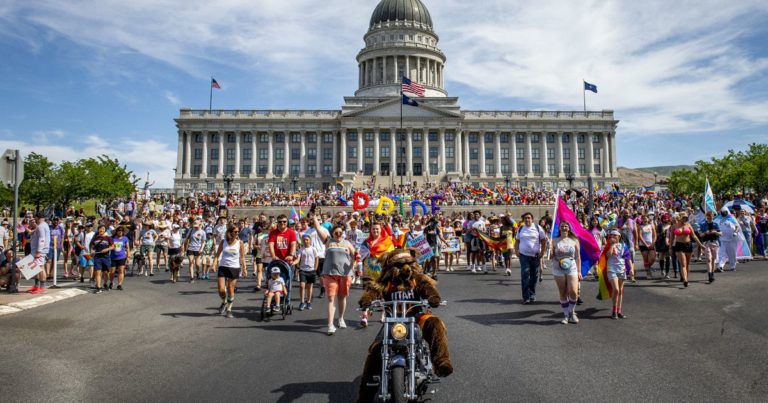
But those who participated in Sunday’s Pride March down State Street — not a parade, due to COVID restrictions, but still a massive march that drew thousands — saw a costume they haven’t seen before: the Jazz Bear’s.

That’s because, for the first time, the Jazz organization (yes, including one famous mascot) got a group of employees together to officially walk in the march.

The NBA team walked alongside those from LGBT resource center Encircle during the march, continuing the high-profile efforts of Jazz owner Ryan Smith in supporting the LGBT community in Utah. In February, the trio of Smith, Dan Reynolds (lead singer of rock band Imagine Dragons), and Apple announced a campaign to raise $8 million for Encircle to purchase eight new homes that act as safe spaces for LGBT youth and families in Utah, Idaho, Nevada, and Arizona.

Smith and his wife, Ashley, donated $2 million to the campaign. Reynolds and his wife, Aja Volkman, donated Reynolds’ childhood home in Las Vegas. And Apple donated $1 million at the request of CEO Tim Cook, who are serving as honorary co-chairs of Encircle’s efforts.

The embrace of the LGBT community from the Jazz organization reflects a shift in priorities after Smith purchased the team. The Jazz hadn’t participated in the Pride parade before, and haven’t hosted an official Pride night at Vivint Arena like many other NBA teams — though they have sold tickets to LGBT groups, the team notes.

There was pushback from Miller family ownership in supporting LGBT events. In 2005, Larry Miller famously pulled ‘Brokeback Mountain’ from his Megaplex Theaters, calling it a “business decision.” Later, Miller said he regretted the decision. Former Jazz player John Amaechi, who later came out as gay, told ESPN 950 WKNR in Cleveland that, “When I played in Utah, it wasn’t subtle messages, it was explicit messages that said, ‘Stay where you are. We may know that you’re gay but we don’t want to deal with the ramifications of you coming out publicly.’”

(Utah Jazz) Members of the Utah Jazz organization — including Jazz Bear — take part in Salt Lake City’s Pride celebrations officially for the first time.

But in the 12 years since Miller’s death, the Jazz organization and other Miller family members stayed out of the public radar in either direction on LGBT issues.

Certainly, though making Pride T-shirts and marching in the Salt Lake City Pride events is new to the organization. The Utah Jazz Team Store at Vivint Arena is selling Pride shirts, proceeds of which will benefit Encircle. The team may have a Pride video played during an upcoming playoff game as well, the team says.

All in all, fans on social media were supportive of the Jazz’s participation in the event, with a few exceptions.

“A lot of people talk about how they can help and help our youth,” Smith said when announcing the partnership with Encircle. “But when someone comes along like Encircle and a community rallies behind it and brings families and kids together, we’ve got to take it to the world. There’s a place in every arena for everyone.”

(Isaac Hale | Special to The Tribune) The Utah Jazz Bear high-fives and hugs passersby as attendees make their way down State Street and away from the Utah State Capitol Building at the start of the Rainbow March and Rally in Salt Lake City as part of Utah Pride Week on Sunday, June 6, 2021.

Vulgar anti-gay slur halts championship final soccer match – Los Angeles Blade

VISALIA – Team USA’s BMX Cycling champion Brooke Crain was all set to speak to students at her alma mater, Mt. Whitney High School in this San Joaquin Valley city 190 miles north of Los Angeles, but hit a snag. Cain, a two time Olympian was going to give a talk on on two subjects close to her heart, suicide prevention and healthy lifestyles when a school administrator objected to part of her planned lecture.

In September 2018, Crain came out on Instagram, announcing her engagement to Australian BMX racer Rachel Jones. As a professional athlete, she lived in fear about her sexuality. Then, on July 2 last year in the midst of the pandemic, Crain lost her biggest fan, supporter and her Dad Todd Crain, a police officer, to suicide.

Since her father’s death Crain has been proactive about raising suicide awareness and prevention. In her personal story she acknowledged to her hometown newspaper, the Visalia Times-Delta last month in an interview; “I’ve struggled with coming out for many years and with that struggle came dark thoughts,” Crain said. “Just being a professional athlete in the limelight and an Olympian, I never thought I would be accepted. I remember struggling, having few dark memories of being suicidal.”

So when she was asked to speak to students about her experiences and life Crain wanted to include her story and struggle with being lesbian and in a text message to Frank Escobar, VUSD director of student services this past week, Crain asked if she could share her coming out story because of the impact it had on her mental health.

The response from Escobar was less than enthusiastic the Times-Delta reported Thursday. Escobar told her that the subject was “kind of a sensitive area” for the VUSD school board.

“I think you can definitely reference it [coming out] in regards to aspects of MH (Mental Health). What we want to steer away from is encouraging or advocating for students to that choice,” Escobar said in the text message to Crain. “That’s where the board draws the line.”

That text exchange was publicly shared by the Olympian bike racer who said she can’t talk openly without telling her full story.  “I didn’t think that I would ever be able to be who I was in the sport as well as come out as being openly gay,” she told the paper. “That was the start of my mental health journey.”

Crain’s goal is to advocate for LGBTQ+ youth and raise awareness on suicide because both are special to her, she added. She then withdrew from participating in speaking to Mt. Whitney High’s students.

The president of the Board of the Visalia Unified School District, Juan Guerrero, apologized telling the Times-Delta; “VUSD would like to go on the record and state incorrect statements about the district were made by Mr. Escobar in a text message exchange between him and Ms. Crain,” said Kim Batty, the district’s spokeswoman. “Mr. Escobar was not authorized to speak on behalf of board nor the district on this manner.” Guerrero added, “VUSD embraces diversity among all students, staff and families. VUSD apologizes for any pain this text message exchange has caused Ms. Crain.”

Nineteen years ago this August, the Visalia Unified School District agreed to adopt sweeping reforms to address anti-gay harassment, including groundbreaking measures to train staff and students with the goal of preventing harassment before it happens, in a settlement reached with the American Civil Liberties Union (ACLU) of Northern California and the Gay-Straight Alliance Network in a Federal lawsuit that was filed the previous year.

“This case isn’t just about Visalia, California – it’s about a nationwide epidemic in non-urban schools, where young people face unspeakable harassment and violence because of who they are,”” said James Esseks, litigation director at the ACLU’s Lesbian and Gay Rights Project at the time of the settlement. “”This could – and often does – happen at almost any school outside urban America.”

Young LGBTQ people are at a higher risk for suicide attempts because of the public rejection they see and hear in the news, from their governments, and from their friends and families,” Amit Paley, CEO and Executive Director of The Trevor Project told the Blade in a previously emailed statement on a related storyline. “It’s important to remind LGBTQ youth that they are loved, never alone, and that their life has value.”

If you or someone you know is feeling hopeless or suicidal, contact The Trevor Project’s TrevorLifeline 24/7/365 at 1-866-488-7386. TheTrevorProject.org.

LGBTQ adults, as well as young people, can also contact the National Suicide Prevention Lifeline at 1-800-273-8255 or online at suicidepreventionlifeline.org.

Is Panic Getting a Second Season? Here’s What We Know So Far – POPSUGAR

PANIC, from left: Ray Nicholson, Olivia Welch, Traps', (Season 1, ep. 103, aired May 28, 2021). photo: Matt Lankes / Amazon / Courtesy Everett Collection

If you’ve already binged season one of Panic, then you’re probably wondering about the possibility of another season. The Amazon Prime Video series revolves around a group of high-school grads as they participate in their dead-end town’s legendary annual games, hoping to score big money despite the games’ big risks. Though the series hasn’t officially been renewed for a second season yet, fans are hopeful, especially since the show’s first season ended on a major cliffhanger. Here’s what we know about the possibility of Panic season two.

Warning: spoilers ahead for season one.

In the final episode of Panic, viewers learn that the town’s sheriff, James Cortez, has been the one pulling the strings all along, seeking revenge after losing his son to the games the year before. After Sheriff Cortez meets his demise at the hands of his wife, it seems for a moment like Heather (who ends up winning the prize money) is finally free of Panic and will get to escape. But as she is driving away from Carp, someone throws a scarecrow of Cortez on Heather’s windshield, implying that Panic isn’t over just yet . . . and someone else is now in control.

Showrunner and author of Panic Lauren Oliver has already said she would love to see the series get a second season. “I am very much hoping to continue it and I was hoping to continue the book,” she told CinemaBlend in June, later adding, “There’s tons of thinking already and tons of material that didn’t make it into the show about the rules of the game and about what might come afterwards, but we’ll see.” And though the original book doesn’t have a sequel (not yet, anyway), there is a Panic spinoff available on Audible titled Panic: Ghosts and Legends, which includes material not yet explored in the series.

During a June interview with Entertainment Tonight, Oliver went into more detail about what she has in mind for the show’s possible second season. “A lot things happen over the course of the season and there’s a character who doesn’t fare so well, and there will certainly be ramifications for that,” Oliver said, alluding to Sheriff Cortez’s death. “There’s a whole new class of kids who expect to be able to play the game and they’ve waited their whole lives to play the game. Who knows whether we’ll get a season two. We really hope so and if so, we’re more than fine on material.”

Actor Olivia Welch (who plays Heather) told ET she would like to see more of her character’s romance with Ray (played by Ray Nicholson) in season two, should it happen. “I think we’re both excited to see — if we get a season two — what Heather and Ray would end up doing, but I think they would definitely end up staying together for a little bit,” she said. “They made it through some really weird stuff at that point in time that they would at least stay together a little longer, if not forever. I would be so excited to see where they take that relationship because also anything can happen.”

Exclusive: Grindr expands LGBTQ health care access for employees – Axios

Grindr is adding a new benefit for its LGBTQ+ employees through the concierge service Included Health, Axios has learned.

Why it matters: One of the disproportionate health care challenges faced by LGBTQ+ people is finding nondiscriminatory care — which the dating app Grindr is trying to make easier for its employees.

  • More than 1 in 10 LGBTQ+ Americans polled by American Progress last summer said they were mistreated by a doctor or health care provider. Many said they stopped seeking treatment at all after facing discrimination.
  • For employers, in order to attract and retain workers in a tight labor market, offering benefits beyond basic health and retirement is key to building an inclusive culture. 

How it works: Grindr is one of about two dozen companies who offer Included Health as a free employer-sponsored benefit. Grindr declined to share how many LGBTQ+ employees would use the benefit, citing confidentiality.

  • Workers who use Included Health get access to a personal health care assistant (of sorts) who matches patients with vetted physicians, coordinates appointments and assists with billing and prescriptions for themselves or someone in their household.
  • If a local LGBTQ-friendly provider isn’t found by Included Health, the employee is connected to a doctor virtually, Colin Quinn, CEO of Included Health, told Axios.
  • Grindr is the only other queer-focused company that Included Health is currently working with, Quinn said.

What they’re saying: “We work with our members to understand what their needs are and what their economic situation is, and look for the most affordable option available to them that is still of quality and meets their needs,” said Quinn, whose personal experience as a gay man has helped him understand some of the challenges.

  • Heidi Schriefer, vice president of People Operations at Grindr, says improved LGBTQ+ health access is top of mind for Grindr’s employees.
  • “We just want to raise the visibility of this as an issue for the queer community in general … that will then put pressure on other employers to do the same,” said Schriefer.

The state of play: Included Health, founded in 2019, was acquired by Grand Rounds Health and Doctor On Demand in May, and is one of a handful of startups trying to address health care barriers experienced by transgender people.

Of note: A rash of former Grindr employees — some of whom were LGBTQ+ — criticized the company in 2019 following former president Scott Chen’s statement in opposition to same-sex marriage.

  • “A lot has happened in the last year. And very few people, if any, in leadership positions who were here in 2019 are still at Grindr today,” Schriefer said in response to the criticism.
  • “We feel quite good about the environment that we’ve created in the last year,” she said, pointing to an employee survey given a few weeks ago through Lattice that found high optimism on diversity and psychological safety.

What to watch: Schriefer told Axios that she has spoken with some transgender employees to improve transition and non-transition related care at the company, as that is another key area of the company’s goal to improve LGBTQ health coverage.

Grindr expands LGBTQ health care access for employees – Yahoo News

Grindr is adding a new benefit for its LGBTQ+ employees through the concierge service Included Health, Axios has learned.

Why it matters: One of the disproportionate health care challenges faced by LGBTQ+ people is finding nondiscriminatory care — which the dating app Grindr is trying to make easier for its employees.

Stay on top of the latest market trends and economic insights with Axios Markets. Subscribe for free

  • More than 1 in 10 LGBTQ+ Americans polled by American Progress last summer said they were mistreated by a doctor or health care provider. Many said they stopped seeking treatment at all after facing discrimination.

  • For employers, in order to attract and retain workers in a tight labor market, offering benefits beyond basic health and retirement is key to building an inclusive culture.

How it works: Grindr is one of about two dozen companies who offer Included Health as a free employer-sponsored benefit. Grindr declined to share how many LGBTQ+ employees would use the benefit, citing confidentiality.

  • Workers who use Included Health get access to a personal health care assistant (of sorts) who matches patients with vetted physicians, coordinates appointments and assists with billing and prescriptions for themselves or someone in their household.

  • If a local LGBTQ-friendly provider isn’t found by Included Health, the employee is connected to a doctor virtually, Colin Quinn, CEO of Included Health, told Axios.

  • Grindr is the only other queer-focused company that Included Health is currently working with, Quinn said.

What they’re saying: “We work with our members to understand what their needs are and what their economic situation is, and look for the most affordable option available to them that is still of quality and meets their needs,” said Quinn, whose personal experience as a gay man has helped him understand some of the challenges.

  • Heidi Schriefer, vice president of People Operations at Grindr, says improved LGBTQ+ health access is top of mind for Grindr’s employees.

  • “We just want to raise the visibility of this as an issue for the queer community in general … that will then put pressure on other employers to do the same,” said Schriefer.

The state of play: Included Health, founded in 2019, was acquired by Grand Rounds Health and Doctor On Demand in May, and is one of a handful of startups trying to address health care barriers experienced by transgender people.

Of note: A rash of former Grindr employees — some of whom were LGBTQ+ — criticized the company in 2019 following former president Scott Chen’s statement in opposition to same-sex marriage.

  • “A lot has happened in the last year. And very few people, if any, in leadership positions who were here in 2019 are still at Grindr today,” Schriefer said in response to the criticism.

  • “We feel quite good about the environment that we’ve created in the last year,” she said, pointing to an employee survey given a few weeks ago through Lattice that found high optimism on diversity and psychological safety.

What to watch: Schriefer told Axios that she has spoken with some transgender employees to improve transition and non-transition related care at the company, as that is another key area of the company’s goal to improve LGBTQ health coverage.

Like this article? Get more from Axios and subscribe to Axios Markets for free.

Burger King Jabs Chick-fil-A in Announcement About Donation to LGBT Group – Faithwire

The battle between Chick-fil-A and every other fast-food chain is about more than just the chicken sandwich wars — at least for Burger King.

In a tweet last week, Burger King took a jab at Chick-fil-A, which has faced consistent attacks from the secular world on LGBT issues.

The Miami-based restaurant chain took to social media to mock Chick-fil-A, saying it would donate 40 cents to the leftist Human Rights Campaign for every Ch’King chicken sandwich sold in June, “even on Sundays.”

Burger King made the announcement days after The Daily Beast published a report that referenced Chick-fil-A, which is closed Sundays, for donating to the National Christian Charitable Foundation, a nonprofit that gives cash to thousands of other groups, like the right-leaning Alliance Defending Freedom, which has opposed the Equality Act, arguing it infringes on Americans’ religious liberties.

Several media outlets immediately picked up on Burger King’s tweet.

“Burger King trolls Chick-fil-A with LGBTQ+ donations,” read a headline from CNN. USA Today reported that Burger King was “tak[ing] aim at Chick-fil-A with plans to donate to LGBTQ group for every chicken sandwich sold.”

The Kansas City Star wrote Burger King was taking a “swipe at Chick-fil-A this LGBTQ Pride month” with its new chicken sandwich.

Nevertheless, it seems Burger King has some very stiff competition.

Chick-fil-A was named Americans’ first pick for fast food in 2020 — marking the sixth year the Atlanta-based eatery has earned the title from the American Consumer Satisfaction Index. Burger King, on the other hand, came in at No. 12.

***As the number of voices facing big-tech censorship continues to grow, please sign up for Faithwire’s daily newsletter and download the CBN News app, developed by our parent company, to stay up-to-date with the latest news from a distinctly Christian perspective.***

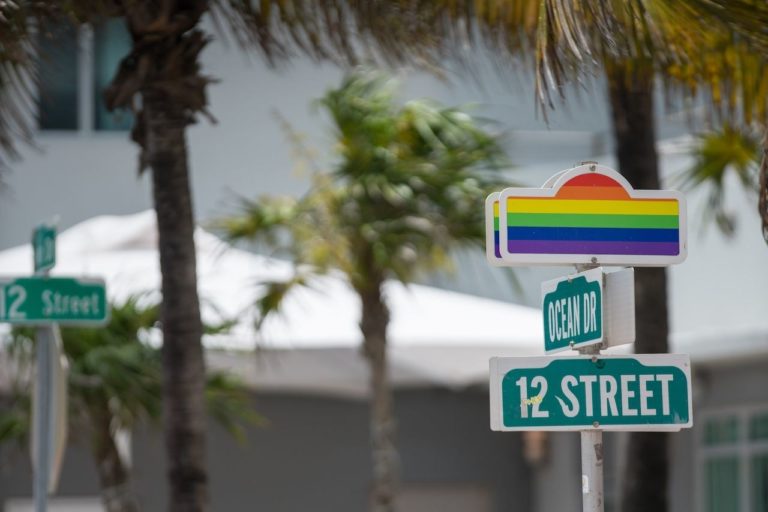
Miami Beach Invites LGBTQ Travelers and Locals to Celebrate Pride Month – PRNewswire

MIAMI BEACH, Fla., June 7, 2021 /PRNewswire/ — Miami Beach, a city like no other place in the world, is also recognized as a top travel destination for LGBTQ travelers. Additionally, Miami Beach is home to organizations like the LGBTQ Visitor Center in Miami Beach and the Miami-Dade Gay & Lesbian Chamber of Commerce, a testament to the city’s diversity, unity, and equality for all. Celebrating pride this month and throughout the year, Miami Beach is hosting an array of events, including the Miami Beach Gay Pride Parade and Pride Bar Crawl, along with virtual networking events.

Miami Beach embraces all travelers with open arms,” said Steve Adkins, Chairman of the Miami Beach Visitor and Convention Authority (MBVCA). “Our city includes a large LGBTQ population, so we aim to provide safe and inclusive events, hotels, restaurants, and attractions that cater specifically to the LGBTQ community.”

For those traveling to Miami Beach to celebrate pride month, there are several must-see, must-do attractions, and events that are perfect picks for LGBTQ travelers, including:

  • “Faces of Pride” Virtual Panel Discussion: Working together to tackle social injustices affecting the LGBTQ+ community will kick off the month during a free Facebook Live discussion called “Faces of Pride.” Hosted by Miami Beach Pride, the live stream will take place on June 8th, and viewers are encouraged to add their voices to the conversation during the broadcast.
  • LGBTQ+ Chamber Cross Country Pride Event: The Miami-Dade Gay & Lesbian Chamber of Commerce (MDGLCC) invites the community to a night of virtual networking on June 15th via Zoom. This event will bring together allied business owners, employees, and fellow LGBTQ+ chambers from across the country. Spots are limited, and registration is currently open.
  • Pride Bar Crawl: Celebrate Pride Month on June 16th, starting at 7 p.m., by enjoying five free drinks at the top LGBTQ bars on South Beach, including Bar Gaythering, Axel Beach, Nathan’s Bar, PALACE, and Twist. Tickets are just $25, and participants will receive a free drink at each bar. Ticketholders will have the chance to enter a giveaway and win a grand prize valued at $1,200, which includes hotel stays, dinners, bar tabs, and VIP bottle service at destination bars.
  • Miami Beach Gay Pride Parade and Festival: Miami Beach Pride returns September 10 – 19, 2021, and will feature a host of events, including Miss Miami Beach Pride Drag Queen Competition, Queer Art Pop-up Showcase, Pride Lights the Night, and more. The iconic festival and parade will also return at Lummus Park with the theme ‘one.’ A full COVID-19 Safety Plan will be in place and includes touchless transactions, increased tent sizes, open spaces, mandatory masks, temperature checks, and sanitizing stations to keep attendees safe.
  • AxelBeach Miami: This premier boutique hotel located in the heart of Miami Beach’s Art Deco District is a top choice for gay travelers. Just steps away from the beach, travelers can enjoy a host of amenities, including the Sky Bar that overlooks Washington Avenue, the spa, and the Alibi Monkei Bar for tasty food and drinks. In addition, guests who book seven days in advance will receive complimentary breakfast throughout their stay.
  • PALACE South Beach: As a year-round LGBTQ-friendly destination, activities at this famed restaurant are a must-do for locals and travelers. Enjoy great food and spectacular entertainment like live drag shows and exclusive special guests.

“The LGBTQ community brings a vibrancy to Miami Beach that shines through in our arts, culture, and culinary scenes,” said Grisette Marcos, Executive Director, MBVCA. “Our pride month celebrations are second to none, and we’re inviting locals and visitors to head to Miami Beach for a celebration they won’t forget.”

For more information about LGBTQ events on Miami Beach, follow @ExperienceMiamiBeach on Facebook, Instagram, and @EMiamiBeach on Twitter, and download the Miami Beach App at http://www.miamibeachapi.com/app/.

Contact: Elisabeth Denil, [email protected] 

SOURCE Miami Beach Visitor and Convention Authority

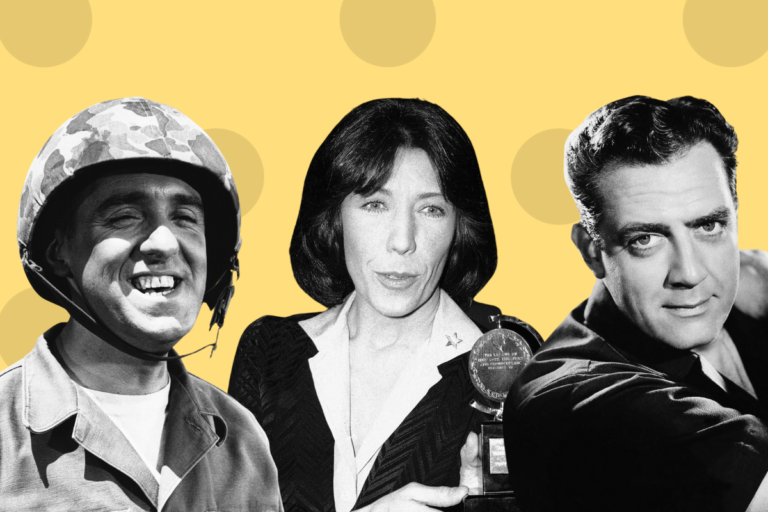
5 Gay Stars of Classic Television Series – Wide Open Country

Multiple classic television series, from The Andy Griffith Show to Perry Mason, starred LGBTQ actors who, for the most part, kept their love lives under wraps.

We steer clear of rumors and spotlight actors whose sexual orientations have been publicly discussed by friends and loved ones (and, in two cases, we picked stars who wed longtime partners in 2013).

Raymond Burr

Raymond Burr, the Canadian-American actor best known for his decades-spanning role as Perry Mason, lived a not-so-secret life (no secret in Hollywood circles, at the very least) with his longtime partner, Robert Benevides.

Benevides, a Korean War veteran and former actor, met Burr in 1960 on the set of Perry Mason. The couple owned an orchard and a vineyard in California’s Dry Creek Valley.

Burr, whose career included everything from roles in a couple of Godzilla movies to an appearance on The Love Boat, died of cancer on Sept. 12, 1993 at age 76.

Paul Lynde

Comedian Paul Lynde was a television fixture as Uncle Arthur on Bewitched and the center square on Hollywood Squares.

Beyond those roles, Lynde made a name for himself on Broadway (namely in Bye Bye Birdie), as a voice actor in cartoons and through numerous television cameos.

He also hosted a series of network TV comedy specials and regularly appeared on Donnie & Marie from 1976 to 1978.

Like most others on this list, Lynde kept his sexual orientation private all the way to his Jan. 10, 1982 passing from a heart attack.

Jim Nabors

Actor, comedian and easy listening crooner Jim Nabors wed his partner of 38 years, Stan Cadwallader, in 2013.

Nabors met his future husband, a firefighter, in the Andy Griffith Show star’s longtime home base of Honolulu, Hawaii.

As Gomer Pyle, Nabors became a beloved member of the Andy Griffith Show cast and the star of spin-off series Gomer Pyle, U.S.M.C.

Robert Reed

Robert Reed, the dad from ABC TV series turned syndication mainstay The Brady Bunch, kept his private and public lives separate all the way to his May 12, 1992 death from colon cancer.

In the years since Reed’s passing, Brady Bunch cast members Barry Williams (Greg Brady) and Florence Henderson (Carol Brady) have opened up about their co-stars’ double life.

“Here he was, the perfect father of this wonderful little family, a perfect husband,” Henderson told ABC News in 2000. “Off camera, he was an unhappy person – I think had Bob not been forced to live this double life, I think it would have dissipated a lot of that anger and frustration. I never asked him. I never challenged him. I had a lot of compassion for him because I knew how he was suffering with keeping this secret.”

“Robert didn’t want to go there,” Williams added in the same ABC News feature. “I don’t think he talked about it with anyone. I just don’t think it was open for discussion – period. [Had it ever come out that Robert Reed was gay] it probably would have caused the demise of the show. I think it would have hurt his career tremendously.”

Reed (birth name John Robert Rietz Jr.) was born on Oct. 19, 1932 in the Chicago suburb of Highland Park, Illinois and spent formative years in Muskogee, Oklahoma. He studied drama at Northwestern University and London’s Royal Academy of Dramatic Art. Off-Broadway roles in Shakespeare plays preceded Reed’s move to Los Angeles to pursue film and television roles.

Though he’s best known for filling the leading role of Mike Brady, Reed’s acting chops and heartthrob looks landed him gigs on some of the top sitcoms and drama series of their time: Father Knows Best, Lawman, Mannix, Men into Space, The Mod Squad, The Love Boat, Family Affair, Ironside, Medical Center and The Defenders.

He picked up Emmy award nominations for his roles in the mini-series Rich Man, Poor Man and Roots.

Read More: Do You Remember Maureen McCormick’s Country Album?

Lily Tomlin

Here’s a rare Hollywood love story that’s made to last: Lily Tomlin and Jane Wagner have been together since the ’70s.

Wagner won a Peabody Award for her 1969 CBS television special J.T. This earned the attention of Tomlin, who had been trying to find a writer to help her with her character Edith Ann on Laugh-In.

What followed can be described as love at first sight for a couple that wed back in 2013.

“A friend brought her to my hotel room,” Tomlin explained to Variety, “and I tell you, in two minutes, I fell in love with her. She had on hot pants, stretchy boots that went up to her knee, and a little backpack. I don’t know what it was, but I was in love.”

Chaplain Fired For ‘Sermon’ Questioning School’s LGBT Policies Fights Back – Christianity Daily

A Christian chaplain is fighting back being accused of “being a terrorist,” which led to his termination for presenting a message on religious freedom on the Trent College campus.

Rev. Dr. Bernard Randall, 48, has filed a lawsuit against Trent College for “discrimination, harassment, victimization and unfair dismissal,” reports the Christian Post.

As mentioned in an earlier report, Randall only explained about gender identification and same-sex partnerships based on the Bible. Students approached him, perplexed and disturbed by some of the stuff they’re told in the curriculum presented by Elly Barnes, the creator of Educate & Celebrate, an LGBT education nonprofit who visited the school.

The course says that it’s intended to “equip you and your communities with the knowledge, skills and confidence to embed gender, gender identity and sexual orientation into the fabric of your organization.”

The next week, he was informed that his sermon had offended several people and that he would be suspended pending an inquiry. He was also reported to Prevent, which deals with terrorist concerns, as well as the Local Authority Designated Officer (LADO), who is the point of contact for claims of child abuse and neglect.

The priest noted that being labeled a terrorist has hurt him. Despite the fact that the police determined in his case two years ago that he was neither a “counter-terrorism risk” or at “risk of radicalization,” he said that it “is still a wound.”

During the first nationwide lockdown in March 2020, Randall was put on furlough. Last December, he was let off from his job.

“My story sends a message to other Christians that you are not free to talk about your faith. It seems it is no longer enough to just ‘tolerate’ LGBT ideology,” he said. “You must accept it without question and no debate is allowed without serious consequences. Someone else will decide what is and what isn’t acceptable, and suddenly you can become an outcast, possibly for the rest of your life.”

His dismissal was reversed on appeal, but he claims he was prohibited from commenting on subjects “likely to cause offense or distress to members of the school body” as well as publicly stating his “beliefs in ways which exploit our pupils’ vulnerability.” The school also asked him to submit a draft sermon for approval ahead of time and to have an observer present during services.

Andrea Williams, Chief Executive Officer of the Christian Legal Centre, stated: “All those that said it couldn’t happen – punishing and criminalizing a Christian minister for preaching from the Bible – need to take a long, hard look at the story of Bernard Randall.”

“Who are the extremists in this story? The moderate school chaplain with an intelligent, mild-mannered and thoughtful sermon or Educate and Celebrate encouraging staff to smash heteronormativity?” she asked.

On June 14, the East Midlands Employment Tribunal is due to hear his case.

Despite all his troubles, the chaplain said he has grown more outspoken as a Christian.

“I think, as a Christian in particular, speaking about truth is really important, as Jesus said, ‘I am the way the truth and the life,'” he asserted.

Bridging the LGBTQI Gap in Care: Why Psychiatrists Need To Do More To Treat These At-Risk Communities – Psychiatric Times

In 1970, a group of gay and lesbian activists made history when they disrupted the annual meeting of the American Psychiatric Association (APA) in San Francisco. Outside the convention center, they formed a human chain to prevent visiting psychiatrists from entering. Inside, they interrupted sessions on transsexualism, laughed at a purported expert on homosexuality, and were so disruptive that a panel titled “Issues of Sexuality” it had to be adjourned.

A year later, they returned with the same demand: delist homosexuality from APA’s Diagnostic and Statistical Manual—where it had been classified as a sexual deviation.

In 1972, the APA allowed a panel of gay activists to make their case. Among them was John E. Fryer, MD, a psychiatrist who appeared in disguise, worried he might lose his license because he was gay.

In 1973, the APA put the issue to a vote, with the majority of attending psychiatrists agreeing to remove homosexuality as a mental disorder from DSM-III. However, the APA compromised by replacing the term homosexuality with sexual orientation disturbance. This, they argued, would allow homosexuality to be considered an illness if an individual distressed with being gay sought psychiatric help to reverse it.

The APA took the final step in 1987 and dropped this reference completely. They officially adopted what is considered a normal variant view on sexual identity. Individuals could, they acknowledged, be born gay.

It is against this backdrop that the uneasy relationship between psychiatry and the lesbian, gay, bisexual, transgender, queer, and intersex community (LGBTQI) continues to evolve. While there are far more protections than there were in the 1950s, this is a group that still struggles to find acceptance, especially its transgender members.

The ideal model of health care is that patients receive unbiased care regardless of gender identity or sexuality. In reality, however, clinicians may both consciously and subconsciously discriminate against members of the LGBTQI community, causing many to forego needed care.

Members of the LGBTQI community are at increased risk for mental health issues associated with minority stress, or the unique experiences associated with homophobic victimization.1 Many grapple with feelings of shame, rejection, and depression. They are the target of abuse, trauma, and bullying. As a result, they experience higher rates of homelessness, substance abuse, and suicide.2

As mental health professionals, it is our ethical responsibility to identify our biases as clinicians. We need to educate ourselves about the needs of this unique and ever-evolving population, to provide the best care possible, and to do so in a way that does not perpetuate the stigma and trauma many sexual minorities contend with daily.

Health Disparities in the LGBTQI Community

As of 2017, there were 9 million adults in the United States, about 3.8% of the country’s population, who identified as lesbian, gay, bisexual, or transgender.2

It takes incredible courage to come out in front of family, friends, school, work, and society at large. It can be an extremely vulnerable experience that can elicit reactions of anger, rejection, and even violence from others. Additionally, there are many subpopulations within the LGBTQI community that have their own unique risk factors that must be considered in the context of care.

According to a 2013 survey of LGBTQI Americans, 39% said they had been rejected by a family member or friend because of their sexual orientation. About 30% said they had been attacked or threatened because of it, and 58% said they were the target of jokes or slurs.3

LGBTQI individuals are more than twice as likely to experience a mental disorder compared to heterosexual men and women. They are also 2.5 times more likely to experience depression, anxiety, and substance misuse.3

Almost 12% of gays, lesbians, and bisexuals have considered attempting suicide, compared to 2.3% of heterosexual individuals. With transgender individuals, this number jumps significantly to 30.8%.3

Another big challenge facing the LGBTQI community is substance abuse and homelessness. A 2015 national survey on drug use and health revealed that 39.1% of sexual minorities used illicit drugs, compared to 17.1% among sexual majorities.4

LGBTQI youth were twice as likely to be homeless than non-LGBTQI youth. And black LGBTQI youth were even more at risk for homelessness. While 7% of black non-LGBTQI youth were homeless in the United States, that number jumped to 16% for black LGBTQI youth.5

These statistics for youth are particularly troubling. More youth are coming out as gay or transgender at younger ages, perhaps due to the growing social acceptance for LGBTQI communities. The average age of coming out was around 14 years old, according to data collected between 2000 and 2010. A decade earlier, this age was 16. In the 1970s, it was 20. Despite this trend, concerns about the rising prevalence of adolescent LGBTQI mental health issues are increasing.6

Perhaps because they are already grappling with identity development, adolescents are already at increased risk for suicide; it is a leading cause of death for youths aged 10 to 19.7 LGBTQI youth, however, tend to have higher rates of mental health issues, with 18% meeting the criteria for depression, 11.3% experiencing posttraumatic stress disorder, and 31% reporting suicidal behavior at some point during their lives. This compared to national youth rates of 8.2%, 3.9%, and 4.1%, respectively.6

The reason behind these rates may have to do with increased peer pressure experienced during these ages. One 2012 study pointed to stronger prejudicial attitudes and homophobic behaviors among youth 12 to 18 years old, especially among boys.8

A 2019 school climate survey revealed that 86% of LGBTQI students experienced harassment or assault at school, according to the Gay, Lesbian, & Straight Education Network (GLSEN), a national organization that supports the LGBTQI community in K-12 schools.9

When LGBTQI people turn to mental health providers for help, they are often let down. Almost one-sixth of LGBTQI adults have felt discriminated against at a doctor’s office, while one-fifth say they avoid medical care altogether due to their fear of discrimination, according to a poll conducted by Harvard University, National Public Radio, and the Robert Wood Johnson Foundation.10

A 2018 Harvard panel said health care providers were woefully unprepared to address the needs of the LGBTQI community. Panelists said providers needed to do a better job gathering data about these patients, even if it meant asking them direct questions about their sexual health.10 For many providers, improvements in mental health care must be based on increased education and understanding of how different people experience and express gender identity.

Understanding Gender Identity and Expression

Today, there are increasing efforts being made to explore what, exactly, gender is and how it should be defined. In Eurocentric models rooted in colonialism, gender has been identified as a binary model that distinctly categorizes individuals as either male or female based on their sex.11 It operates on the idea that gender can be visually seen as a bodily characteristic, with males having penises and females having vaginas. Gender-identity research is shifting away from this binary approach and acknowledging that the idea of gender exists on a spectrum. It is not defined by simplistic biological characteristics and is very individualized.12

While our understanding of the concept of gender is evolving, gender has been postulated to encompass 4 parts: anatomical sex, gender identity, legal gender, and gender expression. Anatomical sex generally refers to genitalia, chromosomes, and bodily attributes. Gender identity refers to one’s sense of self, which can be fluid and change over time and within context. Legal gender is tied to an individual’s assigned gender at birth and is used as a way to measure differences between genders, such as health and wage disparities. Gender expression is how a particular individual presents their gender identity to society, usually through appearance, dress, and behavior. Cisgender refers to those whose self-defined gender identity matches their assigned gender at birth. Transgender refers to others whose assigned gender at birth does not match their self-identified gender.

The problem with a simple binary description of gender identity tends to be with its limitations. In research studies, for example, most demographics include gender responses with very little reflection on why it is included or how it is relevant.13 This standard fails to consider findings related to other gender identities, which can provide results that are inaccurate or misrepresented. Additionally, by only giving male or female as gender options, it immediately discriminates against anyone who does not identify as either.

This discrimination continues in other areas. Even though APA’s recognition of gender dysphoria as a diagnosis is not necessarily stigmatizing, it is the gatekeeping of care that perpetuates the stigma. In addition to a gender dysphoria diagnosis, transgender individuals, for example, need to jump through significant hoops to access gender-affirming care—including psychological evaluations, letters of support, and therapy.14

These are just some examples of how the mental health community needs to shift awareness to treat a population desperately in need of treatment and acceptance.

Nurturing A Vulnerable Community

For decades, psychiatry viewed being gay as a degenerative disorder. It created a deep scar that the mental health industry must now work to mend by setting aside biases, broadening our understanding, and earning the trust of LGBTQI patients. To do so, it is vitally important to refrain from making assumptions about a patient’s gender, sexuality, or sexual identity. It is always necessary to ask about an individual’s pronouns. Do not refer to them as preferred pronouns; they are simply pronouns.

Clinicians are obligated to be aware of their own biases, both conscious and subconscious, that can potentially negatively influence the care provided to their clients. This will help avoid any countertransference of opinion from provider to client.

Creating a therapeutic container is essential for holding patients in a safe place that allows them to express any feelings of pain and shame.15 This is based on Carl Jung’s concept that compares the therapeutic container to an alchemical container that safely holds the feelings and thoughts of patient and analyst alike.

In their book, Becoming a Kink Aware Therapist,16 authors Caroline Shahbaz, BBSc(Hons), MPsych, MA; and Peter Chirinos, MA, LPC, NCC, DCC; offer the following guidelines to create a therapeutic container:

– Validate the sociopolitical issues confronting a patient’s marginalized community

– Do not assume their psychological problems are a function of their sexuality

– Affirm individual life choices

– Help clarify one’s needs and desires

– Validate and work on self-esteem

– Connect patients with appropriate communities and networks

LGBTQI patients may engage in sexual activities that a provider may find disturbing and uncomfortable, which is indicative of a clinician’s own conscious and unconscious biases that can impede a patient’s progress in care. As with any patient population, when treating sexual minorities, competent care as it relates to this population must be the standard of practice and directly translates into making patients feel accepted and validated.

By providing competent care as clinicians, we can continue to bridge the gap of trust and open new appropriately informed ways to treat and support the LGBTQI community. In a sign of hope for the future, the American Psychoanalytic Association issued what it called an “overdue apology” in 2019 to members of the LGBTQI community for its “role in the discrimination and trauma caused by our profession.”17 Moving past apologies, the mental health community needs to focus on restorative justice on both the macro and micro levels. This can include educating themselves and their peers, centering learning from LGBTQI individuals, using cultural safety and trauma-informed frameworks for care, and reducing gatekeeping to gender-affirming care.

Additionally, it is vitally important to advocate for policy changes both in the mental health field and with broader causes that disproportionately impact LGBTQI individuals, such as fair housing, harm reduction, and antidiscrimination legislation. Only a multi-pronged approach will ensure members of the LGBTQI community receive the mental health services many of them so desperately need.

Summer R. Thompson is an Adolescent and Adult Psychiatric Mental Health Nurse Practitioner with Community Psychiatry.

References

1. Poteat VP, Scheer JR, Mereish EH. Factors affecting academic achievement among sexual minority and gender-variant youth. Adv Child Dev Behav. 2014;47:261-300

2. National Alliance on Mental Illness. LGBTQI. Accessed June 3, 2021. https://www.nami.org/Your-Journey/Identity-and-Cultural-Dimensions/LGBTQI

3. A Survey of LGBT Americans. Pew Research Center. June 13, 2013. https://www.pewresearch.org/social-trends/2013/06/13/a-survey-of-lgbt-americans

4. Medley G, Lipari RN, Bose J, et al. Sexual orientation and estimates of adult substance use and mental health: results from the 2015 National Survey on Drug Use and Health. Substance Abuse and Mental Health Services Administration. October 2016. https://www.samhsa.gov/data/sites/default/files/NSDUH-SexualOrientation-2015/NSDUH-SexualOrientation-2015/NSDUH-SexualOrientation-2015.htm

5. Chapin Hall at the University of Chicago, Voices of Youth Count. Missed opportunities: LGBTQ youth homelessness in America. April 2018. https://voicesofyouthcount.org/wp-content/uploads/2018/05/VoYC-LGBTQ-Brief-Chapin-Hall-2018.pdf

6. Russell ST, Fish JN. Mental health in lesbian, gay, bisexual, and transgender (LGBT) youth. Annu Rev Clin Psychol. 2016;12:465-87.

7. Centers for Disease Control and Prevention. Adolescent health. Updated April 14, 2021. Accessed June 3, 2021. https://www.cdc.gov/nchs/fastats/adolescent-health.htm

8. Poteat VP, Anderson CJ. Developmental changes in sexual prejudice from early to late adolescence: the effects of gender, race, and ideology on different patterns of change. Dev Psychol. 2012;48(5):1403-15.

9. GLSEN. The 2019 National School Climate Survey. 2019. Accessed June 3, 2021. https://www.glsen.org/sites/default/files/2020-10/NSCS-2019-Executive-Summary-English_1.pdf

10. Powell A. The problems with LGBTQ health care. The Harvard Gazette. March 23, 2018. https://news.harvard.edu/gazette/story/2018/03/health-care-providers-need-better-understanding-of-lgbtq-patients-harvard-forum-says/

11. Lugones M. The Coloniality of gender. Worlds & Knowledges Otherwise. 2008. Accessed June 3, 2021. https://globalstudies.trinity.duke.edu/sites/globalstudies.trinity.duke.edu/files/file-attachments/v2d2_Lugones.pdf

12. Ainsworth C. Sex redefined: the idea of 2 sexes is overly simplistic. Nature. October 22, 2018. https://www.scientificamerican.com/article/sex-redefined-the-idea-of-2-sexes-is-overly-simplistic1/

13. Lindqvist A, Sendén MG, Renström EA. What is gender, anyway: a review of the options for operationalising gender.Psychology & Sexuality. February 18, 2020. https://www.tandfonline.com/doi/full/10.1080/19419899.2020.1729844?scroll=top&needAccess=true

14. White Hughto JM, Reisner SL, Pachankis JE. Transgender stigma and health: A critical review of stigma determinants, mechanisms, and interventions. Soc Sci Med. 2015;147:222-31

15. Finlay L. Holding, containing and boundarying. In: Relational Integrative Psychotherapy: Engaging Process and Theory in Practice. Wiley; 2016. 

16. Shahbaz C, Chirinos P. Becoming a Kink Aware Therapist. Routledge; 2016.

17. American Psychoanalytic Association. American Psychoanalytic Association issues overdue apology to LGBTQ community. June 21, 2019. https://apsa.org/content/news-apsaa-issues-overdue-apology-lgbtq-community
How authoritarians use gender as a weapon – The Washington Post

To defend against this threat, we must carefully pick through information and events with a gender lens. Disinformation monitoring groups can track and expose gendered narratives. Journalists can be trained to limit the amplification of authoritarian themes. To help inoculate democratic institutions, the establishment of parliamentary gender equality committees, such as those of Denmark, India, Georgia, and the Dominican Republic, can scrutinize legislation to protect against discriminatory impacts.

Arts & Entertainment Atlanta To Launch Digital Exhibit – atlantadailyworld

Arts & Entertainment Atlanta will host its second-ever digital exhibit, The South Got Something to Say, from June 1-July 31. Curated by Karen Comer Lowe, work by 10 Atlanta-based artists will be featured on four A&E Atlanta digital signs throughout Downtown Atlanta. The exhibit is presented in partnership with the Atlanta Downtown Improvement District (ADID), Orange Barrel Media, and BIG Outdoor.

The exhibit title is taken from the words of legendary Atlanta-based rapper Andre 3000, part of the Southern hip-hop duo Outkast, at the 1995 Source Awards. “This phrase issued a proclamation about the rising impact of Atlanta as a city. Since that time, the city has risen as an influential force in music, film, and politics,” said Lowe.

“This digital exhibition is a recognition of the visual culture of Atlanta and the people who contribute to that culture. The works, while variant in medium, address a reckoning with the intersectional inequities of our being.”

The South Got Something to Say will feature works by artists [sheilapreebright.com]Sheila Pree Bright, [jurellcayetano.com]Jurell Cayetano, [alfredconteh.com]Alfred Conteh, [byaridannielle.com]Ariel Dannielle, [shanequagay.com]Shanequa Gay, [kojoayodelegriffin.com]Kojo GriffinGerald Lovell, [yaniquenorman.com]Yanique Norman, [fahamupecou.com]Fahamu Pecou, and Jamele Wright.

Artwork will be on display on A&E Atlanta digital signs located at Peachtree Center, 101 Marietta, Reverb by Hard Rock Hotel, and the 75 MLK St SW Garage.

A&E Atlanta is a neighborhood activation and economic development project for Downtown Atlanta. The program fuses new outdoor media, local art, and advertising and funds cultural and public space programming in the city’s core. The effort is managed by ADID and self-funds its management and programming through revenue-sharing agreements with media companies within the district.

“A&E Atlanta is excited to present our second annual digital exhibition,” said Fredalyn M. Frasier, Project Director of Planning and Urban Design at the Atlanta Downtown Improvement District, who directs A&E Atlanta. “Our curator, Karen Comer Lowe, has gathered an exceptional lineup of Atlanta artists whose combined work will contribute to a memorable experience and the reawakening of Downtown after a challenging year.”

For more information about Arts & Entertainment Atlanta, including participating sign locations and past arts and culture programs, visit AEAtlanta.com.

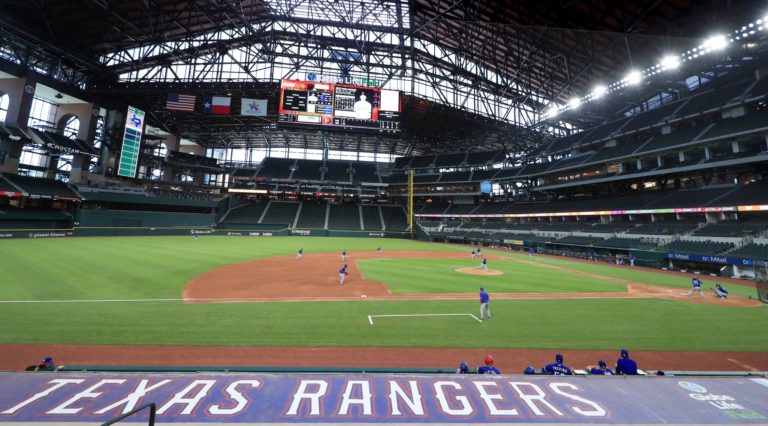
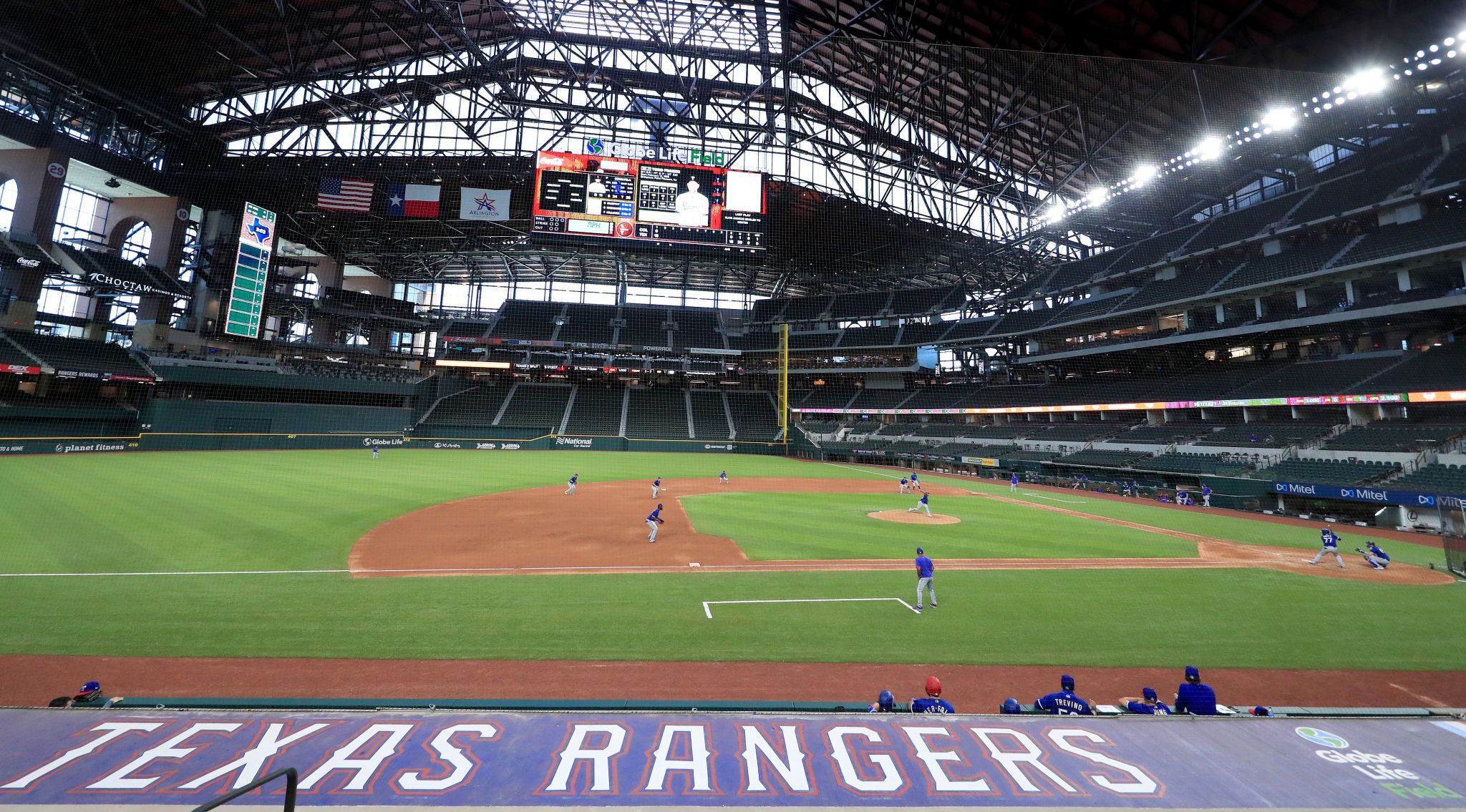
Texas Rangers celebrate things like ‘Game of Thrones’, but not Pride – Beaumont Enterprise

While Rangers fans can celebrate a TV show that hasn’t aired a new episode in more than two years, there will be no such celebration for the team’s LGBTQ fan base.

WELL, WELL, WELL: Trevor Bauer’s spin rate takes noticeable dip after MLB threatens punishment

With June being Pride Month, most Major League Baseball teams are celebrating with different versions of Pride Day. The Rangers are the only Major League Baseball team that has not had some sort of Pride Day since 2003.

The Astros can’t beat their chest about being too progressive since the Rangers and Astros were the only franchises to not have a Pride Day in 2019. The Astros tried to change that by celebrating their LGBTQ fan base with a game last June, but COVID-19 wiped out that game and any chance for fans to go to the ballpark. The Astros are making up for it with a Pride Night on June 16 when the Rangers visit Minute Maid Park.

“We recognize this is one of the most diverse cities in the country and we recognize the city has one of the strongest, if not the strongest, LGBTQ communities in the state,” Astros‘ senior vice president for marketing and communications Anita Sehgal said before the 2020 season.

Getting a statement from the Rangers hasn’t been as easy.

When the Dallas Morning News had a story about the Rangers not celebrating with a Pride Day, the team declined to speak with the paper about their stance on such a day or their possible work with the LGBTQ community.

“Our commitment is to make everyone feel welcome and included in Rangers baseball,” Executive VP for Communications John Blake said in a written statement to the Morning News. “That means in our ballpark, at every game, and in all we do — for both our fans and our employees. We deliver on that promise across our many programs to have a positive impact across our entire community.”

The Chicago Cubs began the tradition in 2001 with what they called “Gay Days,” and now is called “Out at Wrigley.” Since then, most teams have followed suit. The Yankees and Angels had never had a Pride Night before they decided to make it a promotion in 2019. The Astros had a Pride Night in 2010, but hadn’t celebrated it since.

According to The Advocate, an LGBT magazine, the Rangers had a promotion in 2003 where it invited various LGBT groups to the game, but it wasn’t an official Pride Day promotion. The game still drew anti-gay protesters, though.

The Astros will play in Boston during the Red Sox Pride Night celebration on Thursday.

More Sports


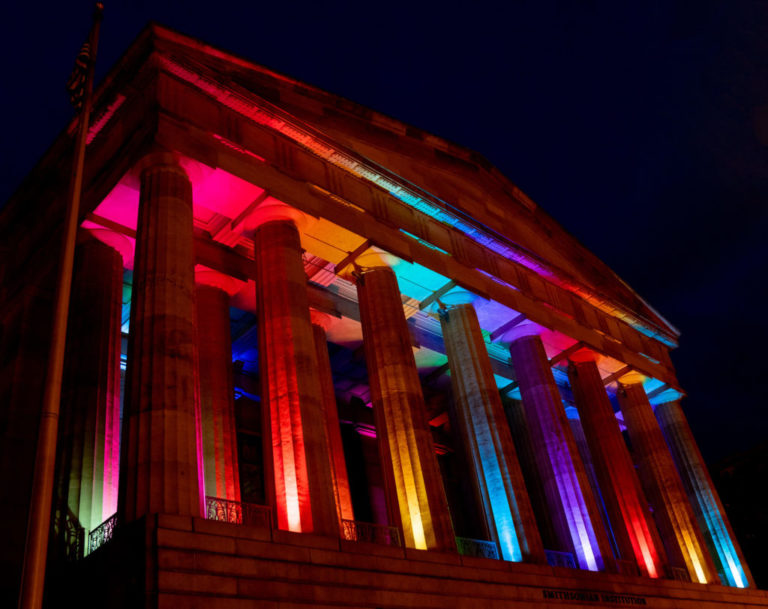
Here’s Your 2021 Guide To Capital Pride – DCist

0

This website uses cookies so that we can provide you with the best user experience possible. Cookie information is stored in your browser and performs functions such as recognising you when you return to our website and helping our team to understand which sections of the website you find most interesting and useful.

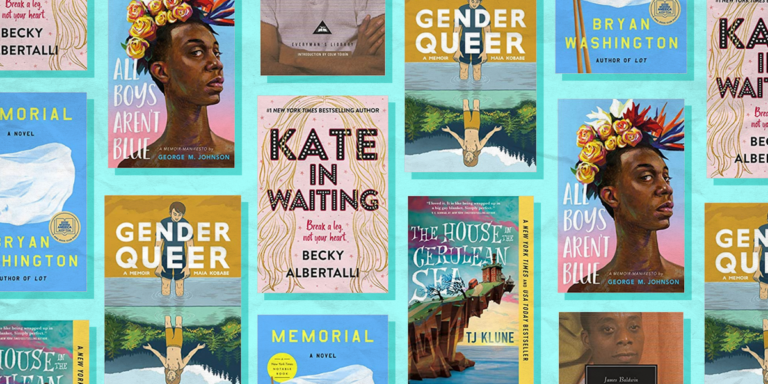
23 must-read books by LGBTQIA+ authors, from stunning memoirs to heartwarming romance novels – Business Insider

0

If you buy through our links, we may earn money from affiliate partners. Learn more.

  • LGBTQIA+ authors bring a necessary perspective to queer literature.
  • We rounded up the best books by queer authors, including YA, memoirs, romance novels, and more.
  • Want more books? Check out our list of the best LGBTQ-friendly books for kids.

LGBTQIA+ authors bring an authentic and unparalleled perspective to queer literature with the ability to inspire, influence, and encourage readers to celebrate sexuality, no matter their identity. These books often bring to light the serious emotional, mental, and physical trials that queer people endure, while also depicting beautiful love stories or inspirational triumphs.

We chose the books on this list based on queer authors we love. We also included a wide range of genres, from romance to memoir, so whether you’re part of the LGBTQIA+ community or an ally, the books on this list are sure to blow you away.

23 great books by LGBTQIA+ authors:

  • Fiction and Poetry
  • Memoir
  • Romance
  • Young Adult
  • Fantasy