Home Blog Page 113

Happy Pride Month! | Department of Biostatistics | Harvard TH Chan School of Public Health – HSPH News

Pride MonthPride Month is both a celebration of the voices, experiences, and achievements of the Lesbian, Gay, Bisexual, Transgender, and Queer (LGBTQ+) community, as well as a time to reflect on the struggles and suffering the community has endured, and to honor those who have led and supported the fight for equality. This Pride Month, we reaffirm our commitment to standing in solidarity with the LGBTQ+ community.

Harvard Title IX Office-  LGBTQ+ Resources – Public Equity, Justice, and Inclusion
Harvard Chan ODI Office – LGTBQ+ Resources

Including:

Unity: Unity, a new grassroots group, creates opportunities for the LGBTQIA+ community at the Harvard T.H. Chan School of Public Health to come together to socialize, learn, and support each other. Unity welcomes input, ideas and organizing of social, educational and networking events by members of the Chan community.

OutList: The online OutList includes more than 130 Harvard LGBTQ faculty, trainees, and staff who have volunteered to be available to medical and dental students for mentoring, career advice, shadowing, research, LGBTQ patient care, or other support. If you would like to join either list, please fill out this survey.
FEATURED EVENT:

Coming OUT or NOT: Considerations & Experiences at HMS & Affiliate Hospitals

Wednesday June 9, 2021 | 12:00 PM – 1:00 PM
Virtual | Event Website

Panelists: Daphne Hass-Kogan, MD (BWH), EJ Jarvie (Staff, HMS), Kanika Kamal (Student, HMS), Jonathan Matsui, PhD (Staff, HMS), Deepali Ravel, PhD (Faculty, HMS), Leah Fygetakis, PhD (Staff, HMS). A compilation of “out at work” resources will also be provided by Countway Library.

ADDITIONAL PRIDE EVENTS

Why the Series Finale of Pose Had Us Heartbroken and Hopeful, All at the Same Time – POPSUGAR

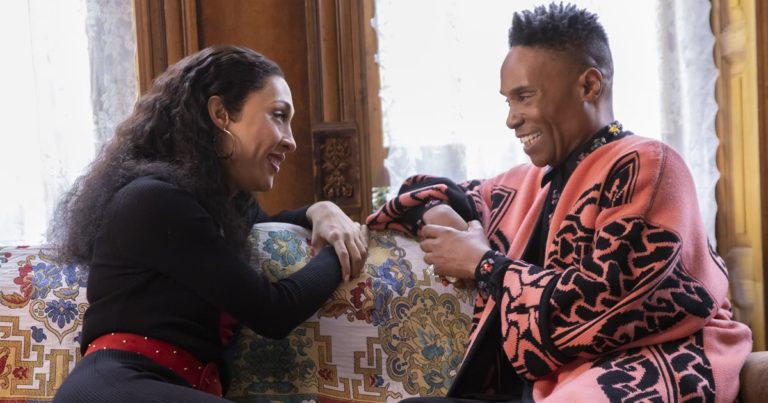
After three seasons, the ballroom has officially closed for the Emmy-nominated Pose. The final season of FX’s drama was both uplifting and absolutely gut-wrenching as fans said farewell to the House of Evangelista. In true Ryan Murphy form, not everyone has a happy ending in the finale, but isn’t that how life works? The seventh and final episode of season three sees the Evangelistas dealing with a health crisis, a few new beginnings, a cheeky Sex and the City reference, and what it means to truly leave a legacy.

For those watching in real time, the two-hour series finale was an emotional roller coaster we weren’t quite ready to get off of, as it meant the end of the road for characters we had come to consider our chosen family. And yes, that roller-coaster ride included plenty of tears. “It was a layered experience that took a long time to shoot,” Sandra Bernhard said of the finale to POPSUGAR. “We covered so many earth-shattering moments — losing good friends, being triumphant, watching the end of an era, hesitantly welcoming another — all this with the reality that we would never be together in this setting again. The work, the friendships, the evolution takes time to process. That’s what good art creates.”

If you missed out on the finale — and can’t wait until 2022, when season three will likely drop on Netflix — ahead, you can find out just what happens during the aptly titled “Series Finale.”

You Won’t Find These Old Navy Pieces in Stores, So Shop Our 40 Online-Only Faves Here – POPSUGAR

While online shopping makes things easy when you don’t want to leave home, there are times when making that choice also means scoring an item you couldn’t find in stores even if you went there in person. For example, Old Navy has an entire online-exclusive section, and it’s packed with everything we need this season from tops to flip-flops.

In the name of research, we browsed around and easily found items from every single category we were happy to spot on the site . . . and add to our carts. Ahead, see the items we love most, including flowing dresses, linen pants, and more (soon-to-be) summer favorites for you, too.

Delaware governor issues Pride proclamation – Washington Blade

Squashed between friends on a plush couch at a shelter for homeless LGBTQ+ young people, Jada Doll talked about what happened after she began to express her identity as a transgender woman.

She moved in with her boyfriend when she was a senior in high school. But Doll – that’s the name she chose – said her family refused to let her back into their Manassas, Va. home when the couple broke up. The reason, said Doll: She had begun to identify as a female. She wound up in the nearby woods that became her home for almost three years.

“When it was raining,’’ the 22-year-old said in a recent interview, “I couldn’t feel my toes.” 

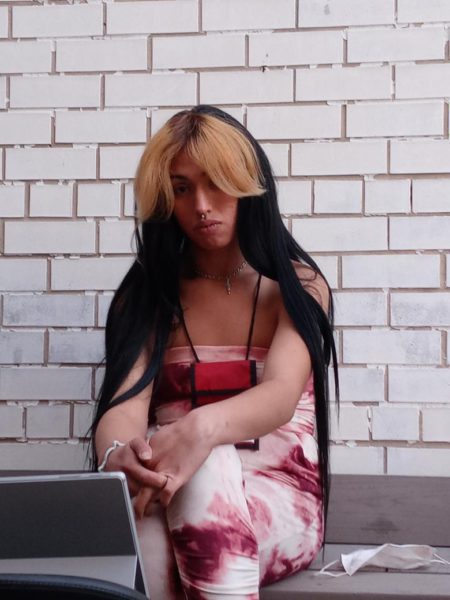
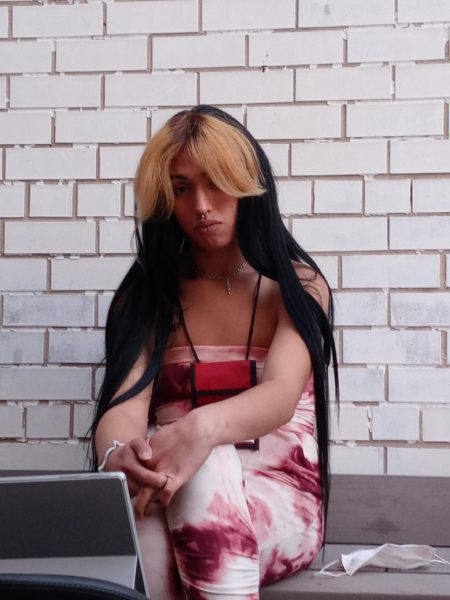
Jada Doll is shown at the Casa Ruby shelter in DC this spring. Photo by Pooja Singh, Urban Health Media Project

Before the pandemic, LGBTQ+ youth had a higher risk of homelessness and the health problems that come with it – from nagging toothaches to life-long trauma.

Then COVID-19 forced families to stay home together, exacerbating the domestic conflicts over gender and sexuality that have driven some young people into the street.

Casa Ruby, the shelter that Doll entered, reports a 60% increase in clients in the past year. The non-profit in the Dupont Circle neighborhood offers housing, preventative healthcare and social services to LGBTQ+ youth. 

Many of the new homeless had no choice. Violence against LGBTQ+ youth often ‘’starts at home,’’ said Keith Pollard, a case manager at Supporting and Mentoring Youth Advocates and Leaders (SMYAL), a Washington non-profit that shelters about three dozen homeless LGBTQ+ youth. About 95 percent of SMYAL residents were thrown out because of their sexuality or gender identity.

Doll said she felt her family ganged up against her when she started to identify as a trans female. That, Pollard said, is a familiar story: “It starts with not being able to explore gender, with ‘Mom caught me with a skirt on’ or ‘Mom caught me with makeup on and put me out.’’’

‘They see you as a prostitute’

Being homeless can lead to a multitude of health and safety issues, but LGBTQ+ youth face unique, additional challenges.

Fear of violence looms over their heads, both on the street and in public shelters. Some shelters, Doll said, are “like jail. Other residents, she said, “can hurt us, and they don’t care if they hurt us.”

Sexual assault is an even larger worry. “They can also rape you in a shelter,’’ said another resident of Casa Ruby who calls herself Raven Queen.

Such fears are founded, according to Tearra Walker, who has lived in shelters and now helps find housing for the homeless. Some older shelter residents are sexual predators, she said, and young LGBTQ+ people “can get caught up in someone’s web.”  

The streets can be even worse. Doll said insults are hurled at LGBTQ+ youth — “They see you as a prostitute.’’ In fact, said SMYAL’s Pollard, many of these young people resort to ‘‘survival sex’’ to secure a place to sleep at night. 

“Once you’re out there on the street past four hours, you gonna be losing it,’’ said Nicholas Boyd, a Casa Ruby resident. “You gotta find someone to talk to, someone to socialize with, because the feeling of aloneness is scary.” 

Physical health suffers as well. Pollard said that when young people come in off the street, they’re often malnourished or underweight, because “they’re just eating anything they can get their hands on.’’ That, plus lack of sleep, can also lead to attention deficits, mood disorders or suppressed immunity to disease and infection. Many suffer from sexually transmitted diseases and infections, including HIV, he said.

For more than two years, Doll lived under a canopy of trees, protected from the elements only by flimsy tents. Hygiene and privacy were the first casualties; she recalled having to use a water bottle to shower “with everyone watching.” 

She ate “just about anything, like, raw stuff.” She neglected to brush her teeth. She suffered insomnia and panic attacks that continued even in the safe haven of Casa Ruby. 

Brian Klausner, medical director of community population health at WakeMed hospital in Raleigh, N.C., works with the chronically homeless through a partnership with a local federally-funded health care clinic. He said their average life expectancy is about 50 (compared to 79 years for all Americans). The homeless are more likely to have suffered childhood traumas — sexual abuse, incarcerated parents, drug use in the home — which increase the risk of health issues such as heart disease, cancer, stroke and suicide, said Klausner, a primary care physician. And homelessness itself exacts a cost.  

The pandemic has upped that cost. As a result of COVID restrictions, Pollard said, his organization saw an increase in drug and alcohol use as well as physical and verbal altercations: “A lot of folks were doing things that were risky, (like) going outside without a mask, interacting with large groups of people, because they could not take the isolation.’’

‘A lot to handle’

Olivia Rodriguez-Nunez said that when her older sister threatened to attack her because she’d begun to identify as a trans woman, their mother flew from Bolivia to Washington to intervene – on the side of the older sister, to “kick me out.’’ 

Rodriguez-Nunez’s sister, Mariela Demerick, said in a phone interview that she blames Olivia – who she calls “Mark” – for being abusive and three months behind on rent. Their mother flew up “to come set order to this home,” she said. 

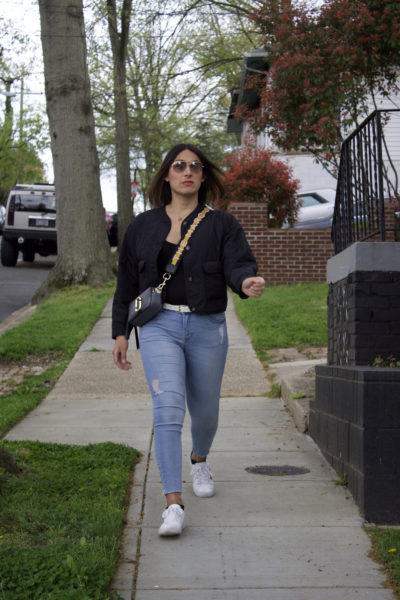
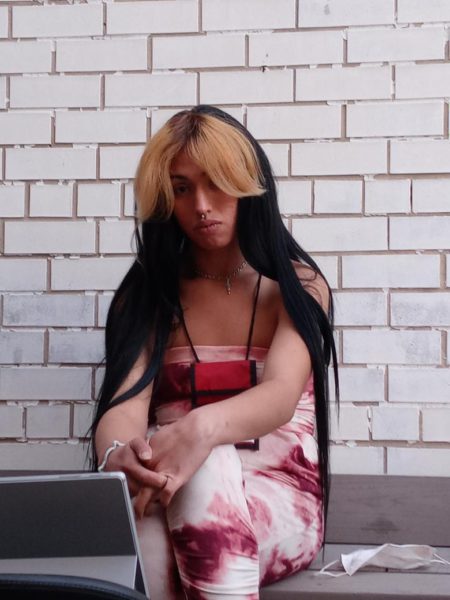
Olivia Rodriguez-Nunuez shown walking in front of her transitional DC home in April. Photo By Jojo Brew, Urban Health Media Project 

Demerick insisted that “it had nothing to do with his choice of sexuality,” but declined to call Olivia by her preferred name and pronouns and blamed hormones for making her sibling erratic. 

“I’ve chosen to remove Mark out of my life.” she said. 

Rodriguez-Nunez said she fled her family home in the Columbia Heights neighborhood because “having two people gang up on me, it was a lot to handle,’’ But she felt safe at Casa Ruby, which aims to be more than a shelter, but also a home where queer, transgender and gender non-conforming people can escape fear of discrimination, harassment and violence. Above all, places like Casa Ruby and SMYAL try to offer the one thing their young clients often lack: consistency.

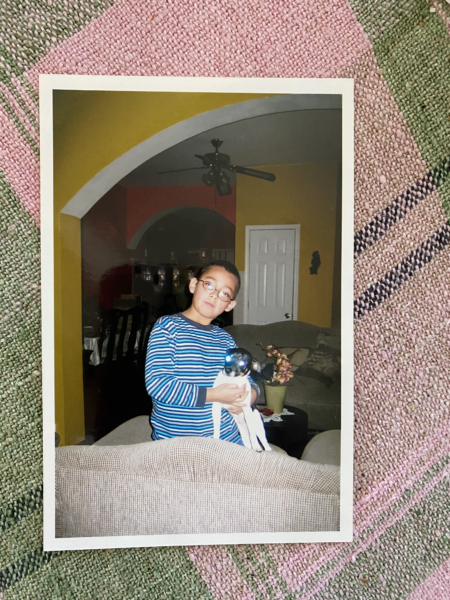
Oliva Rodriguez-Nunez is shown with her dog in a picture from her youth. Photo Courtesy of Olivia Rodriguez-Nunez

Doll is now living in a transitional apartment provided by SYMAL, while Rodriguez-Nunez was referred to a transitional group home run by the Wanda Alston Foundation. 

“Our folks have had a lot of people give up on them,’’ Pollard said. “Parents or guardians give up on them because they don’t agree with their sexuality or gender identity and kick them out.’’ Teachers,foster parents or group homes also give up on kids, sometimes, he said, “just because they’re troubled.’’

“Here at Casa Ruby, it is very welcoming,’’ said Raven Queen. “Everyone can live their own life. They can be who they want.”

 Tagline: Gandluri and Johnson are high school students at Our Lady of Good Counsel High School and The Baltimore Polytechnic Institute in Baltimore. They were participants in Urban Health Media Project’s workshop, “Home Sick: How Where We Live Impacts Health” in Spring of 2021. UHMP student reporters Anthony Green, Malaya Mason, Noah Pangaribuan and Diamond LaPrince contributed to this story.

Pride Week 2021: Varsity Gay League hosts Pride Cornhole tournament to benefit GLYS WNY – Yahoo News

Associated Press

2 face arraignment in road-rage shooting that killed boy, 6

A Southern California couple could face a murder charge over a road rage shooting that killed a 6-year-old boy last month on a freeway, authorities said. Marcus Anthony Eriz, 24, and Wynne Lee, 23, were expected to be arraigned Tuesday in the death of Aiden Leos, who was shot as his mother drove him to kindergarten on April 21 in Orange County, southeast of Los Angeles. CHP Capt. Mike Harris said Monday that he spoke to Aiden’s mother about the arrests.

Even before COVID, LGBTQ+ youth faced a high risk of homelessness. The pandemic only made things worse. – Washington Blade

Squashed between friends on a plush couch at a shelter for homeless LGBTQ+ young people, Jada Doll talked about what happened after she began to express her identity as a transgender woman.

She moved in with her boyfriend when she was a senior in high school. But Doll – that’s the name she chose – said her family refused to let her back into their Manassas, Va. home when the couple broke up. The reason, said Doll: She had begun to identify as a female. She wound up in the nearby woods that became her home for almost three years.

“When it was raining,’’ the 22-year-old said in a recent interview, “I couldn’t feel my toes.” 

Jada Doll is shown at the Casa Ruby shelter in DC this spring. Photo by Pooja Singh, Urban Health Media Project

Before the pandemic, LGBTQ+ youth had a higher risk of homelessness and the health problems that come with it – from nagging toothaches to life-long trauma.

Then COVID-19 forced families to stay home together, exacerbating the domestic conflicts over gender and sexuality that have driven some young people into the street.

Casa Ruby, the shelter that Doll entered, reports a 60% increase in clients in the past year. The non-profit in the Dupont Circle neighborhood offers housing, preventative healthcare and social services to LGBTQ+ youth. 

Many of the new homeless had no choice. Violence against LGBTQ+ youth often ‘’starts at home,’’ said Keith Pollard, a case manager at Supporting and Mentoring Youth Advocates and Leaders (SMYAL), a Washington non-profit that shelters about three dozen homeless LGBTQ+ youth. About 95 percent of SMYAL residents were thrown out because of their sexuality or gender identity.

Doll said she felt her family ganged up against her when she started to identify as a trans female. That, Pollard said, is a familiar story: “It starts with not being able to explore gender, with ‘Mom caught me with a skirt on’ or ‘Mom caught me with makeup on and put me out.’’’

‘They see you as a prostitute’

Being homeless can lead to a multitude of health and safety issues, but LGBTQ+ youth face unique, additional challenges.

Fear of violence looms over their heads, both on the street and in public shelters. Some shelters, Doll said, are “like jail. Other residents, she said, “can hurt us, and they don’t care if they hurt us.”

Sexual assault is an even larger worry. “They can also rape you in a shelter,’’ said another resident of Casa Ruby who calls herself Raven Queen.

Such fears are founded, according to Tearra Walker, who has lived in shelters and now helps find housing for the homeless. Some older shelter residents are sexual predators, she said, and young LGBTQ+ people “can get caught up in someone’s web.”  

The streets can be even worse. Doll said insults are hurled at LGBTQ+ youth — “They see you as a prostitute.’’ In fact, said SMYAL’s Pollard, many of these young people resort to ‘‘survival sex’’ to secure a place to sleep at night. 

“Once you’re out there on the street past four hours, you gonna be losing it,’’ said Nicholas Boyd, a Casa Ruby resident. “You gotta find someone to talk to, someone to socialize with, because the feeling of aloneness is scary.” 

Physical health suffers as well. Pollard said that when young people come in off the street, they’re often malnourished or underweight, because “they’re just eating anything they can get their hands on.’’ That, plus lack of sleep, can also lead to attention deficits, mood disorders or suppressed immunity to disease and infection. Many suffer from sexually transmitted diseases and infections, including HIV, he said.

For more than two years, Doll lived under a canopy of trees, protected from the elements only by flimsy tents. Hygiene and privacy were the first casualties; she recalled having to use a water bottle to shower “with everyone watching.” 

She ate “just about anything, like, raw stuff.” She neglected to brush her teeth. She suffered insomnia and panic attacks that continued even in the safe haven of Casa Ruby. 

Brian Klausner, medical director of community population health at WakeMed hospital in Raleigh, N.C., works with the chronically homeless through a partnership with a local federally-funded health care clinic. He said their average life expectancy is about 50 (compared to 79 years for all Americans). The homeless are more likely to have suffered childhood traumas — sexual abuse, incarcerated parents, drug use in the home — which increase the risk of health issues such as heart disease, cancer, stroke and suicide, said Klausner, a primary care physician. And homelessness itself exacts a cost.  

The pandemic has upped that cost. As a result of COVID restrictions, Pollard said, his organization saw an increase in drug and alcohol use as well as physical and verbal altercations: “A lot of folks were doing things that were risky, (like) going outside without a mask, interacting with large groups of people, because they could not take the isolation.’’

‘A lot to handle’

Olivia Rodriguez-Nunez said that when her older sister threatened to attack her because she’d begun to identify as a trans woman, their mother flew from Bolivia to Washington to intervene – on the side of the older sister, to “kick me out.’’ 

Rodriguez-Nunez’s sister, Mariela Demerick, said in a phone interview that she blames Olivia – who she calls “Mark” – for being abusive and three months behind on rent. Their mother flew up “to come set order to this home,” she said. 

Olivia Rodriguez-Nunuez shown walking in front of her transitional DC home in April. Photo By Jojo Brew, Urban Health Media Project 

Demerick insisted that “it had nothing to do with his choice of sexuality,” but declined to call Olivia by her preferred name and pronouns and blamed hormones for making her sibling erratic. 

“I’ve chosen to remove Mark out of my life.” she said. 

Rodriguez-Nunez said she fled her family home in the Columbia Heights neighborhood because “having two people gang up on me, it was a lot to handle,’’ But she felt safe at Casa Ruby, which aims to be more than a shelter, but also a home where queer, transgender and gender non-conforming people can escape fear of discrimination, harassment and violence. Above all, places like Casa Ruby and SMYAL try to offer the one thing their young clients often lack: consistency.

Oliva Rodriguez-Nunez is shown with her dog in a picture from her youth. Photo Courtesy of Olivia Rodriguez-Nunez

Doll is now living in a transitional apartment provided by SYMAL, while Rodriguez-Nunez was referred to a transitional group home run by the Wanda Alston Foundation. 

“Our folks have had a lot of people give up on them,’’ Pollard said. “Parents or guardians give up on them because they don’t agree with their sexuality or gender identity and kick them out.’’ Teachers,foster parents or group homes also give up on kids, sometimes, he said, “just because they’re troubled.’’

“Here at Casa Ruby, it is very welcoming,’’ said Raven Queen. “Everyone can live their own life. They can be who they want.”

 Tagline: Gandluri and Johnson are high school students at Our Lady of Good Counsel High School and The Baltimore Polytechnic Institute in Baltimore. They were participants in Urban Health Media Project’s workshop, “Home Sick: How Where We Live Impacts Health” in Spring of 2021. UHMP student reporters Anthony Green, Malaya Mason, Noah Pangaribuan and Diamond LaPrince contributed to this story.

Raising Pride Flag is ‘just the beginning’ in addressing LGBTQ+ healthcare disparities in West Michigan – MLive.com

WYOMING, MI – Displaying a Pride Flag, collecting data and holding a mammography clinic are some of the efforts confronting gaps in healthcare for the LGBTQ+ population in West Michigan.

Unfair treatment, lack of experience or bias from healthcare providers can lead to disparities in care and individuals putting off treatment, said Rhae-Ann Booker, Ph.D., vice president of diversity, equity and inclusion at Metro Health in Wyoming.

“If you think about the importance of early intervention and preventative care, when it comes to breast cancer, prostate cancer, heart disease, stress, obesity, and a host of other chronic illnesses — of which we are seeing higher rates among LGBT communities — delaying and avoiding treatment, there are significant consequences to that,” Booker said.

Related: Metro Health aims to reinforce approach to access, choice with first VP of Diversity, Equity and Inclusion

The month of June is recognized as Pride Month in celebration of the LGBTQ+ (Lesbian, Gay, Bisexual, Transgender, and Queer) community. Many West Michigan organizations have raised the rainbow flag, including Metro Health and Mary Free Bed Rehabilitation Hospital.

The cost of healthcare can also be a barrier to LGBTQ+ populations who, research shows, face higher rates of poverty. A 2019 study, “LGBT Poverty in the United States,” examines how sexual orientation and gender identity affect the likelihood that an individual will experience poverty.

“All those pieces together can play out to this particular population not engaging in the healthcare system and the primary care system,” said Grace Huizenga, the president of the Grand Rapids LGBTQ+ Healthcare Consortium, a non-profit organization that partners with hospitals, community groups and local health departments.

The most recent Kent County Community Health Needs Assessment shed light on some of the health disparities the local LGBTQ+ population faces.

The assessment found high numbers of mental health issues, smoking and five times as much marijuana use, Huizenga said.

Related: Economic security, racial inequity among top community health concerns in Kent County

About half of the Kent County LGBTQ+ respondents reported being diagnosed with depression, and they are two to three times more likely than straight or cisgender residents to report poor physical and mental health.

“We really have to look at what does the data actually say, where are exactly the problems and then do we implement something,” said Huizenga.

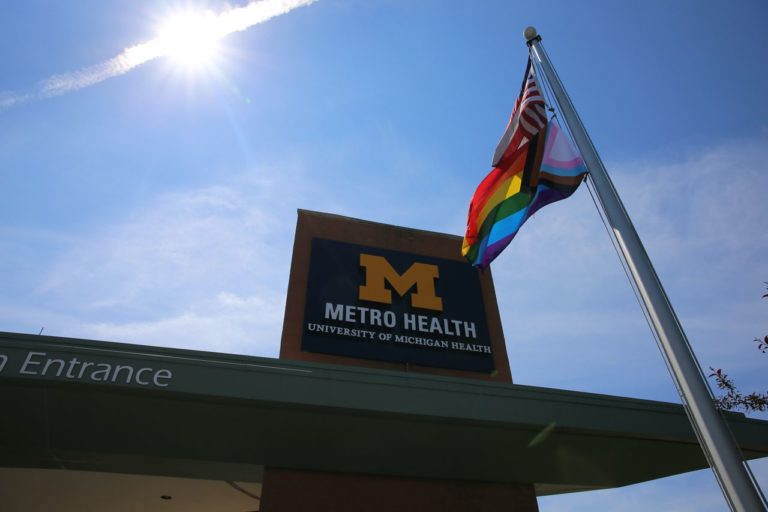
Metro Health aims to address some of these disparities by making the hospital more inclusive through simple steps like flying the Pride Flag for the first time and displaying window decals that say, “You belong here.”

Booker says the work doesn’t stop there, but the symbols of affirmation are “just the beginning.”

When registering patients, the hospital asks for their gender, sexual orientation and pronoun preference — a practice that can seem minor but makes a big difference, Booker said.

Staff also receive ongoing training and education, and Metro Health is collecting data on the LGBTQ+ patient experience to inform practices moving forward.

“It’s hopefully sending a strong message that this is a welcoming and safe place for LGBTQIA+ community members, staff, patients and guests,” Booker said.

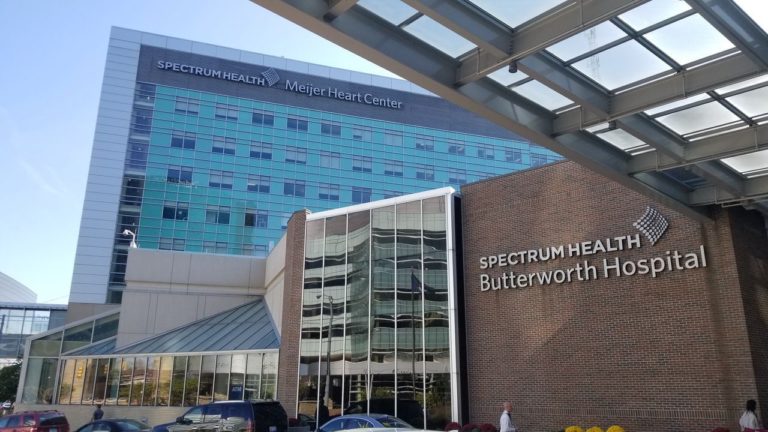
Spectrum Health, a 14-hospital system in West Michigan, partnered with the Grand Rapids Pride Center, the Grand Rapids LGBTQ+ Healthcare Consortium and the West Michigan Coalition for Breast Health to hold breast cancer screening event for LGBTQ+ individuals.

Related: Spectrum Health to offer breast cancer screenings June 12 with emphasis on LGBTQ community

“Hopefully this will decrease the access issue and maybe combat negative experiences that people may have had,” Huizenga said.

A mobile mammography unit will be at the Baxter Community Center, 935 Baxter St., from 9 a.m. to noon on Saturday, June 12. Appointments are required and can be made by calling 616-486-6022.

Huizenga said these efforts are significant for a community that has a “history of being invisible.”

“There’s this population that has had these obvious disparities for a long time and the lack of our systems moving towards that, so that’s starting to change,” she said.

More on MLive:

Michigan Legislature formally recognizes Pride Month for the first time

Rainbow flag raised outside Muskegon City Hall for Pride Month

Pride month being celebrated in downtown Ypsilanti with events through June

‘GMCW Turns 40’ celebrates equality, justice, and joy – DC Metro Theater Arts

0

GMCW turns 40 is a joyous, and bittersweet, survey of the breadth of the work of Gay Men’s Chorus of Washington, DC. Photographs, newpaper clippings, and video footage of the Chorus singing, acting, and dancing are interspersed with interviews and reminiscences by some of its longstanding members. Group members note that this organization has managed to maintain its existence through the AIDS crisis and into the COVID pandemic, all the while using their singing as a weapon to fight for equality and justice.

‘GMCW Turns 40.’ Screenshot courtesy of Gay Men’s Chorus of Washington, DC.

While not emphasized in the anniversary celebration, GMCW is uniquely product of this city. Washington, DC, as the capitol of the United States of America, functions in the imagination of the country and the world as the place from which America’s constitutional and political stability and power emanate and are maintained and protected. What those who are not from DC don’t realize is that DC, more than being merely a symbol or a brand, is also home to people.

One of the ways you can tell that a place is actually a home to somebody, and not just a symbol, is by the music the people who live there produce and what that music says. The sound that comes from musicians such as Eva Cassidy, Chuck Brown, and Sweet Honey in the Rock could only have been produced by people who committed to making their homes in Washington, DC. The sounds these musicians have produced, relentlessly promote the humanity of a citizenry that continues to be treated as less than human and deserving of dignity.

When assessing its influence, GMCW should also be seen as an integral and essential part of this community and movement of DC musicians. Focusing their voice on the humanity and dignity of gay men, as part of the larger community, GMCW has made it possible for gay folks to be able to hear their own voice in Washington, DC, and to claim this city — and, by extension, the larger nation — as home.

Over the course of 90 minutes we are taken through a video scrapbook of GMCW memories along with special performances arranged especially for this anniversary. There are selections from past concerts such as their signature tune, “Make Them Hear You,” from Ragtime by Lynne Ahrens and Stephen Flaherty. The songwriting duo composed a new song, “Harmony Is Never Too Late,” for this anniversary celebration. It perfectly portrays the unshakeable faith that members of GMCW have articulated when talking about the company’s “potential to change hearts and minds when we share our story and raise our voices in harmony for equality and justice for all.”

‘GMCW Turns 40.’ Screenshot courtesy of Gay Men’s Chorus of Washington, DC.

Maybe such sincerity alloyed with rightness of cause is irresistible. In any case, I found myself becoming verklempt several times in the course of watching this program. One such moment was in watching Potomac Fever, one of GMCW’s several offshoots, as they sang “Sure on This Shining Night” in a performance, recorded during the pandemic, that moved back and forth between The National Arboretum and the ubiquitous Zoom squares to which we have all become so accustomed. The chorus’s response to the seemingly relentless targeting and killing of Black people by American police was another moving moment. The song “Heavy” was commissioned in the wake of these killings and it was performed in collaboration with a number Gay and Lesbian choruses across the country. It is lovely piece, a declaration of grief and resilience and an example of GMCW’s dedication to using music to “rise up in spite of the ache and fight injustices everywhere.”

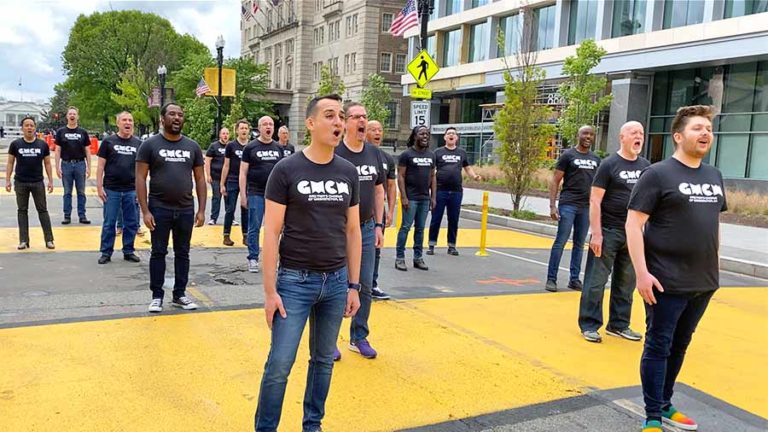
In GMCW Turns 40 we get to accompany the chorus as they travel from the stage — in performances of fully produced pieces of musical theater and in camp parodies and revues — to the streets — in Pride marches, in education efforts and in protests — bearing witness to the existence of gay folks as members of the general community.

‘GMCW Turns 40.’ Screenshot courtesy of Gay Men’s Chorus of Washington, DC.

The Gay Men’s Chorus of Washington, DC has been singing for 40 years, sharing the good vibrations of the human voice with their audiences striving to bring them to one accord: the recognition and celebration of our shared humanity. May they continue to do so long into the future.

Running Time: Approximately 90 minutes

GMCW Turns 40 is streaming from now through June 20, 2021. Tickets, starting at $25, are available online.

Direction by Thea Kano
Associate Conductor: C. Paul Hein
Assistant Conductor: Joshua Sommerville
ASL Interpretation: Jamie Sycamore
Art Direction: Craig Cipollini

Trenton’s first openly gay mayor wishes to improve city for LGBTQ+ community – News 12 Bronx

The Human Rights Campaign ranked Trenton as the least gay-friendly city in New Jersey less than 10 years ago. Today, the city is led by an openly gay mayor who is working to move the city forward.

“I had an 80-year-old Baptist corner me in a church and said, ‘I don’t care what you do in the bedroom. I just want my roads fixed,’” says Mayor Reed Gusciora. “So, I think that’s the theme of this office.”

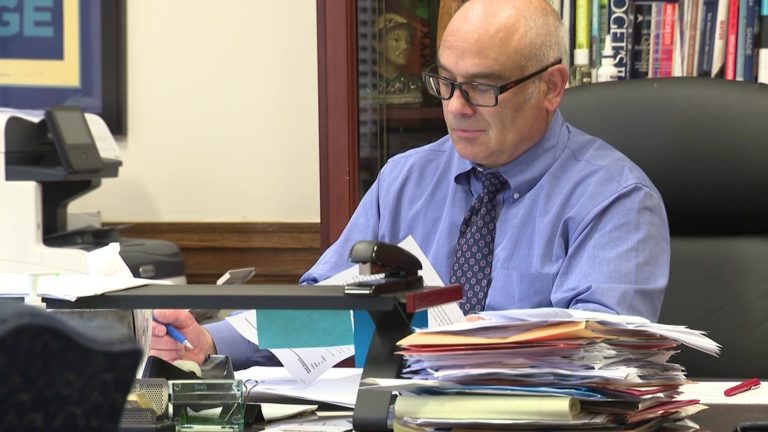
A rainbow flag sits behind Gusciora’s desk. But besides that, it is all business. The mayor was an assemblyman for 22 years before winning the mayorship by a razor-thin victory in 2018.

“I like the challenge that mayors actually solve things,” Gusciora says.

Gusciora’s public coming out story began in 2006, when questioned by a reporter while serving his 10th year in the state Assembly.

“It became news that night. But I thought it was time to really just come out and be who I was and make things a lot easier,” he says.

Gusciora’s public battle with then-Gov. Chris Christie in 2012 reignited the headlines, when Gusciora challenged Christie’s veto on the Marriage Equality Act.

“That became somewhat personal when he called me ‘’numbnuts,” Gusciora says.

Gusciora says he regrets nothing about coming out and says that it is an honor to not only be the first openly gay state assemblyman, but also Trenton’s first openly gay mayor.

“It’s heartwarming when you get emails from parents and young gay kids alike. They really feel their life is not a dead-end and they do have self-worth,” Gusciora says.

Gusciora says that his focus is bringing new industry back to Trenton, improving public safety and being a voice for the growing LGBTQ+ community in Trenton.

“I think that people should be, particularly politicians, should be judged on what they can do for the people and how they can move the city forward and that’s what I intend to do,” Gusciora says.

Gusciora helped organize the city’s first Pride Festival in 2019, drawing a crowd of more than 1,000 people. This year’s event was canceled once again because of the pandemic. But Gusciora says that he is looking to see if events can be held this fall.

5 adventurous Austin ways to enact your revenge on the pandemic – CultureMap Austin

We get it. You’ve been cooped up in your house for more than a year in extremely close quarters with your restless family and have likely missed out on a gazillion amusing escapades you otherwise would have partaken in, were it not for that vexing coronavirus pandemic.

Well, Austin, we’re here to say this: Take a deep breath, round up the vaccinated fam, and get ready for a wave of excitement this summer. It’s time to take revenge on the pandemic. Adventures are back!

Below is a quick roundup of thrill-worthy crusades to help you recover from the worst year ever. (A quick note: We are officially still living in a pandemic, y’all, so take precautions as needed and adhere to any mask-wearing and safety requirements from area businesses.)

Play like a kid again
If it’s been a minute — or, let’s be real, at least a year — since you’ve reveled in some good old fashioned play, local entertainment destination Austin’s has got the perfect revenge adventure for you. Formerly Austin’s Park ’N Pizza, the business has undergone a rebrand and some seriously impressive renovations, resulting in an entertainment fun hub unlike anything else the city has to offer. New attractions include an indoor roller coaster, a tower drop ride, bumper boats, a climbing wall, and tons of other amusement-park-style activities. The upgrades also included the addition of REVL Social Club (aka Mama’s best friend!), where you can nosh on tasty bar bites and sip some craft cocktails before taking in some curling, ping pong, billiards, and darts. Take our advice: Jump on the roller coaster before you hit the bar!

Show your pride, gridiron style
Get in the game this month and show your support for Austin’s LGBTQ community while checking out some hard-hitting and can’t-take-your-eyes-off-it rugby action. AG Rugby, in partnership with the Austin LGBT Chamber of Commerce, will host its final home game of the season on Saturday, June 12. The event will include pre-match and halftime entertainment, pride-themed giveaways, live music from the always spectacular Gina Chavez, a DJ performance, Party in the Plaza attractions (Don’t miss the dunk tank!), and the most savagely delicious sports action around, thanks to the behemoths of Austin’s Major League Rugby squad. Tickets are only $5 and are available on the AG Rugby website.

Eat up some revenge dining
That darn pandemic has probably kept you from dining at your favorite Austin restaurants for far too long. Take revenge by splurging on some high-end eats this summer. Look no further than the Four Seasons Hotel Austin, where ritzy yet approachable onsite eatery Ciclo is dishing out some particularly flamboyant dishes, perfect for getting delicious revenge on the pandemic that forced you to eat soggy leftovers for a year. Manager Joe Pena says, “It’s like the Roaring ’20s right now. People aren’t thinking twice about ordering the most expensive steak or that rare vintage wine.” True revenge diners will definitely want to check out Ciclo’s massive tequila-marinated Texas Wagyu tomahawk steak, which is literally lit on fire tableside. It’ll run you a cool $150 or so a pop.

Also popular with revenge diners lately is high-end Japanese eatery Osome’s pop-up dinner series at The Cathedral, which saw hungry Austinites happily dropping $250-$350 per ticket. In fact, secret VIP table tix were going for $320 each and sold out. After all, who doesn’t want to dine on perfectly crafted sushi and sashimi, sake, and cocktails while taking in some live music? It’s what Osome chef and co-founder Michael Carranza refers to as a “new wave of experiential dining in Austin,” noting that each pop-up boasts a new location and new vibes. While the Cathedral dinner series has run its course, expect Osome to host some additional can’t-miss pop-ups this summer that are guaranteed to be perfect for indulging.

Get in shape outdoors
If your idea of getting revenge on the pandemic is less about splurging and more about getting out of the house (finally!) and shedding some of those pandemic pounds, the Downtown Austin Alliance has got your back. The free Sunset Summer Series, in partnership with YTX (formerly Wanderlust Yoga), kicks off at 7:30 pm each Tuesday through August at Republic Square and includes open-air yoga with a side of live music (or a DJ). Register beforehand to secure your spot. After you get your om for the week, check out #DoingThings in the Park. Through the DAA’s partnership with Austin athleisure biz Outdoor Voices and Motiv Fitness, the free events will take place Thursdays throughout June from 6:30-7:30 pm at Republic Square downtown, and alternate between barre and dance cardio classes. Register ahead of class time.

Rejuvenate your sense of wonder
Shrug off all those gray pandemic days by immersing yourself in Austin’s newest permanent interactive art exhibit, Wonderspaces, a 28,000-square-foot art space that opened last summer. Four new art installations have just joined the Wonderspaces lineup, and in a brilliant move, Wonderspaces is queuing up its new curated bar program, which features Austin and Texas cocktails, beer, and wine offerings. Open to all ages, Wonderspaces spotlights 13 mesmerizing art installations from world-renowned artists, resulting in an ever-changing stream of art. Tickets are available on the Wonderspaces website.

The 15 Funniest LGBTQ Comedy Specials to Watch During Pride – Lifehacker

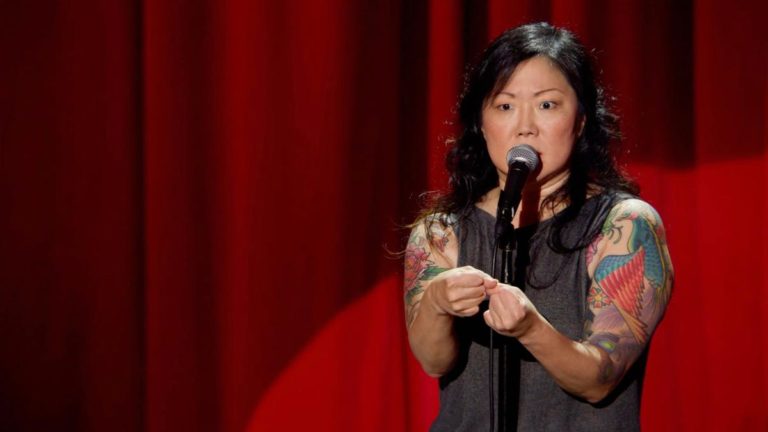
Matteo Lane comes in hot, proclaiming his gayness by singing on the high notes; if that isn’t Pride material, I don’t know what is. He immediately announces, “If you didn’t know I’m gay,” then asks if anyone else in the crowd is gay too, then asks for a date. The special offers a brief taste of Lane’s style, and it’s fast and full of laughs. He makes fun of his voice and the stereotypical views of gayness that others place upon him, and finds a way to poke fun at the pain of a drive-by slur shouted his way while on a visit to Columbus, Ohio. Then there’s his bit about pitching a new Grindr app called “Fruit by the Foot, amid other exaggerated stories.

Where to stream: Netflix

As AMC Entertainment stock surges 20%, SEC says it’s watching memes for ‘disruptions of the market, manipulative trading, or other misconduct’ – MarketWatch

MARKETWATCH FRONT PAGE

The U.S. Securities and Exchange Commission warns that it is closely monitoring moves in the market, amid the surge in values of meme stocks AMC Entertainment and GameStop Corp. See full story.

Justice Department says ‘millions of dollars of bitcoin’ paid to Colonial Pipeline ransomware hackers has been reclaimed

The Justice Department, in conjunction with other federal authorities, on Monday said that the majority of the ransomware paid to hackers last month has been recaptured. See full story.

WWDC: Apple takes aim at Zoom with FaceTime, rolls out new privacy updates

Apple Inc.’s forthcoming software upgrades will aim to make FaceTime a more formidable competitor in the world of videoconferencing and continue the company’s privacy crusade against third-party advertisers that track user data. See full story.

My boyfriend moved in to increase his credit score. Now he wants to buy a home together — without saving any money

‘I own my own home, I have had the same job for over 20 years, I have a 401(k) and IRA accounts, and I also have several accounts that I put money into.’ See full story.

I want to move to a walkable, historic, four-season town and have a budget of $30,000 a year — where should I retire?

‘I’ve been a city dweller all my life and big city/urban sprawl is not my first preference.’ See full story.

MARKETWATCH PERSONAL FINANCE

With home prices rising just about everywhere, it’s more important than ever to find places that are not only gay-friendly but also budget-friendly. See full story.

Spectrum Health to offer breast cancer screenings June 12 with emphasis on LGBTQ community – MLive.com

GRAND RAPIDS, MI — Spectrum Health’s Betty Ford Breast Care Services will be hosting a mobile mammography clinic at Baxter Community Center on Saturday, June 12.

The clinic will include staff from the Spectrum Health Cancer Center who are familiar with the LGBTQ+ (Lesbian, Gay, Bisexual, Transgender and Queer) community and their health care needs who can provide consultations.

June is LGBTQ+ Pride Month. The screening event is in partnership with the Grand Rapids Pride Center, Grand Rapids LGBTQ+ Healthcare Consortium, the West Michigan Coalition for Breast Health, and Baxter Community Center.

The early detection screening through the mobile mammography unit will be offered from 9 a.m. to 2 p.m. at Baxter Community Center, located at 935 Baxter St. SE.

Appointments are required. Free mammograms will be available for uninsured or under-insured patients. People can call 616-486-6022 to see if they qualify or visit spectrumhealth.org/bettyford.

Here’s a few things Spectrum wants those interested to know:

  • The Betty Ford Breast Care Services mobile mammography unit is a clinic on wheels that uses the most advanced technology.
  • Patients will be welcomed in a comfortable registration and waiting area.
  • After being registered, patients use private dressing rooms before receiving their mammogram.
  • The mobile unit provides the same high-quality service as Spectrum Health’s 14 Betty Ford Breast Care Services locations.

Read more:

Michigan reports 419 new coronavirus cases and 11 new deaths for Sunday and Monday, June 6-7

Pedestrian struck, killed in Kent County crash

Pure Michigan June travel deals: Up North resorts, beach escapes and island getaways

Moving event in SF marks AIDS at 40 – Bay Area Reporter, America’s highest circulation LGBT newspaper

People gathered at the National AIDS Memorial Grove in Golden Gate Park June 5 to commemorate the 40th anniversary of the first reported AIDS cases and to solemnly view portions of the AIDS Memorial Quilt and remember those lives lost.

It was June 5, 1981 that the U.S. Centers for Disease Control and Prevention’s Morbidity and Mortality Weekly Report noted five cases of pneumocystis pneumonia among previously healthy gay men in Los Angeles. Over the ensuing years, thousands of people died from the disease, including gay men, women, trans people, hemophiliacs, and injection drug users.

During a morning ceremony, officials laid a wreath in the Circle of Friends and viewed the quilt’s 6000th block. In the afternoon, the public was invited to visit the grove, where they saw 40 other quilt blocks and read names of those lost to the disease. (The AIDS grove took over stewardship of the quilt in 2019.) There were musical performances from the Messengers of Hope Gospel Choir featuring Ja Ronn and Flow and members of the San Francisco Gay Men’s Chorus.

Among the quilt blocks on display was one for Susan Piracci Roggio, who had been a flower girl at the wedding of House Speaker Nancy Pelosi (D-San Francisco), and one for Freddie Mercury, lead singer for the band Queen. There was also a panel for Dr. Tom Waddell, who founded the Gay Games. A larger sized block was also on display from Glide Memorial Church, upon which there were more than 100 names.

Some of those who attended could not believe the disease has ravaged the world for four decades.

“I’m here with my kids and that gives it a whole different meaning,” said Joshua Gamson, a 58-year-old gay man who sits on the board of the grove. “I’m a little bit in awe of what the National AIDS Memorial has become, and still in disbelief that it’s been 40 years. I feel sad and inspired.” Gamson is a sociology professor at the University of San Francisco.

John Cunningham, a gay man who’s executive director of the AIDS grove, opened the speakers’ program by asking for a moment of silence for those lost to AIDS.

“I certainly feel their spirit here today,” he said. “With the beauty of the sun, and the nature, and the birds, and each of you. My name is John Cunningham, and I am a man living with AIDS, and I’m honored to lead the National AIDS Memorial.”

Cunningham asked that anyone living with AIDS stand or raise their hand. Those who did were met with applause. Cunningham also acknowledged June 5 as HIV Long-Term Survivors Awareness Day.

“We must support the long-term survivors community,” he said.

Young people were among those who visited in the afternoon.

Tatum Jenkins, a 20-year-old bisexual woman, and her friend, Zoe Schneider, an 18-year-old straight ally, were waiting to be admitted to the grove to view the quilt blocks.

“We stumbled across this,” said Jenkins. “I recognized that there aren’t a lot of things to do for Pride this year. This felt like a good opportunity to connect with the history of Pride.”

“Coming at it from a young person’s perspective, 40 years can feel like such a long time because it’s double our lifespan,” added Schneider. “When you put it in perspective of all the people here this is very recent history and it has a legacy and a cultural impact that continues to touch so many people.”

Mayor London Breed spoke during the morning ceremony.

“San Francisco was left on our own,” Breed said, recalling the early days of the AIDS epidemic when the federal government largely ignored the crisis. “But we did what San Franciscans do best, we came together and provided things to address this crisis like no other. The system of care to help those who were struggling with HIV/AIDS was developed right here in San Francisco. The renowned research that continues to this very day was established right here in our great city.”

Breed also thanked Cleve Jones for co-founding the AIDS quilt. Breed then spoke of the Getting to Zero campaign, which was established in 2014 when she served on the Board of Supervisors.

“Zero new infections,” she said. “Zero new deaths, zero stigma attached to those who have HIV or AIDS. And for the first time in a very long time, in 2019 we saw only 166 new infections of HIV and that is really historic for the work that we’re doing in investing in PrEP, and investing in the things that are truly going to get us to zero new infections.”

As the Bay Area Reporter noted last week, the city’s Getting to Zero campaign hopes to reduce transmission of the virus and HIV-related deaths by 90% before 2025.

Gay state Senator Scott Wiener (D-San Francisco) recalled that when he was a 17-year-old gay man in 1987, there was no treatment for HIV, and no PrEP, a drug that is highly effective at preventing HIV.

“It was a scary time to come of age as a gay man,” Wiener said. “It was a time when our federal government had abandoned us, because this virus was impacting gay and bisexual men, trans women, Black people, people using drugs, sex workers, all of us considered disposable throwaway people by our federal government, and by society. But this community pulled together and survived. Not everyone survived, we know tens of millions of people have died from this virus, but we were able to come through this and we now have effective treatments, we now have PrEP, we now have support systems.”

Wiener acknowledged that people were still being lost to HIV. He said that he wanted to see the quilt stop growing and thanked Congresswoman Barbara Lee (D-Oakland) for her work in ending the criminalization of HIV. Lee has long pushed for federal legislation to end HIV criminalization. In 2017, then-governor Jerry Brown signed a state law, SB 239, which Wiener authored with gay former Assemblyman Todd Gloria (D), now the mayor of San Diego, that modernized the state’s HIV criminalization laws adopted during the height of the AIDS epidemic in the 1980s. Lee supported the state legislation.

“We need to take that national,” Wiener said.

Lee said she and the others attended to “remember all those we have lost over the last 40 years.”

“Many of you have been in this fight since then,” she added. “We’re also here to reflect at the progress that we’ve made and recommit ourselves to this work. Let us remember those who have fought on the front lines, stood up for dignity, for health, for social justice, and for an end to discrimination.”

Lee noted that she is a co-founder and a co-chair of the bipartisan Congressional HIV/AIDS Caucus and that she serves on the powerful appropriations committee.

“I just want to tell you that ending HIV and AIDS by 2030 continues to be a priority for me,” she said. “We will get there.”

She pointed out that African Americans account for 45% of HIV diagnoses nationwide, even though they are only 13% of the population.

Ima Diawara, inaugural recipient of the AIDS grove’s Mary Bowman Arts in Activism Award, and Antwan Matthews, a grove board member, offered a spoken word performance of their poem “If I Say.” At one point during the reading Matthews became overcome with emotion and had to stop and breathe. Their performance was met with much applause.

Long-term HIV survivor Lonnie Payne, a gay Black man who now serves on the AIDS grove board, recalled losing his partner, his brother, and his brother’s partner. He spoke of his work with the HIV/AIDS hotline in support of others in the community.

There were representatives from Gilead Sciences, Quest Diagnostics, and Vivent Health who spoke of the work they do in support of ending the epidemic.

Jones, also a long-term survivor, recalled reading the CDC’s announcement of the first five cases of AIDS 40 years ago.

“Five years later almost everyone I knew was dead,” he said. “Or dying or caring for someone who was dying. Out of that beginning grew a great movement that changed not just the fight against AIDS, but the way the world looked at gay people. The way we test drugs. The way patients can be part of advocacy and policy change.”

Jones expressed his gratitude to the San Francisco AIDS Foundation, which he helped start with Drs. Paul Volberding and Marcus Conant and the late B.A.R. publisher Bob Ross when it was known as the Kaposi’s Sarcoma Research and Education Foundation, and to Vivent and to Gilead. Jones then introduced Pelosi, saying that she was not an ally, but family.

Pelosi spent much of her time at the podium thanking the many people who have been involved in the fight against AIDS. She also recalled the formation of the quilt and the first time it was displayed on the National Mall in Washington D.C.

“And at the end of the week, ABC News has the newsmaker of the week, and it’s Cleve Jones,” Pelosi said. “And they showed the whole quilt on the mall. It was so fantastic. It was historic. And now today is another historic day, after traveling and finding a home in Atlanta, the quilt has come home to San Francisco, where we will honor it, where we will protect it.”

Pelosi was referring to the fact that the quilt had been warehoused in Atlanta for a number of years, but was recently returned to the Bay Area, where it’s maintained by the AIDS grove.

Pelosi also noted that the LGBTQ community would not have achieved marriage equality or the repeal of the military’s anti-gay “Don’t Ask, Don’t Tell” policy without all the AIDS activism that preceded those movements.

“It’s not over yet,” Pelosi said. “Pretty soon we’re going to put this in a museum in the dustbin of history. We just haven’t gotten there yet, but we will.”

Reading names
The speakers’ program was followed by the reading of names of people who died of AIDS. The readings continued throughout the afternoon as the public was allowed inside the grove to view the quilt blocks and read names themselves.

“It’s bittersweet, 40 years in,” Cunningham told the B.A.R. as the reading of the names began. “But we have hope for the future and we find our hope in each other, and may the words and the power that Speaker Pelosi shared inspire all of us to carry on with a vision of a world without AIDS.”

Others echoed that sentiment.

“As a long-term survivor of 34 years of living with HIV, it’s a delicate balance of beauty and pain to know that I’m here when so many people I know did not survive,” said Vince Crisostomo, a 60-year-old gay Asian American man who’s the program director of SFAF’s Elizabeth Taylor 50-Plus Network. “I’m reminded that my story doesn’t end, it’s not over yet and I’m hoping for a happy ending.”

The morning program has been archived online, and includes a statement from Dr. Anthony Fauci, who was not present at Saturday’s ceremony, but who has been on the frontlines of the AIDS epidemic for decades before becoming the public face of the federal government’s response to the COVID pandemic.

View the program online.

Help keep the Bay Area Reporter going in these tough times. To support local, independent, LGBTQ journalism, consider becoming a BAR member.

The Conjuring 3: Are Jessica and Katie Based on Real People? Here’s the Deal – POPSUGAR

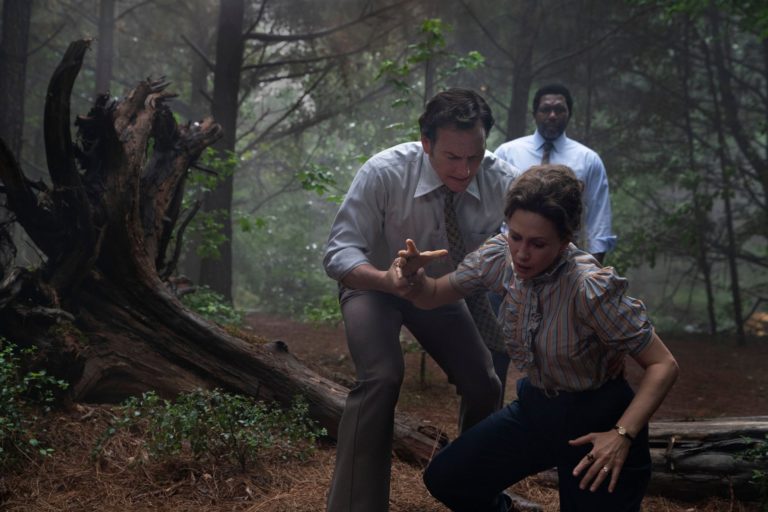
THE CONJURING: THE DEVIL MADE ME DO IT, foreground from left: Patrick Wilson, Vera Farmiga; background: Keith Arthur Bolden, 2021. ph: Ben Rothstein / Warner Bros. / Courtesy Everett Collection

As its title suggests, The Conjuring: The Devil Made Me Do It (aka The Conjuring 3) deals with the real 1981 case involving Arne Cheyenne Johnson, a young man who claimed that demonic possession caused him to kill his landlord. The movie connects Johnson’s case with that of two girls named Katie Lincoln and Jessica Louise Strong as Ed and Lorraine Warren search for clues relevant to Johnson’s investigation. While very creepy, the story of Katie and Jessica isn’t grounded in reality — they’re both included in the movie to drive the narrative forward.

In real life, the Warrens first met Johnson when his girlfriend’s brother, David Glatzel, started showing signs of demonic possession. Eventually, the evil spirits supposedly came into Johnson himself. In the movie version of the events, the Warrens take it upon themselves to investigate Johnson’s case after he stabs his landlord Bruno Sauls 22 times. While poking around leads, they come across the brutal murder of Katie Lincoln, a young girl who was stabbed 22 times. When the Warrens hop onto the case, police are still trying to locate her best friend Jessica. Inside Jessica’s home in Danvers, homicide detectives find a witch’s totem similar to the one Lorraine discovers beneath the Glatzel home, the artifact Father Kastner claims is set up by an occultist. In a vision, Lorraine sees how Katie’s friend Jessica murdered Katie before jumping off a cliff. Touching Jessica’s corpse, she gets a feel for where the occultist is operating.

While they add layers to the Johnson case, Katie and Jessica aren’t real, and neither is the occultist. Their appearances give the movie’s plot structure and portray the Warrens as the protagonists in the story. The actual Warrens did indeed assist with managing David Glatzel’s supposed demonic possession, but their involvement wasn’t always welcomed by the Glatzel family. Lorraine Warren later helped Gerald Brittle write The Devil in Connecticut, a book that unpacks the “Devil Made Me Do It” case. Johnson and Debbie Glatzel have backed up the Warrens, but David and his brother Carl have asserted that the demonic-possession claim was a hoax exploiting David’s mental illness. Suffice to say, The Conjuring 3 takes a lot of creative liberties despite being rooted in reality.