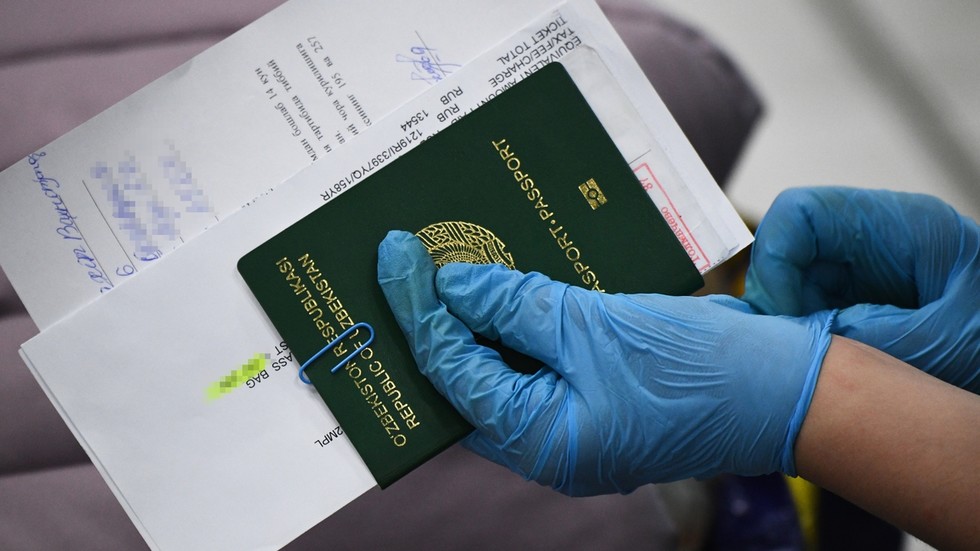
The leader of one of Uzbekistan’s largest political parties has told a popular YouTube channel that Tashkent can put a stop to its societal issues with LGBT people by deporting them to nations where they will feel more at home.
Alisher Kadyrov, who heads the right-wing ‘National Revival’ party, even claimed to the Alter Ego channel that his proposal was met with approval by members of the country’s LGBT community and attempted to portray his idea as an empathetic gesture towards a marginalized group.
“Uzbeks can modernize. They can change their worldview,” Kadyrov explained. “But to accept sodomy, or a man marrying a man? Uzbek society will never accept that. Even in a hundred years, or a thousand years, society will not accept LGBT people. I’m sure of it.”
According to Kadyrov, LGBT Uzbeks should not have to live in a country where they are not accepted and are poorly treated by the general populace.
“The decision [to expel LGBT people] is a global practice,” He told the YouTube channel. “Twenty-six countries use expulsion measures against members of the LGBT community. In Iran or Saudi Arabia, for example, they execute them.”
“I’m not in favor of executing them, I’m not in favor of killing them, I’m just suggesting that we help them,” he continued. “Why put them at such a risk? Let’s better create such conditions for them. Uzbekistan will expel them, and other states will have to give them citizenship. They will have a better life there. I am not bloodthirsty.”
The politician claimed that, after he proposed forced expulsion, many members of the country’s LGBT community wrote to him in support of the decision.
“They reached out to me and said it’s the right thing to do,” he said. “If we pass such a law, won’t it help these people?”
Uzbek law prohibits consensual same-sex sexual activity, with men facing a three-year jail term if convicted. There are also no anti-discrimination laws or provisions allowing same-sex marriage.
In March this year, the American NGO Human Rights Watch published a report asserting that Uzbekistan is failing to protect its LGBT citizens and should move towards guaranteeing rights “to personal security, privacy, and nondiscrimination.”
“Men in Uzbekistan who engage in consensual same-sex sexual conduct face arbitrary detention, prosecution, and imprisonment as well as homophobia, threats, and extortion,” the NGO said.
Earlier this year, pro-LGBT blogger Miraziz Bazarov, who himself is not gay, was beaten up by a mob in a seemingly homophobic attack that left him with a broken leg.
Think your friends would be interested? Share this story!
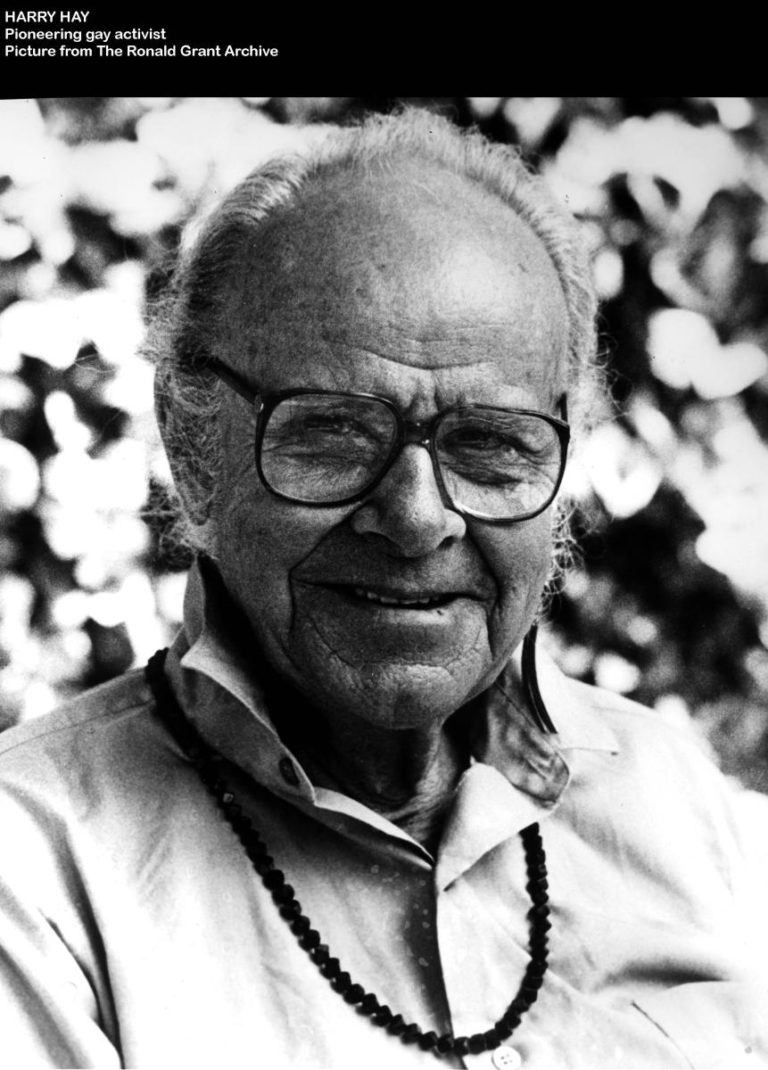
A homosexual, Socialist, writer, spiritualist and activist, Harry Hay would cofound a secret organization in 1950 that would become the origin of the American gay rights movement, and help shape and expound the notion that gay people were an oppressed, cultural minority whose unification would only create greater awareness and understanding.
Hay gravitated towards radical politics as a young adult
Born Henry Hay Jr. on April 7, 1912, in Worthing, England, Hay’s father was a mining engineer who moved the family to Los Angeles in 1919 where Hay would attend high school. Entering Stanford University in 1930, he soon abandoned lectures to return to Los Angeles and pursue a career in acting. It was during this period he met and formed a relationship with the actor Will Greer, who would go on to national fame in the role of Grandpa in the 1970s television series The Waltons.
Greer helped to introduce Hay to the concept of radical politics and Communist organizing. He encouraged him in his interest in Marxist theory, which led to Hay’s adoption of Socialism, and in which he hoped to find support for homosexuality. While attending a docker’s strike in San Francisco in 1934, Hay and Greer reportedly witnessed the shooting of strikers by U.S. national guardsmen. Both men joined the Communist Party USA soon after, with Hay now fully committing himself to left-wing labor and anti-racist campaigns.
He married a woman to not get kicked out of the Communist party
From early childhood, Hay said he recognized he was attracted to boys, not girls, and had his first sexual encounter at age 14. But the Communist party did not tolerate homosexuals and members urged Hay to settle down and get married. Hay married fellow party member Anita Platky in 1938 in a public attempt to quell his homosexuality and avoid suspicion. The couple adopted two daughters, Hannah Margaret and Kate Neall, during the mid-forties. Though the couple shared political beliefs and pursuits, Hay realized his sexual inclinations had not diminished and began seeking out same-sex encounters. He would later describe his marriage as “living in an exile world,” according to The Trouble With Harry Hay: Founder of the Modern Gay Movement by Stuart Timmons. The couple divorced in 1951.
Hay wrote his manifesto ‘The Call’ arguing that the homosexual community deserve equality
It was during his marriage to Platky that Hay began pursuing what he described as a call “deeper than the most innermost reaches of spirit, a vision quest more important than life.” The 1948 release of Sexual Behavior in the Human Male by Alfred Kinsey — which concluded as many as 10 percent of American men were exclusively homosexual — inspired Hay to believe it would be possible to form an organization of homosexuals by homosexuals, a movement which would help in the fight against discrimination. Emboldened, Hay wrote a prospectus devoted to the wellbeing of gay people, calling it “Bachelors Anonymous.” The manifesto, which would later become known as “The Call,” was the first to view homosexuals as a culturally “oppressed minority.”
Hay believed that all lesbians and gay men deserved equality, writing in 1950 that “in order to earn ourselves any place in the sun, we must with perseverance and self-discipline work collectively … for the first-class citizenship of minorities everywhere, including ourselves.” The same year he met Rudi Gernreich who would later gain fame as a designer of unisex clothing and in particular, the topless bathing suit. Hay and Gernreich soon became lovers, encouraging the other in their shared quest to establish a gay political movement in California.
Harry Hay
Photo: RGR Collection/Alamy Stock Photo
In 1950, he helped form the Mattachine Society to unify homosexuals
Along with Dale Jennings, Chuck Rowland and Bob Hull, Gernreich and Hay held the first meeting of what would become the Mattachine Society on November 11, 1950, in Los Angeles. The name was based on masked, medieval French performers who satirized social conventions. Over the next three years, the secret organization quickly grew in membership through sponsored discussion groups for homosexuals, helping to raise awareness and encourage a minority group identity. Ratified in 1951, the Mattachine mission and purposes stated the group’s threefold aims “to unify” homosexuals “isolated from their own kind and unable to adjust to the dominant culture,” “to educate” and improve information about homosexuality and “to lead” homosexuals towards unification and education.
But Hay struggled within the group. His relationship with Gernreich had ended and his leftist politics and belief that gay people should not simply assimilate into a heterosexual-dominated society were often at odds with other members. In 1953, amidst growing media scrutiny of the organization, Hay was ousted from the group. Mattachine continued, but with less confrontational policies than Hay originally envisaged.
Hay immersed himself in West Coast progressive politics
In 1955 Hay was called to testify before a subcommittee of the House Un-American Activities Committee investigating Communist Party activity in Southern California. By then a publicly revealed Marxist, the allegations against Hay were dismissed and he spent the next decade and a half enmeshed in West Coast progressive politics including the anti-draft and anti-war campaigns. Fascinated by the growing counter-culture, Hay eschewed jackets and ties in favor of jeans, earrings, long hair and necklaces. In 1962, Hay met and fell in love with the inventor John Burnside, who would become his life partner. The couple participated in homophile demonstrations throughout the sixties during which Hay became chairman of the Los Angeles Committee to Fight Exclusion of Homosexuals from the Armed Forces, among other positions.
He remained highly critical of the mainstream gay rights movement until his death in 2002
Though the June 1969 Stonewall riots in New York garnered the gay rights movement a higher public profile, Hay stated that he “wasn’t impressed by Stonewall, because of all the open gay projects we had done throughout the sixties in Los Angeles. As far as we were concerned, Stonewall meant that the East Coast was catching up.” Later he would tell the Associated Press that “the importance of Stonewall is that it changed the pronoun from ‘I’ to ‘We,’ … By the time of Stonewall [homosexuals] thought we had always been a cultural minority.”
In 1978 Hay formed the Radical Faeries, a gay brotherhood community in which the rights of homosexuals were extolled alongside spiritualist teachings and New Age practices, and “hetero-imitation” was discouraged. Diversity was key to Hay, who came to be viewed as an elder statesmen within the gay community in the 1980s and 1990s, albeit a controversial one. He remained highly critical of the mainstream gay rights movement and would often take divisive stances, such as advocating for the inclusion of the North American Man/Boy Love Association (NAMBLA) in Pride parades. “The assimilationist movement is running us into the ground,” Hay said in 2000.
Still a largely unknown figure to many unfamiliar with the fight for LGBTQ+ rights in America, Hay died on October 24, 2002, at age 90. In the weeks before his death, Hay and Burnside registered as domestic partners in California.
Fully Vaccinated Napa Woman Dies Of Covid: Napa County reported its first covid death of a fully vaccinated resident earlier this month. Health officials said the woman was older than 65, had underlying health conditions and had received her second dose of the Moderna vaccine at least 30 days before testing positive for the alpha variant (B.1.1.7), which is believed to be more transmissible. Read more from the Los Angeles Times and Bay Area News Group.
Californians Warned Of ‘Vax For The Win’ Scams: The California Department of Public Health is telling residents to be on guard for potential scams related to the state’s “Vax for the Win” lottery. After the first drawing Friday, residents notified the state of scammers impersonating state officials through calls, emails, texts and direct messages on social media, the CDPH said Monday. Read more from the Bay Area News Group.
Below, check out the roundup of California Healthline’s coverage. For today’s national health news, read KHN’s Morning Briefing.
Sign up to get the daily edition in your inbox
More News From Across The State
Alzheimer’s Disease
Los Angeles Times: FDA OKs New Alzheimer’s Drug After 20 Years. Experts Disagree In a decision based as much on hope as on science, the Food and Drug Administration on Monday approved a drug designed to treat Alzheimer’s disease despite scant evidence that it improved the symptoms of patients who tested it. The lack of a clear clinical benefit after two late-stage clinical trials prompted an FDA advisory panel to urge that the drug, called aducanumab, be rejected. The agency acknowledged the uncertainties about the medication but said its approval was justified by the seriousness of the disease and the dearth of options for treating it. (Khan and Kaplan, 6/7)
Stat: FDA Grants Historic Approval To Alzheimer’s Drug From Biogen The Food and Drug Administration on Monday approved the first new treatment for Alzheimer’s disease in nearly two decades, a landmark decision that has been eagerly awaited by millions of Americans diagnosed with the condition but that will be hotly contested by some in the scientific community who doubt the drug’s effectiveness. While other drugs treat symptoms of Alzheimer’s, the new medicine, called Aduhelm, is the first to attack what some believe is an underlying cause of the disease and slow cognitive decline, albeit marginally. (Feuerstein and Garde, 6/7)
AP: FDA Approves Much-Debated Alzheimer’s Drug Panned By Experts It’s the only therapy that U.S. regulators have said can likely treat the underlying disease, rather than manage symptoms like anxiety and insomnia. The decision, which could impact millions of Americans and their families, is certain to spark disagreements among physicians, medical researchers and patient groups. It also has far-reaching implications for the standards used to evaluate experimental therapies, including those that show only incremental benefits. (Perrone, 6/7)
Stat: A Twist In FDA’s Alzheimer’s Decision: No Limits On Which Patients Can Get It As if the saga of aducanumab needed another twist, the Food and Drug Administration tossed in an extra curveball Monday as it approved the Alzheimer’s therapy by specifying who would be eligible for the treatment. Or rather, not specifying. Doctors had anticipated that if the FDA gave the green light to the therapy now called Aduhelm, it would endorse its use for patients like those who qualified for clinical trials: people in the earliest stages of Alzheimer’s disease, who also had the plaques of amyloid protein that the therapy aims to clear. (Joseph, 6/7)
AP: How Will Insurers Cover A New Alzheimer’s Drug? [Insurers] will likely request some documentation first that the patient needs the drug. Many plans will require doctors to submit records and other paperwork justifying the treatment before they agree to cover it. Insurers also will likely require pre-approval for brain scans needed to determine that the patient is a candidate for treatment, said Lance Grady of Avalere Health consultants. (Murphy, 6/8)
Stat: The Price Of Biogen’s Alzheimer’s Drug May Lead Payers To Erect Roadblocks The Food and Drug Administration’s approval on Monday of an Alzheimer’s drug developed by Biogen is raising fresh questions about the financial implications for millions of families, insurers, and American taxpayers. But the drug maker is already scrambling to mitigate the fallout. At a wholesale price of $56,000 per year, the company exceeded some Wall Street expectations, and greatly surpassed the $8,300 threshold that a nonprofit determined was the price at which the medication could be considered cost-effective. That assessment reflected intense controversy over study data that prompted numerous experts to question the extent to which the drug actually helps patients. (Silverman, 6/7)
Axios: FDA Signals Watered-Down Drug Standards With Aduhelm Approval Following the FDA’s approval of Biogen’s Alzheimer’s treatment Aduhelm, experts fear the approval — based on weak scientific data — is a sign the agency is putting speed over rigor. “A general signal being sent to the rest of the drug industry is: If you can get uncertain, maybe suggestive data and a post-hoc analysis — get that threshold to us — we may approve your drug,” said Peter Bach, a drug researcher at Memorial Sloan Kettering Cancer Center. (Herman, 6/8)
CNBC: Biogen Alzheimer’s Drug: Dementia Expert Says Evidence ‘Wasn’t Sufficient’ For Approval Dementia expert Dr. Jason Karlawish told CNBC he’s skeptical of the Food and Drug Administration’s approval of Biogen’s Alzheimer’s disease drug, Aduhelm, saying “the evidence to approve the drug wasn’t sufficient.” “Another study is needed to establish whether this drug, in fact, is effective. Unfortunately, the FDA approved the drug for marketing, although they also do want another study,” the co-director of the Penn Memory Center at the University of Pennsylvania said on Monday following the agency’s formal OK. (DeCiccio, 6/7)
Infant Safety
NPR: Fisher-Price Ignored Safety Warnings Even After Infants Started Dying: Report Executives at Fisher-Price ignored repeated safety warnings about the company’s once popular Rock ‘n Play sleeper, even after infants began to roll over and die in the now-recalled product, according to a new report. An investigation by the House Committee on Oversight and Reform alleges that the New York-based children’s products giant didn’t adequately vet the sleeper for safety before putting it on the market in 2009 and then batted away criticism of the Rock ‘n Play for a decade before recalling it in 2019 after more than 50 infants had lost their lives. “What we found is absolutely shocking,” said the committee’s chairwoman, Rep. Carolyn B. Maloney, D-N.Y. “It is a national scandal.” (Hernandez, 6/7)
The Washington Post: Fisher-Price Criticized By House Panel For Infant Deaths In Its Rock ‘N Play Inclined Sleepers Two company executives were sharply criticized Monday by a House panel over Fisher-Price’s decision to keep its Rock ’n Play inclined sleeper on the market for a decade while waiting until 2019 to recall a product tied to dozens of infant deaths. Members of the House Oversight Committee seemed to struggle to find new ways to describe their outrage and incredulity with the well-known maker of toys and baby products, with Rep. Raja Krishnamoorthi (D-Ill.) saying Fisher-Price showed “a shocking lack of corporate integrity.” (Frankel, 6/7)
Vaccines
San Diego Union-Tribune: San Diego County Tops 2 Million With At Least One Vaccine Dose San Diego County’s vaccine tracker passed the 2 million mark over the weekend, indicating that nearly two-thirds of the region’s population have received at least one dose. Now listed at 2,071,589 on the county’s COVID-19 vaccine tracking website, the total puts the region in easy striking distance of the 2.1 million goal that is 75 percent of the 2.8 million eligible residents age 12 and older, the “herd immunity” goal set by the county health department. (Sisson, 6/7)
Bay Area News Group: California’s Rising Tide Of COVID Vaccination Records Raise Privacy Concerns When California Gov. Gavin Newsom announced cash incentives to spur coronavirus vaccine-hesitant residents to get their shots, he emphasized everyone who received a dose was automatically entered into state databases. “We have your information in our system,” he said, referring to the millions of vaccination records in the California Public Department of Health’s confidential, digital Immunization Information System, reassuring anyone concerned about missing their opportunity to qualify for a $1.5 million grand prize for taking a vaccine. But not everyone is so reassured. (Moore, 6/7)
Southern California News Group: CSUN Coronavirus Vaccine Site Closes As LA County’s Effort Shifts To Smaller, More Focused Efforts Public health officials took steps to shut down the mammoth vaccination site at California State University Northridge on Monday, June 7, as the county morphs its operations to smaller, more-focused sites, in the latest sign that the pandemic is waning in Los Angeles County. Three other sprawling parking-lot clinics will close next week. On Monday, L.A. County reported nine additional deaths, bringing the county’s overall death toll to 24,354. The county reported 120 new cases, bringing the total number of cases to 1,244,254. The number of people hospitalized with the virus dropped from 254 on Sunday to 232 on Monday, according to the state dashboard, with 37 in intensive care. (Grigoryants, 6/7)
Sacramento Bee: Can Coronavirus Antibody Test Prove If COVID Vaccine Worked? For the cautious and vulnerable, such as those with weakened immune systems, taking a coronavirus antibody test after vaccination might offer some assurance that their bodies built immunity against COVID-19. But the tests are unnecessary and unreliable, and should not be used to determine how much protection someone gains from the vaccines, the U.S. Food and Drug Administration says. That’s because the tests weren’t designed to reveal that kind of information; they should only be used to determine if a person had a coronavirus infection in the past, not a current one. What’s more, the test may provide false confidence that could put people in harm’s way. (Camero, 6/7)
Sacramento Bee: Fact Check: Can COVID Vaccines Make Your Arm Magnetic? Social media videos of COVID-19 vaccinated people sticking coins and refrigerator magnets to their arms have been spreading a popular conspiracy that the coronavirus shots contain microchips or other metals supposedly used by the government to track Americans. But instead of facts, all these people have are oily arms and some tape, experts say. (Camero, 6/7)
Coronavirus
Los Angeles Times: California COVID Transmission Rate Among Lowest In The U.S. California continues to record one of the lowest COVID-19 case rates in the nation, underscoring its sustained progress toward extinguishing the pandemic a week ahead of the state’s planned reopening. As of Monday, California’s seven-day case rate per 100,000 people was 11, tied with Nebraska for the third-lowest among all states, according to data from the Centers for Disease Control and Prevention. California is behind only Vermont, with a 6.9 seven-day case rate, and South Dakota, with 9.2. (Money and Lin II, 6/7)
The Bakersfield Californian: Kern Public Health Reports 23 New Coronavirus Cases Monday Kern County Public Health Services reported 23 new coronavirus cases Monday morning, and no new deaths. That brings the county’s case count since the pandemic began to 110,395. There have been 1,398 deaths. Public Health reports that 39,642 people have recovered from the illness, and 68,293 people are presumed to have recovered. (6/7)
Orange County Register: Orange County Reported 19 New Cases And No New Deaths, June 7 The OC Health Care Agency reported 19 new cases of the coronavirus on Monday, June 7, increasing the cumulative total in the county to 255,473 cases since tracking began. There have been 403 new infections reported in the last 14 days. No new deaths were reported Monday. In Orange County, the count of those who have died from the virus is reported at 5,083. (Goertzen, 6/7)
Southern California News Group: L.A. County Reported 134 New Cases And Three New Deaths, June 7 Los Angeles County public health officials reported 134 new cases of the coronavirus, bringing the total number of cases to 1,245,253 as of Monday, June 7. Officials reported three new deaths linked to the coronavirus, for a total 24,392 deaths since tracking began. There were five fewer hospitalizations reported since Sunday, decreasing the official count of hospitalizations to 254, with 17% in ICU. (Goertzen, 6/7)
KQED: 99% of California’s Public Schools Plan to Fully Reopen In-Person This Fall, State Says According to data released by the state Monday, 99% of the California public school districts that provide data to the state say they will fully reopen for in-person instruction this fall. The state also rolled out a series of interactive tools on its Safe Schools web portal Monday, which allow parents and educators to track school reopenings, summer instruction and COVID-19 resources for both public school districts and charter schools in real time. (McEvoy, 6/7)
Los Angeles Times: How Schools Can Reopen Safely In The Fall The masks, the social distancing, the stick-up-the-nose testing: Those unpleasant coronavirus-controlling measures are far from over for K-12 kids returning to in-school learning after summer vacation ends.It’s unlikely that a COVID-19 vaccine will be available for children under 12 before classes resume in the fall. But a new study has found that when elementary-school children mask up and maintain some distance from one another over the course of the school day, a single infected child will likely pass the infection to fewer than one other student, on average, over the course of 30 days. (Healy, 6/7)
Los Angeles Times: Black Parents See Less Bullying, Racism With Online Learning Some parents of Black Los Angeles school students opted to keep their children in distance learning after schools reopened in April because they wanted to shield them from inequitable and sometimes harsh treatment on campus, according to a report from a local advocacy group. Among Black parents surveyed, 82% cited COVID-19 as one factor for keeping their children home and 43% said they were concerned about bullying, racism and low academic standards, according to the report by Speak Up, which conducted focus groups, analyzed district data and conducted its own survey. (Newberry and Blume, 6/8)
Sacramento Bee: Gallup Poll: Less Than Quarter Of Americans Social Distancing Fewer Americans are social distancing and wearing masks during the COVID-19 pandemic after the Centers for Disease Control and Prevention released its updated guidance on masks. A new Gallup poll released Monday found that 22% of Americans are social distancing from non-household people, which is down from 30% in April and 48% in January. (Lin, 6/7)
Economic Toll
San Francisco Chronicle: Oakland’s Guaranteed Income Program To Start Accepting Applications. Who’s Eligible? Oakland will open the first round of applications Tuesday for the city’s guaranteed income program — one of the largest of its kind in the country. The program, Oakland Resilient Families, will send $500 cash payments with no strings attached for 18 months. The first round of applications will be for 300 families who live in East Oakland, who must live within a one square-mile boundary. Applications will open citywide for an additional 300 families later this summer. Low-income families, with at least one child under 18, are eligible for the program. Applicants who are Black, indigenous or people of color will be prioritized. The application is open to anyone whose income qualifies — a shift after the program’s initial announcement spurred criticism that white residents wouldn’t be eligible. (Ravani, 6/7)
CBS News: 36 Million Families May Start Receiving Child Tax Credit Deposits On July 15 The IRS is sending letters to more than 36 million families who may qualify for monthly payments under the federal Child Tax Credit. Under the expanded tax benefit, families may be eligible to receive up to $300 per child on a monthly basis from July 15 through December 15. … The IRS said it will [send] a second letter that will estimate their monthly payment amount, which will begin hitting bank accounts on July 15. (Picchi, 6/7)
Modesto Bee: West Stanislaus County Needs Food, Housing And Utility Assistance Help with utility payments, food and rent are top priorities for West Stanislaus County residents, according to a recent survey. Grayson Neighborhood Council, a nonprofit focused on social equity and environmental issues, conducted the survey, which was presented by five residents during the Stanislaus County Board of Supervisors meeting May 18. Prior to that, the organization presented the results to the Patterson and Newman city councils. John Mataka, Grayson Neighborhood Council president, said during the presentation that between October 2020 and March, 617 residents of Grayson, Westley, Vernalis, Patterson, Newman and Crows Landing were surveyed on what their top needs were as a result of the pandemic. (Briseño, 6/8)
Housing Crisis
Los Angeles Times: Tiny Homes Plan For Homeless People Divides Affluent Arcadia Away from the streets of downtown L.A.’s skid row and gentrifying Echo Park, the debate over tiny homes in Arcadia offers a stark lesson in the challenges of finding shelter for unhoused people. Over the last decade, Los Angeles County’s homeless problem has spread from urban hot spots to the suburbs. While Arcadia has relatively few homeless people, the idea of providing them a place to live is stoking anger and fear in some quarters, compassion in others. (Campa, 6/8)
Health Care Industry
The Bakersfield Californian: Dignity Health Responds To SEIU-UHW Accusations Regarding PPE For Security Officers Service Employees International Union-United Health Care Workers West is claiming leadership with Mercy Hospital Downtown directed security officers to share face coverings with each other during the COVID-19 pandemic. But the hospital is saying that’s completely false. In a Monday advertisement, the union claimed the healthcare provider put patients and workers at risk during the COVID-19 pandemic. Robin Mangarin-Scott, vice president of marketing and communications for Dignity Health Central California, responded to those assertions on Monday. (Feinberg, 6/7)
San Diego Union-Tribune: San Diego Oncologist Treats Maladies With Melodies The recent books “Compassionomics” and “The Empathy Effect” extol the healing power of caring. That comes as no surprise to San Diego physician Steven Eisenberg. He co-founded an oncology practice called uCARE and acts as an official medical director and unofficial CEO — Chief Empathy Officer. (Bell, 6/8)
Silicon Valley and Biotech
Stat: Apple Announces New Feature To Share Health Data With Doctors Apple is making it easier than ever for users to make the most of the mountains of health data already in the palm of their hands. At its annual technology showcase known as the Worldwide Developers Conference on Monday, Apple revealed a new feature for users who have opted to share their medical records on their devices. Users can now choose the types of information they would like to share — such as an elevated cholesterol level or their physical activity history — and identify specific people to send it to, such as family members or clinicians. (Brodwin, 6/7)
Stat: Onduo’s New Exec On Google’s Data Skills And Moving The Needle On Health After leading the charge at Duke University to free health care data from its silos, physician-scientist Erich Huang is jumping to Onduo where, as its chief science and innovation officer, he’ll help generate that kind of health information. In his new role at the virtual care platform created by Verily, Alphabet’s life science division, Huang will focus on generating evidence through case studies and clinical trials, with the aim of learning what kinds of digital health interventions work for patients and why. (Brodwin, 6/7)
The Bakersfield Californian: Teen Brothers Top International Science Fair With Their Biomedical Designs Bakersfield isn’t known for its high-tech laboratories but the Brar brothers haven’t let that get in the way of their scientific experiments. The Stockdale High School students turned their home into a laboratory where they each tried to solve different problems in the medical field. It paid off for both at the recent Regeneron ISEF, an international science fair where high school students from 75 countries compete against one another. Harjaisal Brar, a freshman, earned second place in the biomedical engineering division for his 3D printed COVID-19 ventilator. He was bested only by his older brother Ishaan Brar, a senior, who won first place in the same division for designing a catheter that includes valves that aims to decrease the risk of infection and death. (Gallegos, 6/6)
Public Health
San Francisco Chronicle: Water Shortage Emergency Declaration, Mandatory Restrictions Coming In Santa Clara County The Bay Area’s most populous county likely will soon face mandatory water use restrictions, as officials from its main provider announced Monday they would declare a water shortage emergency this week. With drought conditions worsening in California, the Santa Clara Valley Water District said it planned to make the declaration and urge water companies and city and county officials to impose mandatory water use rules at a meeting Wednesday. (Flores, 6/7)
Sacramento Bee: CA Drought Depletes Reservoirs Of Critical Water Supplies Water levels at Lake Oroville have plunged to the point that its giant hydropower plant could be idled for the first time ever this summer, putting additional strain on California’s troubled electric grid. At massive Shasta Lake, which feeds the Sacramento River watershed and much of the Central Valley, conditions are so bad that major cities are drawing up conservation plans, farmers have scaled back plantings and environmentalists are angrily warning of massive fish kills. California’s reservoirs, normally the bulwark of the state’s elaborate water system, have been left defenseless by a drought that seems to worsen by the day. (Kasler, Sabalow, and Reese, 6/8)
EdSource: Orange County Schools Join With Children’s Hospital To Address Student Mental Health Needs Faced with rates of adolescent suicide and self-harm that have been among the fastest-rising in the country, schools in Orange County have teamed up with a local hospital to boost mental health services on campuses. The partnership between Children’s Hospital of Orange County and the Orange County Department of Education will include a streamlined connection between the schools and the hospital system, and “well spaces” on every campus where students can visit counselors, do yoga or meditate, and generally relax. (Jones, 6/8)
CalMatters: With Anti-Asian Hate Rising, California Group Keeps Track Stop AAPI Hate, a California-based coalition, has recorded nearly 7,000 hate incidents involving Asian Americans and Pacific Islanders nationwide since the beginning of the coronavirus pandemic. It’s become a key source of information for the media and for advocates looking to stop the surge of racist attacks. (Seshadri, 6/7)
San Francisco Chronicle: S.F. City Hall Reopens To The Public With Pride Festivities And Weddings The front steps of San Francisco City Hall were full Monday, with politicians and a marching band, all there to mark the beginning of Pride month, a few days belated, with a flag-raising ceremony. It was standard fare: The Lesbian and Gay Freedom Band — the city’s official band — banged out the classics, like “Dancing Queen” by Abba, while somebody in the crowd passed out mini Pride flags and politicos made speeches. But it also marked a turning point — San Francisco City Hall was finally open to the public for the first time since shelter-in-place orders were issued in March 2020. After more than a year spent at home and over Zoom, a group had gathered in joy looking very much to the future while acknowledging the past. (Kost, 6/7)
KQED: UC Berkeley Launches NFT Auction Of Nobel Prize-Winning Cancer Research UC Berkeley says it is the first academic institution in the world to use a non-fungible token (NFT) to auction off the science and correspondence behind a Nobel discovery. Bidding began at 12:03 p.m. today on “The Fourth Pillar,” which includes the scientific findings behind James P. Allison’s invention of cancer immunotherapy. The first bid was for 12.00 ETH (Ether), or just over $31,000. The piece includes 10 pages of disclosure documents and related correspondence from 1995 detailing the invention of the cancer treatment developed by Allison, an immunologist who was then based at Berkeley. (Veltman, 6/7)
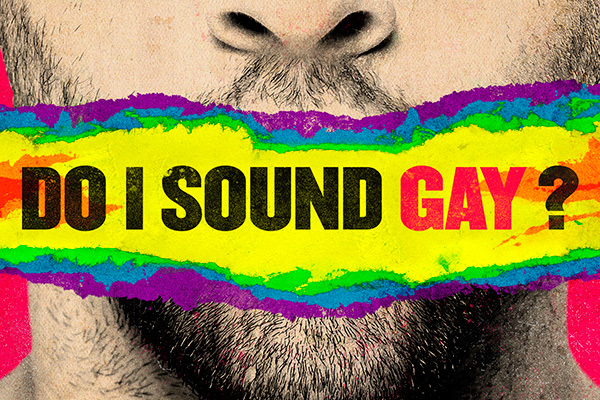
David Thorpe’s documentary Do I Sound Gay? follows his journey through speech therapy as he attempts to adjust his voice.
He looks at what it means to sound “effeminately gay” in interviews with linguists, friends and gay people—and where these stereotypes have come from. An important takeaway is that stereotypes of gay people can be internalised, leading to “a generic self-loathing around being gay”. The documentary explains that stigmatised groups try to keep that stigma at bay by hiding certain attributes.
“Effeminate gay” sounding voices come from picking up certain features that women use when talking. This is tied into myths that women should sound feminine. But Thorpe speaks to both “effeminate” sounding straight men, and “masculine” sounding gay men. Effeminate and sarcastic gay voices are also used to mock and stereotype gay men.
While it was taboo for many young gay men to resemble them out of fear, the projection of what being gay looked like affected how people acted.
Interviews discuss how some gay men are afraid to have effeminate voices as it can “repel” other gay men. Misogyny means some gay men don’t want to be perceived as feminine. One friend tells Thorpe that masculinity can also be a “conscious performance in gay male culture”.
Thorpe ends with the conclusion that how someone sounds is part of their identity and can be affected by their surroundings.
For some, sounding a certain way is important to signal who they are. Others try to hide it.
But shame and fear about sounding “gay” comes from societal pressures to fit gender stereotypes that should be rejected.
Now available on the Icon Film channel on Amazon Prime
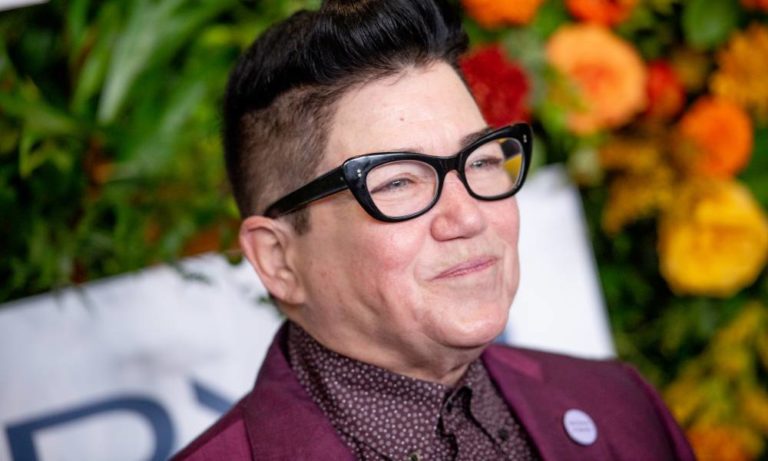
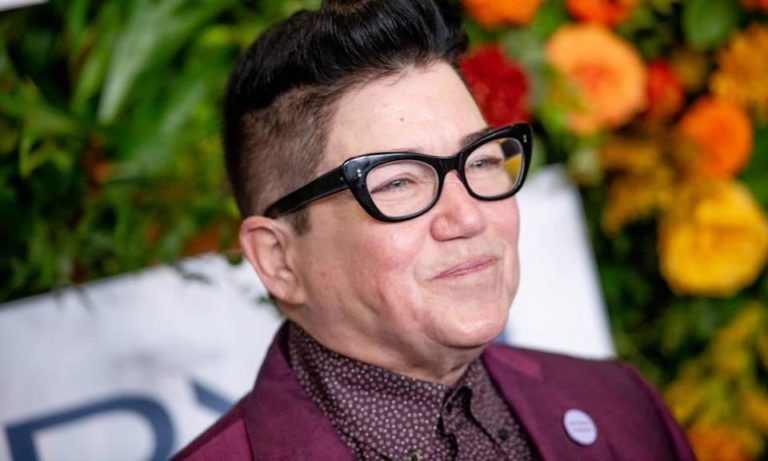
Lea DeLaria attends the 20th Anniversary Hudson River Park gala at Hudson River Park’s Pier 62 on 11 October 2018 in New York City. (Photo by Roy Rochlin/Getty Images)
Orange Is The New Black star Lea DeLaria has revealed that she was hospitalised after being “majorly gay-bashed” in the 1980s.
DeLaria, who played Carrie “Big Boo” Black on the Netflix series, said she was 24 when a homophobic attack left her with a broken nose, chipped eye socket and several cracked ribs.
The lesbian comedian, 63, told Page Six the horrific attack happened after she moved to San Francisco in 1982 and performed a comedy routine that showcased her sexuality.
“I’ve been verbally abused more times than you can mention in my life, and that still goes on,” DeLaria added. “There’s always someone who’s going to call me a fat guy.”
Lea DeLaria said society has been “incredibly rough” on butch lesbians, but that she has experienced less homophobic harassment and violence since she appeared in Orange Is the New Black.
DeLaria also acknowledged that “it’s always been rough on trans women” especially “for trans women of colour” as well as butch lesbians.
“We get attacked more than any other women in our community,” she said.
DeLaria added: “What Orange has done for me, as a butch lesbian, is, it’s opened up people’s hearts and minds to women who look like me. Because Orange was the first positive representation of a butch lesbian that I’ve ever seen in mainstream media.”
Lea DeLaria told Page Six that she has been focused on her work with The Lesbian Bar Project, which aims to help the last surviving lesbian-specific bars survive COVID-19. According to the project’s website, only 21 lesbian bars are left in the entire US.
DeLaria shared that she feels like she is “walking to my sense of community”, “safety” and “camaraderie” when she walks “into a dyke bar”. She named the Cubbyhole in New York City as her “home” and is the “place I go to nonstop” since “everybody there knows me”.
“I’ve always had a presence in the lesbian bars, and I was always the famous lesbian that would go to the lesbian bars,” DeLaria said. “Most famous lesbians do not.”
Orange Is The New Black star Lea DeLaria has revealed that she was hospitalised after being “majorly gay-bashed” in the 1980s.
DeLaria, who played Carrie “Big Boo” Black on the Netflix series, said she was 24 when a homophobic attack left her with a broken nose, chipped eye socket and several cracked ribs.
The lesbian comedian, 63, told Page Six the horrific attack happened after she moved to San Francisco in 1982 and performed a comedy routine that showcased her sexuality.
“I’ve been verbally abused more times than you can mention in my life, and that still goes on,” DeLaria added. “There’s always someone who’s going to call me a fat guy.”
Lea DeLaria said society has been “incredibly rough” on butch lesbians, but that she has experienced less homophobic harassment and violence since she appeared in Orange Is the New Black.
DeLaria also acknowledged that “it’s always been rough on trans women” especially “for trans women of colour” as well as butch lesbians.
“We get attacked more than any other women in our community,” she said.
DeLaria added: “What Orange has done for me, as a butch lesbian, is, it’s opened up people’s hearts and minds to women who look like me. Because Orange was the first positive representation of a butch lesbian that I’ve ever seen in mainstream media.”
Lea DeLaria told Page Six that she has been focused on her work with The Lesbian Bar Project, which aims to help the last surviving lesbian-specific bars survive COVID-19. According to the project’s website, only 21 lesbian bars are left in the entire US.
DeLaria shared that she feels like she is “walking to my sense of community”, “safety” and “camaraderie” when she walks “into a dyke bar”. She named the Cubbyhole in New York City as her “home” and is the “place I go to nonstop” since “everybody there knows me”.
“I’ve always had a presence in the lesbian bars, and I was always the famous lesbian that would go to the lesbian bars,” DeLaria said. “Most famous lesbians do not.”
The London Cabaret Club has reopened its doors at the glorious ballroom in Victoria House, Bloomsbury Square.
Billing itself as a Bond-inspired dining and entertainment experience, London Never Dies is an immersive cabaret night set to music from the iconic film franchise. All the best songs are there, from Adele to Jack White to Tina Turner. The action takes place in the beautiful Art Deco ballroom in Victoria House, and attendees have various food and drink options for the evening. For this review we were given “gold” tickets which cost £90 per person and include a three course meal and premium seats. For a meal and a show in Central London on a weekend it doesn’t seem unreasonable.
The evening begins with some pre-show entertainment in the bar, which is nice enough but really functions as background music as we wait for the main event. After an hour or so we’re ushered through into the main ballroom for the cabaret show. The ballroom itself is a gorgeous setting and it’s a treat to have a night out in a venue like this. The food that accompanies the evening is excellent – it’s a set menu but there are alternative options available for those with dietary requirements. Food and drink service was quite slow during the evening, but we assume this is because the venue has only just reopened and that this will be fixed for future performances.
The show itself is a slick, stylish and polished affair. Attractive men in nicely-fitted suits dance with scantily-clad women while a variety of singers serenade us over the course of the night. The quality of the singing and choreography is solid throughout, although we thought a number of the routines felt a little tame. We’ve seen a lot of cabaret shows over the years that really push boundaries, and much of this set seemed quite unadventurous in comparison. Later on in the show we were introduced to a Cyr wheel and an aerialist and these routines were more impressive. It’s a Bond-themed night – we were expecting the performance to be a bit more dangerous, but only a handful of moments conveyed a sense of peril.
The Los Angeles Blade reports that Jalen McKee-Rodriguez, a high school math teacher and graduate student who has lived in San Antonio since 2013, beat his former boss and incumbent in the runoff race for the San Antonio City Council, and with his victory, McKee-Rodriguez became the first out gay Black man ever elected in the state of Texas.
Attending the June 1 Mayoral Pride Month Proclamation and MCTS Rides with Pride Bus Launch Ceremony—along with the opening of artist Jason Scroggin’s “Massimals MKE: Rainbow” sculpture installation on Cathedral Square—I was particularly struck with a sense of Pride not only in the context of Pride Month and the cause it commemorates, but also of Pride in both the city itself and Milwaukee County.
Milwaukee Pride, Inc President Wes Shaver opened the ceremony with remarks reflecting on the cultural visibility, recognition and celebration of Pride represented by this historic launch. More importantly, he also cited the “immense care and concern for the LGBTQ community of Milwaukee” embodied by this collaboration with supportive local government. Perhaps the most poignant part of the MCTS Pride Bus launch ceremony were the eloquent speeches that followed. Mayor John Barrett, County Executive David Crowley, Common Council President Cavalier Johnson, Milwaukee County Supervisor Chairwoman Marcelia Nicholson, Alderman Bob Baumann, and PNC Regional President Chris Hermann all spoke for diversity and inclusion.
Some made mention of Milwaukee’s perfect score of 100 on the Human Rights Campaign’s Municipal Equality Index accomplished in part due to the city’s non-discrimination ordinance and the mission of its Equal Rights Commission that serve to promote the advance inclusion and equality.
Alderman Bauman mentioned Milwaukee’s leadership in the campaign to ban conversion therapy for minors, a practice known to cause pathological harm to the children subjected to it. Milwaukee was the first Wisconsin city to ban it. Numerous other municipalities and counties have since followed suit. Baumann also condemned Republican controlled state legislature for stoking division by doubling down in its obstinate defense of it.
Significant Advances
Beyond these advances in official policy, we’ve seen significant advances in LGBTQ in other public realms as well.
The arts have moved from the confines of the former Milwaukee Gay Arts Center (MGAC) to our internationally renowned Milwaukee Art Museum and even the Pfister Hotel. Mainstream theater seasons now include LGBTQ relevant plays that edify the broader population on issues once discreetly relegated to the confines of MGAC, Theatre X, the Boulevard and Off the Wall Theaters.
Advances in local corporate and business recognition of the value of LGBTQ employees and consumers began with a few affinity groups and donations to community causes. Today the Wisconsin LGBT Chamber of Commerce boasts nearly 700 members, with a great percentage of them non-LGBT owned and operated. They include the Milwaukee Admirals, Bucks and Brewers professional sports franchises, and, of course, the Green Bay Packers. And, just a reminder, the Brewers’ Pride Night takes place June 14. And talk about inclusion, it features transwoman Dora Diamond singing the National Anthem and our own drag diva, Dear Ruthie, throwing out the first pitch. Of course, there’s also a fanny pack give-away.
Our relationship with Milwaukee Police Department has evolved as well. Once targeted and harassed by the city’s boys in blue during Chief Brier’s 20 year reign of terror, thanks to cooler heads prevailing, various LGBTQ community entities have collaborated with MPD to help pave the way for today’s relatively copasetic relationship. Just last weekend MPD escorted a contingent of hundreds of riders during the “Ride with Pride” motorcycle run. Less well publicized have been positive MPD policy changes in deference to transgender community needs. We’ve also seen MPD police academy candidates marching in formation in the Pride Parade.
While the days of Stonewall activism, of ACT UP demonstrations at city hall, the earliest Pride events and the opposition by some in high places to PrideFest moving to Henry Maier Festival Park, may seem like yesterday to the veterans of those times, they are barely familiar to today’s young LGBTQs. However, continuing the struggle in their way, today’s activists have embarked on their own campaign for social justice and equality. One major and significant difference is that now Milwaukee County and municipal governments are largely behind them.
Meanwhile, when you see that rainbow bedecked MCTS Pride Bus (and the HOP, too, by the way), take Pride not only in what we have achieved since the Stonewall Rising but also in both the City and County of Milwaukee for their affirmation and celebration of our and their LGBTQ community.
Welcome to the Q&A with TV critic — also known to some TV fans as their “TV therapist” — Matt Roush, who’ll try to address whatever you love, loathe, are confused or frustrated or thrilled by in today’s vast TV landscape. (We know background music is too loud, but there’s always closed-captioning.)
One caution: This is a spoiler-free zone, so we won’t be addressing upcoming storylines here unless it’s already common knowledge. Please send your questions and comments to [email protected] (or use the form at the end of the column) and follow me on Twitter (@TVGMMattRoush). Look for Ask Matt columns on many Tuesdays and Fridays.
Balancing Pain and Joy in Pose’s Final Season
Question: As someone who once asked you why high-profile dramas considered misery to be an arbiter of truth, I’m somewhat surprised to find myself asking this question: Is there a sense in whichPose is going out on too high a note? As you pointed out, “there are times when it’s happy to just be an escapist wish-fulfillment fairy tale,” but that’s always been the aspect I’ve found least satisfying. What made this series unique was its warts-and-hugs-and-sequins-and-all depiction of trans and gay life in the ’80s, so in a way, isn’t it a betrayal of both the characters and their real-life equivalents to grant them the sort of oppressively smiley-faced endings we got in Downton Abbey‘s final season? — Ryan
Matt Roush: This is a provocative question — which, I should point out, was posed (so to speak) before the series finale aired on Sunday — and it made me reflect on Pose’s first-season finale when I was primed for something awful to happen to Blanca or one of her “children” after her triumphant win as Mother of the Year. I’ve watched so many season finales that add a final cliffhanger-style jolt that I was even more surprised, and thrilled, when Pose just let them exult in the moment. Pose has done a masterful job of balancing pain and tragedy — including the murder of one of their group — with joy and triumph within their tight circle of outcasts and underdogs. The show never ignored the prejudice they face — including Elektra being abandoned by her sugar daddy for daring to go forward with her sex-reassignment surgery. If the fairy-tale-like wedding of Angel and Papi in the show’s next-to-last episode was over the top, that was Pose’s style, and it’s not like they didn’t go through hell to get there. The series finale had moments of great tragedy (spoiler alert: a major character succumbed to AIDS) and righteous rage (ACT UP protests to get equitable distribution of meds, how timely), but also exuberant flourishes of community and hope for the future. If Pose erred on the side of happiness over gloom, I’m OK with that.
Who Was That Crabby Lady?
Question: I loved all three seasons of The Kominsky Methodon Netflix. But who played Paul Reiser’s mom in Season 3 and what else has she been in? — Mary Ann from Chicago
Matt Roush: I love this question, because I did a double-take as well while watching the episodes that introduced this battle-ax character. It was the brittle voice that convinced me I was watching the otherwise unrecognizable Christine Ebersole, Tony-winning Broadway and cabaret star who appears as Bob’s mom Dottie in Bob Hearts Abishola. Kudos to Chuck Lorre for his loyalty to his stable of character actors. Not only did he insert this wonderful actress into his most personal show, but in the series finale of Mom, he introduced a dysfunctional mother-daughter duo played by veterans from two of his past hits: Melanie Lynskey (fromTwo and a Half Men) and Rondi Reed (fromMike & Molly).
It Had Better Be Worth the Wait
Question: Why do we have to wait another year for Season 2 of Blood & Treasure? It’s been two years since Season 1 aired! Why can’t CBS air Season 2 this summer since it already finished filming last year before the pandemic hit? Why does CBS care so very little about this show to delay it so much longer? — Chris B
Matt Roush: Maybe they’re saving it for something better. With very few exceptions, the broadcast networks are steering clear of original scripted programming this summer, no doubt figuring that even escapist fare like Blood & Treasure will do better for them as a midseason replacement than being thrown away during a period when viewership levels for expensive scripted shows are so low. (And the Olympics will be a further disruption in late July and early August.) But it’s true this has been a longer-than-usual pause between seasons.
Sherlock, Where Are You?
Question: I recently moved to streaming and added a subscription for Paramount+. One of the plusses was that now I’d be able to watch reruns of Elementary, which had disappeared from cable, so you can imagine my disappointment when Elementary was nowhere to be found on Paramount+. What gives? — Jangle
Matt Roush: Curiously, all seven seasons of Elementary are currently available on Hulu. Licensing deals can be confusing, but ViacomCBS is probably making more from Elementary by leasing the episodes to a streaming rival than by harboring it on their own platform. It’s possible that when Hulu’s Elementary contract lapses, the show could move to Paramount+. What this really demonstrates, though, is there’s no one-stop-shopping for everything you want to stream, even if common sense would seem to indicate that shows associated with NBC are on Peacock, CBS shows on Paramount+, ABC on Hulu, and so forth.
Is Closure for Canceled Series a Pipe Dream?
Question: I get so tired of devoting viewing time to a series only to have it canceled with loose ends hanging. For example, I loved Timeless and was happy that it was revived for a second season, only to be denied a third season. However, NBC took the viewers into consideration and wrapped up the loose ends with a TV movie. Now I find myself in the same boat with Debris. I loved the show and thought it would be the next The X-Files, only to find out it too has been canceled. I still have episodes on my DVR and wonder if I should even bother watching them, knowing the series won’t be coming back.
Why don’t the networks plan their decisions with enough advance notice so series can wrap up before its final episode airs? Cancelling a program and leaving the viewer hanging makes me think twice about getting wrapped up in a program. You just never know its future until it is too late. Now I’m wondering about the fate of Manifest. Will that show survive the ax or will it get cut with no resolution to its plotlines? Why can’t the networks give us fans a series finale that ties everything up with a nice bow, even if it means a TV movie like they did with Timeless. Or is that too much to ask? — Rob Bob
Matt Roush: In most cases, it really is too much to ask to have a show with no future return to production for any reason after it’s canceled. We’re talking lots of money with little return. It’s one of the uglier truths about the business of show business. My wish is that the producers of shows that aren’t guaranteed another season would film alternate endings to their season finales or have some backup plan so the cliffhanger conundrum isn’t quite so maddening to viewers. With Debris, it might not have helped because NBC was continuing to weigh its decision when the finale aired, and the unfortunate cancellation came a few days later. That really disappointed me as well. (Although I also usually advise fans of a show to keep watching to the end. Yes, it’s frustrating not to get to see more, but the individual episodes of Debris were well worth watching, especially the two-parter in which the fabric of everyone’s reality was being threatened by all of the time jumps. Excellent sci-fi.)
With Manifest (which I only wish I found as intriguing as Debris), I’m expecting NBC to eventually give the show a fourth season, but would advise the creative team to maybe rethink their six-year plan if it’s going to be such a close call from season to season. After this long ride, it would only be fair for the network and producers to get on the same page to provide at least a bit of resolution for this convoluted thriller.
And Finally …
Question: I’m wondering what happened to Collector’s Callon MeTV? We really enjoyed it and find it to be one of the better ones in this genre. Lisa Whelchel is such a great host as well. Hoping it is coming back sooner rather than later. — Kimmy
Matt Roush: Like many shows during the time of Covid, filming was paused until it’s safe for TV crews to go back into people’s homes to peruse their collectibles. The plan is to resume production once restrictions lift, which could be sooner than later if current trends continue. But no timetable for the show’s return yet.
That’s all for now. We can’t do this without your participation, so please keep sending questions and comments about TV to [email protected] or shoot me a line on Twitter (@TVGMMattRoush), and you can also submit questions via the handy form below. (Please include a first name with your question.)
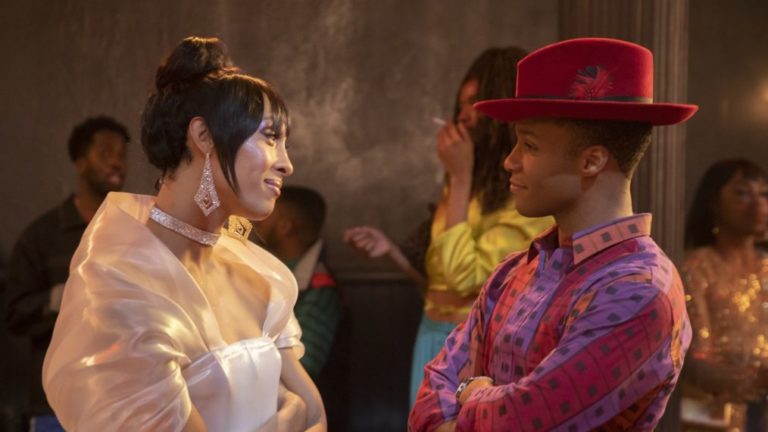
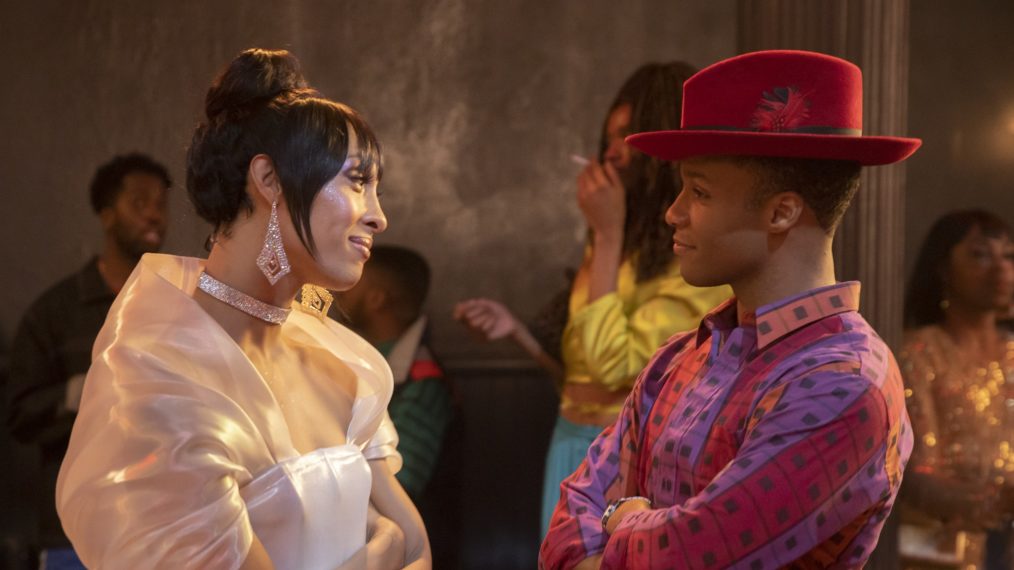
Though the fight for true equality and accurate representation remains ongoing, visibility of LGBTQ+ people in entertainment feels like it’s at an all-time high this year, and that’s worth recognizing and celebrating. In the days leading up to Pride Month, May ended with SNL’s season finale bestowing the stage to Lil Nas X, a proud openly gay Black man, and FX’s Pose featured the wedding of a transgender bride to a cisgender groom in a ceremony full of queer people of color. This kind of visibility was unimaginable when I was growing up in a small town in middle America during the late ’90s and early 2000s, an era when LGBTQ+ representation in entertainment felt non-existent or forced, merely as slivers of stereotypes.
Nearly 4 million people tuned in to watch those joyful televised moments. Keyword: joyful. Not traumatic. For far too long, our community’s trauma was often the only aspect of our lives depicted on film and TV. And while pain and struggle have undoubtedly been a part of many of our life experiences, we have also lived lives sprinkled with moments of growth and happiness. Sometimes, that growth comes from learning from the talented people who are paving the way for the next generation of people in the LGBTQ+ community. Among those talents are celebrities who are leveraging their voices and leading by example with their actions to increase visibility and encourage progress — all while keeping us entertained during a time in history when we’ve needed escapism the most.
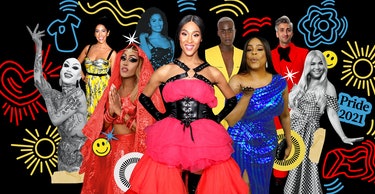
For Pride Month, join us in celebrating LGBTQ+ leaders, starting with our June 8 launch day stars Mj Rodriguez, Tan France, Niecy Nash, Priyanka, and Beanie Feldstein, as they tell us what advice they would give to their 16-year-old selves and where they see themselves 16 years from now in 2037. Head over to Bustle’s 2021 Pride Yearbook to see their advice and read about their goals — and come back every Tuesday in June as we’ll be adding more interviews with your favorite LGBTQ+ entertainers each week.
Margaret Flatley/Bustle
What we’re watching, what we’re hearing, and what we’re experiencing in entertainment is gayer and more representative than ever. And while Bustle is shining the spotlight on these entertainers’ careers and personal lives (marriages and babies!) all June, know that Bustle is committed to highlighting them and other LGBTQ+ stars all year long. They’re not going anywhere. See them. Hear them. Respect them. Love them. Happy Pride!
What advice would you give to your 16-year-old self?
Pose star Mj Rodriguez: “I was a little crazy and off the wall. The first thing I’d say is, “Girl, calm down. You won’t have to do that much.” But also, live and love harder. Make sure you never stop being true to Michaela Jaé. Never stop yourself for anybody.” Read Mj’s full story here.
Queer Eye star Tan France: “If I could go back in time, I would tell myself to continue to be as effeminate as I want to be, and naturally am, without having to hide my feminine traits to appease the greater world, because that’s bull. I would tell myself to just have more fun and stop focusing on what I’ll be like in my 30s … I was so stifled by all my grand plans for my life that I don’t think I ever took enough time to just smell the roses.” Read Tan’s full story here.
Canada’s Drag Race winner Priyanka: “The advice I would give my 16-year-old self is just be gay. It would have been nice to go through high school as an open, out-of-the-closet gay man, because I know my story is part of the reason why my fans are so excited about me because they relate — they understand being in the closet. There was this suppression that was happening in high school that I wished wasn’t happening, but I didn’t know that at the time. I thought everything was normal.” Read Priyanka’s full story here.
Claws star Niecy Nash: “My 16-year-old self was kind of popping. I think my 16-year-old self would need to give myself now some advice. I guess if I had to give my 16-year-old self any advice, it would be always take the time to feel what you feel, especially the dark things. Give yourself permission to feel it, but don’t stay there.” Read Niecy’s full story here.
American Crime Story: Impeachment star Beanie Feldstein: “I would tell my 16-year-old self to value and honor her intellect. I went through a phase in the middle of high school where I did not think I was smart because I didn’t always get perfect grades. I lost my way a bit and started to underestimate my own brain. So, if I went back to 2009, I would tell myself: You are a smart and capable gal!” Read Beanie’s full story here.
2021 Pride Yearbook
To find out where these stars see themselves 16 years from now in 2037, head over to Bustle’s 2021 Pride Yearbook for their revealing answers and their candid Q&As.
Tan France is waiting. The 38-year-old British fashion expert — known for his style prowess on Netflix’s Queer Eye, Next In Fashion, and Dressing Funny — is biding his time in Texas before welcoming his first child, via surrogacy, this summer with longtime husband Rob France. “We’re just waiting for the baby to come,” France tells Bustle from Austin, where he’s spending June filming Season 6 of Queer Eye. “Thankfully, things are great, and the baby boy is doing really well.”
Once the baby is born and he returns to his homes in Utah and Hollywood, France will be one step closer to his dream of becoming a stay-at-home dad, a goal that was put on hold when Netflix called him five years ago to reboot the Queer Eye franchise, which has since gone on to win eight Emmys since 2018 and opened other career opportunities for him.
I don’t see other gay Muslims on TV or many gay people of color, even now, and I’ve been on TV three and a half years. It’s not changing. It’s not getting better for our community. I just think that this is nowhere near where it needs to be.
While the daddy-to-be has his eyes set on retiring to focus on family, he’s well aware of the global impact he’s had in the LGBTQ+ community as an openly gay Muslim man on TV. “It’s something that I didn’t see at all growing up,” France says. “The fact that I’m still one of the very few is telling. I don’t see other gay Muslims on TV or many gay people of color, even now, and I’ve been on TV three and a half years. It’s not changing. It’s not getting better for our community. I just think that this is nowhere near where it needs to be.”
Before becoming a household name and eventually guest starring in Taylor Swift’s Equality Act-supporting music video for “You Need To Calm Down,” France launched several fashion brands before selling them in his early 30s ahead of his planned early retirement. Though no longer owner or CEO of those brands, France has still been busy partnering with brands such as MasterClass, where he teaches about style, and Etsy, where he has designed a home collection. For his latest partnership, known coffee lover France is the face of Starbucks’ new “Stir It Up” campaign for premium instant coffee — a sign of France’s star power and a testament to major brands’ continued efforts toward diverse representation. “A lot of my priorities are changing,” France admits, hinting at his desire to streamline all aspects of his day, “so it’s nice to be in a position to be able to work with a company that really understands the importance of time.”
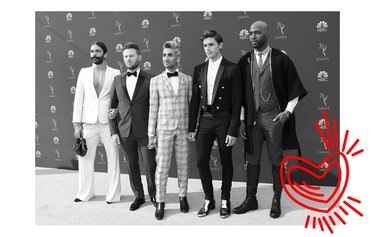
Coffee, protein bars (“the Costco ones to keep it simple”), and pistachios (“the chili pistachio nuts are incredible”) are France’s go-to fuel-up items on any set, including the Queer Eye set in Austin, where he and fellow experts Bobby Berk, Karamo Brown, Antoni Porowski, and Jonathan Van Ness, will spend June making over Texas locals.
“The thing that’s special about this season is that we’re getting to hear what people have been up to the last year and a half and how the COVID-19 pandemic has affected their lives so greatly,” France teases. “We have the likes of frontline workers or people who have been truly affected by the pandemic. This season’s a really special one.”
Tan France Q&A
What advice would you give to your 16-year-old self?
If I could go back in time, I would tell myself to continue to be as effeminate as I want to be, and naturally am, without having to hide my feminine traits to appease the greater world, because that’s bull. I would tell myself to just have more fun and stop focusing on what I’ll be like in my 30s and just actually live in the moment. I was so stifled by all my grand plans for my life that I don’t think I ever took enough time to just smell the roses.
Where do you see yourself 16 years from now?
Ah, I see myself completely retired. I was meant to retire before Queer Eye and then I got this job and my retirement was over. So, I will be, hopefully, completely retired, a stay-at-home dad, hopefully vacationing regularly with my husband and children. It really is the dream. I wanted it so badly, and I got there. By 33, I had retired and we were going to start the surrogacy process and then literally less than five days later, just under five days later, I got a call saying, “Will you be on a show called Queer Eye?” If it wasn’t for me selling my companies, I wouldn’t have been available to do the show. So, it definitely was meant to be.
What special skill or secret talent do you have?
I bake rather well. It’s no secret, as I won The Great British Celebrity Bake Off, but it’s a skill I’ve worked on since I was 13.
What’s your favorite thing you purchased recently?
Oh, easy. Gucci Boots. I got them about two months ago and have worn them at least 30 to 40 times since. I’m in love!
What’s your favorite overused movie quote?
“It’s, like, a totally important designer” from Clueless.
What are your proudest moments as a member of the LGBTQ+ community?
Being visible and sharing my story authentically. I get to be on Queer Eye. I’ve been in one of the most privileged positions where I get to be one of the very few representatives of the brown gay immigrant Muslim people on TV. I think that’s nuts. I never thought that would happen in my lifetime where there’d be somebody like me on a global platform. I’m so grateful for it.
Valerie Macon/AFP/Getty Images
Where and how are you celebrating Pride in 2021?
It’s difficult now that we’re shooting. I mean, I’m very grateful to be shooting. I’m grateful to be with my castmates. But when we shoot, we are so engrossed in the show. So, we don’t really get to celebrate or do anything outside of work. … I guess that is the best way to celebrate — putting out another season of Queer Eye that we feel so proud of that represents our community.
If you had to be on a reality TV show (other than Queer Eye), what would it be?
Keeping Up with the Kardashians. It’s truly the only reality show I watch and have watched pretty much since the first season. I would want a scene with Khloe!
What was your favorite cartoon as a kid?
Care Bears. I loved them. I just loved that they were trying to bring joy to people and help each other. I thought it was so cute.
What’s a TV show you’re obsessed with?
I was and have been obsessed with The Golden Girls for so many years now. I legit watch it every single day, to this day.
Who is your celebrity idol?
Chloe x Halle. I’ve been obsessed over the last couple of years. I love how incredibly talented they are and how active they have been within the activism space.
I love your hair. What products do you use?
Thank you. It’s very easy. I use a mousse when my hair’s wet — it’s just TRESemmé extra hold. Just a little bit of that and then I blow dry my hair. Then all I use is argan oil, a pea-size bit of oil, and a pomade called Firsthand Supply. That’s it. That’s all I use.
Who inspires you in the LGBTQ+ community?
So many people inspire me within our community and have done so for a long time. The likes of Elton John, I mean, the fact that he could just be himself unabashedly, but has philanthropic endeavors, like the Elton John AIDS Foundation, I think is incredible. The work that they’ve been doing for many, many years is so impressive. RuPaul was around since before I was born. Just seeing somebody who is so powerful and Black and living life the way they see as right and appropriate for them, it’s really inspiring.
Michael Kovac/Getty Images
What LGBTQ+ charity do you love?
I love The Trevor Project. I think the work that they do is incredible. I think the work they do with the youth is great. Any project that focuses on youth in our country — LGBTQ youth — I think is doing great work. I mean, I love GLAAD for the fact that they champion success of everyone within the LGBTQ or queer world in general. They work closely with us on making sure that what we, some of the representatives of culture, put out there for the world is the right messaging.
What’s something that’s inspiring you lately?
I feel inspired by the push for great diversity in all fields. So many people across social media are highlighting the importance of it, and I’m so happy to see it.
Marvel creators have revealed that they intentionally made Aaron Fisher, the openly gay Captain America, face “real problems impacting queer people” – including homelessness.
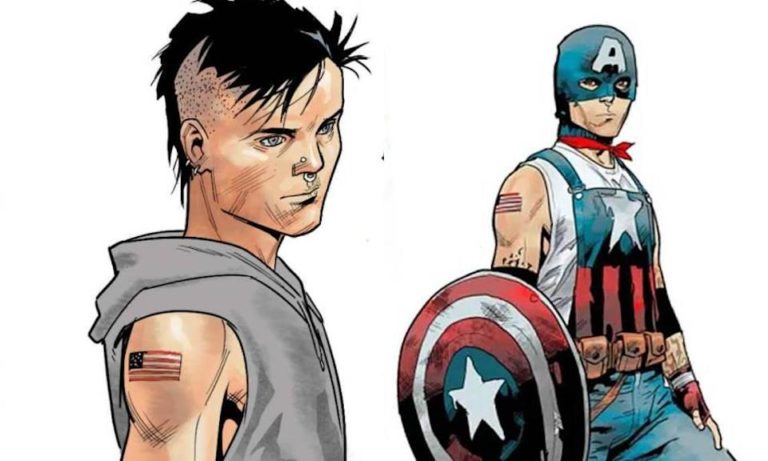
The new patriotic hero, who was dubbed the Captain America of the Railways, was announced in March and joined Marvel‘s ever expanding pantheon of LGBT+ characters. In a new interview with Out, the character’s creators, Josh Trujillo and Jan Bazaldua, revealed that a lot of thought went into the development of Fisher. Trujillo, who is the series writer, explained they wanted Fischer to face “real problems impacting queer people” in real life like experiencing unstable living conditions.
“The housing crisis is something I’m confronted with every day in Los Angeles, and queer youth are among the most vulnerable,” Trujillo said. “Only by drawing more attention to this can we hope to make a difference and help the unhoused in our communities.”
He also shared that Fisher was “inspired by the people in my life” like his siblings who “work for non-profits and in medicine” or “friends who are foster parents or teachers”. Trujillo explained his character if “very much following” the example of these people “who take action every day to help each other”.
Bazaldua, who is the artist on the Fisher issue, told Out that even the teen hero’s appearance was developed with a specific meaning in mind. The trans artist shared that they gave Fisher a “simple appearance” rocking overalls “since he is a street boy who lives in LA” and would have to craft his Captain America costume “with what he had on hand”.
Bazaldua continued: “And we just tried to give him a kind look, someone who did not have resources or large amounts of money but has a huge heart and a great desire to help people like him.”
Fisher will not be replacing the iconic Captain America, Steve Rogers, in The United States of Captain America. Instead, the openly gay hero will join up with Rogers and Sam Wilson to find the hero’s iconic vibranium-metal alloy shield. Rogers will also work with a host of other Captain Americas from the past including Bucky Barnes and John Walker throughout the comic book series.
The United States of Captain America will be published on 30 June 2021, finishing up Pride Month with a bang.
10 LGBTQ+ movie filming locations to visit this summer
Advertiser Disclosure
Many of the credit card offers that appear on the website are from credit card companies from which ThePointsGuy.com receives compensation. This compensation may impact how and where products appear on this site (including, for example, the order in which they appear). This site does not include all credit card companies or all available credit card offers. Please view our advertising policy page for more information.
Editorial Note: Opinions expressed here are the author’s alone, not those of any bank, credit card issuer, airlines or hotel chain, and have not been reviewed, approved or otherwise endorsed by any of these entities.
A Ghanaian court on Tuesday denied bail to 21 gay rights activists arrested nearly three weeks ago for what police described as an unlawful gathering, their lawyer said.
The 16 women and five men were told to reappear in court on June 16 for their next hearing. Some were seen weeping after the ruling in the southeastern city of Ho.
LGBT people face widespread persecution in the West African nation, where gay sex is punishable with up to three years imprisonment. Ghana has not prosecuted anyone for same-sex relations in years, but the LGBT community has reported a crackdown by authorities in recent months.
The activists were arrested on May 20 at a hotel, police said in a statement at the time of their arrest. The statement accused them of having advocated LGBT activities with books and flyers with titles including “Coming out” and “All about Trans”. read more
The organisation LGBT+ Rights Ghana said there was no lawful reason for the arrests, and that the activists had met for a workshop on how to document and report human rights violations. Promoting LGBT rights is not illegal in Ghana.
Julia Selman Ayetey, a lawyer for the defendants, told Reuters that they were denied bail, without giving further details. The activists had already been denied bail at the Ho High Court before taking their application to the Circuit Court.
















/cloudfront-us-east-2.images.arcpublishing.com/reuters/BIFCAKNLQFNG7ECO7ZHIJFGAQE.jpg)