Home Blog Page 108

DC Pride #1 : “Be Gay, Do Crime” – Paying the Piper – Comic Watch

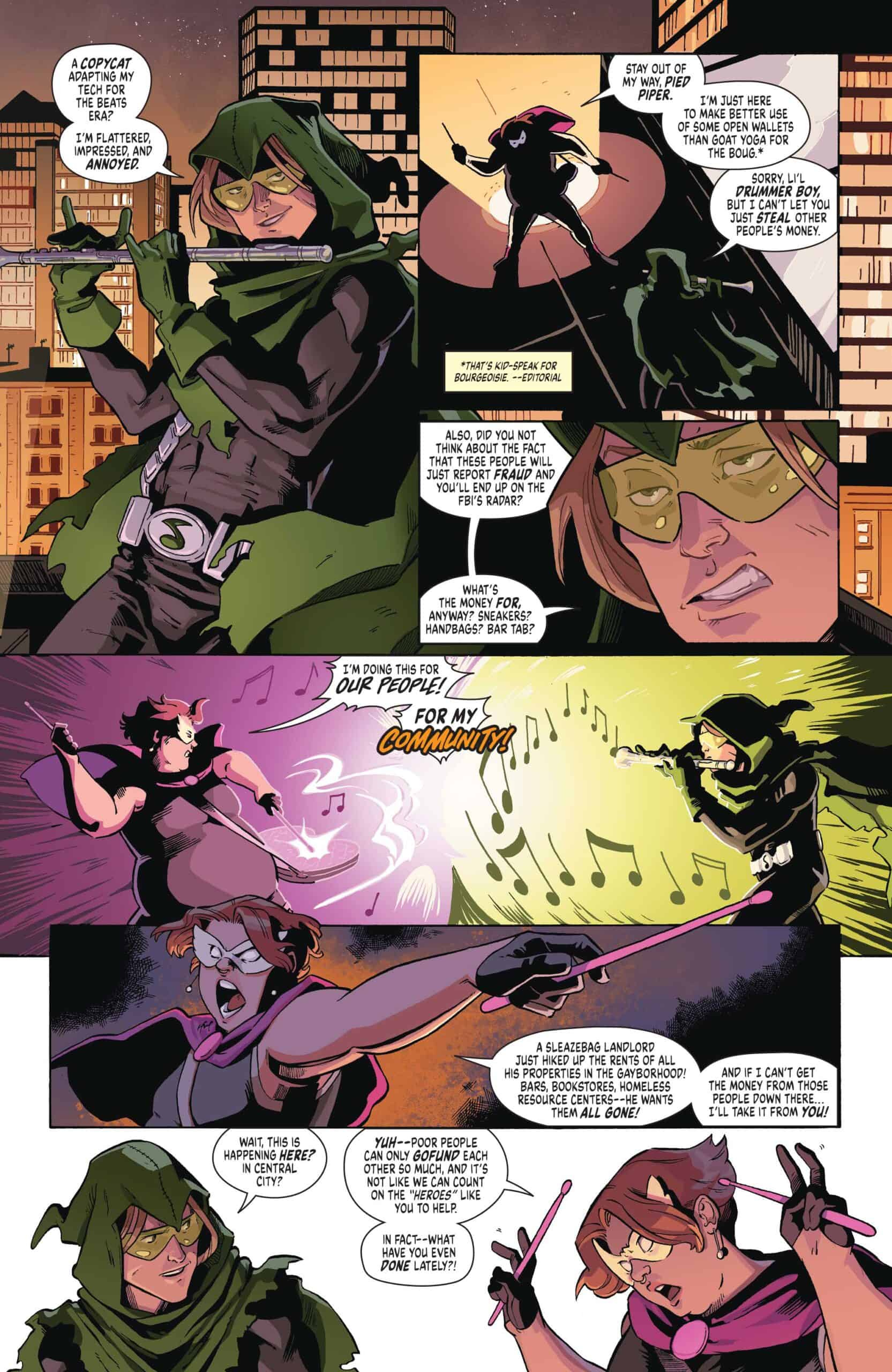
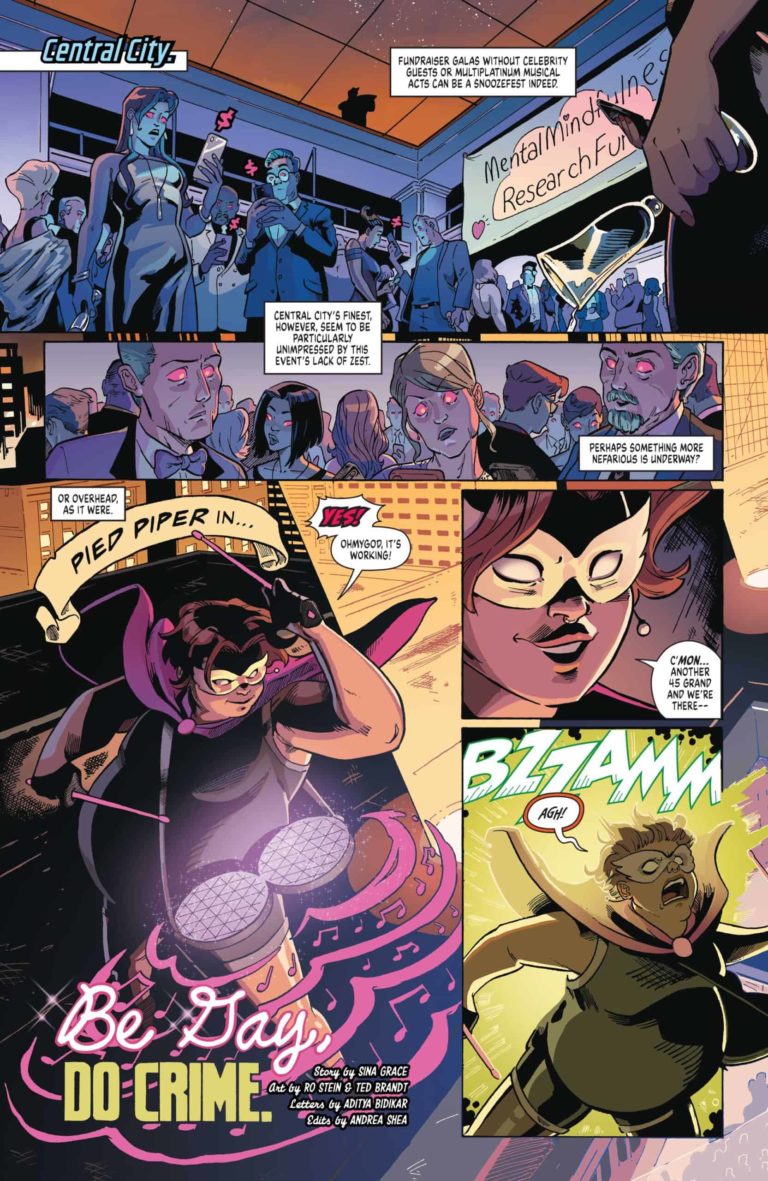
In “Be Gay Do Crime,” audiences are introduced to a new young queer vigilante: Drummer Boy. In search of justice for his local queer community, Drummer Boy is going after a discriminatory landlord using Pied Piper’s mind-controlling technology in combination with a new instrument. Eventually, Pied Piper himself is forced to face how he’s failed their shared community as a hero, and helps Drummer Boy to see there are other — better — ways to get justice. 

The frustrating component of Drummer Boy, however, is that the comic never fully makes sense of his place within the queer community. Ostensibly an LGBTQ+ character, the comic never makes note of his orientation or if he’s trans. Is he gay? Ace? Bi? Pan? While queer characters should have depth beyond their gender or sexual orientation, a story in a Pride-focused issue introducing a new queer character that pays no attention to its character’s gender or sexual orientation feels like a loss. That said, it’s ultimately Piper Piper, an out gay character (whose orientation similarly never comes up) who guides Drummer Boy towards a better outcome. 

That frustration with Drummer Boy aside, Sina Grace’s story in general is incredibly poignant, and Drummer Boy’s motivations feel just even if his way of getting what he wants feels less so. Drummer Boy’s desire to protect his community — a community Pied Piper shares but has ostensibly given up on — is very relevant. While the threat of gentrification might feel boiled down to a single scummy landlord, some of Grace’s lines for Drummer Boy pack a real punch. Having seen both friends and strangers have needed sites like GoFundMe to make rent or get the gender-affirming healthcare they need, “poor people can only GoFund each other so much” hits. Hard.

The story’s art — by Ted Brandt and Ro Stein — is sheerly delightful. The designs of Pied Piper and Drummer Boy contrast one another wonderfully. In addition to complementary colors (Pied Piper in green and Drummer Boy in pinkish-purple), the two characters have satisfyingly contrasting shape language. Drummer Boy, like his instrument, is composed of rounder shapes and carries himself in a way that is ultimately more sturdy and confident than Pied Piper, whose reedy (ha ha) silhouette places emphasis on his more elegant approach to both music-making and problem-solving. These fantastic character designs are complimented by dynamic lighting and expressive faces and body language that make “Be Gay, Do Crime” a joy to read. 

The cover for the DC Pride anthology is a generic group shot, whose figures feel incredibly stiff by comparison. That said, there are several standout variant covers. Neither Pied Piper nor Drummer Boy show up on any of them. 

The Incredible True Adventure of Five Gay Activists in Search of the Black Panther Party – HarpersBAZAAR.com

In the fall of 1970, as the Vietnam War raged, five guys from the New York City Gay Liberation Front took a meandering road trip through the South in a maroon-and-white Volkswagen Bus. Their mission? To inspire gay people to attend the second Black Panther–organized Revolutionary People’s Constitutional Convention in Washington, D.C., where they would join other liberationists from all around the country in writing a new American constitution.

Together, they spent six weeks on the road—Diana Ross and Mick Jagger on the radio, freedom and fear in the air. Joel was the radical; Richard, the lover; Giles, the organizer; Jimmy, the enfant terrible; and Doug, the cipher.

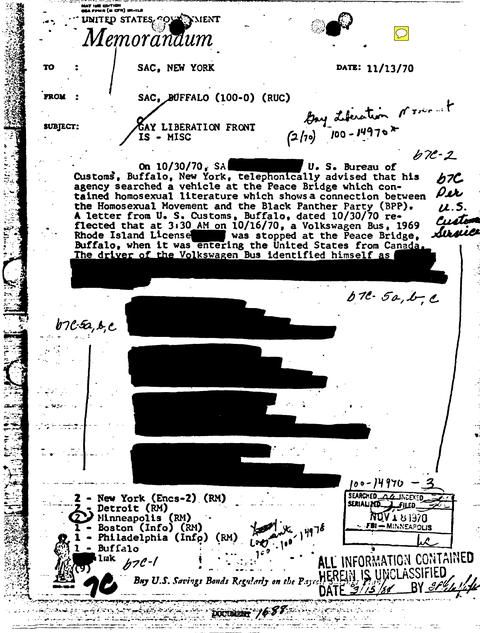
Before they even got underway, the government was watching them, worried about “a connection between the homosexual movement and the Black Panther Party,” a federal document shows.

fbi, one archives at the usc libraries

ONE Archives at the USC Libraries

The FBI was sowing discord among radicals, and it was easy for mistrust to take root. Once, these guys were lovers and comrades; now, some of them can’t even be in a Zoom with one another. But briefly, in the autumn of 1970, they saw a chance for a revolutionary future, and they struck out for it together.

Doug died of AIDS-related lymphoma in ’93, and I was never able to agree to the terms Jimmy set for an on-record interview, but Joel, Richard, and Giles were eager to share their memories.

Fifty years later, their stories are a patchwork quilt of collectives, communes, free love, coming out, getting arrested, consciousness-raising rap sessions, gun shooting, acid dropping, and trying to be macrobiotic at McDonald’s. Their versions vary widely, and reality lives somewhere unlocatable in the blurry overlap.

Once, these guys were lovers and comrades; now, some of them can’t even be in a Zoom together

As a historian, I’m used to making the pieces fit, but it’s always something of a guess. Sometimes, the fragmentation is the story. Sometimes, the pieces are all we have. We’re told hindsight is twenty-twenty, but frankly, that’s bullshit. We’re fallible now, we were fallible then, and we’ll be fallible again tomorrow.

But that shouldn’t stop us from climbing mountains.

This content is imported from Third party. You may be able to find the same content in another format, or you may be able to find more information, at their web site.

Joel: Okay, for my part, this is my story. There were five of us living in a collective together on the Lower East Side of New York, on 7th Street and Avenue C. Richard, Jimmy, myself, Giles—who else? Doug. Doug and I were the only two Black men in that collective. We were full-fledged Gay Liberation and Black Liberation and everything else people.

Giles: Richard was bar none the best-looking man in Gay Liberation. And Joel was the greatest dance partner I ever had. We would get up there in front of everybody and do the dirty bump as if it was propaganda.

Richard: I was living with Doug and Joel in a ménage à trois, and that was really wonderful.

We couldn’t get regular jobs—everybody asked what our draft status was. [Instead], I had this International Rubdown service. We advertised in the Village Voice, $20 a rub. Because it was “International,” we had different names. I was Hans, the German, and Thor, the Swede.

I was also working with this underground printing press, printing stuff for the Black Panthers, the Young Lords, etc. And Jimmy owned a van, like a VW caravan, and he started talking about this trip. I don’t remember anything about bringing people to the Panther convention. But Jimmy recruited us. We were on for the ride and for the adventure.

gay pride parade

Allan TannenbaumGetty Images

Giles: Jimmy had been involved with the Panthers. And I was knowledgeable about the underground press, so I’d call ahead to these newspapers, and say, “We’re coming on a tour organizing for the Black Panthers’ Revolutionary Constitutional Convention. Do you know any gay people?”

We would get up there in front of everybody and do the dirty bump as if it was propaganda.

Joel: We went from Fayetteville, [North Carolina], to New Orleans, to Dallas, to Boulder, Colorado, to Iona, Minnesota. We would contact Gay Liberation in each area, and they’d invite us to speak about what we were doing.

Living a revolutionary life, to me, is always questioning, always questioning myself, and questioning other people about what it is they know. It was a way of living. It was just … who we were. There was no thrill in wanting to have a revolution. Who wants to go through that? Unless you have to.

But I wasn’t scared or anything like that. I never felt scared—well, no, the only time I was scared was in Dallas, when we got arrested.

Life on the Road

mcdonald's restaurant

Hulton ArchiveGetty Images

Richard: Who drove? I think we alternated. Doug and Joel and I, we were sharing clothes and living that way, very much sharing everything, cooking together, figuring out how to be macrobiotic. We’d stop at fast-food places because sometimes, that was the only food that we could afford and the only thing along the highway in the middle of America.

Giles: We might’ve had one pair of jeans, maybe one pair of cutoffs, and a couple of shirts each. Maybe a winter coat. None of us had a lot of clothing. We were proselytizing, so when we’d meet people, we’d sit on the floor in a circle, or in chairs, and spread the word about Gay Liberation.

Joel: The conversations were basically around what it was we were feeling as gay men and how we could move people to come to this convention so that we could organize ourselves.

First Stop: North Carolina

Giles: Greenville, North Carolina, was one of the first places we stopped, because it was a center of leftist organizing in the textile mills. And there was a lot of Klan activity too. We’d made a kind of ideological decision: We have to come out to our parents. Doug’s family were country people, outside Greenville, and he told his mother that he was gay, and she was obviously stricken.

Richard: What happened with Doug and his family, as well as with me and my family later, was about beautiful Southern and Midwestern hospitality. Doug and I had a dog, and we left the dog with Doug’s family, then continued down to Georgia.

Georgia

[No one remembers Georgia.]

New Orleans

new orleans mardi gras

Tim BoxerGetty Images

Joel: We stayed at different people’s places. I mean, we didn’t spend very much money, because we didn’t have very much money! They were mostly young, white, gay men that were involved in Gay Liberation. Occasionally, we would see Black men. But there was a clear separation of Black and white communities, which is still a problem.

Giles: We made contact with this gay man who had a shelter in the French Quarter for gay adolescents who had been thrown out by their families. It was a little bit sketchy, and maybe exploitative. I remember being charmed by it, but also [thinking] that this place was certainly not glamorous at all. We did all the classic things, having beignets and coffee. Then, from New Orleans, we drove possibly to … Dallas?

Texas

downtown fort worth

BettmannGetty Images

Joel: As soon as we entered Dallas, honey, they pulled us over. Well, I won’t get into the details of why. I’ll let other people talk about that. But it had nothing to do with anything other than that we were two Black men in that car with those white boys. We had sworn before we left New York that there were no drugs in the car ever. That was a rule that we all decided that we were going to follow.

Richard: Just around the freeway into Dallas, some big construction truck tried to force us off the highway. Then we were busted, because we were Black and white people together, looking like hippies, in a VW van. Pot was the only thing we had, and fortunately, I stashed it under the seat and the cops didn’t find it.

Living a revolutionary life is always questioning myself and questioning other people

Giles: We didn’t have any weed on the trip. We weren’t smoking weed. The two rookie cops immediately searched Jimmy and found four tabs of acid in his jacket.

Richard: We were all held in a jail compound with lots of other people and had to hang through it for three nights. There must have been like maybe 20 other people in the cell. You were asking about a lesson from all this? Lesson number one was I do not want to go to jail.

Joel: I thought I was in jail for life because first of all, it was in the South. I don’t like going to the South, because I had done that as a child with my parents and it was horrible. Horrible experience to have to deal with. For a young Black child to have to witness his parents go through the shit that they had to go through just to get to Mississippi. … I never thought we’d get out of that jail.

Giles: Jimmy was prancing around in the holding cell in leather pants with snakeskin boots on, flipping his long blond curls. And Joel, who had been in jail, and I, who had been in jail, said, “Jim, come over here, sit the fuck down, and stop attracting potentially violent attention!”

Richard: Jimmy’s lawyer got us out in three days.

Joel: We were out before we knew it. I was surprised. I think the Gay Liberation Front got us out.

we are everywhere

Archive PhotosGetty Images

Giles: Because the two rookie cops did not get a warrant to search us, that’s how we got off. I called my parents in Shreveport, [Louisiana], after. They were terrified that I’d become a mad bomber. So I started the call by announcing that I was gay, and on a tour to recruit gay people for Gay Lib. My father burst into hysterical laughter—because what he had suspected was finally confirmed—but most of all, they were simply deeply relieved that I wasn’t a bomber.

My 21-year-old lesbian sister was listening to the call. She was there with her first girlfriend, whom she had met through my mother. It was her first direct knowledge that I was gay, and that there was such a thing as Gay Liberation.

They proceeded to have a wildly joyous and drunken party in celebration.

Joel: I was furious with Jimmy. Everybody was upset, but we didn’t clobber him over the head with it. We just went on with our mission.

Red Rocks Commune, Huerfano Valley, Colorado

red rock, gay liberation

Larry Laszlo

Giles: My friends had gotten this crazy idea of having a commune in the foothills of the Sangre de Cristo Mountains, near Pueblo. They built these geodesic domes. It was very much in the rocky, semiarid foothills of the mountains, way the fuck out in the middle of nowhere. There was snow on the ground, and they were stoned utopians living the hippie dream.

I had harbored this Weatherman, who was involved with the Days of Rage out in Chicago. I fell very deeply in love with him, and he was there at the commune. The FBI was looking for them like mad. They put us up for a day or two.

gay liberation

Giles, 1970

Carl Miller

Iona, Minnesota

gay liberation

Richard’s journal

Richard Koob

Joel: Then we stopped at Richard’s parents’ house. I met his mother and father. They were so sweet and so kind.

Richard: My parents were very welcoming of us, I felt the same there as at Doug’s in North Carolina.

What happened with his family was about beautiful Southern and Midwestern hospitality.

Joel: Richard’s father took us out and taught us how to shoot a shotgun. I had never shot a gun before in my life, never even handled one. It was very surreal and kind of exciting. I knew at that point that that would not be anything that I would pick up again unless I had to.

But there’s a feeling in the air all the time for Black men who are gay—the possibility of us being offed just because we’re walking down the street.

gay liberation front

New York Public Library

Richard: Some of us had been in meetings in NYC about organizing a gay revolution party, thinking a Panther-like strategy of becoming armed might be essential. So we grabbed a couple rifles, took them out to a pasture near town, and shot cans and fence posts.

And I realized, this is not going to happen. These guys are never going to become militant revolutionaries. And I’m not going to either.

Giles: We all dropped acid—where that came from after we had been busted in Dallas, I don’t know—and went out to practice target shooting with bottles on a fence, while we were tripping! Nuts.

Still high, we came in to dinner. Richard’s parents had cooked some classic luscious steaks for supper. All of us sat there virtually mute and stoned out of our minds. I remember looking at my steak and being unable to eat it, as it pulsated with rainbow-tinged vibrations off the flowing rare juices.

Louisville, Kentucky

gay rights march 1970s

Education ImagesGetty Images

Giles: The last leg that I recall was Louisville, Kentucky. I contacted two friends of mine, Cecil and John, who were my first gay friends as an adult. In the previous four years, Cecil had grown, and he was the most godlike man I have ever seen in my life. He wanted to come to the convention. There was no reason in the world why he shouldn’t have come along on that trip, but he didn’t. The nasty part of me lays it on Jimmy and Richard, in particular, who were the ones driving. They didn’t want to take on any of the sexual tension. They said no.

Richard: I think we did go to Louisville. I remember Kentucky, but Cecil … I don’t remember any names from that trip.

The Revolutionary People’s Constitutional Convention, Washington, D.C.

revolutionary people's party constitutional convention

David FentonGetty Images

Joel: When we got to the convention, everybody was there. I was shocked because I thought it was mainly going to be gay people that we were conferencing with, but we ended up conferencing with everybody. It was absolutely fantastic.

Richard: We didn’t go to the convention.

Giles: We went to the convention, but I have no memory of it whatsoever.

I’m Black and I’m gay. I live a revolutionary life by even existing.

The Panthers envisioned a new America, governed by a radical constitution, which could only be written by a group as diverse as the country itself—a revision to the version made by 55 white male landowners, 200 years before. Inspired by this idea, 5,000 revolutionaries joined them in Washington. Government interference, internal strife among the Panthers, and external divisions between the invited groups prevented the constitution from ever being finished. But as Huey P. Newton, a Panther cofounder, once wrote, “[Revolution] is not a particular action, nor is it a conclusion. It is a process.”

The dreams of the radical Seventies never failed; they are simply still unfinished.

Afterward

the revolutionary people's constitional convention

David FentonGetty Images

Joel: So we go back to New York. Richard decides to move to Hawaii. I go back to Chicago. Everybody dissipates and disbands, but our lives continue to be revolutionary. Everything I do is Black, and everything I do is gay, because I’m Black and I’m gay. I live a revolutionary life by even existing.

The dreams of the radical Seventies never failed; they are simply still unfinished.

Richard: It was a great trip. I’m really grateful for it. It emboldened me to connect with people who live from the heart and make them my mission. Whether you’re straight, or not, or mostly, or whatever, having this ability to love and appreciate our fellow humans is what it’s all about.

Giles: Nobody ever wrote this up. Nobody ever talked about this. It’s not a widely known event. Everywhere, all over the country, in San Francisco, in every fucking town, every city, there was some version of this happening that got lost and didn’t get told or is only now being recovered.

Coda

John Fish <*****@*******.***>

Apr 21, 2021

To: Hugh Ryan <****@*****.***>

Hi Hugh,

I got an email from Micky saying you were looking for information about a group of gay men that visited the Louisville Gay Liberation Front group back in 1970.

I do remember their visit, though not a lot else.

I remember that one of the men was Giles ******, because I had graduated from high school with his younger brother. I think one of the other men in the group was Jim *****.

My recollection is that they had gone to a Revolutionary People’s Constitutional Convention in Philadelphia held by the Black Panther Party, and there was going to be a second convention in Washington, DC, on Thanksgiving Day weekend, and they wanted to see if anyone from Louisville Gay Liberation Front would attend. And five of us did, driving up from Louisville to Washington.

Hope this helps, and let me know if you have any more questions.

At this point in time, I just want to be sure the history is there for all of us.

This content is created and maintained by a third party, and imported onto this page to help users provide their email addresses. You may be able to find more information about this and similar content at piano.io
15 brands that are giving back for Pride Month 2021 – NBC News

After a year when Pride celebrations had to go virtual, members of the LGBTQ community and their allies are eager to shine bright in 2021. And as in years past, numerous brands have launched special Pride products and capsule collections that celebrate love, diversity and inclusion. However, advocates say that authentic support means more than just a rainbow stripe on a T-shirt.

“Brands need to approach Pride not as a marketing moment to sell products and profit from LGBTQ people, but [as] a time to loudly use their reach and influence to affirm our community and support advocacy organizations in authentic and impactful ways,” said Sarah Kate Ellis, CEO of the media watchdog group GLAAD.

Companies that truly walk the walk donate to and uplift LGBTQ organizations, added Alphonso David, president of the Human Rights Campaign, the country’s largest LGBTQ advocacy group. “These businesses provide an invaluable platform to further the fight for LGBTQ equity and inclusivity,” he said.

Some organizations are contributing a portion of proceeds from Pride products to groups like GLAAD and HRC, while others are making direct donations so LGBTQ organizations can continue their vital missions. “We are thrilled to see so many companies and brands stepping up to support Pride this year,” said Shira Kogan, director of corporate development at the Trevor Project, an LGBTQ youth suicide prevention and crisis intervention organization. “Beyond the essential financial support, there’s also a direct benefit for the community when brands are loud about their support of Pride,” she added. “More than half of youth said brands who support the LGBTQ community positively impact how they feel about being LGBTQ.”

Below, we’ve gathered some of our favorite offerings for Pride 2021, including clothing, toys, personal care products and more.

Brands that are giving back to the LGBTQ community during Pride Month

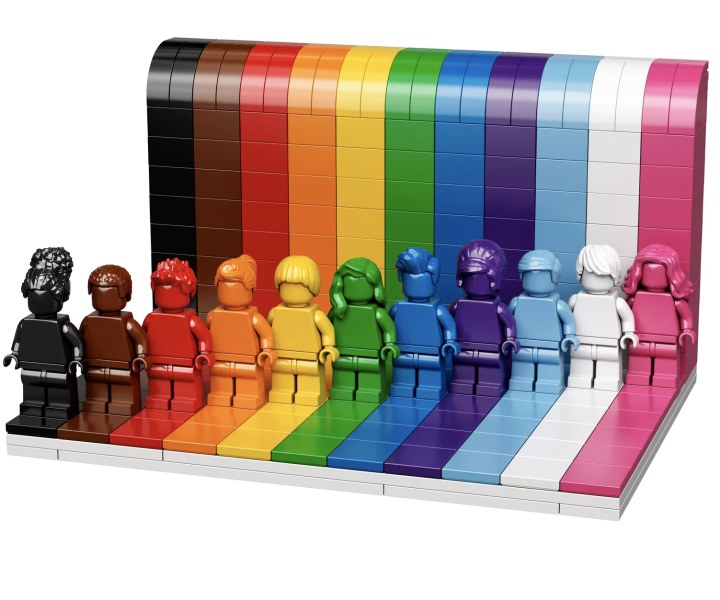
LEGO’s Everyone is Awesome set

On June 1, LEGO launched its first LGBTQ-themed set, which comes with 11 monochromatic figures, each with an assigned color, and 346 pieces creating a rainbow cascade.

“I wanted to create a model that symbolises inclusivity and celebrates everyone, no matter how they identify or who they love,” said Matthew Ashton, Lego’s vice president for design who developed the limited-edition set.

Old Navy’s Project WE Pride Tee by Edward Granger

In January, Old Navy announced “Project WE,” a collection of T-shirts created in collaboration with diverse artists to honor International Women’s Day, Juneteenth, LatinX Heritage Month and other cultural touchstones.

For Pride, the company has tapped queer artist Edward Granger, who designed a unisex rib-knit black crew with the world “Love” colored in a variety of hues. An alternate “Pride” version in white presents an abstract rainbow of geometric shapes.

“This is our love letter to the LGBTQIA+ community,” Granger said. “Love yourself, stay connected to who you are, and never give up.”In celebration of the Project We initiative, Old Navy is donating $1 million to Boys & Girls Clubs of America to support youth arts programs in communities across the United States.

Skittles Pride Packs

For the second Pride season running, Skittles has given up the rainbow in a tip of its hat to the LGBTQ community. Limited-edition Skittles Pride Packs feature gray packaging on the outside and all gray candies inside. (They’re still jammed with delicious strawberry, orange, grape, apple and lemon flavors, but good luck telling which is which.) During the month of June, $1 from each pack will be donated to GLAAD, up to $100,000.

Sarah Long, chief marketing officer for Mars Wrigley North America, said the returning campaign symbolizes the candymaker’s commitment “to shape a world that is connected, caring and celebratory.”

“Skittles giving up their rainbow means so much more than just removing the colors from our Skittles packs, and we’re excited to use our platform to do our part in driving visibility for the LGBTQ+ community, creating better moments and more smiles,” Long said.

Limited-edition packs are available for purchase in 4-ounce Share Size Packs and 15.6-ounce resealable Sharing Size Stand Up Pouches at Walmart, Target and other retailers.

Disney’s Mickey Mouse Ear Hat

The Rainbow Disney 2021 collection includes dozens of tees, polos, mugs, backpacks, hats, face masks and more, available online and in select Disney stores and theme parks.

In celebration of Pride Month 2021 The Walt Disney Company is donating to LGBTQ organizations around the world, including ARELAS in Spain, Famiglie Arcobaleno in Italy, Nijiiro Diversity in Japan and, here in the U.S., GLSEN, which works to ensure all students learn and thrive in a safe and supportive environment.

Ugg’s Pride Rainbow Disco Stripe Slide

Ugg and the Pacific Pride Foundation are back with their “Proud Prom” campaign, featuring bold rainbow takes on the Fluff You Slide Cali Collage and other Cali Collage styles, including the Slide and Highland high-top sneaker.

“We chose to showcase real, bold and wonderful individuals celebrating a virtual prom in a safe and welcoming environment” said Ugg president Andrea O’Donnell in a statement. “We wanted to express that there is beauty in what makes you different and that you should never feel the need to apologize for who you are or who you love.”

The Disco Stripe Slide comes in the colors of the Pride rainbow or in the pink, blue and white of the transgender flag. It’s comfortable and stylish — and $25 from each pair purchased on UGG.com goes to GLAAD, up to $125,000.

Mattel’s UNO Play with Pride edition

The classic card game gets a Pride makeover with special rainbow-colored cards available exclusively at Target.com and Target stores nationwide. Mattel will donate $50,000 to the It Gets Better Project.

Petsmart’s Pride Pink “Pride” Pet Dress

PetSmart’s You Are Loved collection includes rainbow-tinted plush toys, pet clothing, collars, bandanas and more. A fun item from the collection is the Pink Pride Pet Dress — it slips on and off in a snap, and comes with a message of pride and an adorable tutu. This year, PetSmart is donating $100,000 to GLSEN.

Dr. Martens’ 1461 for Pride Smooth Leather Oxford Shoes

The old-school cool shoe brand is keeping it simple for Pride 2021, giving its classic 1461 oxford a rainbow flag on the heel tab and a rainbow Airwair heel-loop. You can upgrade your look even further with rainbow laces and Dr. Martens athletic socks with rainbow stripes, available in black or white.

“At Dr. Martens, we know our many diverse wearers have got us to where we are today,” the company said in a statement. “That’s why we celebrate individuality and diversity in all forms.” As in years past, Dr. Martens is donating $100,000 to The Trevor Project.

Balenciaga’s ‘GAY’ Pride hoodie

The couture house got a little risque with its Pride capsule range this year, including baseball caps, sports bras, shirts, bracelets, fake-fur coin purses and a jockstrap with a rainbow waistband. The collection includes an oversize pink hooded sweat jacket emblazoned with the word “Gay,” stylized like a GAP logo.

Like the rest of the Pride collection, the sweat jacket was designed by Balenciaga creative director Demna Gvasalia, who was raised in the republic of Georgia where LGBTQ people are often the targets of bigotry and violence.

“I’m gay. I grew up in a society where I couldn’t have worn that, and there are places in the world that you cannot today,” Gvasalia told Vogue back when the collection was previewed. “It’s important to push through against homophobia. I’m not someone who goes out in the street and shouts. But this is the political fashion activism I can do.”

Balenciaga is donating 15 percent of sales from Pride items to The Trevor Project.

Vans’ Pride SK8 Hi Tops

Vans’ Pride 2021 Collection goes to the dark side — with slick black Sk8-Hi boots with a thin rainbow stripe. This classic high-top also includes padded collars, reinforced toe caps and Vans’ signature rubber waffle outsoles. Looking to make a brighter statement? The collection also includes a kaleidoscope of slip-ons, sneakers, tees, tanks, laces and more.

This year, Vans is making a $200,000 donation to organizations that support the LGBTQ community around the globe, like GLSEN, Where Love is Illegal, Casa 1 and Tokyo Rainbow Pride.

NYX Professional Makeup’s Born to Glow Icy Highlighter Duo

This Pride, NYX is partnering with HBO’s “Legendary” to celebrate the ballroom scene with a #NYXCosmeticsBall Instagram challenge that sees contestants competing for a $5,000 prize. The category, of course, is FACE.

To get you started on your ball look, NYX is launching a limited-edition collection featuring a Metal Play Palette, Shape Loud Liners, Epic Wear Liner Sticks and the Born to Glow Highlighter that will bring a colorful ultra-metallic sheen to your mug. This year, NYX is also donating over $100,000 to global Pride efforts, including a donation to the LA LGBT Center.

EFFEN Vodka’s 2021 Pride 365 Bottle

EFFEN commissioned Chicago-based queer artist and street muralist Sam Kirk to design the label for its Pride bottle, which celebrates the intersectionality and vibrancy of the Black and LGBTQ communities. Consumers can also personalize their EFFEN Pride 365 bottles with vinyl decals from queer nonbinary Afrolatinx artist Acacia Rodriguez and trans artist Kyle Lasky.

This year, EFFEN is partnering with Allies in Arts, which works to promote underrepresented women, BIPOC and LGBTQ artists. For each 750 ml bottle sold, EFFEN will donate $1 to Allies in Arts.

Happy Socks’ Pride Socks

Happy Socks is switching it up for Pride this year: Instead of launching a large-scale campaign, the company donated the campaign’s entire $20,000 budget to InterPride, an organization promoting lesbian, gay, bisexual, transgender, queer, and intersex communities around the world.

The company is also launching a new Pride collection, featuring four rainbow-centric styles available in adult and kids’ sizes, as single pairs or in gift boxes. The collection includes socks inspired by the “Progress” Pride Flag designed by Daniel Quasar. They feature a broader spectrum of the LGBTQ representation, including pink, light blue and white stripes to represent transgender and non-binary individuals, and black and brown to symbolize marginalized communities of color, as well as those affected by AIDS. Ten percent of the profits from all Pride collection items will be donated to InterPride.

Levi’s Pride Relaxed Graphic Tank Top

Ranging from $18 to $148, Levi’s 2021 Pride Collection “All Pronouns. All Love” puts emphasis on respecting people’s pronouns, with the phrase “they/them, she/her, he/him, we” emblazoned on graphic tees, jackets and a super-sleek tank top. The gender-neutral collection also includes overalls, jumpsuits, denim jackets and accessories like rainbow ombre suspenders and boxer briefs.

Levi’s is donating 100 percent of net proceeds from the collection to OutRight Action International, which works to advance human LGBTQ rights around the world.

TGI Fridays’ Carlo’s Bakery Rainbow Cake

The popular restaurant chain is celebrating Pride with a decadent dessert: six layers of rainbow-colored vanilla cake piled high with vanilla icing and sprinkles, available at participating Friday’s locations or for delivery.

“For more than 50 years, TGI Fridays has celebrated people of all stripes, whether team members or guests,” said Sara Bittorf, chief experience officer at TGI Fridays. “We are committed to creating an environment where people can feel free to come together, socialize, and be themselves.” A portion of every slice sold, up to $25,000, will support GLSEN.

Follow NBC Out on Twitter, Facebook & Instagram

Rainbow Rant: A review of the Target Pride Collection – Columbus Alive

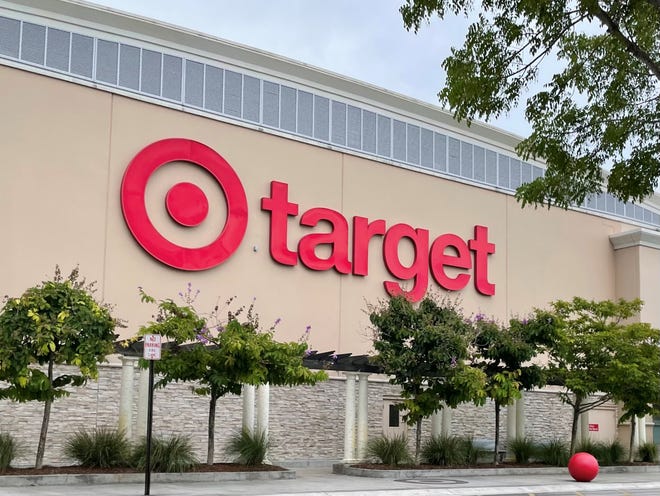
The exterior of a Target store

In my local Target, the Pride Collection products are right next to the Fourth of July paraphernalia. That alone says plenty about the corporation’s latest attempt to sell rainbow-covered everything to queer and trans people. 

The Pride Collection is remarkable for its inclusiveness. Target stands ready to sell us T-shirts and bandanas in the colors denoting a variety of LGBT identities, notably including asexuality. Likewise, obvious care went into hiring a diverse set of models. However, seeing relatable faces in clothing I can’t imagine wearing is surprisingly unsettling.

Examining the collection, I wonder if some queer Target designer carefully created a few products but then slowly started to wonder what exactly they could get away with. That’s the only explanation I can offer for why Target seems to think that a rainbow-colored ice cream cone is this year’s must-have motif (get it on a button-down, a scented candle, or as a dog toy). 

Some of these products are so well-tailored to our community, it’s enough to make a person believe in market research. Target is correct; we will buy Pride-themed pet accessories, and I don’t think that we should be embarrassed by that. Likewise, there are certainly members of our community that will snatch up rainbow-colored Mickey Mouse T-shirts, even if that does mortify me.

Other products in the Pride Collection make less sense. Take this “Pronouns” shirt. Emblazoned with a slew of pronouns, this tee won’t help you share your pronouns with the world; it will just tell everyone what you know what a pronoun is. It’s virtue signaling as a fashion statement. 

Likewise, this animal print button-down raises questions. The bears make sense, but why include chickens, groundhogs, wolves and rats? Furthermore, why is this shirt being modeled by an older man with daddy vibes, when obviously it will be favored by younger nonbinary people whose style is half Victorian gentleman and half Gonzo from the Muppets? (As one such person, I will admit that I love this shirt. That, however, doesn’t change the fact that it makes no sense whatsoever.)

The most baffling product in the line is an eyesore called a “Liberation Jumpsuit.” Despite being described as “ballroom” attire, I can assure you that none of the legendary children would ever be caught dead in this getup. However, if I ever want to spend more than $100 to look like I came to the club straight from a Ghostbusters audition, I will keep Target in mind.

Most of the Target Pride Collection is tacky, but that doesn’t necessarily negate its appeal or importance. Some queer and trans people, particularly youth, will find it affirming, and for that I’m genuinely glad. Furthermore, Target does make an annual donation to GLSEN, though the details are a bit hazy. The Pride Collection is infinitely less objectionable than Raytheon’s attempt to rebrand its weaponry for Pride month. 

But there are social and environmental costs to the “fast fashion” Target sells. The fashion sector employs one out of six people on Earth, but fewer than two percent of those workers earn a living wage. Twenty percent of all industrial water pollution comes from the sector, along with 10 percent of all carbon emissions. That’s nothing to be proud of. 

The product in the Pride Collection that causes me the most distress is a surprising one: a T-shirt bearing a photograph of Stonewall veteran Marsha P. Johnson. In this picture, Johnson is holding a sign reading “Power to the People,” an ironic message on a mass-produced product. A keen observer will notice that the designers have edited out Johnson’s cigarette

The context of the photograph is similarly missing. Johnson was participating in a protest of Bellevue Hospital, where both she and Sylvia Rivera had been held against their wills, receiving forced medical treatment designed to cure them of their sexualities, gender identities and radical politics. In its own way, the Pride Collection functions like the thorazine doctors pumped into Johnson’s body without her consent. Commodified pride products transform our political demands into personal statements, dulling our movement’s radical edge. 

No T-shirt can hope to convey the complexity of the queer and transgender liberation struggle we celebrate during Pride month. There is, however, something especially incongruous about an image of Johnson on a T-shirt when no LGBT historical figure used fashion as deliberately or effectively as she.

Johnson gained notoriety for creating one-of-a-kind ensembles out of cast-offs. In Johnson’s hands, an old dress became a beacon of hope. A bunch of day-old flowers, Christmas ornaments or ribbons became crowns befitting the queen she was. She could have never afforded the T-shirt bearing her face, but she didn’t need a consumer product to embody her political vision.

Johnson waged her struggle on her body and celebrated her survival with her every footstep. She transformed the visibility she could not avoid as a Black trans woman into a tool for building community. Her friend and comrade Sylvia Rivera said, “Marsha would give the blouse off her back if you asked for it. She would give you her last dollar. She would take off her shoes. I’ve seen her do all these things.” 

If we want to follow Johnson’s example and honor her legacy, we should be asking ourselves what we will give up to serve our community. 

Corporations like Target don’t really want us to ask that question. Generous people make poor consumers. The kind of pride that can change the world is something that Target will never be able to manufacture.

Lamborghini CEO on shift to electric future, auto industry trends – Yahoo Money

Associated Press

EXPLAINER: Just how vulnerable is the internet?

An outage at a little-known firm that speeds up access to websites knocked a lot of top internet destinations offline on Tuesday, disrupting business and leisure for untold millions globally. The company, Fastly, blamed a configuration error in its technology. San Francisco-based Fastly isn’t a household name, but its “edge server” computing technology is used by many of the world’s most popular websites, such as The New York Times, Shopify, the Guardian, Ticketmaster, Pinterest, Etsy, Wayfair and Stripe.

Gay marriage is the left’s biggest culture war victory – Yahoo News

Newlyweds.

Newlyweds. Illustrated | Getty Images, iStock

A new Gallup poll tells us that 70 percent of Americans support same-sex marriage, up from 60 percent in 2015 (when the Supreme Court declared it a constitutional right) — and up all the way from 27 percent when the polling firm first posed the question back in 1996. That’s an increase in support of 43 percentage points — from around a quarter to more than two thirds of the country — in just 25 years. That makes gay marriage the left’s greatest triumph in the culture war by far.

As journalist Matthew Yglesias notes in a tweet, Republicans should be grateful that Supreme Court justice Anthony Kennedy (author of the landmark decision Obergefell v. Hodges) took the issue out of the political arena, since the GOP otherwise would have found itself on the wrong side of a potent wedge issue for a long time to come. (Though one wonders how long, given that the new poll also shows that a solid majority of Republican voters — 55 percent — support gay marriage as well.)

But this just highlights even more vividly the distinctiveness of gay marriage among the issues wrapped up with the culture war. Abortion, by contrast, became the first major front in the culture war because of a Supreme Court decision — and nearly a half-century later public opinion appears close to frozen on the issue. About a fifth of the country wants abortion banned in all cases. A somewhat larger share wants it legal in all cases. And around half of the country is found in the muddy middle, leaning in favor of keeping it legal but deeply troubled when pregnancies are terminated after the first trimester.

The latest front in the culture war, over trans issues, is quite fraught as well. Polls show strong support for legal protections for transgender people but also considerable resistance to other items on the agenda of many activists.

But gay marriage is different. I suspect that’s because it built on the way people had already learned to think about marriage — as a personal choice based on a subjective experience of love for another person. If that’s the case, then the left can certainly celebrate its victory on the issue. But it shouldn’t treat that success as a broader sign of conservative weakness across the culture war’s many other fronts.

Gay couple banned from flying Pride flag went one better – PinkNews

A gay couple in Wisconsin took their Pride flag to the next level (Imgur/@memonf)

When a homeowners’ association warned a gay couple not to fly their Pride flag from their porch, they simply went bigger and better.

Memo Fachino and his husband Lance Mier were told last month that they were no longer allowed to display the rainbow flag outside their Wisconsin home, despite it flying there since 2016.

“Due to some neighbours flying BLM flags, Thin Blue Line flags, and other opinion flags, our HOA decided last month that we’re only allowed to fly the USA flag, and nothing else,” Fachino said in a now-viral Reddit post.

The day after the decision was made a neighbour reported the couple for violating the rules. But with Pride month around the corner, they were reluctant to take the flag down.

“We believe it’s important to express ourselves, and to have visible representation,” Fachino said.

They decided to think outside the box and soon found a clever workaround that allowed them to abide by the rules while supporting Pride.

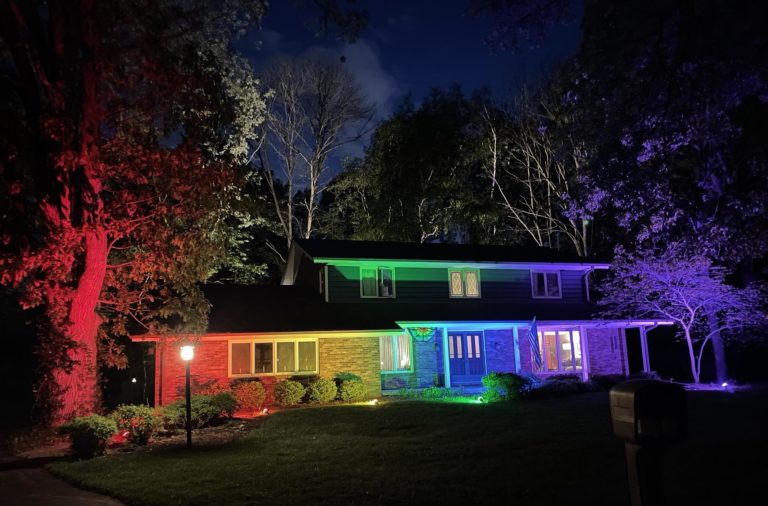
“Looking through our new rules, we noticed that removable lights are permitted without restriction so… we bought six coloured flood lights, and we washed our house in Pride colours,” he said.

The result was incredible. “A little less subtle than our simple flag,” Fachino admitted, but “a lot more fun for anyone complaining about the flag itself and what it represents.”

Pride home

A photo of the glowing rainbow house was posted to the “Malicious Compliance,” subreddit, which celebrates people “conforming to the letter, but not the spirit, of a request”.

Within 48 hours it had gone viral with more than 80,000 upvotes and hundreds of Reddit awards.

But just in case it causes any bad blood in the neighbourhood, Fachino was keen to clarify that they didn’t take the HOA rule personally.

“We’re not trying to stick it to anyone,” he told the Milwaukee Journal Sentinel. “We don’t feel targeted or attacked in our community. It was just a fun way for us to show our individuality and support in a way that didn’t break any HOA rules.”

Gay couple banned from flying Pride flag from their porch. So they went one better – Yahoo Eurosport UK

When a homeowners’ association warned a gay couple not to fly their Pride flag from their porch, they simply went bigger and better.

Memo Fachino and his husband Lance Mier were told last month that they were no longer allowed to display the rainbow flag outside their Wisconsin home, despite it flying there since 2016.

“Due to some neighbours flying BLM flags, Thin Blue Line flags, and other opinion flags, our HOA decided last month that we’re only allowed to fly the USA flag, and nothing else,” Fachino said in a now-viral Reddit post.

The day after the decision was made a neighbour reported the couple for violating the rules. But with Pride month around the corner, they were reluctant to take the flag down.

“We believe it’s important to express ourselves, and to have visible representation,” Fachino said.

They decided to think outside the box and soon found a clever workaround that allowed them to abide by the rules while supporting Pride.

“Looking through our new rules, we noticed that removable lights are permitted without restriction so… we bought six coloured flood lights, and we washed our house in Pride colours,” he said.

The result was incredible. “A little less subtle than our simple flag,” Fachino admitted, but “a lot more fun for anyone complaining about the flag itself and what it represents.”

A photo of the glowing rainbow house was posted to the “Malicious Compliance,” subreddit, which celebrates people “conforming to the letter, but not the spirit, of a request”.

Within 48 hours it had gone viral with more than 80,000 upvotes and hundreds of Reddit awards.

But just in case it causes any bad blood in the neighbourhood, Fachino was keen to clarify that they didn’t take the HOA rule personally.

“We’re not trying to stick it to anyone,” he told the Milwaukee Journal Sentinel. “We don’t feel targeted or attacked in our community. It was just a fun way for us to show our individuality and support in a way that didn’t break any HOA rules.”

Unruly Soccer Fans Halt Championship Game With Anti-Gay Slurs – Out Magazine

Unruly Soccer Fans Halt Championship Game With Anti-Gay Slurs

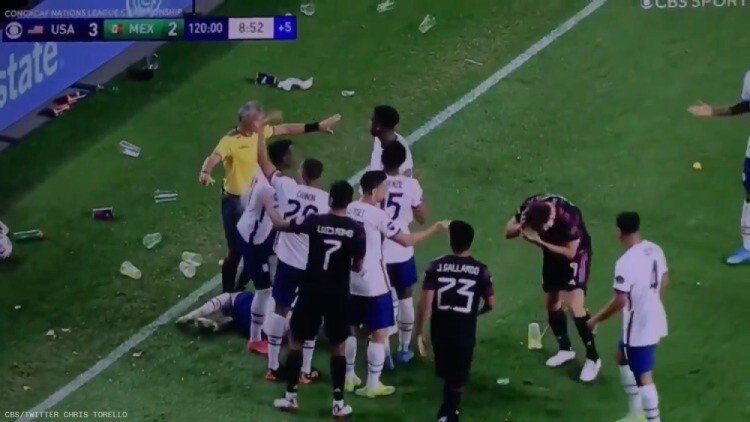
Rowdy soccer fans chanting anti-gay slurs and throwing objects onto the field halted play briefly at the CONCACAF final between the United States and Mexico at Empower Field at Mile High in Denver, Colorado, this past Sunday. According to a report in USA Today, officials stopped the game for three minutes in accordance with league anti-discrimination policies after fans of Mexico started chanting the anti-gay slur for a male prostitute and showering the field with objects. Players from both teams were struck by the objects, including U.S. midfielder Giovanni Reyna who lay on the ground for several minutes after he was hit on the head. The U.S. eventually won the game by a score of 3-2 on a game-winning penalty kick by Christian Pulisic in the 114th minute.

“Total lack of respect for what’s happening on the field and all effort that both teams are putting into the game,” Gregg Berhalter, head coach of the U.S. team, said following the game. “I think [Reyna is] going to be O.K., but he did take something to the head, and it could have been a lot worse.”

The teams from U.S. and Mexico are heated rivals, and the atmosphere was tense throughout the game. Near the end of play, a referee paused the game in accordance with league policy in response to the chanting and rowdy behavior by fans. However, the unsportsmanlike antics continued when the game resumed. After U.S. forward Christian Pulisic scored a late goal, Reyna was struck in the face by an object. He was on the ground surrounded by teammates from both teams for several minutes. Video posted to Twitter showed Mexican forward Henry Martin getting hit on the head with an object as he was standing over the fallen Reyna.

Officials for the stadium later released a statement, announcing multiple arrests and saying they were “fully committed to providing a safe, welcoming and inclusive environment for all participants and fans.”

Denver police arrested five people for their alleged illegal actions at the game. Four were arrested for trespassing, and one was arrested for throwing objects. Security footage was used to identify the fan alleged to have injured Reyna. In addition to the rowdy behavior during the game by spectators, another fan briefly interrupted post-game television coverage by walking behind the broadcasters on live television before apparently being tossed over the railing by security.

Some soccer fans have a notorious reputation when it comes to homophobic chants at opposing players. Gameplay was also halted in Thursday’s semifinal game between Mexico and Costa Rica in accordance with league policy. Some players have also used anti-gay slurs in the past. The USL Championship soccer league suspended Junior “Flemmo” Flemmings for six games and fined the Phoenix player an undisclosed amount after he was found to have used homophobic language in a tirade against an opposing player during a game last October. In another incident, MLS LA Galaxy midfielder Sebastian Lletget apologized after posting a video of himself using a homophobic slur in jest with a teammate on the U.S. Men’s National Team in April.

Some players don’t always take the homophobic hatred without a fight. Henry Bethell, who plays soccer for Sarah Lawrence College in New York, delivered the “punch heard round the world” when he decked an opposing player who called him homophobic slurs without punishment during a game last year.

“It just happened,” Bethell told Cyd Zeigler of OutSports. “I turned around and punched him. After that I kind of blacked out, like a flight-or-fight response.”

RELATED | Pro Soccer Team Forfeits Winning Game Over Homophobic Slur

A Jamaican-British Gay Man Makes His Own Way, With Musical Accompaniment – The New York Times

RAINBOW MILK
By Paul Mendez

When I came out as gay at 15, my West Indian pastor visited my family home to salvage my soul. I was not wrong, he said, but the distance my sexuality could create between me and God was. And so came the questions: Have you had sex with men? Do you plan to in the near or distant future? The act, the manifestation of a buried desire, Sodom and Gomorrah left unchecked: This was to be avoided.

I was reminded of that day while reading “Rainbow Milk,” the debut novel by Paul Mendez. In it a 19-year-old Jehovah’s Witness named Jesse experiences a church intervention almost identical to mine when news that he’s flirted with another boy reaches the pulpit. Because of his transgression, he is “disfellowshipped.” He leaves his home in England’s West Midlands for London, becomes a rent boy and begins the work of finding himself anew.

There is a long history that leads us to Jesse, and “Rainbow Milk” is a study in the consequences of a family’s actions across generations. The novel starts in 1959 with a Jamaican family that has emigrated to a British coal town as part of the Windrush generation of Afro-Caribbeans who came to the United Kingdom at the encouragement of the British government. Narrating this part of the story in a loose Jamaican patois is Norman, a former boxer who is losing his sight. His hope is prosperity, for his wife and two children. His reward is racism, struggle and soot. “We eye never fall on so much black in all we life,” he says. “The building black. The sky black. The people black, and not because they come from where we come from.” As with writers like Marlon James and Nicole Dennis-Benn, Mendez’s dialect-writing stretches the boundaries of a language owned by no one.

Then it is 2002 and an exiled Jesse is on his way to meet up with a john. What follows is a winding coming-of-self story that moves with the uncertainty of a boy trying to become the kind of man he’s never witnessed: one living on his own terms. In London Jesse’s freshly opened eyes devour everything around him: the heft of a crotch on the Tube, the smile of a bearded man across the bar, the butts, the legs, the hair in all places. Mendez writes Jesse’s desires in an honest, unprecious and often raunchy staccato.

The writing is delicious and subtle throughout, often punctuated by musical references that ground it in the decades it explores. Listening to Joy Division, Jesse closes his eyes: “I’ve got the spirit, lose the feeling, take the shock away. There was no chorus, just a guitar line, then a new verse. The weed went to his head and it was black as blindness.” On the lookout for “a white daddy” Jesse spots a middle-aged man in a suit jacket who “looked like a wad of cash, tasted of roast beef, felt like velvet, smelled of success.” But to this man, Jesse thinks — quoting “Freak Like Me,” by Sugababes — “he was just a roughneck brotha that can satisfy me.” Scores by Nina Simone and Wham! give way to Mary J. Blige and Beyoncé: a soundtrack to Jesse’s wayward young adulthood.

Mendez balances the story atop the shifting tectonic plates of dislocation, and in the gaps Jesse discovers new friends and lovers who show him, through unexpected kindness, what it’s like to be seen. That a Black gay man can embrace the totality of his lust, and others’ lust for him. It’s unclear how Mendez will land this bold, horny and at times unmoored debut until a line toward the end winks at just how this unwieldy tale works: “You’ve lost your center of gravity,” a friend tells Jesse. “So to survive, you’ll need to take steps to create another.”

‘Ex gays’ hold rally on Washington Monument grounds – Washington Blade

Squashed between friends on a plush couch at a shelter for homeless LGBTQ+ young people, Jada Doll talked about what happened after she began to express her identity as a transgender woman.

She moved in with her boyfriend when she was a senior in high school. But Doll – that’s the name she chose – said her family refused to let her back into their Manassas, Va. home when the couple broke up. The reason, said Doll: She had begun to identify as a female. She wound up in the nearby woods that became her home for almost three years.

“When it was raining,’’ the 22-year-old said in a recent interview, “I couldn’t feel my toes.” 

Jada Doll is shown at the Casa Ruby shelter in DC this spring. Photo by Pooja Singh, Urban Health Media Project

Before the pandemic, LGBTQ+ youth had a higher risk of homelessness and the health problems that come with it – from nagging toothaches to life-long trauma.

Then COVID-19 forced families to stay home together, exacerbating the domestic conflicts over gender and sexuality that have driven some young people into the street.

Casa Ruby, the shelter that Doll entered, reports a 60% increase in clients in the past year. The non-profit in the Dupont Circle neighborhood offers housing, preventative healthcare and social services to LGBTQ+ youth. 

Many of the new homeless had no choice. Violence against LGBTQ+ youth often ‘’starts at home,’’ said Keith Pollard, a case manager at Supporting and Mentoring Youth Advocates and Leaders (SMYAL), a Washington non-profit that shelters about three dozen homeless LGBTQ+ youth. About 95 percent of SMYAL residents were thrown out because of their sexuality or gender identity.

Doll said she felt her family ganged up against her when she started to identify as a trans female. That, Pollard said, is a familiar story: “It starts with not being able to explore gender, with ‘Mom caught me with a skirt on’ or ‘Mom caught me with makeup on and put me out.’’’

‘They see you as a prostitute’

Being homeless can lead to a multitude of health and safety issues, but LGBTQ+ youth face unique, additional challenges.

Fear of violence looms over their heads, both on the street and in public shelters. Some shelters, Doll said, are “like jail. Other residents, she said, “can hurt us, and they don’t care if they hurt us.”

Sexual assault is an even larger worry. “They can also rape you in a shelter,’’ said another resident of Casa Ruby who calls herself Raven Queen.

Such fears are founded, according to Tearra Walker, who has lived in shelters and now helps find housing for the homeless. Some older shelter residents are sexual predators, she said, and young LGBTQ+ people “can get caught up in someone’s web.”  

The streets can be even worse. Doll said insults are hurled at LGBTQ+ youth — “They see you as a prostitute.’’ In fact, said SMYAL’s Pollard, many of these young people resort to ‘‘survival sex’’ to secure a place to sleep at night. 

“Once you’re out there on the street past four hours, you gonna be losing it,’’ said Nicholas Boyd, a Casa Ruby resident. “You gotta find someone to talk to, someone to socialize with, because the feeling of aloneness is scary.” 

Physical health suffers as well. Pollard said that when young people come in off the street, they’re often malnourished or underweight, because “they’re just eating anything they can get their hands on.’’ That, plus lack of sleep, can also lead to attention deficits, mood disorders or suppressed immunity to disease and infection. Many suffer from sexually transmitted diseases and infections, including HIV, he said.

For more than two years, Doll lived under a canopy of trees, protected from the elements only by flimsy tents. Hygiene and privacy were the first casualties; she recalled having to use a water bottle to shower “with everyone watching.” 

She ate “just about anything, like, raw stuff.” She neglected to brush her teeth. She suffered insomnia and panic attacks that continued even in the safe haven of Casa Ruby. 

Brian Klausner, medical director of community population health at WakeMed hospital in Raleigh, N.C., works with the chronically homeless through a partnership with a local federally-funded health care clinic. He said their average life expectancy is about 50 (compared to 79 years for all Americans). The homeless are more likely to have suffered childhood traumas — sexual abuse, incarcerated parents, drug use in the home — which increase the risk of health issues such as heart disease, cancer, stroke and suicide, said Klausner, a primary care physician. And homelessness itself exacts a cost.  

The pandemic has upped that cost. As a result of COVID restrictions, Pollard said, his organization saw an increase in drug and alcohol use as well as physical and verbal altercations: “A lot of folks were doing things that were risky, (like) going outside without a mask, interacting with large groups of people, because they could not take the isolation.’’

‘A lot to handle’

Olivia Rodriguez-Nunez said that when her older sister threatened to attack her because she’d begun to identify as a trans woman, their mother flew from Bolivia to Washington to intervene – on the side of the older sister, to “kick me out.’’ 

Rodriguez-Nunez’s sister, Mariela Demerick, said in a phone interview that she blames Olivia – who she calls “Mark” – for being abusive and three months behind on rent. Their mother flew up “to come set order to this home,” she said. 

Olivia Rodriguez-Nunuez shown walking in front of her transitional DC home in April. Photo By Jojo Brew, Urban Health Media Project 

Demerick insisted that “it had nothing to do with his choice of sexuality,” but declined to call Olivia by her preferred name and pronouns and blamed hormones for making her sibling erratic. 

“I’ve chosen to remove Mark out of my life.” she said. 

Rodriguez-Nunez said she fled her family home in the Columbia Heights neighborhood because “having two people gang up on me, it was a lot to handle,’’ But she felt safe at Casa Ruby, which aims to be more than a shelter, but also a home where queer, transgender and gender non-conforming people can escape fear of discrimination, harassment and violence. Above all, places like Casa Ruby and SMYAL try to offer the one thing their young clients often lack: consistency.

Oliva Rodriguez-Nunez is shown with her dog in a picture from her youth. Photo Courtesy of Olivia Rodriguez-Nunez

Doll is now living in a transitional apartment provided by SYMAL, while Rodriguez-Nunez was referred to a transitional group home run by the Wanda Alston Foundation. 

“Our folks have had a lot of people give up on them,’’ Pollard said. “Parents or guardians give up on them because they don’t agree with their sexuality or gender identity and kick them out.’’ Teachers,foster parents or group homes also give up on kids, sometimes, he said, “just because they’re troubled.’’

“Here at Casa Ruby, it is very welcoming,’’ said Raven Queen. “Everyone can live their own life. They can be who they want.”

 Tagline: Gandluri and Johnson are high school students at Our Lady of Good Counsel High School and The Baltimore Polytechnic Institute in Baltimore. They were participants in Urban Health Media Project’s workshop, “Home Sick: How Where We Live Impacts Health” in Spring of 2021. UHMP student reporters Anthony Green, Malaya Mason, Noah Pangaribuan and Diamond LaPrince contributed to this story.

Uzbekistan politician wants to deport all LGBT+ people to ‘solve problem’ – PinkNews

Alisher Kadyrov. (YouTube)

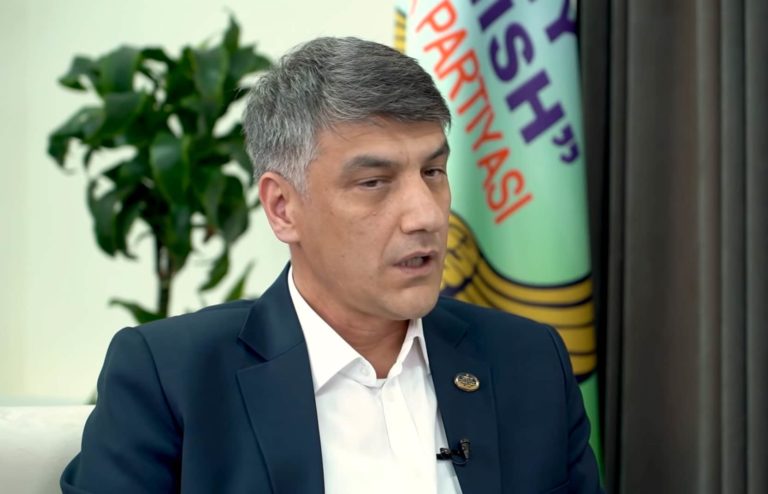
A politician in Uzbekistan has said the country should strip LGBT+ people of citizenship and deport them as a solution to debates around LGBT+ rights.

Alisher Kadyrov, leader of Uzbekistan’s National Revival party, claimed in an interview with Alter Ego that withdrawing citizenship rights for queer people would force other countries to offer them refuge.

The politician acknowledged that Uzbekistan is undergoing a process of social change, but insisted that the public will never change its mind on LGBT+ rights “even after 1,000 years”.

Kadyrov went on to suggest that stripping queer people of citizenship and deporting them would be a more empathetic approach than imprisonment.

“When I put forward this proposal on social networks, up to 100 LGBT people got in touch with me and agreed with what I had said,” Kadyrov said, according to a translation published by EurasiaNet.

“They said that they cannot get visas from those countries that condemn Uzbekistan for its attitude towards LGBT people.

He continued: “LGBT people are targeted with violence, but I do not support that. I believe that this is a provocation.

“We have to solve this problem and my solution is international practice. There are 26 countries that practice deportation. In Iran and Saudi Arabia, they envision the death penalty.”

Kadyrov failed to offer any specifics on how his deportation programme would work – or how queer people could be identified and ordered to leave the country.

Homosexuality is still illegal in Uzbekistan

Sex between men is still illegal in Uzbekistan and is punishable with up to three years in prison.

LGBT+ people in the country face persecution and shocking levels of violence, according to a report released by Human Rights Watch in March.

The group found that queer men face arbitrary detention, prosecution and imprisonment in Uzbekistan, while others face homophobia, threats and extortion because of their sexuality.

While prosecutions are rare under the country’s gay sex ban, queer men often are often targeted by law enforcement authorities and are sometimes charged with other crimes, such as prostitution.

The country’s ban on gay sex is a hangover from when Uzbekistan was a part of the Soviet Union. It remains the only former Soviet territory – alongside Turkmenistan – that continues to criminalise sex between men.

LGBT Center to host events for Pride Month – Ohio University
The Ohio University LGBT center is hosting several virtual events and one in-person event to help celebrate Pride Month.

Dr. Jan Huebenthal, assistant director of the LGBT Center, highlighted two particular events. One is titled “Transgender Equality with Equality Ohio” and will take place virtually on Friday, June 11, from 2 to 3:30 p.m. The event will feature advocacy organization Equality Ohio, and participants will learn about some of the issues the trans community faces and how they can support trans-identified people in their own communities.

The other event Huebenthal highlighted takes place on Tuesday, June 15, from 5 to 7 p.m. and is the premiere of an episode of the Avant-Grad podcast featuring David Collins. Collins, a 1989 OHIO alumnus, is a six-time Emmy Award producer and creator of the Netflix series Queer Eye and the voguing competition show Legendary on HBO Max. To RSVP for the podcast, click here

“We hope that our events will highlight the incredible diversity of our community while also showing pathways to advocacy, inclusion and support,” Huebenthal said. 

Huebenthal said Pride Month is an opportunity for the OHIO community to support LGBTQ+ students, faculty, staff and alumni whether they have come out or not. Pride Month also serves as a reminder that many LGBTQ+ people still face prejudice in many workplaces and communities. 

“We feel lucky to be part of a University that is such a consistent champion of diversity and inclusion – and not just during Pride Month,” Huebenthal said. 

Other events taking place for Pride Month include:

  • LGBTQ+ Equality and Experiences in Europe, Thursday, June 10, 4 to 5 p.m.
  • LGBTQ+ Equality and Experiences in Australia, Friday, June 11, 2 to 3:30 p.m. and Tuesday, June 15, 6 to 7 p.m.
  • Pride Month SpeakOUT Panel Thursday, June 17, 3 to 4:30 p.m.
  • In-person screening of Paris is Burning at Athena Cinema Thursday, June 17, 4 p.m. 

Anyone interested in attending the virtual events should visit https://ohio.qualtrics.com/jfe/form/SV_4ShP5SGtvRUwH0W to RSVP. To RSVP for the Collins podcast, click here.

See Willie Nelson, take in great dancing and more – PW-Philadelphia Weekly

The Umbrella Dance

Anne-Marie Mulgrew and Dancers Company will perform a reimagined version of its signature travelling dance video installation, “The Umbrella Dance,” June 11 at 5pm. The event is hosted by the Delaware River Waterfront Corporation in conjunction with its Fermentation Festival, following COVID guidelines. This free public performance is AMM & DCO’s first live presentation in 2021 and kicks off the Company’s 35th anniversary season. In addition to the live performance, AMM & DCO will screen its best hits consisting of dance films and performance clips on the Cherry Street Pier video screen. annemariemulgrewdancersco.org

Freshwater Mussels, Our Blue-Collar Bivalves

Freshwater mussels are the most imperiled animals in both America and the Delaware River watershed, and restoration of mussels has become a national priority, especially as these hard-working animals perform the vital service of filtering our water. A coalition of public and private partners has ambitious plans, including propagating as many as a million mussels annually in labs and ponds to restore their populations. Lance Butler, senior scientist with the Philadelphia Water Department, one of the partners, presents the astonishing sweep of this ambitious program, designed to help these blue-collar bivalves thrive in our waterways again. Schuylkill Center for Environmental Education. June 10 at 7pm. schuylkillcenter.org

Willie returns to Philly

Willie Nelson, Blackbird Presents, Live Nation, and the Outlaw Music Festival Tour are on the road again. Willie will once again be live and in concert with his family and friends as part of a 14-stop tour starting this summer. VIP packages including great seats and exclusive festival merchandise will be available. Sept. 11. TD Pavilion at the Mann. manncenter.org

Antoinette Nwandu’s ‘Pass Over’

Theatre Exile and Theatre in the X present Antoinette Nwandu’s “Pass Over.” “Pass Over” tells the story of two Black men, Moses and Kitch – friends hanging out on a city street corner, sharing dreams of an escape from their circumstances. When a stranger wanders onto their corner with his own agenda, he derails their plans of finding their promised land. June 10 at 7pm. theatreexile.org

Pride Month with Festive Fitness

Join Mike Watkins of Festive Fitness this Pride Month for a donation-based outdoor workout at the Spring Gardens, with all proceeds benefiting The Attic Youth Center, Philadelphia’s only independent LGBTQ Youth Center. Saturday, June 12, 11-11:45.  Suggested Donation of $10-$20. festivefitnessphilly.com

Tribute to Ron Rubin

On June 10 at 7pm, the National Museum of American Jewish History is hosting a tribute to Ron Rubin, a passionate Philadelphia civic leader and developer who helped make Philadelphia’s streetscape and skyline what it is today. Rubin passed away in April; he would have been 90 in May. His friends, colleagues, and family are co-hosting this celebration of his life. nmajh.org 

_____________________

Make Music Philly will join over 90 cities across the U.S. and 120 countries worldwide to celebrate Make Music Day on June 21.  Make Music Philly is part of Make Music Day, the worldwide music celebration held each year on June 21. With the pandemic starting to recede, there will be a number of in-person musical performances and participatory events available this year. Visit makemusicphilly.org for details and to register. Meanwhile, here are some of the highlights.

J.W. Pepper

The largest sheet music retailer in the world will be offering free music lessons from their talented staff members from 12:30 to 3:30pm at the main office in Exton.

 Flower Pot Music

Join this fun, participatory event making music with flower pots. Tentative location: Clark Park 6pm Rehearsal and 7:30pm performance.

Community Ring

Malmark Corporation will host Community Ring, a hands-on ringing and drumming event featuring handbells, handchimes and cajons on the grounds of their manufacturing site in Plumsteadville with three sessions: 10am, 1pm and 3pm. Ice cream and soft pretzels will also be available by another Plumsteadville family business, The Salt Box.

Rock, pop, classical event

Local 77 Musicians Union and the Elegance String Quartet are inviting musicians with string instruments to join them for a fun rock, pop and classical participatory event. Tentative location is Clark Park with scheduled time to be published shortly

Ukulele Circle

Keep Music Alive will host a Ukulele Circle at the Kelly Music & Arts Center in Havertown from 7pm to 8:30pm.

Bucket Drum Circle

Rockdale Music will host a Bucket Drum Circle at Sundown in Aston starting at 7:30pm.

Lit buildings

One & Two Liberty Place, FMC Tower, Cira Centre and Cira Garage in Philadelphia will join buildings and landmarks across the country by lighting up in orange for #MakeMusicDay on the evening of June 21. 

__________________________

Live jazz, great art and a flea market you need to visit

The sites and sounds of Philly are once again open for business. Here are a few you’ll want to check out.

Image | Lexy Pierce

Tour to Dye For

My Local Brew Works, Philadelphia’s soon-to-launch nano-brewery focusing on contract brewing, special events, and direct-to-public brewing, is sliding into Philly Beer Week with this year’s most spirited event – First Look: Tour To Dye For – a brewery tour led by founders of My Local Brew Works, including the Globe Dye Works (an event and work space focusing on makers and the creative community), and wrapping with beer tastings and parting gifts from MLBW. There’s a tour scheduled for Saturday, June 12 from 1-4pm. Due to the exclusive nature of First Look: Tour To Dye For, participants are required to confirm the day prior via text correspondence from My Local Brew Works. Interested participants of legal drinking age must register on the My Local Brew Works website, providing first and last name, email address, phone number, and favorite beer. www.mylocalbrewworks.com

Pride workout

Come Alive 215 and Meet Philadelphia have joined forces to present one of the most unique, fun and heart-pumping outdoor events for Philly Gay Pride Month. Come Alive 215 x Meet Philadelphia Pride Workout, Drag Show and Picnic Brunch brings together a morning of movement, celebration, charity and community on Saturday, June 12, from 9:15am to 1:30pm. Fitness gurus Kim Harari and Shannon Brennan will bring their electric, contagious and community-driven fitness experience to the Lawn at Park Towne Place (2200 Benjamin Franklin Parkway). The event will feature a 45 minute workout programmed for all fitness levels, followed by a drag show and a picnic brunch. Tickets are on sale now for $65 each with a portion of proceeds going to support two local charities: The Attic Youth Center and William Way LGBT Community Center. Tickets are available at hellopride.eventbrite.com. For more about Come Alive 215, visit comealive215.com.

One Africa! One Nation! Uhuru Flea Market

One Africa! One Nation Uhuru Flea Market is an economic development institution of the African Peoples Education and Defense Fund . This seasonal, monthly market located in Clark Park provides a low-cost economic platform for established and budding small businesses. Vendors make and sell a wide array of products for the whole family. For more information, visit uhurufleamarket.blogspot.com. June 12, 9am – 5pm.

Live jazz

Fabrika, 1108 Frankford Avenue, will be one of the first places to experience live jazz in Philadelphia with the launch of CHOPS – a jazz series that takes place every Wednesday from 6- 9pm at the Fishtown entertainment venue. The club has locked down some well-known names from both the Philly and NYC jazz worlds, including pianist/composer Luke O’Reilly and Samara Joy McLendon, winner of the 2019 Sarah Vaughan International Jazz Vocal Competition. Visit fabrikaphilly.com for details.

Derive

All art comes from somewhere, a place, a reference, a memory, a state of mind. The Da Vinci Art Alliance’s Members Exhibition, Derive, will explore the diverse origins from which their community of artists creates art. This exploration will take the form of two artist-submitted components: an artwork and a source image. Through this exhibition, we asked our members: where does your artwork come from? On view through June 20 at Da Vinci Art Alliance and as a recorded video tour on the Da Vinci Art Alliance website. davinciartalliance.org

If you read this story and liked it, consider joining altPhilly, our membership program that offers exclusive content, instant access to the editor and awesome perks for like-minded Philadelphians. At PW, our coverage goes against the grain of the local mainstream media.

Join altPhilly Now

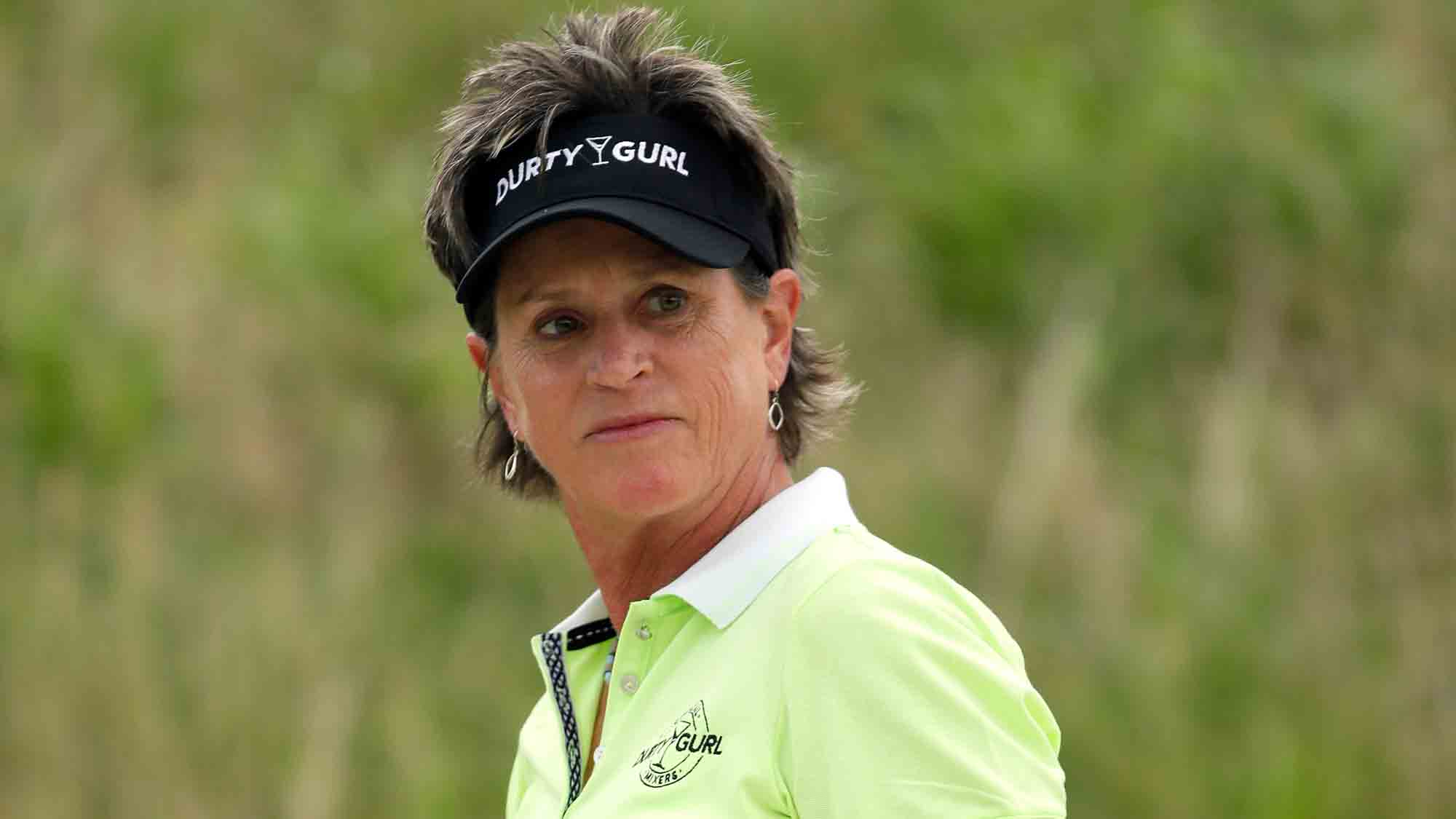
Rosie Jones Takes Pride In Where We’ve All Come – LPGA

0

She has 13 LPGA Tour wins, five that came from playoffs, from 1987 through 2003, along with two LET wins and nine victories on the Legends Tour from 2007 through 2019. But as hard as it was to win on the LPGA Tour during the eras of Lopez, King, Bradley, Sheehan, Mallon, Inkster, Pak, Webb and Sorenstam, the conflicts Rosie Jones had to endure in keeping her personal secret were far more difficult than anything she experienced inside the ropes.

“Some of my most vivid memories of my early years on tour were the pro-ams,” Jones said last week as she and her partner, Carrie Sexton, rode through the American south in their RV. “Back then, you’d be having this really nice personal time with four players, usually men but occasionally women and you’d start talking about your lives. But even then, there was this sense of dread because the question would inevitably come up: are you married? I would always just say, ‘No, I’m not married,’ but you couldn’t really embellish on that. I couldn’t say, ‘I’m in a relationship,’ or anything like that because it meant more questions were coming. So, I dodged the issue and changed the subject. And I always came out of that conversation thinking, I really want to tell them that I’m in a relationship; I am a fun person; I do feel love and give love and I have a full rich life. But you couldn’t.

“Back then the LPGA always tried to steer us away from conversations about our sexuality. Bring it back to your golf, was the mantra. We had a lot of media training to keep away from our personal lives and focus on our performance on the course. But at the same time, we had this big campaign to promote the mothers on tour and how they balanced playing professionally while raising children. So, it was really a lonely way to live.

“We were fearful of losing what few endorsements we had. All the players knew who was gay and who was not. I think the administration and the rules officials, everyone within the traveling circus of the LPGA Tour knew. But nobody was coming out publicly because there was too much to lose.

“We felt desperate at times. It was a challenge being a public person. And, of course, the better you played the more attention you got, and the more people wanted to know about you.”

Jones was thrilled when she saw society begin to change in the 1990s.

“People became more welcoming,” she said. “We saw shows on TV like ‘Will & Grace’ that brought acceptance of the gay community into mainstream culture. Everything became more known and more open.

“It’s hard to keep that part of yourself closed off. There are still people my age who choose to live like that. But I simply couldn’t do it anymore.

“I had the opportunity, in 2003, to work with a travel company, Olivia, (that caters to a lesbian market) and I thought, this is the perfect opportunity to bring this out into the open and free myself from these chains that I have been living under. So, I called the LPGA and said, ‘I’m going to sign an endorsement with a lesbian cruise ship. And we’re going to make a big splash at what was then the Kraft Nabisco. There’s going to be an article in the New York Times. And I just want your support.’ To his credit, (the commissioner) Ty Votaw said, ‘Absolutely. We’ll help you do whatever you need. We’ll have one of our media people help you coordinate.’

“There was a lot of media surrounding the launch and a lot of press conferences at the tournament sites. I was also playing pretty well, so that helped. It was refreshing and tiresome at the time. But it was also liberating to get this out there.”

Like so many people who struggle with the decision to come out, Jones wondered what would happen to the relationships she had developed and the companies that she represented.

“I called up every single golf club where I had an affiliation, every organization that I was associated with and every sponsor that I was signed with,” she said. “And every one of them said, ‘Oh my gosh, Rosie, we already know. You go for it. We’re with you.’ I reached out to everybody who I thought might be affected by this and I said, ‘This is your time to get out if you don’t want to be on my sleeve.’ And to a person, they all said, ‘Oh no, we support you all the way.’ Not only that, I gained sponsorships, which was very humbling. It was an exciting time for me.

“There had already been a big change in society because of people like Martina Navratilova and some actors and artists who were coming out. Some of our players had come out as well, but after they had retired.

“It’s even easier now. People are not worried now about losing friends. Those are the last people you think will abandon you if you come out. But 20 years ago, I had gay friends who were concerned that they would be outed just by associating with me. It was sad. I wasn’t celebrated by my gay friends. My journey was a curiosity to my straight friends who wanted to know what this was like for me. I told them, ‘I feel like I’m walking around naked because I’ve exposed myself to everyone.’”

In hindsight, with the success of her career on and off the course, coming out when and how Jones did was one of the best decisions of her life.

“So many people, friends, acquaintances, neighbors, came up to me at that time and said things like, ‘Thank you so much for what you are doing. My son is gay. I know it’s so hard for you. This is going to help people understand.’

“I felt that I was doing something good by standing up. Standing up for who I am, for who we are. And it warmed my heart to have people stand up and applaud what I was doing in that way.”