Home Blog Page 101

Is My Turtle Gay? – 105.7 The Point – 105.7 The Point

0

RIZZUTOSHOW BLOGGGG

rizz_news_1.jpg 134544

A Bullet Train Driver Left the Controls Due to a Bathroom Emergency – BBC

Nearly 40% of workers would consider quitting if their bosses made them return to the office full time, a new survey shows – BizInsider

Balenciaga Is Going to Start Selling Stiletto Crocs – HighSnob

Sisters ‘shot beauty parlour owner after row over price of getting nails done’ – DailyStar

Virginia DoorDash driver threatened to ‘execute’ at McDonald’s customers over Happy Meal: Police – AL

Largest collection of passwords ever has been leaked online – Techradar

And in other summer-related news . . . we’ve got our first poop-in-the-pool story of the year.  A public pool in Wausau, Wisconsin had to shut down for the day after someone broke in yesterday morning and spread fecal matter all over the place.  One report we saw described it as an “intentional fecal incident.”

Attorney General sues spa accused of human trafficking – KCTV5

A Disney Worker Shares the Dumbest Question a Guest Ever Asked – TikTok

crap_on_01.jpg

Armie Hammer (link) has been in a custody battle in his and Elizabeth’s ongoing divorce (link), and the sexual assault scandal since January where several women accused him of emotional abuse, manipulation and sexual violence on social media. He called it BS and that’s about all we had heard from him. Then in March, Hammer was accused of rape (link) … something he’s denied, but police are investigating the accuser’s allegation. And remember in all this he lost all jobs and I think his agent etc. UPDATE…Armie Hammer  checked himself into an in-patient facility in Florida on May 31st to get treatment for several addiction issues. He told his wife he was leaving the Cayman Islands — where he’d been staying for months — to seek treatment for drugs, alcohol and sex. Elizabeth and the family are reportedly supportive of his decision.

CHRIS HARRISON has announced he’s officially leaving the “Bachelor” franchise.  He’s been the host and producer since it started in 2002. Chris has been on time-out since February, when he defended a contestant’s allegedly racist past. He announced his departure in an Instagram post (link).  He said, quote, “While my two-decade journey is wrapping up, the friendships I’ve made will last a lifetime.” The “Hollywood Reporter” says he’s getting a big payday for leaving. Warner Brothers and ABC said in a joint statement, quote, “We are thankful for [Chris’] many contributions over the past 20 years and wish him all the best on his new journey.”

KANYE WEST designed a new jacket for the Gap, and it’s ugly.  It looks kind of like a moon boot for your torso, and there’s no zipper or buttons, so it just stays open all the time… it’s 200 bucks. And it also crashed the Gap website with trying to get one when it was announced yesterday.  Supposedly, the jacket brought the most traffic in the site’s history. Kanye was spotted wearing the jacket last week, and it doesn’t look any better on him than it would on you.  

Over the weekend, Sinead O’Connor said she was done she is retiring. She is old and knows when to go away basically is what she said. She said she is tired etc.   Also confirming that her forthcoming album ‘No Veteran Dies Alone (link)’, will be her last release. And all dates currently scheduled have been canceled. Get out the bunting she is back baby… she will not be retiring and her initial announcement was a “knee jerk reaction” to some triggering interviews with UK and Canadian broadcasters, who she referred to as “pigs in lipstick”. She also confirmed she will still be performing all shows currently booked in 2022, apologising to fans and industry workers “for the fright”. “All interviewers were asked to please be sensitive and not ask about child abuse or dig deep into painful shit about mental health which would be traumatising for me to have to think about. Every fuggin time I go to sell a record for 30 years, it’s ‘aren’t you mental? aren’t you an asshole? aren’t you invalid?’,” O’Connor said “I said I was retiring. As I have said many times before in knee jerk reactions when I was young and made the butt of media abuse on the grounds I’m legally vulnerable. The hugest misconception (I’m always asked this but never answer) of ‘Sinead O’Connor’ is that she is Amazonian. I’m not. I’m a five-foot, four-inch soft-hearted female who is actually very fragile. 

Madea’s “retirement” didn’t last long.  TYLER PERRY is bringing her back for a 12th movie, “A Madea Homecoming”.  It’s hitting Netflix in 2022.  There’s no word yet on the plot. Tyler supposedly put Madea to rest in 2019, with the movie “A Madea Family Funeral” and the stage play “Madea’s Farewell”. At the time he was 49 years old, and he said, quote, “I don’t want to be her age playing her, so it was time to shut it down and move on.  I’ve got some other things I want to do, and in this next 50, I’m going to do something different.” 

Also back is MIKE MYERS is BACK! Production has already started on his new Netflix limited series, “The Pentaverate”. It will be a six-episode, half-hour comedy where Mike will play SEVEN different characters. It’s about a secret society of five men who have been working to influence world events for the greater good since the Black Plague of 1347. One unlikely Canadian journalist (probably played by Mike) will try to uncover the truth and save the world. The series will also include Ken Jeong, Keegan-Michael Key, Debi Mazar from “Goodfellas”, and Jennifer Saunders from “Absolutely Fabulous”. Here’s Mike referencing the Pentaverate in his 1993 film, “So I Married an Axe Murderer”.  His character Stuart

More good news in the movie industry…Filmmakers and executives from the U.S. and U.K. hoping to attend this year’s Cannes (link) Film Festival got good news  as France, along with the rest of the European Union, reopened its borders to travelers from previously banned countries. The new regulations mean that Americans and Brits — if they are fully vaccinated — can travel to Cannes and will not be required to quarantine upon arrival. Both the U.S. and U.K. are designated “orange” countries in the EU’s new traffic light system for travel. Fully vaccinated travelers from orange-list countries — which also include most of Africa and Asia — will be able to enter the country provided they show proof of vaccination and a negative PCR test taken 72 hours before travel. 

Rob Zombie is doing a movie version of the  sitcom “The Munsters”! He said…’”The rumors are true! My next film project will be the one I’ve been chasing for 20 years! THE MUNSTERS!” “Stay tuned for exciting details as things progress!” he adds. Sheri Moon Zombie and Jeff Daniel Phillips will be playing Lily and Herman Munster. Cassandra (Elvira) Peterson is in it as well. This casting is not fully confirmed at this time.( “The Munsters” is streaming on Peacock. That series ran for just two seasons between 1964 and 1966, spawning several feature films and a sequel television series titled “The Munsters Today” (1988 – 1991). Most recently, Bryan Fuller’s “Mockingbird Lane” reimagined the series for NBC, but never made it past a pilot episode.) 

To celebrate New York’s apparent reopening, Mayor Bill de Blasio is planning a huge show in Central Park.  No acts have been confirmed for the show, which is tentatively set for Aug. 21, but look for eight “iconic” stars to perform a three-hour show for 60,000 attendees and a worldwide television audience. The concert would be part of a “Homecoming Week” to demonstrate that New York City is coming back from the pandemic. Most tickets will be free, although there will be some V.I.P. seating. The mayor’s office said there would be vaccinated and unvaccinated sections at the concert, and that about 70 percent of tickets would go to people who are vaccinated. 

Cruel World Festival has been rescheduled for May 14th 2022 at Brookside at the Rose Bowl. With Psychedelic Furs, Violent Femmes, Echo & the Bunnymen, English Beat, Public Image Ltd., Berlin, Missing Persons, the Damned, the Church, and more. Tickets go on sale to the general public on Friday, June 11th check out the festival’s site (link) for more ticket information.

porno

Today’s birthday girl has been in 603 fine films, including:

– Alone Time

– Best Friends Share Everything

– Every Man Loves His Babysitter 2

– Gazongas

– Mandingo Massacre 9

– Sloppy Seconds

– And who can forget her role in 2016’s It’s a Family Thing

Keisha Grey is 27 years old.

sports_report_1.jpg 134551

Going into last nights game, the Cardinals had not one a game since last week against the Dodgers.  And – well – that continues.  They got WORKED last night by the Indians…final score 10-1.  It was ugly.  The Cards and Indians wrap up their 2 games series tonight.  Adam Wainwright gets the start.  7:15 first pitch start.

Funny video to check out from last night.  Pirates third baseman Ke’Bryan Hayes hit a solo home run off Dodgers pitcher Walker Buehler at PNC Park.  But, he forgot to do one important thing—step on first base.  With one out in the first inning, Hayes squeezed the home run just inside the right field foul pole. Instead of him recording his third homer of the season, a video review confirmed that Hayes stepped around first base, instead of on it, while turning on the jets running the bases.  He’s a young player and sure to not live this down.

Over in the NHL, the Lightning have eliminated the Hurricanes with a win yesterday.  They will take on the winner of the Islanders/Bruins series and that could wrap up today with an Islanders win.  On the other side of the bracket, the Canadiens will play either the Knights or the Avs.  And last night the Knights won in OT to take a 3-2 series lead.

In the NBA the 76ers got the win against the Hawks to tie up that series at 1.  The last game had the Jazz getting a game 1 win against the Clippers.  Tonight, Game 2 of the Suns/Nuggets series.  Phoenix is up in that series 1-0.

Speaking of the Nuggets….On Tuesday, The NBA announced that Denver Nuggets superstar Nikola Jokic is this season’s Most Valuable Player. Jokic becomes the first MVP for the franchise. He is also the lowest draft pick ever to win the honor. Seven years ago, Jokic was drafted in the 2nd round at number 41. He is the sixth international player to win the award. Jokic is from Serbia. Philadelphia’s Joel Embiid finished second in MVP voting. Steph Curry, Giannis Antetokounmpo, and Chris Paul round out the top five.

It was time to check in and the Packers franchise quarterback was a no show. On Tuesday, Aaron Rodgers, 37, failed to appear for a mandatory minicamp, upping the ante on his dispute with the team about his future in Green Bay. He faces a fine in the $100,000 range for his decision.  The news has been expected for weeks as Rodgers skipped offseason workouts amid his displeasure with the organization. Packers coach Matt LaFleur declined to disclose whether Rodgers’ absence was excused, calling it “team business.”

Rookie cornerback Cameron Kinley’s request to delay his U.S. Navy commission to play in the NFL for the Buccaneers has been denied. Kinley is being required by the Navy to commission as an ensign and is not permitted to appeal the decision. Kinley, a team captain at Navy and class president, signed as an undrafted free agent with the Buccaneers and participated in the team’s rookie minicamp, with the Navy’s permission. In a statement released Monday afternoon, Kinley said that he has spent the past week processing his emotions, as it is very difficult to have been this close to achieving his childhood dream and having it taken away from him. He also said he “hopes that this situation will soon be overturned and that he can get back to competing on the field and representing the U.S. Navy.”

The Metro East will have one of their own going for gold in Tokyo in July. Maryville, Illinois, native and Collinsville High School grad Michelle Bartsch-Hackley was named to the United States Women’s Olympic Volleyball Team on Monday. Bartsch-Hackley (link) is a 31-year-old outside hitter and has been a member of the U.S. Women’s National Team since 2015. She was an Olympic alternate in 2016. She also attended the University of Illinois and was inducted into the Illinois Athletics Hall of Fame in 2020. Bartsch-Hackley was joined by another former Illini great on the Olympic roster as well. Jordyn Poulter, who played at Illinois from 2015-2018, as she was named to the team on Monday as well.

The next version of the College Football Playoff is expected to include 12 teams. The CFP has included just four teams each year since the inaugural playoff in January 2015. But a 12-team playoff is now viewed as “the most likely result.” A 12-team playoff could satisfy complaints regarding the continued exclusion of Group of 5 schools such as UCF. In a 12-team system, automatic bids would go to the winners of the five power conferences, plus one of the Group of 5 champions. The other six spots would then be at-large bids.

Trainer Bob Baffert and the owners of Kentucky Derby winner Medina Spirit have filed a lawsuit against Kentucky racing officials. Medina Spirit’s Derby victory on May 1 is in jeopardy after a failed postrace drug test revealed some drugs in the horse. The Hall of Fame trainer and Medina Spirit owner confirmed last week that a second test—or split-sample—was also positive. Baffert and Zedan Racing Stables filed the lawsuit against the Kentucky Horse Racing Commission on Monday. The suit states that the Kentucky Horse Racing Committee told the trainer and owners on June 1 that remnant samples of the samples had been “damaged/contaminated” during transport to the testing lab.
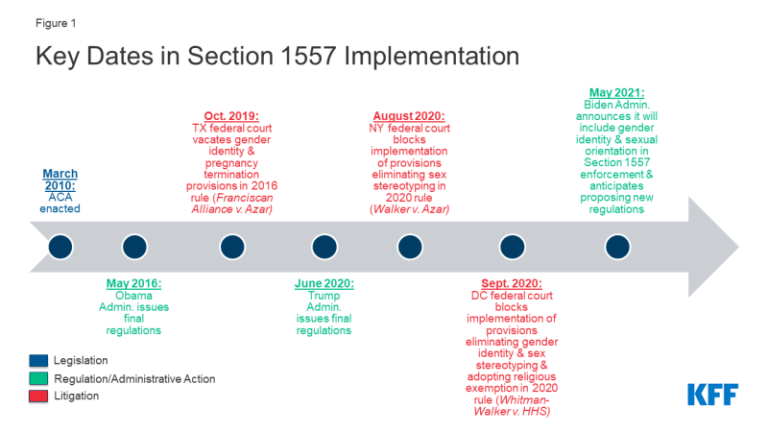
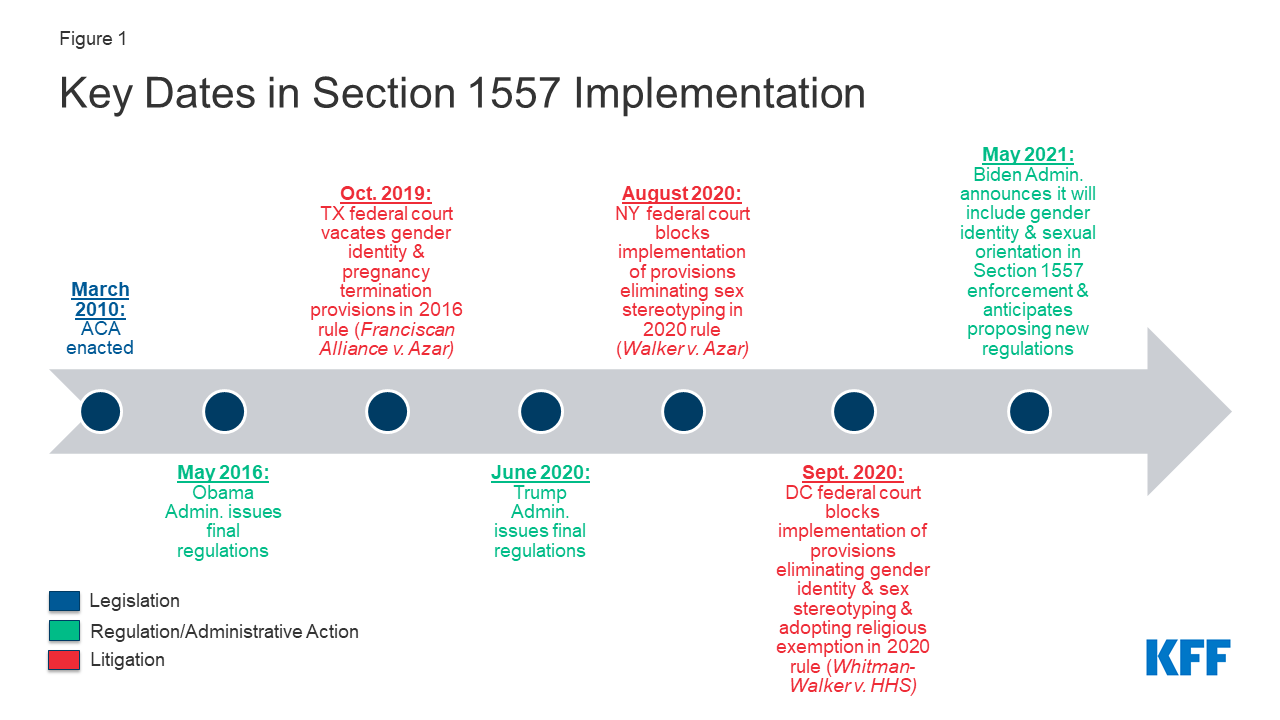
Recent and Anticipated Actions to Reverse Trump Administration Section 1557 Non-Discrimination Rules – Kaiser Family Foundation

The Biden Administration has started taking steps to reverse Trump Administration policy and regulations that significantly narrowed the implementation and administrative enforcement of Section 1557, the Affordable Care Act’s nondiscrimination provision, particularly as the regulations apply to gender identity and sexual orientation. In addition, several lawsuits challenging the regulations, which were initially issued by the Obama Administration and later substantially revised by the Trump Administration, are pending. Section 1557 prohibits discrimination based on race, color, national origin, sex, age, and disability in health programs and activities receiving federal financial assistance. The two versions of the regulations, those from the Obama Administration followed by those from the Trump Administration, adopted conflicting interpretations about the content and scope of prohibited discrimination. This issue brief provides an update on current developments and identifies issues to watch in the coming weeks and months.

Administrative Actions

On May 10, 2021, the Biden Administration announced that the HHS Office for Civil Rights (OCR) will include gender identity and sexual orientation as it interprets and enforces Section 1557’s prohibition against sex discrimination (Figure 1). This announcement followed a federal agency review of existing regulations and policy directed by President Biden’s executive order on preventing and combatting discrimination based on gender identity and sexual orientation, which he issued on his first day in office. The May 2021 announcement marks both a reversal of Trump Administration policy and an expansion of Obama Administration policy. While the Obama Administration regulations included gender identity and sex stereotyping in the definition of sex discrimination, they omitted sexual orientation, noting that federal law in this area was still evolving at that time. Subsequently, the Trump Administration eliminated gender identity and sex stereotyping from the regulations. However, just after the Trump Administration regulations were published, the Supreme Court, in Bostock v. Clayton County, Georgia, ruled that sex discrimination in the employment context does include discrimination based on gender identity or sexual orientation. Following the Bostock ruling, two federal district courts issued nationwide preliminary injunctions (Figure 1 and described further below), blocking implementation of several provisions of the Trump Administration’s regulations related to Section 1557.

Figure 1: Key Dates in Section 1557 Implementation

HHS recently indicated that it will issue a new notice of proposed rule-making (NPRM) to revise the Section 1557 regulations. The Biden Administration states that its “anticipated rulemaking proceeding will provide for the reconsideration of many or all of the changes to existing Section 1557 regulations” that are being challenged in current litigation (described below). The timeframe for the new NPRM is uncertain, with HHS stating that it intends to do so “as expeditiously as reasonably possible” while “account[ing] for HHS’s limited resources. . . .” In light of the Biden Administration’s May 10 announcement, it is likely that the new NPRM will propose not only restoring gender identity but also adding sexual orientation to the regulatory definition of sex discrimination, thereby expanding on the Obama Administration interpretation. The extent to which the new NPRM proposes restoring or expanding other Section 1557 provisions that were changed by the Trump Administration unrelated to the definition of sex discrimination, such as those related to discrimination in health insurance benefit design; language access; notices, grievance procedures, and enforcement; and covered entities, remains to be seen. The new NPRM also could propose restoring provisions prohibiting discrimination based on gender identity and sexual orientation that were eliminated by the Trump Administration in other federal health care regulations outside of Section 1557 that apply to Medicaid, the ACA Marketplaces, and private insurance issuers.

Court Actions

Three of the five cases challenging the Trump Administration regulations have been put on hold to provide the Biden Administration with additional time to complete its review of existing regulations and policy (Table 1). Courts in two of the cases on hold issued the nationwide preliminary injunction orders that continue to block implementation of some provisions of the Trump Administration regulations. These orders remain in place, although the federal government appealed both of them. A third case challenging the Trump Administration regulations also has been put on hold, though the parties disagree about how long the delay in that case should last. The cases currently on hold include:

Two other cases challenging the Trump Administration regulations are currently active (Table 1). Decisions in these cases could influence the contents of the Biden Administration’s expected NPRM as well as the status of the Trump regulations that remain in effect. The active cases include:

Another two cases, which were filed to challenge the Obama Administration regulations and are still pending, raise issues about the interaction between Section 1557’s nondiscrimination provisions and federal laws that protect religious beliefs. The Supreme Court did not reach this issue in Bostock, noting that this is a question for future cases to decide. These cases include:

  • Religious Sisters of Mercy v. Becerra, in which the Biden Administration is appealing a North Dakota federal court ruling that blocks it from requiring Catholic health care entities to perform or provide health insurance coverage for gender transition services under the Obama Administration’s Section 1557 regulations.
  • Franciscan Alliance v. Becerra, in which religiously affiliated health care providers claim that the Obama Administration regulations’ inclusion of gender identity and termination of pregnancy in the definition of sex discrimination would require them to serve people seeking transgender care and people who have terminated a pregnancy in violation of the providers’ religious rights. The 5th Circuit Court of Appeals sent the case back to the trial court to determine whether the providers’ claims are moot in light of the subsequent Trump Administration regulations as well as the recent Biden Administration actions. Briefing on these issues closes on June 18, 2021.

Looking Ahead

The interpretation and enforcement of Section 1557’s prohibition against discrimination in federally funded health programs and activities will continue to develop in the coming months. Outside of the Section 1557 regulations and surrounding litigation, federal courts in other cases have granted relief to individuals alleging discrimination under Section 1557, relying on the text of the statute itself. For example, a Wisconsin federal court permanently blocked the state Medicaid program’s categorical exclusion of gender affirming services from coverage as a violation of the statutory prohibition against sex discrimination. Future court rulings, the forthcoming NPRM, and administrative enforcement by OCR under the new Biden Administration policy together will influence Section 1557 law and policy and could affect the ability to access health coverage and care without discrimination.

Case Name/Court Plaintiffs Status
Whitman-Walker Clinic v. HHS

(DC district court and DC Circuit Court of Appeals.)

Health care and social service providers who serve LGBTQ people and people with LEP Case is on hold, with next status report due 8/12/21, to provide Biden Administration time to assess next steps. Nationwide preliminary injunction blocking parts of Trump Administration rule remains in place.

  • On 9/2/20, the district court issued a nationwide preliminary injunction preventing the federal government from implementing provisions of the Trump Administration regulations that (1) exclude sex stereotyping from the definition of sex discrimination and (2) incorporate a blanket religious freedom exemption from claims of sex discrimination.
  • The district court denied plaintiffs’ motion for a preliminary injunction to block the final rule’s (1) elimination of the provision prohibiting categorical coverage exclusions for gender-affirming care, (2) elimination of notice and tagline requirements, (3) restriction of the rule’s scope to apply only to HHS-administered programs and activities under ACA Title I, and not all HHS programs and activities, (4) exclusion from the rule of certain activities of health insurance issuers not principally engaged in the business of providing health care, and (5) provisions amending the appropriate legal standard to be applied to Section 1557 claims.
  • The Trump Administration appealed the district court’s preliminary injunction order, seeking to have it overturned. After the Biden Administration took office, the appeals court agreed to the parties’ joint request to put the appeal on hold, in light of the Biden Administration’s executive order directing federal agencies to review existing regulations and policy to prevent and combat discrimination based on gender identity and sexual orientation and to allow the Biden Administration time to review the issues in the lawsuit.
  • The Trump Administration also filed a motion to dismiss the district court case. Like the appeals court case, the district court case has been put on hold to give the Biden Administration time to complete its review of agency regulations and policy.
  • On 5/14/21, the parties filed a joint status report in which the Biden Administration said that its assessment pursuant to the executive order is ongoing. The Biden Administration also said that it intends to issue a new notice of proposed rule-making “as expeditiously as reasonably possible” to revise the regulations, which it says will provide the opportunity to reconsider many or all of the issues raised in this case. The Biden Administration also referred to its 5/10/21 notice that it will consider gender identity and sexual orientation within the definition of sex discrimination under Section 1557, consistent with the Supreme Court’s Bostock decision.
  • The next status report is due on 8/12/21, and every 90 days thereafter. The parties are to file motions to govern future court proceedings within 30 days after the Biden Administration completes its review of existing regulations and policy.
Asapansa-Johnson Walker v. Azar

(NY district court (eastern district) and 2nd Circuit Court of Appeals)

2 transgender women of color Case is on hold, with next status report duel 8/12/21, to provide Biden Administration time to assess next steps. Nationwide preliminary injunction blocking certain provisions of Trump Administration rule remains in place.

  • On 8/17/20, the district court issued a nationwide preliminary injunction preventing the federal government from implementing provisions of the Trump Administration regulations that exclude gender identity and sex stereotyping from definition of sex discrimination.
  • On 10/29/20, the district court entered an order expanding the preliminary injunction to also prevent the federal government from implementing provisions of the Trump Administration regulations that eliminated the requirement for healthcare providers to treat individuals consistent with their gender identity and eliminated the prohibition on providers from denying or limiting services based on gender identity. The court denied the plaintiffs’ other requests to expand the scope of the preliminary injunction but said that those requests can be renewed if plaintiffs can establish that they have standing to challenge other provisions.
  • The Trump Administration appealed both of the district court’s preliminary injunction orders, seeking to have them overturned. The district court case is on hold while the appeals are pending.
  • After the Biden Administration took office, the appeals court agreed to the parties’ joint request to put the appeal on hold, in light of the Biden Administration’s executive order directing federal agencies to review existing regulations and policy to prevent and combat discrimination based on gender identity and sexual orientation and to allow the Biden Administration time to review the issues in the lawsuit.
  • On 5/14/21, the parties filed a joint status report in which the Biden Administration said that its assessment pursuant to the executive order is ongoing. The Biden Administration also said that it intends to issue a new notice of proposed rule-making “as expeditiously as reasonably possible” to revise the regulations, which it says will provide the opportunity to reconsider many or all of the issues raised in this case. The Biden Administration also referred to its 5/10/21 notice that it will consider gender identity and sexual orientation within the definition of sex discrimination under Section 1557, consistent with the Supreme Court’s Bostock decision.
  • The next joint status report is due on 8/12/21. The parties disagree about how to resolve the case. The plaintiffs argue that the federal government should withdraw its appeal of the preliminary injunction orders, while the federal government argues that the plaintiffs should dismiss their lawsuit.
NY v. HHS

(NY district court (southern district))

23 states (NY, CA, MA, CO, CT, DE, DC, HI, IL, ME, MD, MI, MN, NV, NJ, NM, NC, OR, PA, RI, VT, VA, WI) Case is on hold, although the parties disagree about when the next status report should be due. The states propose 6/13/21, while the federal government proposes 8/12/21.

  • The states’ motion for summary judgment and the federal government’s motion to dismiss the case are waiting for the court’s decision.
  • However, the court granted the federal government’s motion to put the case on hold (which the states did not oppose) in light of the Biden Administration’s executive order directing federal agencies to review existing regulations and policy to prevent and combat discrimination based on gender identity and sexual orientation and to allow the Biden Administration time to review the issues in the lawsuit.
  • On 5/14/21, the parties filed a joint status report in which the Biden Administration said that its assessment pursuant to the executive order is ongoing. The Biden Administration also said that it intends to issue a new notice of proposed rule-making “as expeditiously as reasonably possible” to revise the regulations, which it says will provide the opportunity to reconsider many or all of the issues raised in this case. The Biden Administration also referred to its 5/10/21 notice that it will consider gender identity and sexual orientation within the definition of sex discrimination under Section 1557, consistent with the Supreme Court’s Bostock decision.
Boston Alliance of Gay, Lesbian, Bisexual & Transgender Youth v. HHS

(Massachusetts district court)

A transgender man and health care and social service providers who serve LGBTQ people and people with LEP Case is active. Hearing scheduled for 6/3/21 on federal government’s motion to dismiss the lawsuit.

The court denied federal government’s motion to stay the case. The federal government had asked for the case to be put on hold to give HHS time to complete its review of regulations and policy in light of the Biden Administration’s executive order directing federal agencies to review existing regulations and policy to prevent and combat discrimination based on gender identity and sexual orientation and to allow the Biden Administration time to review the issues in the lawsuit. The plaintiffs opposed the request.

Chinatown Service Center v. HHS

(DC district court)

Community-based organizations serving older adults with LEP Case is active. Awaiting federal government’s response to complaint.
SOURCE:  KFF analysis of case documents, available at https://affordablecareactlitigation.com/aca-enforcement-directly-and-1557/.

For LGBTQ employees of color, sexual orientation is the biggest source of discrimination in the workplace – USA TODAY

While race and gender remain prime targets for bias, people of color who are also gay, lesbian or bisexual say sexual orientation is the biggest driver of discrimination they face in the workplace, according to a new study shared exclusively with USA TODAY.

Among Black LGB employees, 34% said they believed sexual orientation was the main reason for the discrimination they experienced on the job, compared with 36% of Latinos, 42% of Asians and 32% of Native American workers who felt the same, according to a survey conducted by the IBM Institute for Business Value and Oxford Economics.  

“We found across lines of race that there was agreement … sexual orientation was the biggest liability in terms of the discrimination experienced,’’ says Deena Fidas, managing director and chief program and partnerships officer for Out & Equal Workplace Advocates, which collaborated with IBV on a related survey. 

A recent wave of anti LGBTQ+ legislation may be a key reason some workers see such discrimination as their biggest threat.

State lawmakers have introduced more than 250 bills this year, according to the Human Rights Campaign, including legislation that would prohibit transgender students from taking part in sports or bar teachers from talking about the LGBTQ community in the classroom. Eighteen of the bills have become law or are waiting for a governor’s signature.

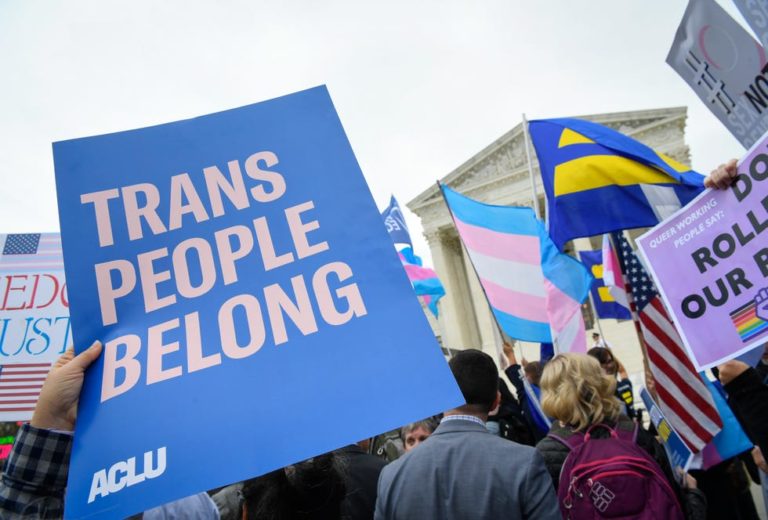
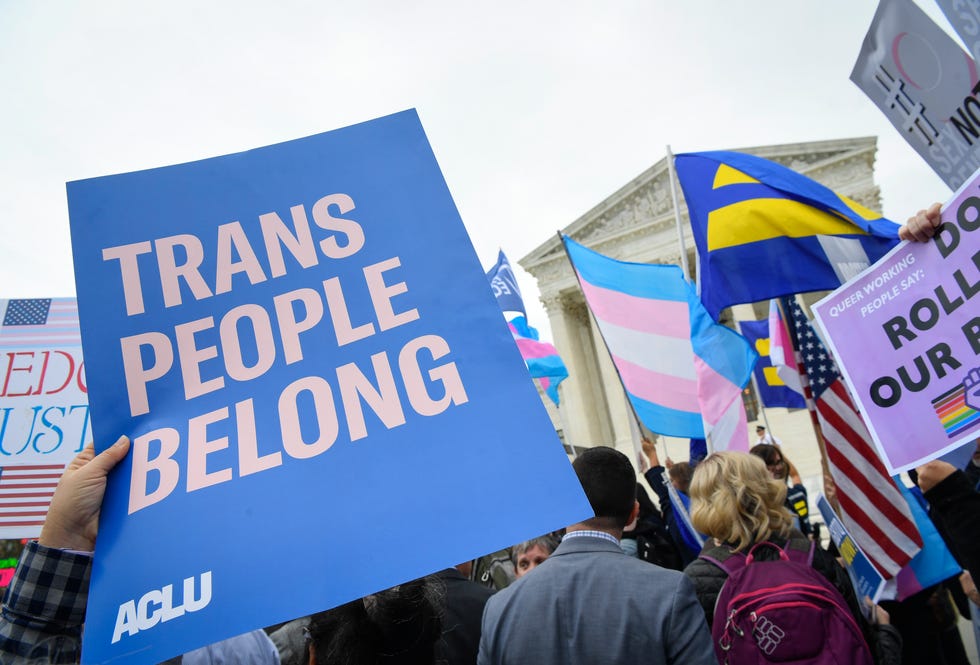
Protestors and supporters gather in front of the U.S. Supreme Court on Oct. 8, 2019 in Washington as the justices hear three challenges from New York, Michigan and Georgia involving workers who claim they were fired because they were gay or transgender.

“In the United States … we still don’t have consistent federal civil right protections on the basis of sexual orientation and gender identity,” Fidas says, adding that while there is still more work to do to ensure equity along lines of race, gender and ability, there is at least a basic legal framework prohibiting discrimination in the workplace based on those characteristics. “The LGBTQ+ community simply doesn’t have that.’’

Race, gender, still are factors 

Still, LGBTQ+ employees say they often face biases aimed at multiple aspects of their identity. And for people of color, who felt sexual orientation was the primary reason they encountered discrimination, race wasn’t far behind.

Among Black employees who identified as gay, lesbian or bisexual, 27% said race was the main driver of discrimination in the workplace, the most of any group. That was compared with 22% of Latino employees and 17% of Asian workers who felt the same.

Getting ready to return:Transgender people transitioned during COVID-19 and are bracing for a return to the office

Not a safe space:Top platforms are unsafe for LGBTQ community, new report says

Meanwhile, 29% of Native American employees said that gender was the primary cause of their experiences with discrimination, second only to sexual orientation.

Layers of bias

Employees of color believe the combination of biases they face hinder their ability to rise in the workplace.

While 50% of those who were lesbian, gay or bisexual believed people who share the same race, gender and sexual orientation as them were less successful than Americans overall, 70% of African Americans who identified as LGB felt that combination of traits was an obstacle. 

Meghan Stabler says that as a transgender woman, her current company's acceptance means she doesn't have to wrap herself in a protective shell.

Among Native Americans, the number dipped slightly to 67%, while 57% of Latinos, 56% of Asians, and 18% of whites who were LGB believed people who shared those same three characteristics were less successful.     

During pandemic, work-life balance was a particular challenge 

Employees who identified as lesbian, gay or bisexual also had a more difficult time juggling remote work with their caretaking responsibilities during the pandemic, with 43% saying it was a challenge as compared with 34% of non-LGB workers.

That may be because employees who hid parts of their identity at the office now found themselves having to put their home life on display via Zoom, says Ella Slade, IBM’s Global LGBT+ Leader.   

“You see their partner in the background, or a rainbow flag hung in the home,” Slade says. “That can add a lot of stress.”

Or, an employee may have been “out at work,” but during the pandemic they quarantined with friends and family who were not aware of their identity or gender expression.

“That creates difficulties,” Slade says.

Businesses have stepped up

But the business community has taken concrete steps to be more welcoming and inclusive, LGBTQ+ advocates say, partly because their employees demand it.

Nearly 9  in 10 workers say their employer or organization should be a stronger public supporter of LGBTQ+ inclusion, according to IBV, which held an event in the spring with Out & Equal and Workplace Pride to gain insights about the experiences of the LGBTQ+ community.

Meghan Stabler has seen the difference between working for a company that is uncomfortable with her expressing her true gender identity, and one that is accepting. 

After she began transitioning in 2004 while working as an executive for a tech company in Houston, Stabler was gradually stripped of responsibilities and demoted. 

“I wasn’t allowed to meet with customers anymore,’’ she recalls. “I wasn’t allowed to be the executive that was talking product strategy  … There was a fear if I did so, we would lose customers.’’

When Stabler began looking for a new position, she continued to struggle, barely getting a call back as she applied to roughly 65 positions over two years. But in 2018, she was hired by BigCommerce, an ecommerce platform, and she felt liberated.

“I don’t have to have a layer of protectiveness or shell around me,’’ she says.

Despite the struggles she previously dealt with, Stabler says, “I’ve been lucky. I have white privilege… It is detrimentally worse for Black trans people in the workplace.”

To create equitable workspaces, businesses should make sure the corporate leadership pipeline includes people who represent the LGBTQ+ community, Slade says. Communicating and enforcing anti-discrimination policies, incorporating practices such as the recognition of an employee’s chosen pronouns, and advocating for civil rights legislation are also key. 

When a company takes a visible stand against legislation that would ban people from using a bathroom that corresponds with their gender identity and similar proposals, “it sends a huge message,” Slade says, “not only to those lawmakers and local governments, but to your own employees.” 

Follow Charisse Jones on Twitter @charissejones

5 Things To Do This Weekend In Cleveland: June 11-13 – Clevelandmagazine.com

Amanda Wicker

Dive into local history, be carried away by the voice of a violin and see the Cleveland community on display in a parade this weekend in Cleveland.

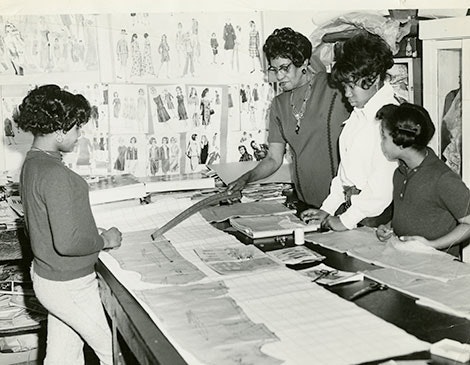
Amanda Wicker: Black Fashion Design in Cleveland at the Cleveland History Center
On June 10, a new exhibit opens at the Cleveland History Center. Almost 100 years ago, Amanda Wicker moved to Cleveland in 1924. Her home on Cedar Avenue would become the starting point of the Clarke School of Dressmaking and Fashion Design. For the next 60 years, her Fairfax neighborhood would revere her as a fashion mentor. Be inspired by 15 of Wicker’s works, on display for the first time, either on Thursday’s opening ($20-$25) from 5:30 to 7:30 p.m., or during regular visiting hours. $12, June 11 thru 2021, Fri-Sun 10 a.m.-4 p.m., 10825 East Boulevard, Cleveland, 216-721-5722, wrhs.org

Community Arts Center opening and Parade the City at the Cleveland Museum of Art
The former Astrup Awning factory complex is officially transforming into something new this weekend. The Cleveland Museum of Art is opening its Community Arts Center in the Clark-Fulton neighborhood this Saturday, a space dedicated to exploring the arts and connecting communities. A prime example of aspired connection, Parade the City, will be held afterward. A revamp of the inaugural Parade the Circle, Parade the City features eight art installations throughout Cleveland made by community groups like Extended Family, the LGBT Community Center of Greater Cleveland and Karamu House. Free, June 12, 10 a.m., 2937 W. 25th St., Cleveland, 216-421-7350, clevelandart.org

Crocker Park Block Party at Crocker Park
There’s something for everyone on the block at the inaugural Crocker Park Block Party — even our friends with four legs! The day starts at 9:30 a.m., with the Crocker Bark 5K and 1 Mile Walk ($30), which welcomes leashed dogs to participate. The proceeds appropriately go toward the City of Westlake’s K9 Unit. The rest of the day offers free events from 11 a.m. on, including live music, a rock wall, sidewalk art, vendors, animal shows and food trucks. Cleveland Metroparks, Cleveland Metroparks Zoo, the Cleveland Baseball Team and Cleveland Browns will also be hosting giveaways for kids. Free, June 13, 11 a.m.-3 p.m., Crocker Park, 177 Market St., Westlake, crockerpark.com/blockparty

Fire by Encore Chamber Music Institute at Dodero Center for Performing Arts at Gilmour Academy
Internationally known violinist and founder of Encore Chamber Music Institute, Jinjoo Cho, returns home to Cleveland to kick off the institute’s sixth annual season, Fire. Inspired by well-known figures from Billie Holiday to Theodore Roosevelt, the first event performed by The Ariel Quartet pays tribute to Marie Curie Friday, June 11. The second, performed by violist Mathieu Herzog and violinist Dorothy Ro, draws its flame from Murakami Haruki, Sunday, June 13. Fire will continue through July 17 with further concerts, which includes discussions about the individuals before and after shows. Specially priced livestream tickets are also available, as well as a full season pass ($220). $10-$30 per concert, June 11 & 13, Fri 7 p.m., Sun 4:30 p.m., 2045 SOM Center Road, Gates Mills, 216-559-4015, encorechambermusic.org

Lost Civil War Book Launch at Prosperity Social Club
Laura DeMarco made her mark at The Plain Dealer as an arts and culture reporter, and the journalist continues to keep history alive in her latest book, Lost Civil War: The Disappearing Legacy of America’s Greatest Conflict. The book, which is set for release on June 15, will celebrate its launch with a book signing at Prosperity Social Club. Accompanying it will be a test to anyone’s inner history buff with a Civil War trivia contest, as well as food and drink specials — including a civil war-inspired cocktail, named Bourbon Junkie ($10). Free, June 12, 2-4 p.m., Prosperity Social Club, 1109 Starkweather Ave., Cleveland, 216-937-1938, laurademarcoauthor.com

Jason June discusses the magic of queer firsts with Jay’s Gay Agenda – Culturess

Jason June’s debut young adult novel Jay’s Gay Agenda follows newly out teen, Jay, on his quest to experience all the gay firsts in a riotous and sweet story.

When Jay gets the chance to move to Seattle and no longer be The Only Gay, he jumps at the chance to actually live out his Gay Agenda and check off items like, Meet another gay kid,” to the more hormonal, “See another penis besides my own, IRL, and do fun things with it!”

But, of course, the Agenda quickly goes awry when two VSBs (Very Sexy Boys) cross Jay’s path and he has to choose between his heart and his…other heart, as he realizes the Agenda is more than just a game, it’s real life.

Culturess sat down with Jason June to discuss sex positivity in YA, how to balance humor alongside real emotion and the magic of queer beginnings. (Read our full review of Jay’s Gay Agenda before diving into the interview below.)

This interview has been edited for length and clarity.

Culturess:  Jay’s Gay Agenda is a coming-out story in a very roundabout way. By focusing on the checklist of experiences after coming out, what were you hoping to accomplish? 

Jason June:  Coming out stories hold such a special place in my heart because it’s such a pivotal experience in so many of our lives. And even after we come out that first time, we constantly come out for the rest of our lives in each new environment we find ourselves in.

For Jay, I wanted his story to be about what’s after that initial coming out so that we have more examples of how much fun life can be after that anxiety-ridden moment of sharing who we are with the world for the first time.

All those firsts, like first kisses and first dates and first hookups, can bring so much magic into our lives, and I wanted this book to be about that magic.

Culturess:  Jay’s voice is laugh-out-loud funny and chockful of puns. How do you balance the humor in the novel with the very real emotions at play?

Jason June:  I’m so glad this made you laugh! I tried to pull out the humor in normal, everyday situations so many of us find ourselves in. Especially with dating for the first time, there can be so many fun awkward moments that were such a blast to pull out, and I hope are relatable for many of us.

But I wanted to be sure too that this book had heart, so for every few LOL times, I wanted to make sure we explored why certain things were so pivotal for Jay’s development as a romantic and sexual being, or dive into why other characters’ life experiences shaped the decisions they made.

I wanted to be sure that each of the pivotal characters Jay interacts with—Lu, Albert, Max, and Damon—had a moment where we learned about their life before Jay moved to Seattle, learned about their pasts and life choices, and also had a moment where they contributed to the comedy part of the rom-com.

Culturess:  Jay’s Gay Agenda may be one of the most sex-positive young adult novels out there, queer or not. What do you want young readers to take away from the novel about their own sexuality?

Jason June:  Making this sex-positive was so so important to me because when I was a teen, there wasn’t a lot of media celebrating queer teens’ sexual awakening, but movies and books showcasing straight teens’ hormones and horniness were everywhere.

It made me feel like something was wrong with me, and I want my book to be something that helps end those shame spirals. So I hope readers take away from this that having sexual thoughts about any consenting human regardless of gender or sexuality is a beautiful thing, and that queer sexuality is just as deserving of the spotlight as anybody else!

Culturess:  In a sort of classic rom-com structure, Jay pursues two different guys, but the reader knows upfront that he’s interested in one romantically and one sexually. What led you to this story choice? Why did you think it was important to give Jay these choices?

Jason June:  I wanted Jay to have these two choices to explore the idea that sex doesn’t always have to be about love. That can definitely 100% be such a magical experience when it is, but having sex to explore your body and figure yourself out and connect with another human on simply a physical level can be magical too.

I also wanted to show through Jay’s experience just how soul-uplifting both things can be: falling for someone’s entire personality and meeting someone who so clearly shows they want to get physical with you.

I hope readers see that one isn’t “better” than the other, but the fun comes in figuring out what combination of these two areas—love and sex—works best for you.

Culturess:  You’ve previously published picture books, but Jay’s Gay Agenda is your official debut as a young adult author. How did the process differ for you as a writer? What do you find the most joyful and challenging about writing for different age categories?

Jason June:  I love love love that I get to write for all age ranges! One of the most notable differences between this and my work in the picture book (Whobert Whover, Owl Detective and Porcupine Cupid) and chapter book (Mermicorn Island) space is that I’m finally writing about humans!

My work for younger readers has all featured animals, but whether animal or human I include queer themes and hopefully heart. And with Jay’s Gay Agenda, I got to explore those even more since I had so much more space to work with, developing backstories not only for Jay but for all the secondary characters too, which is something I haven’t been able to do as much of before.

Creating whole developed histories of people in a contemporary setting was so special and made me feel like I was a part of this friend group. That was also the most challenging part for YA: keeping track of everyone’s stories and how they intersect. But once it all came together, it was such a special moment.

For picture books, the hardest part is telling a whole complete story with humor and heart in under 500 words. It’s such a challenging puzzle, but like with YA, when it all comes together it’s just *chef’s kiss*.

Culturess:  Jay’s Gay Agenda is full of a rich cast of characters, queer and not queer alike. How did you make sure all of Jay’s friends, family, and classmates had a moment to shine?

Jason June:  I love Jay’s framily so much! I wanted to be sure that while Jay is the star of this show, it’s clear he’s not the star of all these other characters’ lives; they’re the main character of their own stories.

So I wanted each character to have moments where they could explain their own lives and show us what their life looks like outside of Jay.

And since this is a book all about different kinds of relationships, I wanted them each to be able to share with us their histories in terms of romance and friendship, and let Jay take those in and see if any of their paths tugged at his heart and made him want to go in a similar direction.

Culturess:  Is there anything else you’d like to add?

Jason June:  Just that I’m so, so thankful for everybody’s support. It’s been so surreal and floaty in the best way to kick off Pride with people celebrating this book all about queer joy and love and lust and I will never forget this moment for the rest of my life. I love you all!

Jay’s Gay Agenda is available now wherever books are sold. Let us know if you add it to your TBR pile.

Stony Brook Medicine launches survey to learn about LBGTQ healthcare needs – RiverheadLOCAL

Stony Brook Medicine has launched a survey to collect data on the healthcare needs of the LGBTQ community on Long Island to better inform their practice.

The survey is the first of its kind on Long Island. It launched on June 4 and is available until the end of June to complete for lesbian, gay, bisexual, transgender or queer/questioning adults in Nassau and Suffolk counties. The survey is anonymous.

Dr. Allison Eliscu, Stony Brook Medicine’s chief of adolescent medicine and principal investigator of the study, said that the survey’s results will help address gaps in data on the needs of the LGBTQ community both on a national level, and especially on a regional level on Long Island.

“[The survey] gives the opportunity for LGBTQ individuals here in Nassau and Suffolk counties to make their voices heard and really feel empowered in their care; to voice what experiences they’ve had in the healthcare system thus far, whether it was positive or negative experiences and what concerns they have,” Eliscu said.

LGBTQ individuals face certain health disparities, Eliscu said. This includes higher rates of sexually transmitted infections, higher rates of mental health disorders and suicidal ideation, and being less likely to have health insurance. LGBTQ individuals have also experienced discrimination in the doctors office and are also often less comfortable.

With the survey, Stony Brook hopes to learn what resources healthcare providers need to better serve the LGBTQ community. Stony Brook Medicine has already been named a leader in LGBTQ healthcare, with both their hospitals receiving top scores in the National LGBTQ Healthcare Equality Index of the Human Rights Campaign Foundation in 2020.

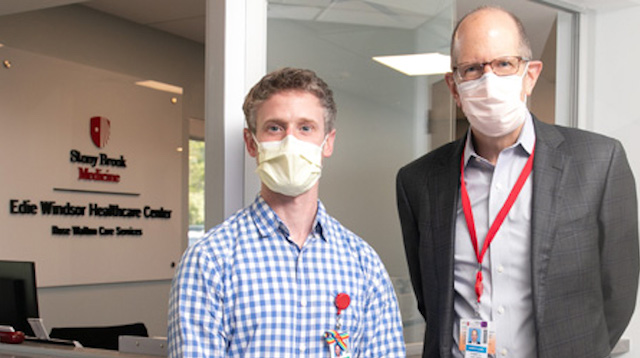
They also spearheaded LGBTQ healthcare services on Long Island with the Edie Windsor Healthcare Center in Hampton Bays, which provides specialized care for the LGBTQ community and services to people living with HIV/AIDS. Employees at the center are recruited based on their interest in LBGTQ healthcare, according to Southampton Hospital’s chief administrative officer Robert Chaloner.

“By encouraging as many people as possible to do the survey we will be able to get a better sense of what are the health needs of the community and be able to plan and structure the services more precisely than we’ve been able to do in the past,” Chaloner said.

The survey is also being distributed in partnership with more than 20 Long Island based organizations and community leaders who help to support the LGBTQ community and their struggles.

“We will be sharing information back with those organizations so that together we can try to improve access to care and make sure that resources are available,” Eliscu said.

Support local journalism.
Now more than ever, the survival of quality local journalism depends on your support. Our community faces unprecedented economic disruption, and the future of many small businesses are under threat, including our own. It takes time and resources to provide this service. We are a small family-owned operation, and we will do everything in our power to keep it going. But today more than ever before, we will depend on your support to continue. Support RiverheadLOCAL today. You rely on us to stay informed and we depend on you to make our work possible.

Burger King donating up to $250K to LGBT group in swipe at Chick-fil-A – The Christian Post

Burger King
Burger King signs at a restaurant in Annandale, Virginia, on August 24, 2010. |

A prominent fast-food company announced that it’s donating nearly half of the proceeds from its sales of chicken sandwiches to an LGBT activist group while taking a shot at one of its competitors. 

Burger King, one of the largest and most popular global fast food companies, sent out a tweet Thursday announcing that “the #ChKing says LGBTQ+ rights!” The tweet, which is now pinned to the Burger King Twitter account, referred to the Ch’King, the restaurant chain’s newly created chicken sandwich.

“During #pridemonth (even on Sundays) your chicken sandwich craving can do good! We are making a donation* to @HRC for every Ch’King sold!”

Burger King will donate 40 cents to the Human Rights Campaign, the largest LGBT activist group in the United States, for every Ch’King sold between June 3 and June 30. The fast-food chain will donate up to $250,000 to HRC, a goal that can be reached with the sale of 625,000 chicken sandwiches. 

The reference to Sundays in the tweet is seen as a veiled swipe at Chick-fil-A, another major fast-food chain that, unlike nearly all of its primary competitors, does not open on Sundays because of the religious beliefs of the restaurant chain’s founders.

Steve Cortes, a Newsmax host and former Trump campaign employee, took issue with Burger King’s jab at Chick-fil-A for closing on Sundays: “This corporation makes it clear it mocks Christians (and other religious people) and doesn’t want our business.” 

In the past, Chick-fil-A has come under fire from progressives because its CEO, Dan Cathy, has expressed opposition to same-sex marriage. A recent article in The Daily Beast alleges that Cathy is among several donors to the National Christian Charitable Foundation, a charity that’s opposed to the passage of the Equality Act. Supporters of the Equality Act paint the wide-reaching legislative initiative as necessary to prevent discrimination against LGBT people. Opponents of the bill worry about its implications for religious liberty and women’s sports. 

More than 400 major companies have signed onto the Human Rights Campaign’s Business Coalition for the Equality Act, a coalition of companies that have publicly declared their support for the Equality Act. Although Burger King has made its support for LGBT activism quite clear over the years, it is not a member of HRC’s Business Coalition for the Equality Act.

In addition to supporting the Equality Act, the Human Rights Campaign called on the Biden administration to strip accreditation from Christian schools that subscribe to biblical beliefs about sexuality and marriage, and therefore oppose homosexuality.

The group has also steadfastly opposed efforts by states to prevent boys who identify as female from competing in girls’ sports. 

In response to the passage of such a bill in Alabama, Alphonso David, the president of HRC, characterized it as a “politically motivated bill designed to discriminate against an already vulnerable population.” Conservative political commentator Paul Joseph Watson slammed Burger King’s partnership with HRC, which he described as a “radical LGBT lobby group that supports child sex changes.” 

Speaking to USA Today, a Burger King spokesperson defended the company’s decision to collaborate with HRC: “This is a community we love dearly and have proudly supported over the years, so we couldn’t miss an opportunity to take action and help shine a light on the important conversation happening.” 

Burger King’s partnership with the Human Rights Campaign is not the first example of the restaurant chain embracing LGBT activism. In 2014, Burger King introduced a “Gay Pride Whopper” in San Francisco ahead of the annual Pride Parade. While the “Gay Pride Whopper” tasted and looked the same as a regular Whopper, it was packaged in a rainbow-colored wrapper containing the message “we are all the same inside.”

Additionally, the San Francisco Burger King, which was located along the parade route, handed out more than 50,000 rainbow-colored Burger King crowns to those participating in the parade. The “Gay Pride Whopper” was sold exclusively in San Francisco for a limited time and the proceeds from its sales went to the Burger King McLamore Foundation, which provided scholarships to LGBT high school seniors who were slated to graduate in the spring of 2015.

Ryan Foley is a reporter for The Christian Post. He can be reached at: ryan.foley@christianpost.com

What Channel are the Euros on? Graeme Souness lands ITV pundit gig – Entertainment Daily

The Euros 2021 football championship is now upon us, but what channel are they on in the UK?

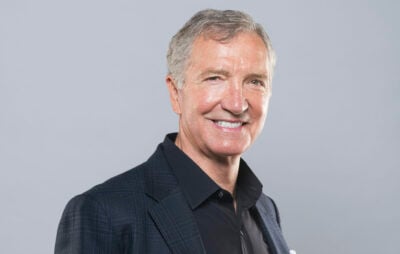
ITV has a dedicated team of commentators and pundits lined up, among the non-nonsense Graeme Souness.

A legendary player and manager, and now regular pundit for Sky Sports, what more is there to know about the impressive Scot?

Euros 2021 Graeme Souness
Graeme will be a pundit for ITV (Credit: ITV)

How did ITV Euros 2021 pundit Graeme Souness become famous?

The 68-year-old was born in Edinburgh and became a star when he was transferred after a successful stint at Middlesborough in the late 1970s.

He joined First Division powerhouse Liverpool in 1978 and came on board just in time for the club’s most successful ever period.

During his time at Anfield, he not only became captain but also lifted five First Division championship trophies and three European Cups.

Read more: Gary Lineker sparks outrage on Twitter as he ‘pokes fun’ at TV licence fee increase

In 1986 he went abroad to Sampdoria in Italy and won the Italian Cup there.

He finished his playing career at Glasgow Rangers.

But it wasn’t just on the club circuit Graeme was a star – he was a part of the Scotland team that went to two World Cups.

Euros 2021 Graeme Souness
Graeme Souness in his Liverpool playing days (Credit: Colorsport/Shutterstock (3067778a))

What was he like as a manager?

Known as a hardman on the field, he carried his fiery demeanour over to management.

Becoming player-manager at Rangers, the team won two league championships under his stewardship.

He then went to Turkey for an eventful spell as manager of Galatasaray. However, his two-year stay in Istanbul will be remembered for one moment.

During the Turkish Cup Final, Galatasaray played fierce cross-town rivals Fenerbahçe.

He nearly sparked a riot when he ran onto the pitch and towards the centre circle, planting a huge Galatasaray flag in the grass.

After his Turkish adventure, Graeme managed in Portugal (Benfica), Italy (Torino) and back in England (Southampton, Blackburn Rovers and Newcastle).

Euros 2021 Graeme Souness
Graeme had a heart attack in 2015 (Credit: Grant Buchanan / Flynet – SplashNews / SplashNews.com)

Triple heart bypass surgery when he was 38

Always known as the ultimate competitor on the field and off, Graeme had to change his lifestyle when he suffered a heart attack in 2015.

This followed triple heart bypass surgery when he was only 38.

He says: “When I was diagnosed with coronary heart disease, I was as fit as any other player on the pitch.

“I never thought I’d be the type of person to get heart disease but if it can happen to me, it can happen to anyone.”

Graeme Souness praised for support of gay community

Now a firm favourite on Sky Sports, Graeme raised eyebrows when he attended Gay Pride in Brighton in 2019.

In an on-air discussion, he encouraged gay and bisexual players to come out.

“I went to Brighton Pride and it was enlightening,” he said.

“We have to create an environment where they feel comfortable.”

His stance, contrary to his perceived hard man image, won praise from fans and gay rights campaigners alike.

Euros 2021 Graeme Souness
Graeme Souness and second wife Karen (Credit: FameFlynet.uk.com / SplashNews.com)

Is Graeme Souness married and does he have children?

Graeme married his first wife Danielle in 1984, and together they went on to have three children. They also adopted another child.

Sadly, Graeme and Danielle separated in 1989 and divorced later.

Read more: Ian Wright: Home Truths documentary sees footballer reveal horrific childhood abuse from stepfather

Graeme remarried in 1994, and with Karen he had a son.

Karen also has two children from a previous relationship, one of which (Lauren) works as a sports presenter on the Al-Jazeera network.

Leave us a comment on our Facebook page @EntertainmentDailyFix and let us know what you think of this story.

‘It’s open to everybody’: Bet-z Boenning has created a safe space for the LGBT+ community for decades at Walker’s Pint – Milwaukee Journal Sentinel

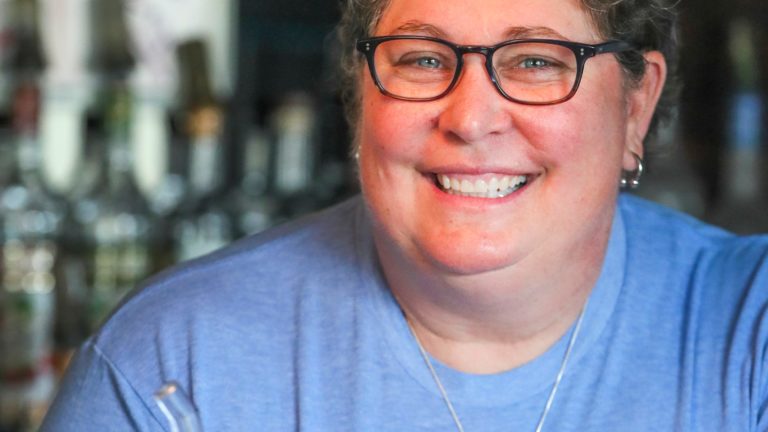
Both Elizabeth “Bet-z” Boenning and the bar she owns look simple on the outside.

Boenning’s working uniform is jeans and a t-shirt. She keeps her hair short so her natural curls are easy to manage.  

Her bar’s green awning just says Walker’s Pint, its name. Staff wear t-shirts with Walker’s Pint golden rule on the back: “Be nice or leave.”

For the past 20 years, Walker’s Pint has been a safe social space for the gay community, especially women. 

“It’s open to everybody. I don’t want to exclude people. I know what it’s like to be excluded,” Boenning said. 

A lesbian who has been with her wife for 14 years, Boenning said her family and friends are accepting, but that’s not always the case with strangers. 

“Being out at bars, and people calling you a ‘dyke,’ and you’re not included, and you’re made fun of an dismissed as less than, it’s not a good feeling,” Boenning said. “I’ve really lucked out that I’ve had a great support system. There’s a lot of people who don’t have anything, so we try to make them feel welcome here.” 

She has gay staff, straight staff, and people who are transitioning genders working for her. They are all welcome to join Boenning’s family at the Pint. 

“I never thought we would have a community like this,” said Kristina Gibbons, who has worked at Walker’s Pint for many years. “We’ve gone through people who hate us and that protest us, and we’ve seen it all, especially during Pride(Fest). Just people treating us like garbage, so it’s nice to have a safe space.”

She said for years people would protest outside of the bar during the PrideFest Parade, which goes down 2nd Street past Walker’s Pint. She said it was much more common before gay marriage was legalized in 2014. 

More:These Wisconsin homeowners were told to take down their Pride flag. Their clever loophole became Internet famous.

More:During Pride Month, the Black and LGBTQ+ communities need to celebrate common ground

“I just laugh now. It’s really sad to see someone have that much hate. We’re in here dancing to Cher. You have nothing else to do besides protest?” Gibbons said.

But it wasn’t easy for Gibbons to laugh it off the first few years that she experienced it.

“I come from a military family, so I’m not accepted,” Gibbons said of her sexuality. “So here I’m accepted, so I’m like OK, this is my place. I feel like a lot of people feel that. If their family has disowned them, or if they’re having a hard time with their sexuality, they can just come here and be themselves.” 

Gibbons said she started working for Boenning 17 years ago, and then had to stop working for a period of time. She didn’t go into details on why she had to leave, but she said Boenning was forgiving of her and lether come back. 

“She gave me another chance and I’ve been here ever since. It helped me turn my life around,” Gibbons said. 

Beyond creating a welcoming environment for staff and gests, Boenning has run dozens of fundraisers for causes that pull at her heart strings, from multiple sclerosis to a friend whose dog needs an expensive surgery. She’s in the process of creating her own nonprofit organization to do more of that.

Walker's Pint, a gay bar for women at 828 S. 2nd St., is celebrating 20 years in business.

The history of Walker’s Pint

Boenning opened Walker’s Pint in July 2001. Previously, she had worked at Dish, a women’s bar in the 1990s. Dish transitioned to being more of a dance club, and then closed in 2000.

Boenning still wanted a space where she could just hang out, so she saved money to open her own bar.

She soon found an ad for a small bar at 818 N. 2nd St. with a patio and big windows.

“Most of the gay bars were dark. The buildings are from the industrial era, so no windows. And all the boy bars have the windows all blocked up,” she said. “I didn’t want to keep going to these dark places. I want to have just a regular bar with awesome windows, and get sunlight, and not have to hide anymore.”  

Boenning said when she first purchased the bar she made a point to go to every neighboring bar to let them know they were moving in, and that everyone was welcome to come in.

“Back then, boys bars were kind of boys bars and you didn’t mix a lot. The staff that I had, and it was very small staff, I think it was three or four people, we made a point to let everyone know that we were here,” Boenning said. “We all agreed, like why weren’t we blending our crowds?”

More:DJ Shawna is the Bucks’ official DJ, opened for Lizzo, and still plays at the small bar where she started

She said she was especially close with neighboring Steny’s, a sports bar, and Fluid, a gay bar, across the street.

“On Sunday fundays before COVID, it just seemed like all the bar owners would run around to the other bars on the block,” she said. 

Bill Wardlow, who owns Fluid, said he and Boenning became friends after Walker’s Pint opened. 

“I just remember one day she came in. We both had been having difficulties like any bar owner has,” Wardlow said. “I asked her how she was doing, and she said ‘Stressed out. How are you doing?’ and I responded ‘Stressed out.’ The flood gates opened and we’ve been friends ever since.” 

He said that Boenning is one of the most kind and generous people that he knows and he’s impressed with the fundraisers she hosts. 

He also is impressed with the talent Boenning books on weekends, like DJ Shawna, who has gone onto be the Bucks official DJ, and Betsy Ade, who went onto have fame on the singing show “The Voice.” 

“Bet-z is a great asset to Walker’s Point,” Wardlow said. “I’m grateful she moved in across the street.” 

A Proud place

The Walker’s Point bars come together for the annual PrideFest, which has been canceled for a second consecutive year in 2021 because of the COVID-19 pandemic.

For Boenning, her most memorable weekend at Walker’s Pint was the PrideFest weekend in 2014 when gay marriage was legalized by the United States Supreme Court. 

“The energy that was in this neighborhood was so positive. It passed that Friday. My wife and I went down to the courthouse and got married that Saturday. We came back and celebrated here,” Boenning said. “I still get chills thinking about it.” 

Aside from PrideFest, Walker’s Pint thrives for a weekend in July when they throw a Scorpio party, since many bartenders from the Pint’s early days, including Boenning, are under the Zodiac sign of Scorpio. 

When Boenning says she does everything for Walker’s Pint from the books to the bathrooms, that also included a drag performance for a Scorpio Party when their entertainment canceled last minute. 

Walker's Pint owner Elizabeth "Bet-z" Boenning, middle, poses with her employees that she considers family. From left: Liam Odden, Michelle, Rosie Quesada, Boenning, Kelly Platner, Kristina Gibbons and Morgan Evans.

“She’s hilarious. She’s also a great friend and she’s very giving. I can’t say enough good things about her,” said Dre Boyer, a patron who bartended at Walker’s Pint 19 years ago. 

Boyer is one of the Scorpios celebrants. She visited Walker’s Pint on a recent Tuesday for happy hour with another patron, Mary Crogan. 

Crogan first went to Walker’s Pint because it was a lesbian bar. But now, in 2021, she doesn’t feel like she has to go to a gay bar to be with a partner of the same sex. Crogran said keeps coming back to the Pint because of its staff and its openness to everyone. 

Crogan was visiting the bar to show the staff her 7-week-old puppy. 

Her previous dog, Jackson, died a few weeks before. That dog’s name was on a plaque at the bar, and served as an unofficial mascot of Walker’s Pint. 

Crogran said when the bar was slow Boenning would turn on the dance lights and the dog would chase the lights around the bar. 

When Jackson was diagnosed with cancer at 3 years old, Boenning threw a party to raise money for his treatments. They raised enough money for the dog to get the medication it needed, and it lived for seven more years. 

Gibbons also recalled how Boenning put together a fundraiser on a night Gibbons was supposed to go to a Gwen Stefani concert. Instead Gibbons donated her tickets and helped with the fundraiser at Walker’s Pint.

That night, a couple came in who couldn’t use their Gwen Stefani concert tickets. Boenning bought those tickets for Gibbons and told her to go have fun. 

“It was just awesome for her to do that,” Gibbons said. 

Elizabeth "Bet-z" Boenning holds a Jack Daniels Tennessee Fire bottle on May 6, 2021, at Walker's Pint, 818 S. 2nd St. The Pint has been in business for 20 years. "This is my baby," she said. "I put a lot into this. It is more of a family than a bar."

Forward Please

After 20 years of fundraising for different causes, Boenning created a nonprofit organization to help facilitate charitable ventures. 

The 501(c)(3) is named Forward Please. 

She got the name while chaperoning in Costa Rica for a school trip with her friend who is a Spanish teacher.

Boening, her friend, and about a dozen high school girls went whitewater rafting on the trip. Every time they hit a wave the girls shifted to the middle of the boat and freaked out, leaving Boenning, the teacher and the guide to paddle by themselves. 

The guide said he would let them know when he really needed them to paddle by yelling “forward please.” 

At first he would nonchalantly said “forward please,” but then as they hit more intense waves, he more intensely would scream “forward please,” but it didn’t do much to get the girls to paddle, and they eventually flipped.

Once the guide got everyone back in the boat, he explained that they all have to help each other move forward. 

“He said, ‘We can’t just give up and cave in. We all have to paddle together to get to the end,'” Boenning said. 

It spoke to Boenning. 

She launched Forward Please with a golf outing on May 23 where they raised $2,000. 

Of that money raised, Forward Please will donate $1,000 to Special Olympics in honor of Ken Kuemmerlein, a worker at Steny’s who died of COVID-19 in 2020. 

The golf outing fell on his birthday so it only felt right that Kuemmerlein’s favorite cause be our first fundraising effort,” Boenning said. 

More:‘Incredible friend’ and ‘the heart of the group’ at Steny’s, Ken Kuemmerlein dies of COVID-19

The rest of the money will be donated to other organizations as Forward Please hosts more events in the summer and fall. 

Boenning wanted to make clear that Forward Please is a charity for anyone in need or facing disadvantages. 

“I like to have options. I don’t want to have just one cause,” Boenning said. 

She also will host a golf outing on Aug. 15 at Whitnall Park to raise money for Courage Milwaukee. 

“No matter your background, when people have challenges and stuff, you come together and have each others backs, and solve problems and come up with the solutions,” Boenning said.

“My mom has always said, that its nice to be important, but its more important to be nice. I promote my staff to do that, and treat people like that,” Boenning said. “We just focus on being welcoming, nice, kind. And then the fun just happens.”

Jordyn Noennig covers Wisconsin culture and lifestyle.  Follow her on Instagram @JordynTaylor_n. Find her on Twitter @JordynTNoennig. Call her at 262-446-6601 or email Jordyn.Noennig@jrn.com.

Community-Based Programs Look to Decrease HIV Incidence – Contagionlive.com

This week, in the midst of the COVID-19 pandemic, we were reminded of another pandemic—HIV/AIDS.

Many of the mistakes of the HIV/AIDS pandemic we still haven’t learned—stigma, harm reduction, social and racial inequity, and the impact of leadership with little interest in addressing a growing outbreak. Of course, the impact of COVID-19 has been felt far and wide, those early days of the HIV/AIDS epidemic were felt by an already marginalized community that instead of receiving support, was further stigmatized and neglected. It’s been 40 years since the Centers for Disease Control and Prevention (CDC) published a Morbidity and Mortality Weekly Report (MMWR) regarding a cluster of pneumocystis pneumonia among gay men in Los Angeles, California.

While the disease existed well before it was identified some 40 years ago, since this first publication, millions have been impacted. Currently in the United States, 1.2 million are living with HIV and roughly 13% don’t know their infection status. In 2019, 34,800 new infections occurred and from 2015-2019, there was an 8% decline in HIV incidence. Currently, 69% of new HIV diagnoses are in men who have sex with men (MSM), but the number of new HIV diagnoses in MSM actually declined overall from 2015-2019.

In the United States though, rates of HIV diagnoses among adults and adolescents is higher in southern states—with states like Texas, Louisiana, Mississippi, Georgia, Nevada, and Florida, with rates substantially higher than more northern states. A new publication in JAMA addressed this trend by reviewing community-based organizations working to confront HIV in Southern states.

One such example of these critical organizations is Transclusive. which is “the only African American trans-led organization in South Florida that offers comprehensive services for transgender and gender nonconforming people, including HIV prevention and care. Williams leverages her experience as a Black transgender woman who transitioned 30 years ago to establish comfort and confidence for people who may not trust the health care system.

The organization’s work earned it technical support from pharmaceutical maker Gilead Sciences’ 10-year, $100 million COMPASS (Commitment to Partnership in Addressing HIV/AIDS in Southern States) Initiative. It’s part of the drive involving many organizations to support community-based programs that have sprung up to tackle the deeply rooted HIV/AIDS epidemic in the southern US.”

As the authors emphasized, the south has been heavily hit by the HIV/AIDS pandemic for decades, with some of the highest rates across regions. More recent analysis has underscored the unequal access to healthcare and long-term institutional racism and policies that contribute to disparities in HIV diagnoses. As the authors note “Black individuals make up a larger share of the population in the south—31% compared with 13% of the overall US population. Sullivan and his colleagues reported that in 2018, 38% of all new HIV diagnoses among men who have sex with men were in Black men and that 63% of those diagnoses were in the south.”

Supporting and building up community-based programs is critical to combat these trends. Working with scientists from disproportionally affected groups and engaging people trusted within the community can help address the systemic issues that inhibit change. Initiatives from universities, like Emory, can help correct inequities, such as access to care, but now more than ever, we need to be investing in these initiatives as critical rather than optional.

Nearly 1 in 5 young adults say they’re not straight, global survey finds – NBC News

An increasing number of young adults identify as nonheterosexual and noncisgender, according to a new global survey from Ipsos.

The results, released Wednesday, are based on internet surveys of more than 19,000 people in 27 countries ages 16 or 18 (depending on the country) to 74. The surveys were conducted in the languages of each country.

Respondents in Generation Z, which includes people born after 1997, were nearly four times as likely than those over 40 (4 percent compared to 1 percent) to identify as transgender, nonbinary, gender-nonconforming, gender-fluid or “in another way.”

They were also the age group most likely to identify as something other than heterosexual. Overall, 9 percent of respondents identified as lesbian, gay, bisexual, pansexual, omnisexual or asexual; for Generation Z, the figure doubles to 18 percent.

June 8, 202104:34

Previous surveys of young Americans have pointed to this phenomenon: In a Gallup poll last year, 5.6 percent of U.S. respondents overall identified as lesbian, gay, bisexual, transgender or queer, while 16 percent of those in Generation Z reported being LGBTQ.

“The patterns that we see in the U.S. are definitely not unique to the U.S.,” Nicolas Boyon, senior vice president of public affairs at Ipsos, said of the higher rate of gender and sexual fluidity among Gen Z. “It’s a global phenomenon.”

Worldwide, 1.4 percent of those surveyed identified as gender minorities, with Sweden (2.9 percent), Germany (2.5 percent) and Argentina (2.3) having the highest percentages of respondents who identify as transgender, nonbinary, gender-nonconforming, gender-fluid or “in another way.” South Africa (0.3 percent) and Belgium (0.5 percent) had the lowest.

India (17 percent), Brazil (15 percent) and Spain (12 percent) had the highest percentages of respondents who identified as nonheterosexual. China and South Korea had the lowest.

Exposure to sexual and gender minorities

Worldwide, 42 percent of survey respondents said they have a gay or lesbian relative, friend or colleague, while 24 percent said they know someone who is bisexual; 10 percent said they known someone who is transgender, and 9 percent said they know someone who is nonbinary, gender-nonconforming or gender-fluid. The likelihood is higher among women than among men in all four groups, and there is wide national variation. In Brazil, for example, 66 percent report having a gay or lesbian relative, friend or colleague, but in Japan and South Korea, the number is only 7 percent.

When it comes to speaking out on behalf of LGBTQ people, nearly one-third of all respondents around the world said they had done so. Consistent with the other findings, the survey found that Gen Z is much more outspoken than older generations, with 40 percent saying they have spoken out against anti-LGBTQ prejudice.

Eleven percent of respondents across all 27 countries reported having attended a same-sex wedding, from over 20 percent in Mexico and Argentina to 1 percent in Russia.

The survey asked about participation in pro-LGBTQ events, like Pride marches. Globally, 13 percent of all respondents said they had attended such an event, including 54 percent of lesbian and gay respondents and 10 percent of heterosexuals. In Australia, more than 20 percent of respondents reported having attended an event in support of LGBTQ rights, but in Russia, only 1 percent did.

“I’m not surprised that Russia stands out,” said Emil Edenborg, an associate senior lecturer at Stockholm University and an expert on Russia. Edenborg, who was not involved in the survey, said the low level of participation in Pride events in Russia is due, in part, to the country’s so-called gay propaganda law.

“Pride parades are banned in Russia since 2013, as are public expressions in favor of LGBT rights,” he said.

The law not only affects activists, Edenborg said — it also targets social media and any kind of public information, including sexual education information.

“The most harmful effect of this law is the way it impacts young people,” he said. “It really has put a harsh form of censuring on young people, especially limiting their ability to speak out about their sexuality and gender identity.”

Same-sex marriage and parenting

The survey found that a global majority are in favor of same-sex marriage. In only two of the 27 countries surveyed, Russia and Malaysia, researchers found majorities in opposition.

Edenborg said same-sex marriage has become a political flashpoint in Russia.

“Same-sex marriage and parenting have been the main features of the homophobic and stigmatizing discourse of the state. Those issues have been highlighted as the biggest threats,” he said.

Worldwide, women are more likely to support same-sex marriage than men. One’s level of education did not play a role in attitudes. Since Ipsos’ last global survey of opinions on same-sex marriage, in 2013, there has not been a drop in support in any country. There was growth in support in most countries, with the U.S. having the second-highest growth, following Argentina, where support grew by 25 percent.

Latin American countries demonstrated relatively high levels of support for same-sex marriage, with 82 percent of respondents in Chile and 76 percent in Mexico in favor of same-sex marriage or some type of legal recognition of gay unions. Jordi Díez, a professor of political science at the University of Guelph, in Ontario, said it is a common misconception that Latin America is uniformly conservative.

“You have much higher levels of tolerance in Latin America than in the U.S. There is no question about that,” he said.

He also pointed to the long history of gay and lesbian activism in Latin America. “Gay and lesbian mobilization in Latin America is actually quite old. The visibility has been there, and these demands have been there for a long time,” he said.

Several Latin American countries — Argentina, Brazil, Colombia, Ecuador, Uruguay and Costa Rica — have adopted same-sex marriage laws. The laws, Díez said, have a “normalizing effect,” increasing support for the policies and acceptance of homosexuality.

Support for equal parental rights is also high worldwide, with 61 percent of respondents saying same-sex couples should have the same rights as heterosexual couples. In only four countries — Russia, Malaysia, Poland and Peru — were there majorities in opposition to adoption by same-sex couples.

Overall, the survey found that women are more supportive of parental rights for same-sex couples and that boomers are more likely to support adoption rights than Gen X. Canada and the Netherlands stand out as having the most support for the parental rights of same-sex couples, with 81 percent of Canadians and 83 percent of Dutch in favor of equal rights for same-sex parents.

Visibility and equality

Around the world, a majority support lesbians’, gays’ and bisexuals’ being open about their sexual orientation (51 percent in favor compared to 16 percent in opposition). There is strong support for laws banning discrimination at 55 percent worldwide, but support is more muted on public affection, with 37 percent supporting and 27 percent opposing.

There is also global support for openly lesbian, gay and bisexual athletes on sports teams. In the U.S., 53 percent of respondents support athletes’ being out, similar to the global average of 50 percent.

The same level of support does not appear to exist for transgender athletes’ competing in accordance with their gender identities. On average across the 27 countries, as many respondents support as oppose the idea (32 percent compared to 32 percent).

“The U.S. is one of the countries where there is the most opposition,” said Boyon of Ipsos, with only 27 percent of U.S. respondents in support.

In the U.S., state legislators have introduced a slew of bills this year to prohibit transgender athletes from competing in school sports.

Obstacles and next steps for a global survey

Boyon acknowledged that global surveys have their limitations. In particular, he cited the difficulty in crafting a survey to adequately capture the diversity of people’s gender identifications.

“In designing the questionnaires, we realized that no matter what we do, we will miss people,” Boyon said. “We are aware of the challenges of using labels.”

Another issue is translation, Boyon said. “We did not use the word ‘queer’ in the survey, because it doesn’t really translate in a lot of languages.”

Relatedly, the survey was designed in English by researchers based in the U.S. and the U.K. “This is a survey that is designed by Westerners,” Boyon said.

The survey does not claim to be nationally representative in all counties. In countries where the internet is not as accessible, for example, the survey captures the opinions of a relatively urban and digitally connected group.

Boyon said that going forward, he’d like to explore whether Generation Z retains its gender and sexual openness.

“One big question about the trends that we see among younger people is whether the patterns we see in Gen Z will stick over time,” Boyon said, “or whether it just reflects youth and as time goes by they may have more defined identities.”

Follow NBC Out on Twitter, Facebook & Instagram

‘Vice Patrol’ examines how police and courts enforced anti-gay laws before Stonewall – Legal Talk Network

A red tie. Manicured nails. Bleached hair. Loafers. The width of a person’s hips. These are just a few of the things cited by vice patrol cops as indicators of someone’s sexual preferences in the 1930s through the 1960s. In Vice Patrol: Cops, Courts, and the Struggle Over Urban Gay Life Before Stonewall, author Anna Lvovsky examines the way that queer communities were policed in the 1930s through the 1960s.

GAY PRIDE MONTH IS HERE FOR ALL OF US – Santa Monica Daily Press

The Rainbows are on display! Yep, it’s that month again. The month when the parking meters on Montana Ave get wrapped in rainbow streamers. When the corporations go out of their way to have special advertising to remind the world, but most especially their gay and lesbian clients, how supportive they are and LGBT friendly their business practices are.

As a gay man I have to say that the idea of a month devoted to the celebration of love and openness is a welcome change from the terroristic behavior I experienced as a young man in Northern California. Coming of age in the mid-80s was an experiment in how much trauma can we load onto a community and still have them be functional. Growing up in the age of AIDS, the ‘almost pandemic’ of my youth pushed my generation to the edge of its ability to tolerate pain, experience the tremendous losses and still find something to celebrate in love.

The epidemic impacted me in ways that still today echo in my psyche. I will never forget the experience of viewing the Names Project – the giant quilt that was made up of rectangles dedicated to a lost soul. It was in Moscone center, that the sections were laid out, with walkways in between and all you could hear were the muffled conversations and the sobbing and shedding of tears of the survivors. The project was the gay community trying to find a place for people to vent their pain that didn’t involve protests, or burning down the structures of a society that abandoned them in their hour of need.

Today’s freedoms and the changes of society’s attitude were born out of the losses of those tens of thousands of men and women to a disease that still carries with it a stigma of moral judgment. The youth of today, who celebrate their freedom of sexuality and gender selection, enjoy the freedoms that were paid for with the pain and loss of a huge portion of the gay community.

It’s progress that today a young gay boy can come out at 12 to his parents, join the Gay/Straight alliance at his school, find a young crush, share his budding love with his friends and not be judged, bullied or abused for being who he is. He will not grow up, hopefully, with the psychic scars of being a ‘faggot’ every day at school. His best lesbian girlfriend will likely be able to share he loves and crushes and not have to suffer the loneliness of an unrequited love. They will find a common support in each other, and in their circle of friends. Their parents will likely have little or no distress or concerns for their life and wellbeing. It will be a stark difference from what I went through, and still experience in the oddest of moments and ways. The memories that surface, of the comments from the other boys bring up fear, pain, anxiety, tears and anger – even some 30 years later. When I came out to my mother her primary concern wasn’t was I happy or in love, was I in need of help or assistance to navigate a hostile world, no it was, “for God’s sake don’t get sick” – meaning don’t get AIDS.

It’s been 36 years since the height of the epidemic was taking men by the score daily. Today, you’re more likely to die with HIV, than from it. That’s progress.

As we celebrate the freedom of Gay/Lesbian/Bisexual/Transgender rights this month, let’s remember that people paid for this with blood, sweat, tears, loss of careers, family and loves. Progress is great, but it’s expensive.

Have a conversation with someone you know who is gay. Ask them what their experiences have been, good and bad. Listen to them. Give support to those who are coming out, share your love with those who have been out and fought the fight.

I like to say that human sexuality is a 7 lane highway and most people are in the bike lane. If we can remember that diversity is the human condition, and remind ourselves that we all have battle scars, every one of us. Straight, Gay, Bi, Poly, Trans or whatever you want to call yourself, you have scars. So does every one else. Be tolerant of them, for it’s the only way they, and you, heal.

David Pisarra is a Los Angeles Divorce and Child Custody Lawyer specializing in Father’s and Men’s Rights with the Santa Monica firm of Pisarra & Grist. He welcomes your questions and comments. He can be reached at dpisarra@pisarra.com or 310/664-9969. You can follow him on Twitter @davidpisarra

Pose star Jeremy Pope to play gay marine in new drama – Gay Times Magazine

Jeremy Pope will star alongside Gabrielle Union in The Inspection.

The drama will mark the feature-film debut of filmmaker and photographer Elegance Bratton, who also serves as writer and director.

The Inspection will reportedly be based on an autobiographical story of Bratton, who won universal acclaim for his documentary last year about homeless trans youth, Pier Kids.

Pope will play a young gay man enlisting in the Marines who is desperate to win the approval of his mother, who will be portrayed by Union.

Dear White People’s Effie T. Brown will produce and co-finance on behalf of Gamechanger.

A24 will also co-finance and handle worldwide distribution while Chester Algernal Gordon will produce via Freedom Principle.

In a statement, Brown said: “Elegance brings authenticity, heart and a fresh perspective to this compelling autobiographical story and we are thrilled to have Jeremy Pope and Gabrielle Union on board to bring it to life.

“I’ve long admired the excellent work of our partners at A24 and it’s exciting for Gamechanger to partner with a company that is equally committed to bringing diverse and captivating stories to the forefront of entertainment.”

Pope recently rose to fame in Ryan Murphy’s Netflix miniseries Hollywood, which earned him a Primetime Emmy Award nomination for Outstanding Lead Actor in a Miniseries or Movie. He recently reunited with Murphy for the third season of Pose as the boyfriend of Blanca (Mj Rodriguez).

The actor also made history in 2019 when he earned two Tony nominations for Choir Boy and Ain’t Too Proud, becoming the first Black performer to do so. For the latter, Pope also earned a Grammy Award nomination.

Last year, it was also announced that he will team up with Pose writer and director Janet Mock for a biopic on Sammy Davis Jr. called Scandalous.

LGBTQ activists in Japan plan Tokyo Olympics as ‘turning point’ for gay rights – Hindustan Times

LGBTQ activists in Japan plan to use the Tokyo Olympics as a “turning point” for non-heterosexual and non-cisgender rights in the country, due to the wide international attention involved with the multi-sport event. “The Tokyo 2020 Olympics is galvanising huge international attention to how this country is going to address LGBTQ issues,” said Gon Matsunaka, head of Pride House Tokyo, a community hub recognised as part of the Olympic programme. The renewed push for long-term changes in favour of the protection of gay rights in Japan comes amid the backdrop of the country’s parliament mulling over an anti-discrimination bill and growing support among the younger population for LGBTQ-friendly laws.

The 2020 Summer Olympics in Tokyo, while originally scheduled to take place from 24 July to 9 August 2020, was eventually postponed as a result of the coronavirus disease (Covid-19) pandemic. Now, the much-awaited global games are slated to be held from 23 July to 8 August 2021 in Tokyo.

The fact that the games were pushed back this year comes with revamped global attention. Speaking with reporters at the Foreign correspondents’ club of Japan, Gon Matsunaka detailed the LGBTQ campaign’s plan to use the heightened international spotlight to push for gay rights. “By utilising this huge momentum, we aim to do two things: first, to create change inside Japan’s sports industry, and second to create change in society itself,” he said.

Japan’s handling of LGBTQ rights is chequered with controversies. While the country has some protections for sexual minorities, it remains the only G7 nation that does not recognise same-sex unions, and many couples say they can struggle to rent apartments together and are even barred from hospital visits.

The situation is equally arduous for Japanese athletes. It is “very difficult” for LGBTQ sports figures in Japan to be honest about their sexuality, said Fumino Sugiyama, a former athlete who was on the national women’s fencing team before coming out as a transgender man. Athletes are afraid they will disappoint their fans and families, or that they will face discrimination from their sports association that could hinder their career, Sugiyama explained.

Japan’s proposed anti-discrimination law has been under discussion for years and gained traction after a group of lawyers began working on it in 2015. During one debate in May, a Liberal Democratic Party (LDP) lawmaker — a member of the conservative ruling party — sparked outrage by reportedly saying same-sex relationships threaten “the preservation of the species”.

However, things do have the potential for change, LGBTQ activists believe. Yuri Igarashi, director of the LGBTQ rights group J-ALL, told reporters there was still time for the proposed law to be passed before the parliament session ends next week. “We would like them to fulfil their promise to the people of this country,” she said, citing a 2019 election pledge by the LDP to “promote understanding” of LGBTQ issues.

At the UN, Japan has supported an anti-discrimination resolution, Igarashi added, while prime minister Yoshihide Suga recently spoke out against prejudice and discrimination. An increasing number of local governments and private companies are also introducing more inclusive policies, and a recent landmark court verdict called the failure to recognise same-sex marriage unconstitutional.

(With inputs from AFP)

SHARE THIS ARTICLE ON