Home Blog Page 100

LGBT Center’s Global Perspectives series highlights intersectional queer experiences – The Post

For pride month, the LGBT Center at Ohio University holds numerous events to commemorate the increased visibility of LGBTQ+ individuals. Alongside the events catered specifically to pride is a new series of events within the global track of the LGBT Center’s engagement program. 

Global Perspectives, which kicked off in May 2021, is a series that serves to educate on the historical and modern experiences of LGBTQ+ topics around the globe. The series has been broken up into six separate events that recognize six continental regions. 

Micah McCarey, director of the LGBT Center, said the inspiration behind these events was to acknowledge the different approaches to LGBTQ+ identities around the world. 

“It’s important to recognize that the US has a very different history with LGBTQ equality than any other parts of the world,” McCarey said. “So we have gone continent by continent, highlighting different human rights issues and histories and linguistic patterns, and a wide range of different countries to increase our understanding of the work that still needs to be done to promote freedom, health care and information.”

Talia Potter, a senior majoring in psychology, is a student staff member for the LGBT Center who is also presenting the Global Perspective events. Potter said the research done for the events focuses heavily on the question of intersectionality across different cultures and geographic locations. 

“I was really curious in terms of intersectionality around the world,” Potter said. “Where does this fall in the world? How is it handled? Was the backlash to it seen as a major problem?”

Andy Figueroa, who graduated with a degree in theater from OU in spring 2021, was also a part of forming the Global Perspective series. Figueroa mentioned the purpose of the series is for participants to distance themselves from the American understanding of LGBTQ+ topics, and learn about different approaches around the world. 

“It’s a way to try to decenter our American lens that we grew up so much with,” Figueroa said. “And so it’s less like us imposing our 2021 American (perception of) queerness at its best point of liberation. Instead, it’s to decenter ourselves, and look at different global perspectives with all of this different history and nuance taken into account.”

Throughout the research for the events, McCarey said it’s been surprising to learn about the historical acceptances of gender diverse individuals, particularly in comparison to the contemporary understanding of gender. 

“It’s really nice to see that some cultures have had an understanding and embracement of queer identities, particularly gender expansive identities from, say, their indigenous populations for significantly longer than the US,” McCarey said. “It’s interesting to recognize that even in the US, Native Americans recognized and honored people who are two-spirited and could understand gender as less of a binary than we tend to think of it now, so there’s just a lot of work to be done.”

Potter said the studies of different countries illuminates the privileges present in American society. 

“In the US, we westernized a lot of things, we slapped labels on a lot of things, like LGBT,” Potter said. “Everybody else doesn’t have a label for it. And, that’s a privilege, though, to be able to give yourself the title, and have that title acknowledged. But some people don’t have that privilege. And so it makes people aware of what you have versus what somebody else doesn’t have.”

The benefit of these discussions, Figueroa said, is to strengthen support and understanding from allies who support LGBTQ+ individuals, as it offers a challenge to their centralized viewpoints. 

“I feel that it’s important because so much of our work at the LGBT Center is not only support for the people of queer communities, but people who claim to want to be allies,” Figueroa said. “And I think there’s inherently always going to be a performance aspect because of the privilege that they hold. It is optional for them to care about these systems that already benefit them. And so, if you really want to support these communities, and really know what you’re talking about, you need to decenter yourself. And so having this practice of decentering this very Western America centric narrative, in a safe and brave space of discussion, I think it really helps with building up that allyship tactic.”

For McCarey, the significance of this event series is to offer “cultural humility” to individuals in the majority populations. Through this humbled understanding, McCarey said it will create a sense of community across the globe. 

“It’s important that we suspend judgment as part of the learning process, and think about how complex international politics and human rights issues really are,” McCarey said. “So I hope that people will come with open minds and curiosity, and a desire to embrace the reality that we are really all globally connected.”

@laurenserge

ls351117@ohio.edu 

Levine loses Lt. guv and delegate races in Va. primary – Washington Blade

Some owners of D.C. gay bars have said Mayor Muriel Bowser’s announcement on May 10 that the city’s restaurants and bars could resume operations at full capacity and return to pre-pandemic operating hours on May 21 caught them by surprise.

After several months of business shutdowns followed by a partial reopening with strict limits of only 25 percent of the normal number of customers inside bars and restaurants, a ban on standing in bars or being served while sitting at a barstool, the mayor’s reopening order left many bars and restaurants short on servers and bartenders.

But nearly everyone associated with D.C. gay bars who spoke with the Washington Blade — including owners, employees, and customers — have said they were ecstatic to see a full reopening after more than a year of COVID-related restrictions and hardship.

“We didn’t really open at a 100 percent capacity,” said John Guggenmos, co-owner of the D.C. gay bars Trade and Number 9, immediately after Mayor Bowser issued her full reopening order. Like other bar owners, Guggenmos said Trade and Number 9 had to bring back employees who had to be let go due to the shutdowns and operating restrictions over the past year.

“But you know, seeing people again, hearing the stories of some of the struggles they went through, and our customers just talking to each other and saying how glad they are to be back gave us a sense of our community and how much we are more than just four walls and some chairs and music,” Guggenmos said.

Dito Sevilla, who works as bar manager at the 17th Street restaurant Floriana, and as longtime host of the restaurant’s lower-level space known as Dito’s Bar, said the May 21 lifting of COVID restrictions has returned business to pre-pandemic levels.

“We were not fully staffed on day one either,” Sevilla told the Blade. “Everyone had to work a little extra,” he said. “And that was OK with them because they had gone without working for so long that working some extra shifts that week wasn’t going to hurt anyone. They were thrilled to do it.”

Doug Schantz, owner of the U Street, N.W. gay sports bar Nellie’s, said he too was caught off guard by the short advance notice of the mayor’s May 21 full reopening of restaurants and bars but like other bar owners said he is pleased that the full reopening has come to D.C.

He said Nellie’s put in place a “soft” reopening on May 21, with operations limited to his second-floor space that has a roof deck and he continued to close at midnight instead of the resumption to normal closing times with the mayor’s order at 2 a.m. on weekdays and 3 a.m. on weekends.

Schantz said he timed his full reopening to take place this weekend to coincide with the kickoff of the city’s LGBTQ Pride events. And by July 1, he said, Nellie’s will resume its popular drag brunch.

“We’re taking it one step at a time, but so many people were happy to be back,” he said. “They want to be back to normal.”

David Perruzza, owner of the Adams Morgan gay sports bar Pitchers and its adjoining lesbian bar A League of Her Own, said he and his regular customers, many of whom continued to show up at the two bars during the height of the pandemic restrictions, are delighted over the full reopening. Like several of the other bar owners, Perruzza said he will continue to operate outdoor seating under the “streetery” program the city established when indoor seating was initially banned and later resumed at just 25 percent capacity.

One COVID-related rule remaining in place for bars and restaurants, which is expected to be lifted soon, is the requirement that bars and restaurants obtain a name and phone number for at least one person entering as part of a group and for each individual entering for contact tracing purposes in the event someone tests positive for COVID on the day the customer was present. The city’s Alcoholic Beverage Regulation Administration, which initiated the requirement during the height of the pandemic, was expected to end the requirement in the next few weeks, according to sources familiar with ABRA.

In addition to the full reopening of bars and restaurants on May 21, the city has cleared the way for the full resumption of large indoor and outdoor events on June 11, including parades and sports stadiums. That development has prompted D.C.’s Capital Pride Alliance, the group that organizes the city’s LGBTQ Pride events, to add to this week’s Pride events a June 12 Pride Walk, which will begin at Dupont Circle at noon and travel to Logan Circle before heading south to Freedom Plaza, where a rally will take place.

“The excitement has been palpable since bars and restaurants in D.C. recently reopened at full capacity and without limit or activity restrictions,” said Mark Lee, coordinator of the D.C. Nightlife Council, a local trade association representing bars, restaurants, and nightclubs.

“The enthusiasm is especially evident at LGBT venues, with long lines common after a long period of shutdowns and slowdowns,” Lee said. “The celebration will expand on June 11 when nightclub-licensed dance clubs fully reopen, and large music venues begin hosting tour acts and special shows in the coming days.”

But Lee said a “flip side” to the reopening celebrations is the reality that many bars, restaurants, and nightclubs must grapple with a massive debt burden of back-rent owed to landlords that threatens their survival.

Lee and others point out that the forced shutdowns and capacity restrictions that these mostly small businesses have faced during the pandemic resulted in a drastic reduction in revenue that forced them to rely on local D.C. and federal COVID moratoriums on evictions for commercial and residential tenants. With the moratoriums ending, the businesses must now repay the back rent owed that Lee says often exceeds $100,000 or more.

“That’s why the D.C. Nightlife Council and the Restaurant Association of Metropolitan Washington are urging Mayor Bowser and the D.C. Council to utilize a small portion of the city’s federal relief monies to create a Rent Relief Fund for local establishments facing unsustainable past-due lease obligations,” Lee said.

Perruzza said that in addition to facing back rent payments related to the pandemic, he and other bar and restaurant owners had to pay D.C. property taxes under their lease agreements at a time when their revenue was greatly suppressed from the pandemic. He said he believes he will be able to cope with the rental payoff, but the relief fund proposed by Lee and others would be immensely helpful for his and other struggling small businesses.

Bowser and members of the D.C. Council have said they were considering the relief proposal.

“We’re thankful for the support the community showed throughout the pandemic and the eagerness to want to get back to us,” said Guggenmos of Trade and Number 9. “We are thrilled and it’s great seeing everyone, but it doesn’t mean the sleepless nights are over,” he said in referring to the rental debt and other COVID-related expenses that his clubs continue to face.

Among the other D.C. gay bars whose representatives or customers said they are pleased over the reopening at full capacity include Uproar, Dirty Goose, JR.’s, Larry’s Lounge, Window’s, Annie’s Paramount Steakhouse, Duplex Diner, and Freddie’s Beach Bar in Arlington, Va.

Lee said the downtown D.C. nightclub Sound Check at 1420 K St., N.W., was scheduled to resume its weekly Avalon Saturday “gay” nights on June 12. Before being put on hold during the pandemic, the event featured drag shows and dancing.

DUP MLA Tom Buchanan condemned for ‘malicious anti-LGBT propaganda’ – Belfast Telegraph

An Alliance councillor has condemned a DUP MLA for sharing “malicious anti-LGBT propaganda” on social media. 

ouncillor Stephen Donnelly said politicians have a duty to stand up for the inclusion of minorities after DUP MLA Tom Buchanan shared a post from a woman who claimed she was gay until she became a Christian and urged other LGBT people to “turn from false idols and fleeting pleasures”.

Councillor Donnelly said this is not the first time the West Tyrone MLA has shared “malicious anti-LGBT propaganda” but added he was nevertheless disappointed by his actions. 

““LGBT people in West Tyrone deserve better than having their very existence being opposed by their local DUP MLA,” he said.

“Instead of targeting and attempting to stigmatise them even further, Mr Buchanan would be better speaking to LGBT people and hearing first hand how damaging posts such as his are.”

Communities are strengthened by diversity and differences should be respected instead of “cruelly dismissing people as sinful because of how they were born”, he said. 

The DUP and Tom Buchanan have been asked for their response to this story.

Download the Belfast Telegraph App

Get quick and easy access to the latest Northern Ireland news, sport, business and opinion with the Belfast Telegraph App.

Download on the app store Get it on Google Play

Son comes out as gay to Mormon dad – USA TODAY

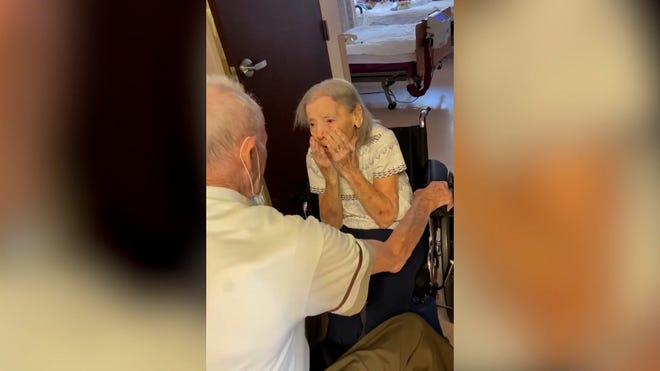
PORT ST. LUCIE – Coming out as gay is hard, but coming out as gay to your Mormon dad is really hard.

Austin Swink was preparing to go on his first mission trip with the Church of Jesus Christ of Latter-day Saints when he decided to reveal the news that he was gay to his dad, Vaughn Swink. He had always had a strong relationship with his dad but he was anxious about how he would react.

“I got this feeling that I just needed to get it off my chest before I left, because it was weighing on me for so long, not saying anything,” Swink said. He decided to video record his coming out to his dad, and posted the reaction online.

Watch the video above to see how Swink’s dad reacted to him coming out as gay.

Touching video shows son come out as gay to Mormon dad – USA TODAY

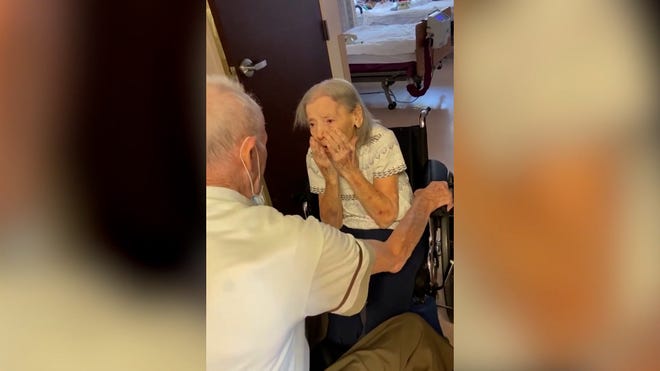
PORT ST. LUCIE – Coming out as gay is hard, but coming out as gay to your Mormon dad is really hard.

Austin Swink was preparing to go on his first mission trip with the Church of Jesus Christ of Latter-day Saints when he decided to reveal the news that he was gay to his dad, Vaughn Swink. He had always had a strong relationship with his dad but he was anxious about how he would react.

“I got this feeling that I just needed to get it off my chest before I left, because it was weighing on me for so long, not saying anything,” Swink said. He decided to video record his coming out to his dad, and posted the reaction online.

Watch the video above to see how Swink’s dad reacted to him coming out as gay.

Pride lights removed from Florida bridges after DeSantis signed anti-LGBT + bill – Floridanewstimes.com

Florida Governor Ron DeSantis Being criticized by LGBT + activists after officials Jackson Building I was told to turn off the lights that were installed to help. Pride Month..

According to the City of Jacksonville, the Florida Department of Transportation has instructed Acosta Bridge to turn off the rainbow lights because it is “out of compliance.”

The lights were only on on Monday’s Pride Month and were scheduled to be on for a week before the Jacksonville Transportation Authority (JTA) was instructed to turn off the rainbow lights.

The JTA said in a statement: “FDOT has notified JTA that the planned color scheme for Acosta Bridge does not comply with existing permits. JTA will respond.”

FDOT spokesmen did not immediately reveal which parts of the lighting were not compliant. Jacksonville.com With the current permission, “I understand that a particular color palette is available.”

FDOT said News4Jax The Florida Governor’s office was not involved in the decision, and was a local issue under investigation by the Florida Department of Transportation.

A statement from the FDOT said, “The beautiful lighting of the Acosta Bridge is owned and operated by JTA. Questions about lighting systems, features and permits should be contacted by JTA.”

Not only this, the FDOT’s recent decision on LGBT + issues rejected requests from the FDOT. Sarasota To turn the Ring Ring Causeway Bridge into a rainbow of pride months Sarasota Herald Tribune report.

Both bridges are often lit up in different colors and at events such as Autism Acceptance Month, Memorial Day, and NFL matches.

According to the FDOT’s Bridge Lighting Policy, the Department reserves the right to deny requests that it considers offensive or in the best interests of the public. Herald Tribune report.

The bridge is state-owned but is operated by the city authorities with permission.

Protesters are organizing a pride-supporting procession across the Acosta Bridge on Saturday, according to one group. Facebook This page is for more than 250 people.

According to the American Civil Liberties Union (ACLU), this follows an increasing number of Republican attacks on LGBT + groups, with more than 75 legislations targeting transgender people at the state level. ..

DeSantis recently approved a budget to remove funding for LGBT + groups after signing a law in Florida banning transgender athletes from women’s sports. put forward report.

Independent We contacted DeSantis and the FDOT office for further comment.

Source link Pride lights removed from Florida bridges after DeSantis signed anti-LGBT + bill

The role of the pediatric provider in supporting gender-diverse youth – Contemporary Obgyn

Sexual minority and gender-diverse (SMGD) youth experience significant health and psychosocial disparities compared with their heterosexual and cisgender peers. Risk for poor health and social outcomes is incrementally higher among SMGD youth, but not universally so. Pediatricians, adolescent medicine physicians, and other youth providers can play a crucial role in mitigating this risk by supporting SMGD youth and their families and promoting resilience through inclusive and clinically, culturally competent care.

Sexual orientation encompasses sexual identity, attraction, and behavior. Gender identity refers to one’s internal sense of being male, female, or another gender identity. Sexual minority youth are individuals who identify as lesbian, gay, bisexual, or another nonheterosexual identity (eg, pansexual, same-gender loving), have same-sex attractions, engage in same-sex sexual behavior, or may be questioning their sexual orientation. Gender-diverse youth are individuals who identify as transgender; have a gender identity that differs from their sex assigned at birth; may be questioning their gender identity; or identify as agender, fluid, or nonbinary.

Sexual orientation and gender identity (SOGI) data are not routinely collected in the US Census or recorded in vital statistics; however, national surveillance and polling data suggest increasing trends in the prevalence of SMGD youth and adults.

Data from the Youth Risk Behavior Survey (YRBS)—a biennial survey of high school students—suggests the prevalence of sexual minority adolescents aged 13 to 17 years increased from 11.2% in 2015 to 15.6% in 2019, with adolescent respondents identifying as gay or lesbian increasing from 2.0% to 2.5%; bisexual, from 6.0% to 8.7%; and unsure, from 3.2% to 4.5%.1 The YRBS collected data on gender identity for the first time during the 2017 wave of data collection in which 1.8% of adolescent respondents identified as transgender2—a prevalence more than double the prior estimates of 0.7% prevalence among adolescents aged 13 to 17 years.3 Another 1.6% reported being unsure of their gender identity.2

The Gallup Poll, a telephone survey of a random sample of adults aged 18 and older, has similarly shown an increasing percentage of adults who identify as lesbian, gay, bisexual, or transgender (LGBT), from 3.5% in 2012 to 5.6% in 2020.4 In 2020, the question about LGBT identity was changed to allow respondents to specifically designate transgender identity in addition to lesbian, gay, or bisexual identity, which produced the following population prevalence estimates—3.1% bisexual, 1.4% gay, 0.7% lesbian, and 0.6% transgender.4 Whereas the Gallup Poll is limited to adults, the rise in reported LGBT identity was driven by increasing prevalence among younger age cohorts; 9.1% of millennials (born between 1981 and 1996) and 15.9% of Generation Z who are 18 years and older (born between 1997-2002), identify as LGBT, suggesting these increasing trends are mirrored and potentially higher in adolescents.4

Identity development is one of the primary tasks of adolescence and includes the development of one’s self-concept and social identity—how you fit into society and among social groups that share characteristics important to your self-concept (eg, race, ethnicity, culture, religiosity).5,6

The formation of sexual and gender identity is an important component of identity development. Sexual identity formation theory suggests that identity occurs in stages as people try to align identity, behavior, and attraction and includes identity formation (ie, awareness, exploration, questioning sexuality) emerging in early adolescence followed by integration of sexual identity into one’s self-concept and disclosing to others (coming out) in middle to late adolescence.7,8

This approach suggests a linear progression; however, others have suggested that sexual identity formation is nonlinear, fluid, and interconnected with lived experiences and other social identities, including racial/ethnic identities.9,10

Gender identity typically develops in early childhood for cisgender as well as transgender and other gender-diverse youth; however, gender identity development also occurs in the context of social norms, biases, and familial and cultural expectations and can be a dynamic and evolving process from childhood into adolescence and adulthood.11

Children and adolescents may present differently based on where they are in their gender or sexual identity development and on their exposures to anti-LGBT stigma and discrimination. They may present in a period of self-discovery or exploration; a period of questioning, confusion, or internal conflict; at a stage where they have fully realized and integrated their identity; or anywhere along this spectrum.

At any and all of these stages, it is critical that pediatric and adolescent medicine providers meet and affirm patients where they are with reassurances that it is “entirely acceptable to be whoever you are” and explain that variations in sexual orientation and gender identity are normal aspects of human diversity. This approach is particularly important for youth who have experienced anti-LGBT stigma. The National Academies 2020 report “Understanding the Well-being of LGBTQI+ Populations”12 notes the following:

“Early life course exposure to discrimination and stigma based on sexual orientation, gender identity, or intersex status can have lifelong consequences […and] can set trajectories of health and well-being into motion that may be exacerbated by subsequent exposures to discrimination or interrupted by subsequent exposures to protective factors.”

Providers thus have the opportunity in their care of SMGD youth to interrupt or exacerbate the negative effects of the homophobia, transphobia, and heterosexism that many SMGD face.

Unfortunately, some SMGD youth experience stigma, discrimination, and rejection in the health care setting. The Human Rights Campaign’s survey of over 10,000 LGBT-identified youth aged 13 to 17 years showed that 67% of LGB and 61% of transgender youth described not disclosing their sexual orientation or gender identity to their health care provider and that 80% of LGBT youth who identified as racial/ethnic minorities further described experiences of racial discrimination in health care settings.13 SMGD youth who have delayed disclosure of their sexual orientation or gender identity have described discrimination, denial, and substandard care as a result of their sexual orientation or gender identity.14

Such experiences can also result in delayed medical care and poor access to treatment15,16 and exacerbate rather than interrupt SMGD youths’ disproportionate risk of depression, suicidal ideation, poor sexual and reproductive health outcomes, and substance use compared with heterosexual cisgender youth.17

Providers first should routinely ask about an adolescent’s sexual orientation and gender identity. The American Academy of Pediatrics, the Society for Adolescent Health and Medicine, the Uniform Data System, and Meaningful Use Stage 3 have issued policy statements recommending routine collection of sexual orientation and gender identity as part of primary care for all patients, including adolescents.18-20 In an AAP survey, only 18% of pediatricians reported routinely discussing SOGI with their patients.21 Routinely asking alerts adolescents that it is safe to disclose to their provider and that it is an opportunity for open dialogue. SMGD youth have described routinely wanting to disclose their SOGI to their providers.14

The preferred method of SOGI disclosure by age, sexual orientation, and gender identity is yet to be extensively researched, but routine and universal conversations about sexual orientation and gender identity create an environment of support and reassurance so that children feel safe raising questions and concerns.

These routine, universal conversations also provide opportunities to teach and model to children and families the importance of inclusion, family support, and affirmation and that sexual and gender diversity is a normal, expected aspect of human development.

The specific approach for SOGI assessment may vary depending on the age of the patient. For instance, to assess gender identity in school-age children, providers may ask parents about their child’s preferences for play, hair, and dress; about how their child reacts to gendered activities like having to “line up with all the girls” or use the “boys” bathroom at school; and whether they have concerns or questions about their child’s behavior with these activities.

Providers can also ask children and younger adolescents how they like to play, dress, or wear their hair; or “When you think about who you are on the inside, do you feel more like a girl, a boy, neither, both, or something else?”

In younger adolescents, sexual orientation may be assessed by asking about crushes or feelings toward other adolescent males or females.

In older adolescents, the routine use of self-administered questionnaires is a suggested approach for asking about sexual orientation and gender identity that can enhance the accessibility of the information for further discussion during the visit. Providers can also ask patients to share about their gender journey, including what age they knew they were in the wrong body, feelings of discomfort with their body, or desire for secondary characteristics of the other gender.

Second, pediatricians can move beyond asking about sexual orientation and gender identity to affirming the patient’s identity.

The first step is to provide developmentally appropriate care oriented toward understanding and appreciating the youth’s experience.22 This includes encouraging talk about identity and providing assurance that diverse sexual or gender identities are not a mental disorder, illness, or aberration but, rather, normal aspects of human diversity. Example affirmation statements include, “Many of my patients begin to question their sexual identity as they grow older and that’s completely normal,” and “You are not alone; it is very normal to have feelings and questions about your gender identity.” The purpose of this is to let the adolescent know that what they are experiencing is normal and that they are not alone.

Providers can also create a setting that affirms adolescents’ sexual orientation and gender identity. These can be in the form of visual cues, such as posters featuring SMGD youth, badges with providers’ preferred pronouns, gender-neutral restrooms, and inclusive forms and patient materials that are gender-neutral and nonheteronormative.

Pediatricians are uniquely situated to provide or refer SMGD youth to sources of needed health care. SMGD youth experience disproportionate rates of bullying and victimization, interpersonal and intimate partner violence, mental and behavioral health needs (eg, depression, anxiety, and suicidality), substance use disorder, and HIV and other sexually transmitted infections (STIs) compared with their heterosexual and cisgender peers.19

As with all youth, but particularly SMGD youth who are at greater risk, providers should be prepared to complete appropriate screening for these notable health and social disparities. They may be the first to identify a health or social need that requires treatment or referral. Bullying is a key area that may require identification and action. The GLSEN (formerly Gay, Lesbian & Straight Education Network) 2019 National School Climate Survey23 and the Human Rights Comparison 2018 LGBTQ Youth Report13 both report high rates of bullying and victimization (including verbal, physical, electronic, and sexual harassment) among SMGD youth. Further, YRBS reports significantly higher rates of bullying and victimization among youth who identify as lesbian, gay, bisexual, or transgender compared with their heterosexual and cisgender peers.2,24 Providers should ask about school, including safety inside and outside the building, and be prepared with guidance and resources if youth are feeling unsafe.

Finally, at all ages and at all stages of sexual and gender identity development, pediatric and adolescent medicine providers play a critical role in supporting, educating, and equipping parents with the tools needed to affirm their SMGD child and protect them against the negative effects of anti-LGBT stigma. Evidence is clear that family acceptance is associated with improved mental health, delay in the engagement of substance use, and less engagement in sexual risk behavior.

Studies have consistently shown that family acceptance during adolescence can be protective against depression, suicidality, substance use, HIV and STIs, and associated with higher reported social support, self-esteem, and general health.25,26 The reverse is also unfortunately true. SMGD youth rejected by their families have higher rates of poor mental health outcomes, substance use, and sexual risk behaviors than SMGD who experience family acceptance and affirmation.25,26 Parental and family affirmation and support are paramount to SMGD youth health and well-being. Pediatric and adolescent medicine providers should prioritize helping parents understand this.

Similar to the approach we have recommended for SMGD youth, providers should also start by meeting parents where they are and inviting them to share their questions, feelings, beliefs, and concerns. However, providers’ advice and anticipatory guidance should be grounded in their evidence-based medical expertise about the importance of parent and family support. Providers should also remind parents of responsibilities that are important for all youth—parental monitoring, parent-child communication, and setting expectations and limit setting—and remain important as parents help their SMGD youth navigate the transition to adulthood.

By routinely creating a space of acceptance and support, pediatricians have an opportunity to improve the health outcomes of SMGD youth. They can create this space by asking consistent, routine questions about SOGI, linking youth to needed resources and referrals, and providing parents with the evidence, knowledge, and resources to help them support their children and adolescents.

Using such an approach, pediatricians can help patients and families address the vulnerabilities that sexual minority and gender-diverse youth face, play a critical role in bolstering youth against these vulnerabilities, and help secure their health and well-being.

This article was originally published in Contemporary Pediatrics®.

References

1. Kann L, Olsen EO, McManus T, et al. Sexual Identity, Sex of Sexual Contacts, and Health-Related Behaviors Among Students in Grades 9–12 — United States and Selected Sites, 2015. MMWR Surveill Summ 2016;65(No. SS-9):1-202. DOI: http://dx.doi.org/10.15585/mmwr.ss6509a12.Youth risk behavior surveillance system. Centers for Disease Control and Prevention. Updated October 27, 2020. Accessed May 4, 2021. https://www.cdc.gov/healthyyouth/data/yrbs/index.htm

2. Johns MM, Lowry R, Andrzejewski J, et al. Transgender identity and experiences of violence victimization, substance use, suicide risk, and sexual risk behaviors among high school students – 19 states and large urban school districts, 2017. MMWR Morb Mortal Wkly Rep. 2019;68(3):67-71. doi:10.15585/mmwr.mm6803a3

3. Herman JL, Flores AR, Brown TNT, Wilson BDM, Conron KJ. Age of individuals who identify as transgender in the United States. The Williams Institute, UCLA School of Law; 2017. Accessed April 25, 2021. https://williamsinstitute.law.ucla.edu/wp-content/uploads/Age-Trans-Individuals-Jan-2017.pdf .

4. Jones JM. LGBT identification rises to 5.6% in latest U.S. estimate. Gallup. February 24, 2021. Accessed April 25, 2021. https://news.gallup.com/poll/329708/lgbt-identification-rises-latest-estimate.aspx

5. Erikson EH. Growth and crises of the healthy personality. Psyche (Stuttg). 1953;7(1):1-31.

6. Sanders RA. Adolescent psychosocial, social, and cognitive development. Pediatr Rev. 2013;34(8):354-358. doi:10.1542/pir.34-8-354

7. Cass VC. Homosexuality identity formation: A theoretical model. J Homosex. 1979;4(3):219-235. doi:10.1300/J082v04n03_01

8. Mcneely C, Blanchard J. The teen years explained: A guide to healthy adolescent development; 2009. Accessed April 25, 2021. https://www.jhsph.edu/research/centers-and-institutes/center-for-adolescent-health/_docs/TTYE-Guide.pdf

9. Rosario M, Schrimshaw EW, Hunter J, Braun L. Sexual identity development among gay, lesbian, and bisexual youths: consistency and change over time. J Sex Res. 2006;43(1):46-58. doi:10.1080/00224490609552298

10. Fields E, Morgan A, Sanders RA. The intersection of sociocultural factors and health-related behavior in lesbian, gay, bisexual, and transgender youth: experiences among young black gay males as an example. Pediatr Clin North Am. 2016;63(6):1091-1106. doi:10.1016/j.pcl.2016.07.009

11 .Guss C, Shumer D, Katz-Wise SL. Transgender and gender nonconforming adolescent care: psychosocial and medical considerations. Curr Opin Pediatr. 2015;27(4):421-426. doi:10.1097/MOP.0000000000000240

12. White J, Sepúlveda MJ, Patterson CJ. Understanding the well-being of LGBTQI+ populations. National Academies Press; 2020. Accessed April 21, 2021. https://www.nap.edu/catalog/25877/understanding-the-well-being-of-lgbtqi-populations

13. Kahn E, Johnson A, Lee M, Miranda L. 2018 LGBTQ Youth Report. Accessed April 25, 2021. https://www.hrc.org/resources/2018-lgbtq-youth-report

14. Rossman K, Salamanca P, Macapagal K. A qualitative study examining young adults’ experiences of disclosure and nondisclosure of LGBTQ identity to health care providers. J Homosex. 2017;64(10):1390-1410. doi:10.1080/00918369.2017.1321379

15. When health care isn’t caring: Lambda Legal’s survey of discrimination against LGBT people and people with HIV. Lambda Legal. Accessed April 21, 2021. https://www.lambdalegal.org/sites/default/files/publications/downloads/whcic-report_when-health-care-isnt-caring.pdf

16. Smith DM, Mathews WC. Physicians’ attitudes toward homosexuality and HIV: survey of a California Medical Society- revisited (PATHH-II). J Homosex. 2007;52(3-4):1-9. doi:10.1300/J082v52n03_01

17. Hafeez H, Zeshan M, Tahir MA, Jahan N, Naveed S. Health care disparities among lesbian, gay, bisexual, and transgender youth: a literature review. Cureus. 2017;9(4):e1184. doi:10.7759/cureus.1184

18. Cahill S, Makadon HJ. Sexual orientation and gender identity data collection update: U.S. government takes steps to promote sexual orientation and gender identity data collection through meaningful use guidelines. LGBT Health. 2014;1(3):157-160. doi:10.1089/lgbt.2014.0033

19. Levine DA; Committee on Adolescence. Office-based care for lesbian, gay, bisexual, transgender, and questioning youth. Pediatrics. 2013;132(1):e297-e313. doi:10.1542/peds.2013-1283

20. Reitman DS, Austin B, Belkind U, et al. Recommendations for promoting the health and well-being of lesbian, gay, bisexual, and transgender adolescents: a position paper of the Society for Adolescent Health and Medicine. J Adolesc Health. 2013;52(4):506-510. doi:10.1016/j.jadohealth.2013.01.015

21. Alexander SC, Fortenberry JD, Pollak KI, et al. Sexuality talk during adolescent health maintenance visits. JAMA Pediatr. 2014;168(2):163-169. doi:10.1001/jamapediatrics.2013.4338

22. Rafferty J, Committee on psychosocial aspects of child and family health; committee on adolescence; section on lesbian, gay, bisexual, and transgender health and wellness, Health F. Ensuring comprehensive care and support for transgender and gender-diverse children and adolescents. Pediatrics. 2018;142(4):e20182162. doi:10.1542/peds.2018-2162

23 Kosciw JG, Clark CM, Truong NL, Zongrone AD. (2020). The 2019 national school climate survey: the experiences of lesbian, gay, bisexual, transgender, and queer youth in our nation’s schools. GLSEN. Accessed March 22, 2021. https://www.glsen.org/sites/default/files/2021-04/NSCS19-FullReport-032421-Web_0.pdf

24. Johns MM, Lowry R, Haderxhanaj LT, et al. Trends in violence victimization and suicide risk by sexual identity among high school students — Youth Risk Behavior Survey, United States, 2015-2019. August 21, 2020. Accessed March 22, 2021. https://www.cdc.gov/mmwr/volumes/69/su/su6901a3.htm

25. Russell ST, Fish JN. Mental health in lesbian, gay, bisexual, and transgender (LGBT) youth. Annu Rev Clin Psychol. 2016;12:465-487. doi:10.1146/annurev-clinpsy-021815-093153

26. Ryan C, Russell ST, Huebner D, Diaz R, Sanchez J. Family acceptance in adolescence and the health of LGBT young adults. J Child Adolesc Psychiatr Nurs. 2010;23(4):205-213. doi:10.1111/j.1744-6171.2010.00246.x

This Orlando thrift store fighting HIV/AIDS wants to be an ally for the city’s LGBT community – Orlando Sentinel

But without insurance, medical treatment remains out of reach for many. A recent study found that the cost for antiretroviral treatment regimen, the mainstay HIV medicine, is between $36,000 and $48,000 per year. Black residents, who are more likely to live under the poverty line and work in low-wage jobs, are also disproportionately impacted by HIV/AIDS, research has found, representing 42% of new diagnoses in 2018.

Florida must should reject history of hate against LGBTQ+ people – Daytona Beach News-Journal

The year was 1977. Dade County had just passed a groundbreaking ordinance that protected basic human rights for residents of the Miami-Dade area, regardless of sexual orientation. Anita Bryant, well known for her singing and promotion of Florida orange juice, spearheaded a brutal, fearmongering campaign against it, under an organization named “Save Our Children.” She relentlessly brandished the baseless notion that non-straight people wanted to have sex with children or recruit them into homosexuality and compared them to pedophiles and perverts.

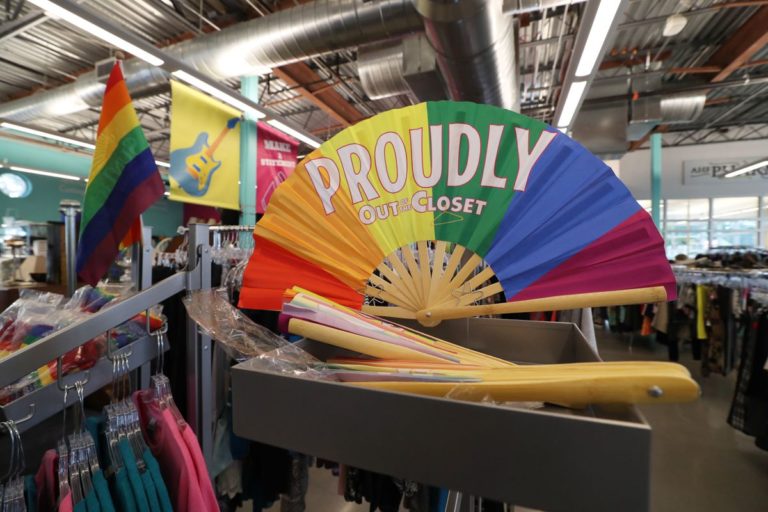
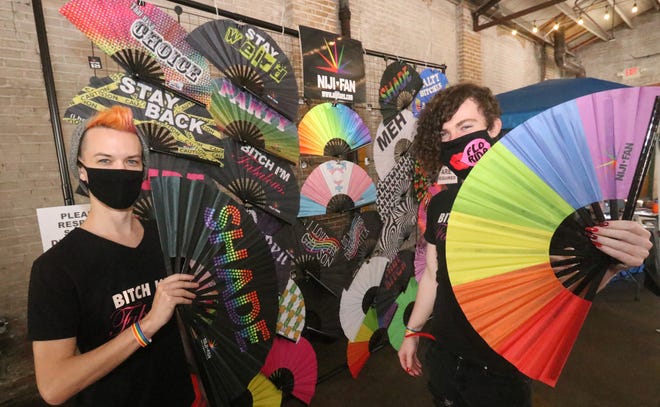
Vendors Chris Mistery and Tristar Strickland stand with their assortment of fans Saturday, Feb. 20, 2021 during the annual DeLand Pride Fest.

It worked — Miami-Dade voters repealed the ordinance. Across the nation, self-described “Christian conservatives took note, realizing that railing against the so-called “gay agenda” was a great way to energize their own political base. The cruelly successful campaign is credited with starting a wave of political persecutions across the nation that particularly targeted LGBTQ-plus Floridians.

Flash forward to 1986. The DeSoto County School Board banned three brothers, all under the age of 8, from attending public school after learning that they were infected with the virus that causes AIDS. The three boys — Ricky, Robert and Randy Ray —  were hemophiliacs who contracted the virus through blood transfusions. The family launched a legal challenge and won. But someone burned down the Ray’s home, and the Rays finally gave up and left town. Throughout the entire, shameful ordeal, anti-gay crusaders ruthlessly linked the Ray family’s ordeal to their homophobic  agenda — blind to the repulsion most Americans felt at the persecution of three little boys.

In 1998 the first of several lawsuits challenged an Anita-Bryant-era law banning any gay people from adopting. The plaintiffs: two nurses who wanted to adopt HIV-positive children placed under their care as foster children. As that case moved through the legal process, other gay people who wanted to adopt came forward. And as Florida officials fought to defend the nation’s only remaining ban on gay adoption, Americans watched yet another official, state-government endorsement of homophobia.

More:Volusia recognizes LGBTQ+ students after School Board’s initial refusal

In 2008, as other states were moving to recognize same-sex partnerships and marriages, Florida voters approved a comprehensive ban on both. It was a statewide referendum on cruelty, and shamefully, cruelty won. It’s worth noting that many business and industry groups came out against the amendment to the Florida Constitution, suggesting the state was gaining a reputation for hate so virulent it could damage Florida’s economy. There’s no way of telling how true that prediction became, partly because the amendment evaporated seven years after it passed, when the U.S. Supreme Court found that same-sex marriage was legal everywhere.

More:Don’t block transgender youths from playing sports

Put this week’s events against that wretched historic backdrop, and they might seem too petty to notice. Tuesday — the second day of Pride Month — DeSantis signed a bill forbidding transgender girls from competing in girls’ sports. Then on Thursday, even as he spared more lavish projects, DeSantis killed funding for an Orlando project targeted at gay and lesbian homeless youth. He also erased funding that helped pay for counseling for families and survivors of the  massacre at Orlando’s Pulse Nightclub — just a few days before the commemoration of the shootings’ fifth anniversary.

Some Floridians may not see this as a big deal — but it is. Because the governor and (in the case of the transgender athlete bill) the Legislature took the time to specifically target and hurt people — not because they did something wrong but because of their sexual identity, or because they were family or friend to others who were LGBTQ+, or merely chose to go dancing one night in a place where the queer community was welcome.

 Just because they were homeless, young and struggling with their sexuality.

Just because they wanted to play sports.

It may be petty but it is not insignificant. It shows that Florida’s leaders are still — after all these years — willing to go out of their way to reject and hurt their own constituents, though they have done nothing wrong. It’s ugly and it’s shameful, and it’s past time for it to stop.

Hear Pride resolution

Thursday, the St. Johns County Commission was hit with a lawsuit that claims Chairman Jeremiah Blocker broke civil-rights and open-government laws by refusing to put a request for a Price Month resolution on the agenda. 

More:City of St. Augustine Beach will not fly rainbow Pride flag this year

More:St. Johns County commissioner, board sued over Pride Month proclamation rejection

The county could spend several months in court wrangling over the murky law surrounding this issue. Or Blocker could simply reverse the decision and allow the resolution to be heard.

This isn’t a political issue. It’s a human one and personal prejudice should not get in the way. St. Augustine and St. Augustine Beach have already adopted the resolution with little fanfare. The county should follow suit.

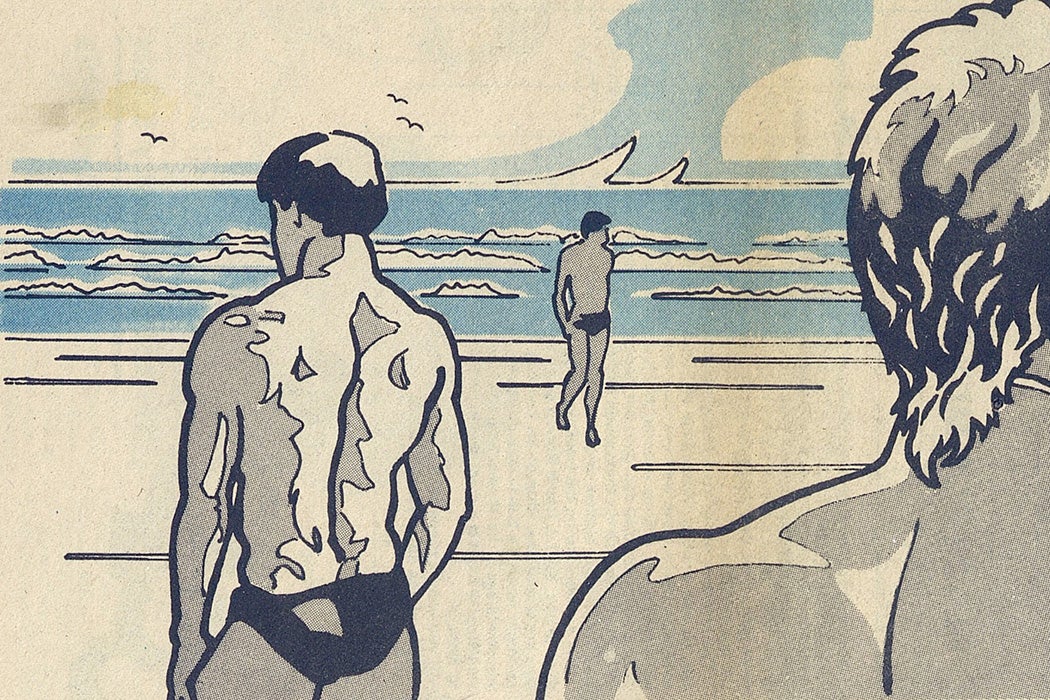
Discovering the “Gay Lifestyle” through 1970s Magazines – JSTOR Daily

The early 1970s were a watershed moment for LGBTQ people. Today, we remember the increasingly outspoken political movement for gay and lesbian rights. But as humanities scholar Lucas Hilderbrand writes, not all of the era’s new developments were quite so serious. Hilderbrand tells the story of a magazine named QQ (initially titled Queen’s Quarterly) and its spin-off travel magazine, Ciao!

Launched in the spring of 1969 with the slogan “For Gay Guys Who Have No Hangups,” QQ was a glossy consumer magazine. Its stories covered food, health, fashion—and, in no uncertain terms, sex. It ran items with titles like “What Not to Wear to an Orgy” and “Glory Holes: A Piece of Vanishing Americana.” But unlike gay liberation magazines and newspapers of the time, it devoted little space to politics or activism.

Ciao!, which premiered in 1973, focused mainly on travel guides, offering information about bars, restaurants, and cruising spots in different cities and foreign countries. In between, there were nude photo spreads, with models identified only by country. The magazine explained where to find dance clubs or leather bars, and what kind of crowd to expect at a particular spot.

Hilderbrand writes that gay travel guides were not a wholly new idea. In the 1950s and ’60s, some gay men turned word-of-mouth descriptions of local scenes into guides consisting of the names and addresses of bars, with coded descriptions. But in the 1970s, higher-budget guidebooks flourished, and so did Ciao!

Both QQ and Ciao! were publications about “lifestyle,” a term that was becoming increasingly common at the time.

“The turn toward lifestyle, straight and gay, involved a turn toward consumption as a form of self-invention, yet the gay lifestyle media instructed its readershp not only how to become ‘themselves,’ as in the straight publications, but also how to become gay,” Hilderbrand writes.

The lifestyle the magazines promoted involved spending a fair amount of money, and, at least to some extent, seemed designed to fit white men. Hilderbrand notes that while Ciao!’s photos reflected more racial and ethnic diversity than many other gay publications of the time, that could be seen more as a reflection of fetishization than inclusion. Its guides ignored or barely mentioned bars catering primarily to men of color but did suggest that readers might be specifically seeking encounters with Black men in Detroit or Cuban Americans in Miami. Stories on international destinations like Morocco and Senegal objectified “exotic” men, while also portraying those societies as surprisingly tolerant and sexually fluid.

A Ciao! profile of San Diego in 1975 addressed its readers as cosmopolitan sophisticates looking for closeted “college students, servicemen and surfers” to hook up with.

“Although these young studs may do everything in bed, except perhaps kiss, there is still one rule a gay must never forget,” the author writes. “These youths cling tenaciously to their heterosexual self-image.”

Unlike those young men, the intended audience of QQ and Ciao! embraced a gay identity, if not necessarily one that was particularly political.

Browse other LGBTQ publications in the Independent Voices collection on JSTOR.


Support JSTOR Daily! Join our new membership program on Patreon today.

These video game companies are all screaming ‘gay rights’ this June – and we love to see it – Yahoo Eurosport UK

Happy Pride Month! This June many gaming companies are celebrating the LGBT+ community with Pride flags, content and merchandise.

Although there are the usual concerns over rainbow capitalism, it has to be said that gaming companies are going the extra mile to show support, although of course we hope that support extends beyond Pride Month into year-round inclusivity. It’s also worth mentioning that the world of gaming hasn’t aways been very representative or inclusive, and the industry still as a lot of catching up to do.

Below, we’ve collated how some gaming companies are choosing to gay “gay rights!” this Pride Month.

First up is Square Enix, who are offering fans the chance to name their new Pride mascot, designed by Final Fantasy artist Toshiyuki Itahana. The mascot features on their Pride range of merchandise, with all proceeds split between Stonewall and GLAAD.

Sega are focusing on employee-led initiatives this year, including a Twitch fundraiser for LGBT+ charities and conversations around diversity and inclusion. What’s significant is that Sega in Japan is one of the few companies in that country that support and protect LGBT+ staff.

Xbox is launching a whole load of Pride initiatives. It’s a shame that their Pride wireless controller isn’t available to purchase, but there’s still other Pride merchandise to buy, plus trans game Tell Me Why is available for free, and the team are highlighting plenty of LGBT+ games, movies, TV shows and communities.

They’ve also donated over $2 million to LGBT+ organisations in the past year, and are making an additional $150,000 to non-profits around the world this month. Get all the details here.

Twitch may not always be the best at highlighting the diverse communities on the platform, but throughout Pride month LGBT+ streamers will feature on the front page. Plus there are even more community led initiatives in the works.

Speaking of Twitch, LGBT+ developer MidBoss will be holding their third annual Season of Pride in July, with over 65 Twitch streamers collectively raising money for LGBT+ charities throughout the month. There will also be a special Steam sale with up to 80% off LGBT+ fan favourites. All the details will be revealed on the Season of Pride website.

Dead by Daylight is one of the most popular games among the LGBT+ community, particularly drag artists. Thankfully Behaviour Interactive are going all-in this Pride with its #IntoTheRainbow livestream event highlighting queer creators, in addition to other events and Pride emotes.

Elsewhere, both Rocksteady Games and Ninja Theory are engaging with the community sharing LGBT+ stories and content.

Plenty of online multiplayer games are adding Pride emotes, badges and flags to customise your character and compete loudly and proudly.

Other developers are sharing Pride messages, including from the trans developer of Celeste, Gearbox (who recently opposed controversial trans laws in Texas), and even Angry Birds who really said kink at Pride…

Naughty Dog are also celebrating Pride Month with some beautiful The Last Of Us artwork.

Lastly, there are the developers who so far have simply changed their profile pictures to rainbows – a token effort that’s appreciated, though hardly sufficient. That includes the likes of DICE, Respawn and 2K Publishing.

Bethesda have updated to rainbows for their multiple Twitter accounts from around the world, well, at least in countries were homosexuality is legal. The failure to update them in the repressive countries hasn’t gone unnoticed by gamers, and was even made into a meme last year.

Sony and PlayStation are yet to announce their Pride plans. It’s a little disappointing following their previous LGBT+ campaigns, Pride console themes and sponsorship of London Pride. Expect an update from them very soon.

In the meantime, these fictional corporations are in on the act too…

For more gaming news, follow Gaymeo on Facebook. You can also email us with any news or tips on Gaymeo@pinknews.co.uk

Out of the Closet thrift store in Orlando fights HIV/AIDS, nurtures LGBT community – Orlando Sentinel

But without insurance, medical treatment remains out of reach for many. A recent study found that the cost for antiretroviral treatment regimen, the mainstay HIV medicine, is between $36,000 and $48,000 per year. Black residents, who are more likely to live under the poverty line and work in low-wage jobs, are also disproportionately impacted by HIV/AIDS, research has found, representing 42% of new diagnoses in 2018.

When crime goes viral – Windy City Times

Activists say Illinois’s law that makes it illegal to expose others to HIV is racist and homophobic. Now they’re close to changing it.

In early 2016, Jimmy Amutavi had what he considered a happy life.

More than a decade had passed since he first emigrated to the U.S. from Kenya with dreams of being a personal trainer. Amutavi had settled down with his wife and young son in Evanston and was renting space at a nearby gym where the lifelong fitness fanatic gave private lessons.

But Amutavi’s ties to the gym went beyond business.

Amutavi says he got a voicemail message from a Skokie police detective in 2016 saying there was a warrant out for his arrest. The detective alleged the personal trainer had exposed three women he had sex with to HIV without their knowledge. One of them was a woman he’d met at the gym with whom he’d had a relationship.

Amutavi remembers feeling like his life was over.

“I was just floating there,” Amutavi says. “I didn’t know anything. It was as if someone had drugged me, and I was a zombie.”

He surrendered to police custody in October 2016, but maintained his innocence.

Amutavi claims that when he ended his relationship with the woman, she retaliated by contacting his clients and disclosing his HIV status. Two other women, who Amutavi had also slept with, then agreed to press charges as well, he says. In addition, his lawyer tells the Reader and Injustice Watch that Amutavi’s principal accuser allegedly violated health privacy laws to obtain Amutavi’s private medical information through her job at a local hospital, which gave her access to those records. Phone calls and e-mails to the woman were not returned.

The Cook County State’s Attorney’s Office charged Amutavi with three counts of criminal transmission of HIV, each count punishable by up to seven years in prison. Prosecutors alleged Amutavi had intentionally hidden his HIV status from the three women, and through condomless sex, had put them at risk of contracting the virus themselves.

Prosecutors dropped the charges in April 2017 under then-newly elected Cook County State’s Attorney Kim Foxx’s office.

“Jon saved my life,” Amutavi says of his attorney, Jon F. Erickson. “He gave me a lot of peace, and he assured me that we were gonna beat this.”

One of the problems with the state’s case against Amutavi was that there was virtually no way for him to transmit the virus because he takes medicine to treat and suppress the HIV in his body.

Illinois’s HIV criminalization law makes it illegal for a person living with HIV to have condomless sex without first disclosing their HIV status to their sexual partners. The law also makes it illegal for someone to donate blood, semen, tissue, or organs, or to share non-sterile drug paraphernalia, such as needles, if they have HIV and don’t first disclose that to the recipient. The law can and has been applied even if transmission of HIV does not occur.

Amutavi is one of the dozens of people charged in Cook County under the controversial law that Illinois lawmakers passed in the late 1980s at the height of the HIV/AIDS crisis. Scores of critics say policies like Illinois’s are a dangerous and misguided attempt at stopping the spread of HIV and punish people for merely living with the virus while potentially allowing vengeful lovers to weaponize the law against people living with HIV. Activists pushing to repeal the law say it’s a product of the overwhelmingly homophobic panic of that era and disproportionately impacts Black and Brown people.

A 2020 Chicago HIV surveillance report found that non-Hispanic Black people accounted for half of all people living with HIV, as well as the most frequently diagnosed population, in Chicago in 2019. Black men who have sex with men are also most at risk for contracting HIV.

“You can’t really legislate around stigma,” says Aisha Davis, director of policy at AIDS Foundation Chicago. “Then, when you add to that the implications around race, around gender, identity, around just the perception of someone when they’ve been charged with this, it means that Black and Latinx folks are going to be targeted even more.”

Cook County hasn’t prosecuted anyone under the statute since 2016. Still, the law remains on the books and within prosecutors’ discretion.

Critics are also quick to point out that the law ignores the proliferation of pre-exposure prophylaxis, landmark HIV prevention drugs commonly known as PrEP, which have been found to be almost 99 percent effective. Activists and public health officials alike say the law also ignores the fact that, as the CDC states, people like Amutavi who are living with HIV and have been regularly taking treatment have virtually no risk of transmitting the virus, even without a condom. And like when the law was first up for debate, many today say the law punishes people for living with an incurable virus.

The law targets people “with the specific intent” to withhold their HIV status and spread the virus to their partners. But critics say that intent is difficult if not impossible to prove, and can be easily fabricated.

In June 2017, Amutavi obtained an order of protection for his family against the woman who allegedly accessed Amutavi’s medical records. The petition alleges that over a yearlong period beginning in June 2016, the woman keyed Amutavi’s car and verbally harassed him, his wife, and young son. However, Amutavi and his family declined to press charges, prioritizing fighting the charges against him.

But even after the county dropped the HIV charges against Amutavi, they still followed him, at least briefly. He applied to clear his record of the charges, but that application was denied in June 2018 by then-Cook County Assistant State’s Attorney Michael Falagario. The form-letter denial states that “the people’s interest in maintaining the records outweigh petitioner’s need for expungement.” Falagario wrote “multiple charges involving criminal transmission of HIV” as additional reasoning to deny the expungement petition before signing his name.

Court officials later expunged Amutavi’s record in late July 2018 after, Erickson says, they were “educated” about his case.

But Amutavi, now in his 50s, says he still bears the emotional and psychological scars and the real-world consequences from his case. After news organizations like the Chicago Tribune, Seattle Times, and the Associated Press publicized the allegations against him, Amutavi says he lost all of his clients. He left his passion for personal training behind as a result. (He asked the Reader and Injustice Watch not to name his current employer out of fear of harassment from his principal accuser, which he says continues.)

He gets emotional talking about the case and is fiercely private about his personal information out of fear that the woman he broke up with will continue to harass him and his family. Therapy has helped him deal with the anxiety, depression, and PTSD he says he carries from the ordeal. There are good days, he says, when his shame and guilt subside, “but the bad days are still there.”

“Every once in a while, I’m reminded of, you know, all of this,” he says.

He also says he worries about how the charges, or news coverage about them, will impact his son, now ten years old. Internet searches of Amutavi’s name call up his mugshot and the numerous articles about the allegations against him. But news about his exoneration nearly a year later is scant.

“I struggle with this thought, you know, my son googling me,” Amutavi says. “And I worry how this might affect him one day.”

Amutavi’s case, and the damage it caused him and his family, are far from unique.

The Chicago Reader and Injustice Watch examined the law’s origins in Illinois, how prosecutors have leveraged it in Cook County, and its impacts on people charged. Our investigation is part of The Circuit, a courts data project led by Injustice Watch and the Better Government Association, in partnership with civic tech consulting firm DataMade.

Early charges under the law indeed reflect critics’ concerns about racism and homophobic AIDS panic, but so do recent prosecutions. As part of this investigation, we reviewed court records and used news clippings to dig up charges and track down attorneys, activists, and people charged.

An analysis of Cook County court data by The Circuit shows that Black men make up more than two-thirds of the people charged under this law; and across gender lines 75 percent of those charged are Black.

Court data shows that between 1990 and 2016, the Cook County State’s Attorney’s Office charged at least 60 people with criminal transmission of HIV. Prosecutors themselves put that number closer to 80 people during that time frame, and the discrepancy could come from myriad places. In our analysis, we eliminated names and cases that appeared to be related or duplicates. Some cases, like the one against Amutavi, could have been expunged or sealed.

The data also shows that prosecutors added HIV transmission charges in nearly 30 cases alleging criminal or aggravated sexual abuse or assault, almost half of the HIV transmission charges we found. Prosecutors have charged 15 people solely with criminal transmission of HIV, half of whom have pleaded guilty. And though prosecutors dropped roughly a third of all HIV-related charges, at least 20 people in the county have been convicted of criminal transmission of HIV since 1989.

The first Cook County State’s Attorney to charge someone with criminal transmission of HIV after the law passed in 1989 was Cecil A. Partee, a Democrat who was appointed to replace Richard M. Daley after Daley was elected mayor of Chicago. Partee was the first Black person to serve as the county’s top prosecutor, and Cook County wouldn’t elect a second until Kim Foxx, another Democrat, won the post in 2016. Partee’s tenure was short-lived though, ended by Republican Jack O’Malley in a November 1990 special election.

Court data shows that Partee prosecuted two people under the law. One was a Black man charged in 1990 with criminal sexual assault, criminal HIV transmission, and unlawful restraint. He pled guilty to the latter charge while prosecutors dropped the sex-related claims against him. Circuit Court judge Margaret Stanton McBride, now an Illinois appellate judge, sentenced the man to one year in prison in 1991. We couldn’t find out much more than that; privacy laws restrict access to the case file, and we couldn’t find contact info for the defendant or any news stories about the case.

However, Partee’s other prosecution made more headlines—and stoked critics’ fears about the HIV law’s disparate application. The case began with the March 1990 arrest of Olivia St. John, a Black transgender woman who an August 1990 Chicago Tribune article reported as the defendent in the county’s “first AIDS biting case.”

Prosecutors alleged that St. John bit and scratched two police officers as they tried locking her up at a north-side police station after cops found her breaking car windows, according to the article. A representative for the state’s attorney’s office at the time told the newspaper that prosecutors approved the charges before conferring with medical experts but dropped the charges after they couldn’t prove that HIV can be transmitted through saliva.

The Centers for Disease Control and Prevention reports that possible HIV transmission from a bite is almost impossible.

Court records about the case show that St. John was initially charged with two counts of criminal transmission of HIV and four counts of aggravated battery. St. John pleaded guilty to a single aggravated battery count in October 1990, and Judge Howard T. Savage sentenced her to three years in the Illinois Department of Corrections. Court records use male gender markers for St. John, who the Tribune reports identifies as a woman, though the article used male gender markers as well.

It’s all but certain that St. John was sent to a men’s prison in the state, despite being a woman. The American Civil Liberties Union is currently suing the state’s department of corrections, alleging the agency fails to properly care for trans people in its custody.

The 1990 Tribune article about St. John’s case also uses offensive, outdated, transphobic language to describe her.

Bill McMillan, a member of the Chicago chapter of ACT UP, the historic HIV/AIDS-focused activist group, is quoted in the 1990 article as saying St. John’s arrest was “based on racism, homophobia and AIDS panic.” ACT UP famously forced the government, and the public, to confront the reality of the virus in the early days of the AIDS crisis under President Ronald Reagan. The grassroots group was founded in New York City in 1987, two years before Illinois passed its HIV criminalization law.

McMillan told the Reader and Injustice Watch that cases like St. John’s were all too common. He says he doesn’t blame St. John for biting and scratching the officers.

“They were pretty brutal with us, pretty brutal with a lot of people,” he says. “She was probably fighting for her life.”

McMillan, who now lives in Palm Springs, says he was diagnosed with HIV in 1983, when the virus was known as GRID, or Gay Related Immune Deficiency. He says Illinois’s HIV criminalization law, and others like it around the country, came at a particularly difficult time in the AIDS crisis when thousands were dying due in large part to a federal government that sought to let them perish.

“I was afraid,” McMillan says. “I think we were all afraid. And we were outraged. It just was another attack on us, you know?

“When they passed that law, it added insult to injury. And it just really affected my self-esteem, affected my mental health, affected my emotional feelings.”

Prosecutors couldn’t prove that St. John could have even transmitted the virus through scratching and spitting in 1990. But that didn’t stop Cook County from bringing charges against other people based on similarly bad science.

In one case, from December 2000, a man living with HIV was charged under the law after allegedly spitting blood at officers while being arrested during a domestic disturbance, records show. In November 2011, police in Oak Park charged a man with criminal transmission of HIV after he allegedly bit an officer on the thumb during an arrest and broke the skin.

Many cases also center on ex-lovers who call the police alleging that their partners hid their HIV status.

In one 1993 case, a woman was charged with attempted murder and criminal transmission of HIV after she didn’t tell her husband she was living with the virus. Prosecutors explained the attempted murder charge in court documents by alleging that exposing her husband to HIV was “a substantial step toward the commission of first degree murder.”

In a motion to dismiss, the woman and her attorneys argued that the law was vague and violated her due process rights. Her motion was eventually denied and she pleaded guilty to criminal transmission of HIV. In 1994, Cook County judge Richard E. Neville barred her from having unprotected sex of any kind for four years as part of her probation.

She was later found to have violated her probation after she gave birth to a child.

More recently, in 2013, Cicero police officer John Savage was charged by Cook County prosecutors after a sexual partner learned he had HIV and called the police, according to news reports of his arrest. But, like Amutavi, Savage posed virtually no risk of transmitting the virus, leaders from groups including Lambda Legal, AIDS Foundation Chicago, and the ACLU of Illinois say.

Savage ultimately pleaded guilty to a lesser charge the following year; activists say prosecutors routinely stack charges in order to secure convictions, while HIV-specific charges often go unchallenged. The Chicago Tribune recently reported that Savage eventually left law enforcement and the state of Illinois after his case was over. He could not be reached for comment.

But even amid a wave of progressive district attorneys being elected across the country, prosecutors still have little incentive to speak out against these laws or stop prosecuting these charges outright, says Kenyon Farrow, co-executive director of Partners for Dignity & Rights, previously known as the National Economic and Social Rights Initiative.

“District attorneys often have bigger political ambitions, and how they make their mark to run for mayors, governors, federal offices is by their record of how many people they prosecuted,” he says.

In Cook County, prosecutors varied in how frequently they brought HIV-related charges. Former state’s attorney O’Malley prosecuted 19 cases from 1992 to 1996, an average of nearly five cases a year. His successor, Dick Devine, initiated 24 cases from 1997 to 2008, an average of about two cases a year. Anita Alvarez prosecuted 16 cases from 2010 until 2016, about three cases a year and closer to O’Malley’s rate.

O’Malley, Devine, and Alvarez did not respond to multiple requests for comment by presstime.

Roughly five months before Amutavi was charged, Alvarez told the Windy City Times in what was considered a landmark statement at the time that the state’s HIV criminalization law “makes no sense and is clearly out of date and out of line with modern science.” But that didn’t deter her office from filing charges under the law.

Alvarez’s office filed charges under the HIV criminalization law in May 2016, two months after her comments, and again the following November, according to court data.

Amutavi was arrested that October. Erickson, his attorney, alleges that Alvarez’s office conducted a sloppy investigation into the allegations against Amutavi before the arrest.

Amutavi and his attorney both claim the principal woman who had accused him was well aware of his HIV status when she reported him to the police, and only found two other accusers after she went through his phone.

Amutavi was one of the last people Cook County officials say they have charged under the law. The origins of the measure, which was passed in 1989 during the height of the HIV/AIDS epidemic in the United States and the panic that ensued, is crucial, and is reflected in the law itself.

Just two years before former Illinois state representative Penny Pullen, a Republican from Park Ridge, introduced the state’s HIV criminalization bill in 1989, President Ronald Reagan tapped her for a spot on his Presidential Commission on HIV/AIDS.

Pullen was first elected in 1977 to represent the 55th District, which at the time comprised suburbs north and west of Chicago, including Des Plaines, Park Ridge, and part of Niles. She spent 16 years in the Illinois House, eventually rising to the rank of assistant minority leader, and made a name for herself in Springfield sponsoring many controversial HIV/AIDS-related bills.

One such bill became a short-lived law, passed in 1987, requiring people to be tested for HIV before getting marriage licenses. The law earned national criticism and lasted for 21 months before being repealed by the state legislature in September 1989.

Illinois’s HIV criminalization law came during a particularly critical time of the HIV/AIDS crisis in the U.S. Just two years before House Bill 1871 was passed by the state legislature, the U.S. Food and Drug Administration approved the toxic drug azidothymidine, originally a failed attempt at cancer treatment, as the first drug to fight HIV/AIDS. There were 100,000 reported AIDS cases in the country at the time Illinois’s law passed, according to the U.S. Department of Health & Human Services.

The state legislature eventually passed both a House and Senate version of the HIV criminalization bill, though the latter was vetoed out of redundancy. Though the bills received significant support at the time, they also had some staunch critics, according to legislative transcripts. One of the most vocal critics was representative Ellis B. Levin, a Democrat.

“What we have here is a bill that basically says, let’s discriminate against people who are sick,” Levin said on the House floor in June 1989. “Let’s make it a crime to be sick . . . you know, at some point you need to say enough is enough.”

In support of the bill, however, state representative Ron Stephens, a Republican, called it “absolutely ridiculous” to oppose Pullen’s bill following Levin’s testimony.

“We’re not talking about a common cold here, representative,” Stephens said in response to Levin. “We’re talking about a disease that kills. Why don’t you just understand that once and for all? Quit the demagoguery on the issue.”

Then-representative Ed Petka also testified in support of the Senate version. During his testimony, Petka conjured sensational images of gay men living with HIV biting officers during arrests, claims he said he heard from a Chicago police officer he was close friends with.

Pullen was also involved with the influential American Legislative Exchange Council (ALEC), an ultraconservative nonprofit of lawmakers and business leaders that sends model legislation to state governments across the country, alongside her state House seat and her role on Reagan’s AIDS commission. And as Trevor Hoppe wrote in his 2017 book Punishing Disease: HIV and the Criminalization of Sickness, Pullen used her role at ALEC in particular to spread her influence on AIDS policy.

“She’s not the end all be all, but she has this really instrumental place in history,” says Hoppe, an assistant sociology professor at the University of North Carolina at Greensboro. “There’s no one else who really played a similar kind of role in specifically promoting HIV criminal statutes.”

Pullen did not respond to multiple requests for comment.

The same year Pullen introduced House Bill 1871, ALEC released a report on AIDS policy, Hoppe wrote. The report included model legislation on topics including public education, partner notification, mandatory screening of incarcerated people, and HIV criminalization.

The organization’s version of an HIV criminalization statute was nearly identical to Pullen’s bill in Illinois, and was first proposed by Pullen during testimony before ALEC’s AIDS working group, Hoppe wrote.

But the influence of Illinois’s law didn’t just extend to ALEC. Hoppe wrote that lawmakers in Nevada turned to House Bill 1871 when drafting their own HIV criminalization statute. Alaska lawmakers similarly conferred with officials in Illinois when taking up their law.

The Illinois Supreme Court rejected a constitutional challenge to the law in early 1994. The American Public Health Association, the Illinois Public Health Association, and separately the AIDS Legal Council, filed briefs in the case urging the state’s high court to strike down the law as unconstitutional.

“The extreme ambiguity of the law undermines educational efforts critical to limiting the spread of HIV,” the health associations wrote.

But in a biting January 1994 opinion, former Justice James D. Heiple blasted claims that the law was vague and violated two defendants’ rights to free speech and association. Heiple, a Republican, served on the Illinois Supreme Court for a decade beginning in 1990.

“Vagueness, like beauty, may be in the eye of the beholder,” the onetime chief justice wrote. “We, however, read the statute as being sufficiently clear and explicit so that a person of ordinary intelligence need not have to guess at its meaning or application.”

In 2012, the Illinois state legislature amended the HIV criminalization law to specifically require that the intent to transmit the virus be present, an effort to assuage activists pushing for reform. But critics like Davis, AIDS Foundation Chicago’s policy director, say the change does little to reform the law because of the difficulty in proving intent.

And now, more than 30 years after Pullen’s law was first passed in Illinois, prosecutors across the country continue to pursue cases under similar laws.

The Center for HIV Law and Policy reports that, as of last July, 28 states now have HIV-specific criminal laws and eight states have applicable sentencing enhancements. Additionally, 25 states have also used general criminal laws to prosecute people living with HIV.

Scott Schoettes, director of Lambda Legal’s HIV Project, has challenged a number of HIV-centered convictions across the country.

In 2012, he helped win a ruling from New York’s highest court that the saliva of a man living with HIV could not be considered a “dangerous instrument” under state law. The ruling vacated an aggravated assault conviction against David Plunkett over a 2006 incident in which he bit a police officer. At the time of his release, he had served half of a ten-year sentence.

In 2014, Schoettes helped exonerate Nick Rhoades, who had been sentenced to 25 years in Iowa prison in 2008 for not disclosing his HIV status to a sexual partner even though they had protected sex. As part of that sentence, he was also required to register as a sex offender. After Rhoades’s sentence was shortened to probation, Schoettes took over his case and successfully fought to have his conviction overturned.

Schoettes is quick to point out that alongside HIV-specific criminal statutes, people living with HIV are also frequently prosecuted under general criminal laws, including Plunkett. This, Schoettes says, makes the repeal of HIV-specific statutes less effective if those efforts don’t also address those general criminal laws.

Alongside the allegations themselves, Schoettes says the accompanying attention can be damaging as well. But unlike the era when these laws were passed, news coverage of contemporary allegations now live forever on the Internet, as do mugshots and oftentimes private medical information.

And as the news media cover these charges, defendants are often portrayed as malicious disease spreaders and not, as they often are, victims of stigma and circumstance, their once-private medical information now on display.

Farrow, of Partners for Dignity & Rights, says he sees such articles come up across the nation at least once a week.

“[These articles] are almost always framed around, ‘This person is a kind of pariah who is out here trying to infect other people,'” says Farrow, who also recently worked as a senior editor at HIV/AIDS-focused publication The Body.

Tami Haught is the managing director of Sero Project, which aims to repeal HIV criminalization bills nationwide. She says her late husband, who was diagnosed with AIDS in 1993, struggled significantly with fear that her family would force her to file charges against him under Iowa’s since-reformed HIV criminalization law. She says he eventually suffered a mental breakdown.

Haught has been living with HIV for more than 27 years, and says her late husband eventually died of pneumonia, kidney failure, and complications related to AIDS. But she says the other causes of his death—like stigma, shame, and fear—are much harder to diagnose.

Haught spoke before the Iowa state legislature in 2013 and 2014 and helped update the state’s HIV statute. In 2014, Iowa updated its statute to scrap a 25-year prison sentence and to allow for a tiered sentencing system, including felonies and misdemeanors, depending on the situation.

Haught says she knows of situations in which HIV criminalization laws have been used to trap people living with HIV in abusive relationships.

“These laws were put on the books to protect women,” Haught says. “And actually women are at the greatest risk of prosecution or domestic violence or manipulation because of these laws, and their partners using these laws to keep them trapped.”

Alongside Iowa, a handful of other states have also updated their HIV-related criminal statutes in various ways.

Most recently, in early April, Virginia updated its HIV-specific laws to require a heavier burden of proof regarding intent and actual transmission of the virus. However, state law still makes it a felony to intentionally transmit HIV, dubbed “infected sexual battery.”

In late 2018, Michigan updated its HIV disclosure law to exempt from prosecution people living with HIV who are on treatment and are virally suppressed. In 2017, California downgraded from a felony to a misdemeanor knowingly exposing a sexual partner to HIV and reduced the possible prison term from three to eight years to six months.

Colorado, in 2016, repealed two of its HIV criminalization laws and significantly modified a third.

Farrow, of Partners for Dignity & Rights, particularly criticized reforms that only exempt from prosecution people who are virally suppressed, pointing to significant health disparities in the United States.

“There’s kind of this false notion that everybody has equal access to HIV care, and it’s just not true,” he says.

And here in Illinois, it’s now in the governor’s hands to repeal the state’s HIV criminalization law.

Until recently, Amutavi’s mugshot was the first thing that appeared when searching his name on the Internet. But some news organizations, including the Chicago Tribune, have begun to offer ways for people to apply to have their mugshots taken down—finally understanding the harms caused by publishing mugshots without context.

After I heard that the Tribune offered this, I urged Amutavi to reach out. His mugshot has since been scrubbed from the Trib’s website. But articles about the charges against him remain, again limiting his ability to move on completely.

If a group of state legislators has their way, however, there won’t be any more charges under the law ever again.

In February 2021, Illinois state senator Sen. Robert Peters sponsored a bill to amend the 2012 criminal code to completely repeal the HIV criminalization statute and amend other HIV-related statutes. The bill recently passed both chambers of the Illinois General Assembly and awaits the governor’s signature.

In an interview with the Reader and Injustice Watch, Peters says he was motivated to introduce the bill after activists approached him from the Illinois HIV Action Alliance, a coalition launched in June 2019 to end HIV criminalization in the state. He called the law and others like it the intersection of anti-Black racism and “gay panic.”

“When you combine those sort of systemic prejudices with a system of incarceration that’s built on top of that, you get laws like these that don’t do anything for anybody,” Peters says.

Just months before Illinois HIV Action Alliance went public, members sent a letter to Attorney General Kwame Raoul in March 2019 asking him to issue a formal written opinion interpreting the statute to require specific intent to transmit HIV.

“During your campaign, you spoke passionately of your long-standing commitment to criminal justice reform,” the letter states. “As part of that promise, we urge you to prioritize ending unjust prosecutions of people living with HIV.”

Since Peters’s bill was introduced, nearly three dozen legislators, including the recently appointed Mike Simmons, Illinois’s first openly gay state senator, signed on as co-sponsors. Peters says he’s hopeful the bill will get the governor’s signature, crediting in particular the Black, queer organizers who led the charge against the original HIV criminalization law. But he admits that even now, decades into the fight against HIV/AIDS, progress has its limits.

“When we have floor debates, I would not be surprised if we hear some similar statements that were made in the past, brought up again,” Peters says, referring to the inflammatory remarks by 86th General Assembly members who debated the original law in 1989. “And I think that it’s gonna be disgusting, and nasty, but that is not the majority of voices, I believe, in our chamber and under the dome.”

But even if Peters’s law passes, relief for people previously charged under the law, like Amutavi, is limited. He left a fulfilling career, had his name, face, and HIV status spread all across the country. The ordeal had irreversible impacts on him, and his family.

And despite all he has endured, maybe even in spite of it all, Amutavi looks ahead with purpose. I asked him if had anything to say to the woman who led the allegations against him.

“She didn’t bury me,” he says. “She planted me.”

Additional reporting and research by Adeshina Emmanuel, Injustice Watch.

This story was co-produced by the Chicago Reader and Injustice Watch as part of The Circuit, a joint project from Injustice Watch and Better Government Association, in partnership with the civic tech consulting firm DataMade. The Circuit was made possible with support from the McCormick Foundation. Learn more about the project here: thecircuit.cc/ .
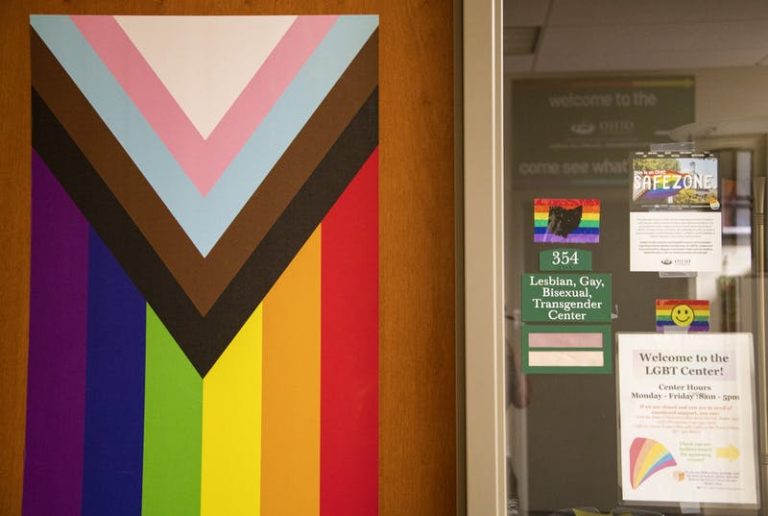
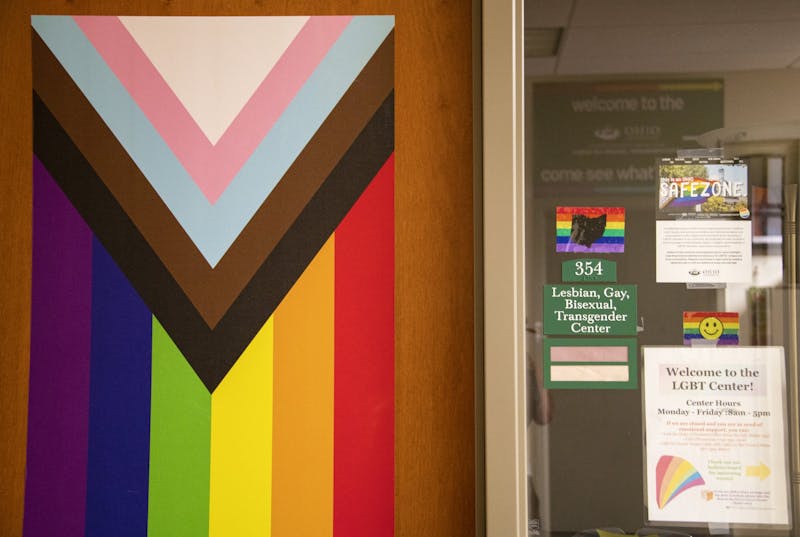
How one gay man overcame burnout and shame to build a self-empowerment community – Yahoo Eurosport UK

When LGBT+ wellbeing advocate Michael Stephens came out as gay, he thought he would “live his best life” and would “never have to hide anything again”.

But instead, he told PinkNews, he “came out of one closet and went into another”, forcing him to reevaluate his career and eventually leading him to found the LGBT+ self-empowerment collective We Create Space.

“I was at what I thought was the pinnacle of my career,” he said.

“I was working for a very prestigious brand in a senior position, and everything looked perfect on the outside. But inside I was I was really struggling.”

He continued: “I just totally ran myself into the ground, I ran out of energy, emotionally, physically, mentally, and I wasn’t able to do my job anymore… It took a burnout, with my body telling me you need to pay attention, for me to actually pay attention.

“It had given me signs up until that point, and I had managed to psychologically evade those.”

Stephens left his job and left London, finally realising that he needed to take care of his mental and physical health.

“I focused on myself, and understanding how I’d got myself into that situation to avoid getting into it again,” he said.

He realised “through months of reading, of trying different therapies, of doing lots of self-help stuff, holistic practices or self-inquiry like journaling”, that he had “never once prioritised” his health and wellbeing.

Although his first goal was to get mentally healthier, he soon realised that his career ambitions “were very much fuelled by fear, and by unprocessed adversity from growing up really believing that I wasn’t worthy”.

“I needed to prove that I had value,” Stephens said, “and to do that, I would seek external validation and recognition. And it became a bit like an addiction, really.”

This experience is not uncommon for LGBT+ folk, Stephens said, as having to constantly fight to be seen as valid can take a huge toll on mental health, self-care and self-empowerment.

He continued: “What we know is that you can’t talk about LGBT+ mental health without talking about trauma and lived experiences.

“The impact that growing up in a heteronormative environment has on us as children, but also as adults as well, is massive.

“When we think about self-empowerment, it’s about how do we achieve our full potential? If we’re not aware of the barriers, whether they be internal or external, that are stopping us from reaching our full potential, then we’re never going to be able to get there.”

That’s where Stephens’ change of career comes in. Having worked through his own shame surrounding his mental health, including a decade-long eating disorder, he wanted to help others to do the same by becoming an advocate for LGBT+ wellbeing.

He started by creating a two-day retreat programme called “Who Am I?” at the very beginning of the COVID-19 pandemic, which was a resounding success.

From there he developed further leadership programmes and workshops and eventually found himself part of a community with “one common goal, which was to understand us ourselves better, so that we can have a greater impact in the world”.

This led him to found We Create Space, “a self-empowerment platform for LGBT+ change-makers and professionals”.

“It’s become a global community, we’ve now got about 5,000 active members, and we host free workshops each month,” Stephens said.

We Create Space also runs a podcast on queer self-empowerment, and provides LGBT+ wellbeing workshops for university students.

Stephens said: “What I need was for someone to tell me that I’m enough… I went through this journey of re-discovery that actually became more of a journey of liberation.

“Through discarding all these facades and these layers that I’d accumulated, which were actually kind of like my armour, it was just so freeing… I wanted to share that with other people.”

“It was around this idea of building courage within the community,” he added.

“Not everyone has the opportunity to come out, but we also find ourselves coming out all the time, whether it’s having to restate your sexual identity, or whether it’s around mental health.

“That requires courage and bravery. It’s something that the community struggles with, because it poses this real threat of rejection, and that fear can sometimes stop us from reaching for our goals and our dreams.

“So if I can just help one person with going for their dream, then that makes a big difference for me.”

It’s Pride Month: How 7 hospitals are improving LGBTQ-centered care and reducing discrimination – Becker’s Hospital Review

June is Pride Month, and hospital leaders from Rush, Kaiser Permanente and CommonSpirit Health shared how their hospitals and health systems are improving care and mitigating discrimination toward the LGBTQ community.

More than half of patients in the LGBTQ community report having faced discrimination in a healthcare setting. Seventy percent of transgender or gender-nonconforming patients said they have experienced discrimination in a healthcare setting, and 56 percent of lesbian, gay or bisexual patients reported facing discrimination in healthcare, according to the Human Rights Campaign’s “Healthcare Equality Index 2020.”

Here’s what seven hospitals are doing to combat LGBTQ-patient discrimination and improve LGBTQ-centered care:

Ronald Copeland, MD. Senior Vice President of National Equity, Inclusion and Diversity Strategy and Chief Equity, Inclusion and Diversity Officer of Kaiser Permanente (Oakland, Calif.): Kaiser Permanente has a long-standing commitment to achieving equitable health outcomes for our LGBTQ members, patients and families. In addition to being recognized for 11 consecutive years as an LGBTQ Healthcare Equality Leader by the Human Rights Campaign, we are consistently vocal about the need for equity across healthcare and beyond for LGBTQ Americans, advocating for workplace protections and standing up for the rights of transgender individuals.

Lloyd Dean. CEO of CommonSpirit Health (Chicago): When HIV/AIDS began to take its tragic, disproportionate toll on the gay community, I remember our hospitals opening their doors widely to care for those in need. When others backed away, we lived out our commitment to compassionate, unbiased care. Four decades later, in Pride Month 2021, I can assure you that our commitment to LGBTQ equity is proud, strong and unwavering.

Scott Ellner, DO. CEO of Billings (Mont.) Clinic: Billings Clinic is committed to ensuring an inclusive, compassionate environment for all. One of the most important things we can do in healthcare is to take care of everybody who comes through our doors, whether they’re a patient, a visitor or a co-worker. We also know that it’s our responsibility to meet people where they’re at in our communities outside of our walls. Everybody deserves care that meets their needs. At Billings Clinic, we regularly review and adjust our work to make sure we are LGBTQ+ inclusive. We have a group that actively works on internal and external policies to make sure we are open and meeting the needs of patients, we provide training opportunities for our staff to better understand and meet LGBTQ+ patient needs, and we have providers who are resources in the community to connect with these patients.

Billings Clinic will not discriminate, and we are on a continuous journey to build diversity, equity, belonging and inclusion both within our organization and in the communities we serve. I am incredibly proud of the work we are doing, but we also know that there is more to be done because being an inclusive organization takes constant commitment. There will always be new opportunities to learn, to adjust and to enhance what we are doing.  

Gina Romero Hernandez. Vice President and Chief Learning Officer at Montefiore Health System (New York City): Montefiore Health System takes a broad approach to LGBTQ healthcare. At a corporate level, we are proud leaders in the LGBTQ Healthcare Equality Index through our participation in the Human Rights Campaign since 2017. This distinction is awarded for our commitment to equitable and knowledgeable healthcare to LGBTQ patients and their families and a safe, inclusive workplace for our associates. Some of the ways in which Montefiore has earned this honor are through the pillars of associate engagement, associate training, patient experience and community engagement. A multidisciplinary committee across Montefiore manages LGBTQ awareness, inclusion, education and community outreach to ensure these pillars are actively engaged throughout the year and celebrated during Pride Month. 

In terms of trainings, Montefiore offers a tremendous variety of LGBTQ training opportunities, beginning with diversity and inclusion onboarding training for all new associates, and clinical offerings, including the Patient Care Act outlining the American Disabilities Act, Affordable Care Act, Patient Bill of Rights and the Civil Rights Act of 1964. Other trainings offered to all associates include Diversity and Inclusion Training, Leading Across Generations (a course aimed at improving relations in a multigenerational environment), Disrupting Everyday Bias, Cultural Competency and Health Literacy, LGBTQ Healthcare for clinicians, and Working with Transgender Patients, plus over 50 additional courses aimed at diversity and inclusion available in the Human Rights Campaign. Since our inception into HEI, education and training has increased over 200 percent to over 25,000 Montefiore associates.

Montefiore has a long history of providing leading-edge LGBTQ care in our hospitals, community healthcare centers and specialty clinics. Montefiore’s Adolescent AIDS Program is on the forefront of HIV/AIDS care serving patients 13-24 years old; for those over 16, Montefiore’s Oval Center focuses on sexual and mental health for LGBTQ patients. Additionally, Montefiore provides surgical services to the transgender community, a growing practice outlined in our website where a new TransWellness Center has recently launched. 

K. Ranga Rama Krishnan. CEO of Rush University System for Health (Chicago): Equality is and has always been at the heart of Rush’s mission, so maintaining a culture of respect, inclusion and equal treatment for patients, visitors, students and employees who are lesbian, gay, bisexual, transgender, queer and/or questioning, and other sexual identities (LGBTQ+) is deeply ingrained in who we are. We understand all too well the healthcare disparities that face the LGBTQ+ community, including access to care and a lack of knowledge and understanding among healthcare providers. To begin to address these disparities, we’ve formed Affirm: The Rush Center for Gender, Sexuality and Reproductive Health, a comprehensive center that provides safe, accessible, affirming and multidisciplinary, comprehensive care from across the Rush System to those who identify as LGBTQ+. Rush’s long-standing commitment to equity of care for the LGBTQ+ community extends beyond the walls of Affirm to all aspects of our institution — from patient care and clinical expertise to employment opportunities, training and employee benefits. We proudly provide extensive resources and welcoming policies to ensure that we continue to support and foster the culture of inclusion and equality that Rush is known for.

Dawson Smith. Vice President of Affiliate Operations and Network Development for UAB Medicine (Birmingham, Ala.): UAB Medicine is proud to once again be designated as a leader in LGBTQ Healthcare Equality by the Healthcare Equality Index for the survey year 2020-21. Since we first started participating in the survey in 2016, we have made significant progress in creating an inclusive and affirming environment for both our LGBTQ patient and employee populations. In order to help patients connect with the right provider, we have updated our provider directory so patients can find providers with training and a focus on the LGBT patient population. 

Our most significant accomplishments to date has been the addition of programs that support our transgender population. We recently launched the Gender Health Clinic, a one-of-a-kind specialty clinic in the Southeast for transgender patients that provides access to care for hormone replacement therapy, gender-affirming surgeries, and access to primary and mental healthcare. We also offer health benefits that cover care specific to our transgender employees. As the only non-VA hospital with the leadership designation in the state of Alabama, we play an important role in caring for this community. While we have accomplished a lot in this space, we know the work is ongoing and are committed to making UAB Medicine a more inclusive and affirming place for all our patients and employees.

Kevin Wang, MD. Medical Director for Swedish’s LGBTQI+ Initiative (Seattle): In early 2020, Swedish launched its LGBTQI+ Initiative to identify opportunities to improve care and better meet the health needs of our LGBTQIA+ community. [Editor’s note: “I” stands for “intersex” and “A” stands for “asexual.”] Members of the initiative team have worked alongside more than a dozen community-based organizations to better understand how to support the LGBTQIA+ community.

Swedish is normalizing using pronouns by distributing pronoun pins (she/her/hers, he/him/his, they/them/theirs) and encouraging caregivers to share their pronouns with patients; using inclusive language in patient materials, including adding sexual orientation and gender identity or expression into nondiscrimination clauses; using inclusive language in signage, including urine collection instructions and gender-inclusive restrooms; adding fields in intake forms, electronic health record and MyChart for name and pronouns used, sexual orientation, gender identity and sex assigned at birth; and developing a Transgender Healthcare Navigation Program.